Support

Museum of Far Eastern Art

About

Imagine a quiet corner of the East in the heart of Europe: the Museum of Far Eastern Art, also known as the Baur Foundation, is a true treasure trove for connoisseurs of Asian culture. Located in the city of Geneva, this specialized museum houses one of the most significant collections of Japanese, Chinese, and Korean art on the continent. Switzerland is proud of this collection, which is housed in an elegant mansion built in a traditional Japanese style.
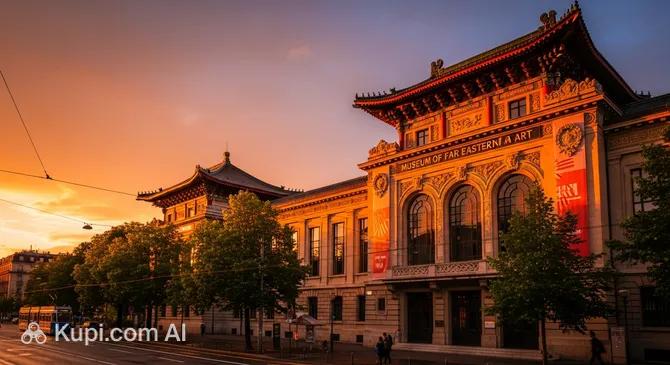
Museum of Far Eastern Art
Museum of Far Eastern Art. Иллюстрация. Источник: Kupi.com AI

The museum's core consists of the impressive personal collection of diplomat Alfred Baur. It features approximately 10,000 artifacts spanning a vast period—from ancient jade pieces (2000 BC) to exquisite imperial porcelain and works by 18th–19th-century masters. Visitors can expect to see delicate Japanese netsuke, lacquerware, painted scrolls, and majestic Buddhist statues that trace the evolution of Eastern craftsmanship.

The museum's significance is highlighted not only by the rarity of its exhibits but also by its wonderful atmosphere. The mansion is surrounded by an authentic garden, creating a sense of complete immersion in Far Eastern culture, away from the city's hustle and bustle. This place is rightfully considered one of the cultural pillars that shape the unique character of modern Geneva.

Contacts

To inquire about special exhibitions or to book group tours, you can use the museum's official contact channels.

How to contactContact
AddressRue Munier-Romilly 8, 1206 Genève, Швейцария
Phone+41 22 704 32 82
Websitewww.fondation-baur.ch

What to Do

Inside the museum walls, a meditative journey through the centuries awaits you. Begin your exploration with the Japanese garden, whose minimalist aesthetics instantly set the right mood. Inside the building itself, the exhibition is arranged chronologically: you can leisurely move from halls with ancient ceramics to display cases featuring finely crafted inro and netsuke. For a deep dive into the history of each masterpiece, we recommend using the interactive tablets or audio guides.

Of particular interest are the temporary exhibitions, which are regularly updated and dedicated to specific aspects of Eastern life or art. If you're lucky, you might catch a lecture by a guest expert or even participate in an authentic tea ceremony. For those who want to take a piece of this atmosphere home, there is a museum shop with high-quality replicas of art objects and books on Oriental studies.

The museum is perfect for those seeking an intimate setting away from tourist crowds. Photo sessions in the garden, the chance to read quietly in the cozy halls, or attending special children's programs where Japanese fairy tales come to life through art—everyone will find something to their liking here. Lovers of Asian aesthetics should look into combined tickets, which allow entry to other art venues in the city.

Getting There

The museum is located in the quiet and prestigious residential district of Eaux-Vives, very close to the famous Lake Geneva. Getting here from the city center is easy: the most convenient way is to take tram No. 12 or No. 15. You should get off at the "Maison de Retraite" stop, which is just a few minutes' walk from the museum gates.

If you are traveling from the main railway station, the ride on tram No. 15 takes about 15 minutes. Buses No. 1 and No. 8 also head in this direction (get off at the "Rive" stop). For those who prefer walking, we suggest a stroll from the Jardin Anglais along the waterfront—this route takes about 20 minutes and offers beautiful views.

For tourists in Geneva, there is an excellent perk: when staying in hotels, hostels, or campsites, you receive a Geneva Transport Card, which entitles you to free travel on public transport, including routes to the museum. If you decide to take a taxi from the center, the trip will be short and comfortable, but be aware that parking for private cars in this area is extremely limited.

Ближайший город: Geneva

History & Facts

The history of this remarkable place is inextricably linked to the name of Alfred Baur, a Swiss diplomat who dedicated over 25 years of his life to diplomatic service in Japan and China. It was there, at the beginning of the 20th century, that he began passionately collecting pieces of Eastern art, with a particular focus on the Edo and Meiji periods. After his death in 1951, his widow, Maria Baur, followed her husband's wishes and bequeathed the priceless collection to the city.

The museum building on Rue Munier-Romilly itself deserves special attention. This elegant mansion was built in the 1920s and designed by architect Naoyoshi Hotta in the style of a traditional Japanese villa. Thus, the architecture of the building is the first exhibit, preparing the visitor for immersion into Eastern aesthetics.

The Baur Foundation officially opened its doors to the public in 1967, becoming the first specialized institution in Europe entirely dedicated to the art of the Far East. Since then, the collection has been constantly enriched through donations and acquisitions, growing into one of the most significant collections of its kind in the world, numbering around 10,000 items.

Today, the museum does more than just store artifacts; it serves as an important bridge in the cultural dialogue between Europe and Asia. It conducts serious scientific research, publishes catalogs, and organizes international exhibitions in collaboration with leading museums in China and Japan.

Time Needed

To enjoy the elegance of Eastern forms and details without rushing, a typical visitor will need about 1.5–2 hours. This is usually enough time to see the main exhibition and take a stroll through the cozy Japanese garden.

If your visit coincides with a temporary themed exhibition or if you plan to use an audio guide for a detailed study of each item, it is better to set aside 2–3 hours. On days when cultural events such as tea ceremonies or lectures are held, the visit may last up to half a day, allowing you to fully immerse yourself in the museum's meditative atmosphere.

Working Hours

The museum warmly welcomes visitors from Tuesday to Sunday. Please note that the opening hours are quite compact: from 14:00 to 18:00. Monday is the official closing day.

Keep in mind that the ticket office stops selling tickets 30 minutes before closing. Since the schedule may change during the summer period or during major exhibitions, we strongly recommend checking the official website before planning your visit to confirm current information.

Nearby

After visiting this world of Eastern harmony, you can continue your day exploring other interesting corners of the city. The area around the museum offers a variety of options for relaxation, from walks in parks to entertainment for the whole family.

NameDistance
Museum of Art and History0.2 km
Place du Bourg-de-Four0.4 km
Natural History Museum of Geneva0.4 km
St. Pierre Cathedral0.5 km
Reformation Wall0.6 km
Oh Martine!0.8 km
Claire Bar0.9 km

Reached the end of the page?

That means the route is fully explored