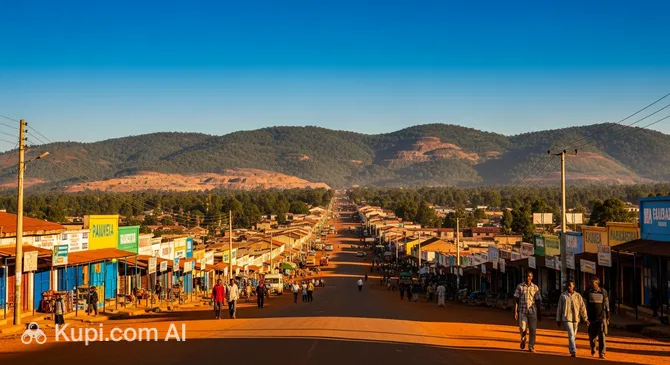
Public transport in Geita is informal, decentralized, and relies entirely on road-based vehicles. Unlike major global metropolises, there are no metros, trams, or large municipal bus networks here. Instead, the system is driven by a combination of privately operated minibuses and smaller vehicles that provide essential connectivity across the town and to neighboring suburbs. For a visitor, understanding the hierarchy of these vehicles is key to getting around efficiently.
The backbone of local transit is the Daladala, the ubiquitous minibus found throughout the region. These vans run on specific routes, usually originating from the central bus stand. They are the most affordable way to travel but can be crowded and often wait to fill up completely before departing. For more direct and flexible travel within the town center, Bajajis (auto-rickshaws) are extremely popular. They offer a balance between cost and comfort, providing a roof over your head and the ability to navigate narrow streets. The fastest, though least comfortable, option is the Bodaboda (motorcycle taxi), which can take you literally anywhere, from a shop doorstep to a remote dirt road.
The payment system in Geita is strictly cash-based. There are no travel cards, passes, or mobile apps for ticketing. Fares for Daladalas are fixed and very low, typically amounting to a few hundred shillings depending on the distance. You pay the conductor (known locally as the "konda") during the journey. For Bajajis and Bodabodas, there are no meters; prices must be negotiated with the driver before you get on. It is advisable to ask a local or your hotel receptionist for the approximate "market rate" to a specific destination to avoid being overcharged.
Tourists should keep a few practical tips in mind to navigate this system smoothly. Always carry small bills and coins, as drivers often struggle to find change for large banknotes. Daladalas typically operate from early morning (around 6:00 AM) until shortly after sunset; finding one late at night can be difficult. Stops are not always marked with signs, so you need to alert the conductor when you want to get off—shouting "Shuka!" (which means "drop off" or "get down") is the standard way to signal a stop. If you are using a Bodaboda, always insist on a helmet, although safety standards can vary.
For those who prefer not to use public transit, private taxis are available, though they are less conspicuous than in larger cities. They are usually white sedans and do not cruise the streets looking for passengers; you typically find them parked at designated stands near markets, the main bus terminal, or major hotels. Car rentals are not common in the traditional self-drive sense; most "rentals" come with a driver included, which is often the best option for visitors unfamiliar with local driving habits and road conditions. Walking is also a viable alternative for the compact town center, allowing you to soak in the atmosphere at your own pace.
While Geita lacks historic cable cars or subway systems, the sheer volume and coordination of the Bodaboda drivers at major intersections is a unique feature in itself. These drivers often congregate in groups at specific "stages" or corners, acting as an informal information network for the town. They know every shortcut and local landmark, making them an indispensable, albeit chaotic, part of the city's transport infrastructure.