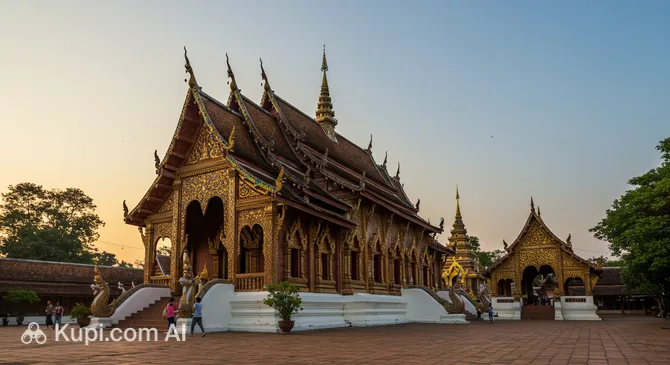
Dazzling Wat Ming Muang is a true gem of northern architecture, often referred to as the "white" or "silver" temple. Located in the heart of the cozy city of Nan, this Buddhist complex captures the imagination with its intricate craftsmanship. Its walls are covered in exquisite stucco ornamentation in the Lanna style, which resembles precious lace in its delicacy.
Wat Ming Mueang. Illustration.
Source: Kupi.com AI
Traveler photos:
Beyond its aesthetic beauty, this site holds immense spiritual significance for the whole of Thailand. The temple grounds house the sacred city pillar — Lak Muang, considered the guardian of the province. It is believed that every visitor to the city should pay their respects here to receive blessings and good luck for their journey.
This is not just a historical monument but a living spiritual center, where snow-white facades and silvery elements create an atmosphere of purity and tranquility. The unique architectural style sets it apart from other shrines in the region, making it a must-visit for any tourist seeking authentic and inspiring locations.
Contacts
To plan your visit to Wat Ming Muang, it is helpful to check its exact location and official resources beforehand. While the temple doesn't have a direct email address for tourists, it is active on social media, where you can see current photos and community news. Below is the essential contact information for your convenience.
The first thing to do at Wat Ming Muang is to examine the exterior decoration in detail. Visitors can spend hours admiring the incredibly fine stucco ornamentation that adorns the facades. The snow-white walls and silvery details create a stunning backdrop for photos, especially in sunny weather when the building literally shines.
Be sure to peek inside the main hall (wihan). Here, you will find magnificent murals that tell the story of the Buddha's life and depict scenes from the daily lives of locals in past eras. The temple's interior offers a sense of deep peace, making it an ideal place for a short meditation or quiet contemplation away from the city bustle.
Don't forget to approach the city pillars — Nan's sacred columns. According to local tradition, it is customary to make wishes and ask for good luck here. You can observe local rituals or take part in offering flowers yourself, allowing for a deeper immersion into the cultural and religious atmosphere of this unique site.
Getting There
Finding this architectural masterpiece is easy as it is located in the heart of the historic center on Suriyapong Road. If you are already in the city of Nan, you can easily walk to the temple from the National Museum or other central attractions. For navigation, it's convenient to use coordinates 18.7746465, 100.7691162 or simply look for the prominent white walls of the complex.
If you are arriving from other regions of the country, you will first need to get to the city itself. Comfortable buses run regularly to Nan from Bangkok and Chiang Mai. Within the city, the most popular and colorful way to get around is by tuk-tuk or renting a bicycle, allowing you to explore the surroundings at your own pace.
For those who prefer comfort, taxis are always available via mobile apps or can be hailed on the main streets. If you are traveling by rental car, there is a small parking area near the temple complex, making the visit as convenient as possible for road trippers.
Nearest city: Nan
History & Facts
The history of Wat Ming Muang dates back to the mid-19th century. Originally, the site was an abandoned and semi-ruined temple that eventually found a second life thanks to a large-scale reconstruction. Today, it is considered one of the most striking examples of Lanna architecture, carefully restored in keeping with the local traditions of the northern region.
The temple's main feature is its incredible exterior finish. The dazzlingly white walls are decorated with complex stucco ornamentation, handcrafted by masters. This style is often called "silver" due to the specific luster and delicacy of the work, resembling jewelry. The design carries deep symbolism reflecting ancient Thai concepts of heavenly abodes.
In addition to its architectural value, Wat Ming Muang serves an important sacred function. Its territory houses the Nan City Pillar (Lak Muang). According to beliefs, this is the spiritual center of the province, where the city's guardian spirit resides. From its foundation to this day, the temple remains a crucial venue for significant religious rites and city festivals.
Time Needed
To leisurely explore the main details of Wat Ming Muang, most travelers will find 30 to 60 minutes sufficient. This time is enough to admire the exterior stucco, step inside the main hall, and take atmospheric photos against the snow-white facades.
If you plan more than just a quick look and want to spend time praying at the city pillar or studying the murals in detail, you should allow about an hour. The temple is compactly arranged, so a visit can easily be combined with a walk through the neighboring streets or a visit to the National Museum located nearby.
Working Hours
Official opening hours for Wat Ming Muang are not strictly regulated; however, like most active temples in this region, it is typically open to visitors from early morning until sunset. This allows guests to see the shrine in both the rays of the rising sun and the soft evening light.
Since the temple is an active religious site, the schedule may vary depending on festivals or ceremonies. Before visiting, we recommend checking their official Facebook page to ensure the complex is accessible on your chosen day.
Nearby
Exploring the surroundings of Wat Ming Muang can significantly enrich your trip, as the temple is located in an area with a high concentration of cultural and historical sites. A walk through the quiet streets of the old city will allow you to feel the authentic spirit of Northern Thailand and see landmarks that are just steps away from each other.