Support

National Museum

About

The Royal Palace Museum, also known as "Haw Kham" (Golden Hall), is an architectural gem located in the heart of Luang Prabang. Built in 1904, it served for many years as the official residence of the monarchs of Laos, and today it is one of the most important cultural sites in the region.
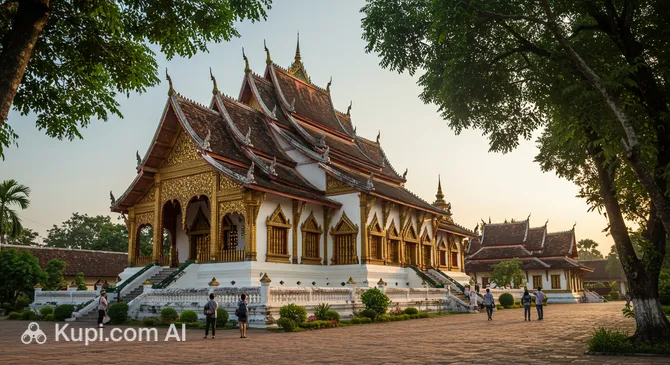
Royal Palace Museum
Royal Palace Museum. Иллюстрация. Источник: Kupi.com AI

The exterior of the palace is a striking synthesis of traditional Lao architecture and elegant French Beaux-Arts style. White walls, rich gilding, and stained-glass mosaics create an atmosphere of understated luxury. Surrounded by shaded palm-lined avenues and situated near the banks of the Mekong River, the palace exudes a sense of peace and tranquility.

Since 1995, the palace has operated as a museum where visitors can experience the history of the Lao royal dynasty. Inside, you'll find unique works of art, personal belongings of the rulers, and priceless relics that make a visit here a true journey through time.

Contacts

To find the most up-to-date information on special exhibitions or visiting rules, you can use the institution's official contact details:

The museum's overall rating based on visitor reviews is 4.1 out of 5, confirming its high cultural significance.

How to contactContact
Address27 Ounheun Rd, Luang Prabang, Laos
Phone+856 20 57 895 313
Websitewww.tourismluangprabang.org

What to Do

Start your exploration with the ceremonial wing, which houses the reception halls. Here, you will see busts of Lao kings and magnificent gilded screens depicting scenes from the ancient epic, the Ramayana. Be sure to look at the walls: they are decorated with murals by a French artist from the 1930s, detailing daily life in Laos at that time.

The main spiritual treasure of the museum is the Phra Bang Buddha statue. This 83-centimeter figure, made from an alloy of gold, silver, and bronze, is considered a national symbol that protects the entire country. After visiting the throne room and the royal family's private quarters, which are preserved almost in their original state, it is worth stopping by the separate pavilion housing the royal car collection—featuring rare American models from the mid-20th century.

In addition to the historical interiors, the museum exhibits diplomatic gifts from around the world, a collection of royal porcelain, silver, and musical instruments. A walk through the grounds will also reveal exquisite ivory carvings and unique crystal Buddha images.

Getting There

The National Museum is located at 27 Ounheun Rd in the very heart of the city's historical center. It is easy to find thanks to the monumental palm-lined avenue that leads directly to the main entrance, creating a grand atmosphere even before the tour begins.

If you are staying in the old part of the city, a walk to the museum will take only a few minutes. From more distant areas, it is most convenient to take a colorful local tuk-tuk or call a taxi. For independent travelers using a navigator, the banks of the Mekong River, near which the palace complex was built, serve as a perfect landmark.

Ближайший город: Luang Prabang

History & Facts

The history of this majestic building began in 1904. The palace was designed during the French Protectorate era for King Sisavang Vong. The choice of location was not accidental: the proximity to the Mekong River allowed official guests and ambassadors to arrive by water and enter the residence's state rooms directly.

The building remained the home of the ruling dynasty until 1975, when the country underwent a change in political regime and the monarchy was abolished. Twenty years later, in 1995, the palace officially opened its doors as the National Museum. Interestingly, the living quarters of the royal family members were preserved almost exactly as they were on the day the palace's last inhabitants departed.

The architecture of the complex deserves special attention as a symbol of cultural dialogue: it harmoniously blends traditional Lao motifs with the elegant French Beaux-Arts style. On the building's pediment, you can see a three-headed elephant under a white parasol—the historical symbol of the Lao monarchy, a reminder of the kingdom's former grandeur.

Time Needed

To leisurely explore all the palace halls, study the artifact collections, and stroll through the surrounding park, most tourists need between 1.5 and 2 hours. This is ample time to see the royal chambers and the automobile exhibition.

Keep in mind that the museum closes for a long lunch break, so plan your visit for either early morning or mid-afternoon to ensure you can see everything without rushing.

Working Hours

The museum maintains a strict operating schedule with a mandatory break in the middle of the day. The doors are open to visitors daily, from Monday to Sunday.

Visiting hours: in the morning from 8:00 to 11:30 and in the afternoon from 13:30 to 16:00. Please plan your arrival in advance, as the ticket office stops selling tickets shortly before the lunch break or closing time.

8:00 – 11:30, 1:30 – 16:00

Nearby

Exploring the area around the Royal Palace will allow you to immerse yourself even deeper into the atmosphere of the ancient capital. The neighborhood is filled with cozy restaurants, authentic bars, and historical monuments, all within walking distance.

NameDistance
Lost In Baan0.2 km
Tangor Restaurant Bar & Lounge0.2 km
Luang Prabang Night Market0.2 km
Sa Sa Sunset Cruise0.3 km
Mount Phousi0.3 km
Luang Prabang Morning Market0.3 km
Traditional Arts and Ethnology Centre0.4 km

Reached the end of the page?

That means the route is fully explored