Support

Wat Xiengthong

About

Wat Xieng Thong, known as the "Temple of the Golden City," is rightfully considered one of the most exquisite and significant Buddhist structures that Laos has to offer. Located in the historical heart of Luang Prabang, this temple embodies the pinnacle of the region's classical architecture. Its unique silhouette, with low-sweeping, multi-tiered roofs, is instantly recognizable and serves as a symbol of the country's spiritual heritage.
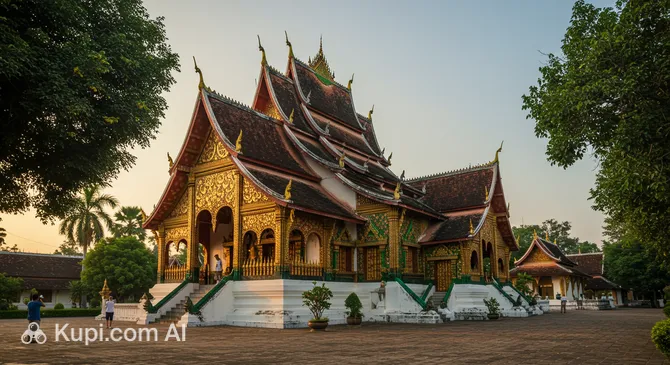
Wat Xieng Thong
Wat Xieng Thong. Иллюстрация. Источник: Kupi.com AI

The complex's primary artistic pride is the "Tree of Life" mosaic, which adorns the back wall of the main building. Crafted from pieces of colored glass against a rich red background, this mosaic depicts mythological themes and scenes from nature. Inside the temple, visitors are greeted by massive wooden columns richly decorated with golden images of dharmachakras—the wheels of teaching—and delicate wall paintings.

The complex grounds bring together about 20 different structures, including an elegant Tripitaka library, the richly decorated "Red Chapel" featuring a rare reclining Buddha statue, and the building housing the royal funeral carriage. This is not just an open-air museum, but an active spiritual center where the gold finishes harmoniously blend with the peaceful atmosphere of a tropical garden at the confluence of the Mekong and Nam Khan rivers.

Contacts

To help you plan your visit to this architectural masterpiece, the following contact details will be useful. The temple is located in the historical part of the city and is easily found by its characteristic golden decorative elements.

How to contactContact
AddressV4XV+277, Khem Khong, Luang Prabang, Laos

What to Do

When visiting Wat Xieng Thong, the first thing to focus on is the intricate detail of the main temple. Be sure to walk around the building to see the famous "Tree of Life" mosaic—a canvas of thousands of glass shards shimmering in the sun. Inside the temple, you can examine murals depicting the life of Buddha and admire the craftsmanship of the wood carvings covered in a thin layer of gold leaf.

Explore the cozy corners of the complex: peek into the "Red Chapel" to see the unique reclining Buddha statue, which dates back to the temple's founding. Don't miss the royal funeral carriage house—its teak walls are adorned with complex carvings based on the Ramayana epic, and the carriage itself, with its seven naga dragon heads, looks truly impressive.

Beyond the architecture, you can simply enjoy the peace and quiet. Monks in orange robes can often be seen going about their daily activities on the grounds. This is an ideal place for meditative contemplation or for taking artistic photos against the backdrop of the sweeping roofs and golden facades, which look especially beautiful in the morning or evening light.

Getting There

Located in the heart of the historic peninsula, Wat Xieng Thong is situated at V4XV+277, Khem Khong. Its location near the confluence of the Mekong and Nam Khan rivers makes it an ideal spot to conclude a walking tour of the old town. Most tourists prefer to get here on foot or by rented bicycle, enjoying the colonial architecture along the way.

If you are in a more distant part of the city, it is most convenient to use a local tuk-tuk (songthaew). Rides around town are usually inexpensive, and drivers know the way to the "Golden Temple" well. For those who prefer navigation apps, you can use the coordinates 19.8975763, 102.14313. There is a small parking area for scooters and bicycles near the entrance.

Travelers arriving at Luang Prabang International Airport (LPQ) can reach the temple by taxi or tuk-tuk in about 15–20 minutes. The ride will cost approximately 50,000 to 100,000 Lao kip. From other cities in Laos, buses arrive at the bus station, from where the historic center can be reached in 10–15 minutes by local transport.

Ближайший город: Luang Prabang

History & Facts

The construction of this grand complex began in 1560 by order of King Setthathirath. For centuries, Wat Xieng Thong remained under the personal patronage of monarchs, serving as the site for their coronations and most important religious festivals. Legend has it that the temple was founded on the very spot where two hermits once lived next to a giant "flame tree."

One of the most remarkable chapters in the temple's history is its survival in 1887. While many other shrines were destroyed during the "Black Flag" raids, the leader of the invaders, Deo Van Tri, ordered that this wat be left untouched. It turned out that in his youth, he had been a novice monk here and maintained a deep respect for the place.

The complex continued to evolve: in the 19th century, the Tripitaka library was added to house sacred Buddhist texts, and in the mid-20th century, the drum tower was erected. Until 1975, the temple was officially considered a royal site, and today, the ashes of several members of the Lao ruling dynasty rest here in special golden urns.

Today, this site is recognized as the pinnacle of 16th-century Lao architecture. Despite various restorations, it has preserved its original spirit and is considered a living heritage, where ancient traditions continue to exist within the rhythm of modern temple life.

Time Needed

To see all the details of the complex without rushing, it usually takes about 1 to 2 hours. This is enough time to explore the main temple, carefully examine the mosaics, and visit the smaller shrines located on the grounds.

About 45 minutes should be allocated to the main building (sim) and its famous "Tree of Life" wall. The remaining time can be spent walking between the pavilions, viewing the royal funeral carriage, and taking a short break in the shade of the trees while observing the daily life of the monks. If you enjoy photography, you might want to stay longer to catch the perfect light on the golden facades.

Working Hours

Wat Xieng Thong is open to visitors daily, including weekends and holidays. You can plan your visit for any convenient time during daylight hours.

The complex's operating hours are from 6:00 AM to 6:00 PM. Early morning is an excellent time to visit if you want to see the temple in the rays of the rising sun and avoid the midday heat and large crowds of tourists.

6:00 – 18:00

Nearby

Exploring the surroundings of this famous temple will allow you to dive deeper into the atmosphere of the ancient capital of Laos. Thanks to its prime location at the tip of the peninsula, many interesting sites and cozy establishments are literally just a few steps away.

A stroll through the adjacent streets will offer views of traditional wooden houses and colonial villas converted into restaurants and cafes where you can relax after your sightseeing.

NameDistance
Sa Sa Sunset Cruise0.7 km
Lost In Baan0.8 km
Tangor Restaurant Bar & Lounge0.8 km
Royal Palace Museum1 km
Mount Phousi1 km
Utopia Bar & Restaurant1.1 km
Luang Prabang Night Market1.1 km

Reached the end of the page?

That means the route is fully explored