Support

Mae Fah Luang Art and Cultural Park (Rai Mae Fah Luang)

About

If you find yourself in the northern region of Thailand, be sure to visit the Mae Fah Luang Art and Cultural Park. This is not just an open-air museum, but a true center for preserving the unique heritage of the Lanna kingdom. Here, in the city of Chiang Rai, elegant architecture, rare works of art, and lush tropical nature blend harmoniously.
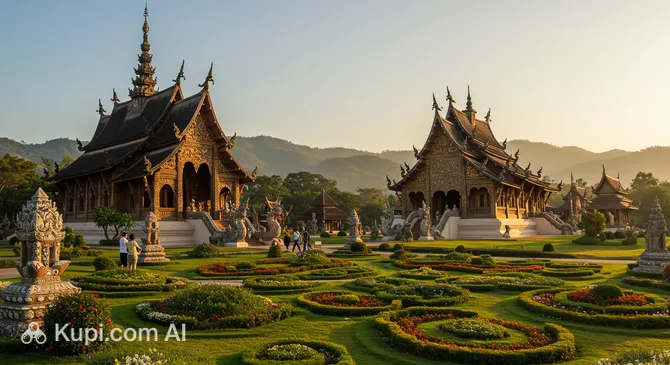
Mae Fah Luang Art and Cultural Park
Mae Fah Luang Art and Cultural Park. Иллюстрация. Источник: Kupi.com AI

The park occupies an extensive, well-maintained territory adorned with lotus ponds, ancient trees, and quiet alleys. The main architectural treasure is Haw Kham (the Golden Pavilion) — a majestic teak wood structure built in the best traditions of Northern Thai architecture. This site is recognized as one of the region's most significant cultural venues, housing a rich collection of Lanna artifacts.

Visitors to the park can discover the spiritual traditions and lifestyle of the Tai people, who flourished here from the 13th to the 18th century. Thanks to the efforts of the foundation under the patronage of the Princess Mother, today every guest can see sacred ritual objects, intricate wood carvings, and ancient pagodas preserved in their original form.

Contacts

For the latest information regarding events or group tours, you can use the following official contact channels. The staff at Mae Fah Luang Art and Cultural Park are always ready to help guests navigate the cultural program.

How to contactContact
Address313, บ้าน, Pa Ngew, Tambon Rop Wiang, Amphoe Mueang Chiang Rai, Chang Wat Chiang Rai 57000, Таиланд
Phone+66 53 716 605
Websitewww.maefahluang.org

What to Do

A walk through the park is a true immersion into Northern aesthetics. Your first stop should be the Golden Pavilion (Haw Kham). This building is striking with its multi-tiered roof and sloping walls decorated with gold inlays. Guided tours are often held inside the pavilion, where guides reveal the deep meaning behind the religious carvings and Wai Sa ritual objects.

History and art lovers should visit the Haw Kaew museum. It houses an impressive permanent exhibition of teak carvings and Lanna artifacts that tell the story of trade links, Buddhism, and the family values of the ancient kingdom. Each exhibit is a testament to the skill of the ancient craftsmen who worked with fine teak.

If you are seeking tranquility, the park offers cozy paths along lotus ponds and botanical corners with rare plants. It is an ideal place for landscape photography and meditative relaxation in the fresh air. In the evening, when the decorative building lighting comes on, the park's atmosphere becomes truly magical and mysterious.

Getting There

The cultural park is located on the western outskirts of Chiang Rai. If you are traveling from the city center, a car or taxi ride will take approximately 15–20 minutes. The roads in this part of the city are in good condition, and there is convenient parking for visitors within the park grounds.

For those who prefer public transport, traditional Thai songthaews (red pickup trucks) or motorbike taxis heading toward the Pa Ngew district are excellent options. Ride-hailing services like Grab are also active in the city, making logistics much simpler for international tourists.

If your journey begins directly from Chiang Rai Airport, the trip to the park gates will take about 20–30 minutes. It is best to plan your visit for the morning hours when the sun is not yet too hot, making a walk across the extensive grounds as comfortable as possible.

Ближайший город: Chiang Rai

History & Facts

The history of this remarkable place is inextricably linked to the work of the Mae Fah Luang Foundation, established in 1972 by Princess Srinagarindra. Originally called the Thai Hill Crafts Foundation, its mission was to support the ethnic minorities of Northern Thailand through the development of handicrafts and education.

In 1973, the site began operating as a training center for youth from remote mountainous areas. Children not only attended local schools but also learned skills in traditional agriculture, leadership, and applied arts. Later, as the state education system became more accessible in rural villages, the facility was officially transformed into the Mae Fah Luang Art and Cultural Park in 2008.

The artifact collection began to take shape as early as the 1980s to save priceless relics from being taken out of the country. The park's crown jewel, the Haw Kham pavilion, was built from the timber of 32 traditional teak houses from Chiang Rai and presented as a gift to the Princess Mother on her 84th birthday. This majestic building has become a symbol of the revival of the Lanna heritage that flourished on these lands centuries ago.

Time Needed

To leisurely explore all the treasures of Mae Fah Luang Art and Cultural Park, it is recommended to set aside 2 to 3 hours. This is quite enough time to visit the main pavilions and enjoy a stroll through the tropical greenery.

Expect to spend about an hour specifically viewing the Golden Pavilion and the museum exhibitions of artifacts. The remaining time is perfect for meditative walks by the lotus ponds and discovering the park's botanical collection, which is particularly beautiful in the morning or evening sunlight.

Working Hours

The park is open to visitors six days a week. Please note that on Mondays, the attraction is closed to tourists — this time is used for the maintenance of the gardens and pavilions.

Operating hours for the other days: from Tuesday to Sunday, the park welcomes guests from 08:30 to 16:30. It is recommended to arrive in the first half of the day to have enough time to see all the museum halls before closing.

DayWorking hours
понедельникЗакрыто
вторник08:30–16:30
среда08:30–16:30
четверг08:30–16:30
пятница08:30–16:30
суббота08:30–16:30
воскресенье08:30–16:30

Nearby

A visit to the park can be easily combined with other interesting locations within the city. Chiang Rai is rich in historical monuments and cozy spots that allow you to feel the atmosphere of Northern Thailand more deeply.

Exploring the surrounding area will give you access to ancient city gates and modern architectural landmarks. Visiting these sites will round out your cultural itinerary and show how carefully the locals preserve their history.

NameDistance
Chiang Rai River Beach1.1 km
Saikaew Resort2.6 km
Wat Phra That Doi Chom Thong2.9 km
Chiang Rai City Pillar Shrine2.9 km
Wat Phra Kaew Chiang Rai3.3 km
Wat Mung Muang3.4 km
Chiang Rai Clock Tower3.6 km

Reached the end of the page?

That means the route is fully explored