Support

Wat Phra Kaew Don Tao Suchadaram

About

In the quiet and charming city of Lampang lies one of the region's most significant spiritual centers — Wat Phra Kaeo Don Tao Suchadaram. This majestic temple complex is a unique blend of history and architecture, having merged two ancient monasteries in 1984. Its name poetically translates as "the temple of the Emerald Buddha on the hill with water jars," referencing the ancient legends of these lands.
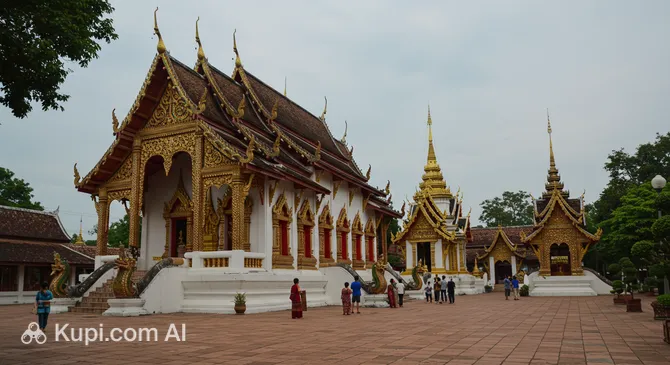
Wat Phra Kaew Don Tao Suchadaram
Wat Phra Kaew Don Tao Suchadaram. Иллюстрация. Источник: Kupi.com AI

This site is considered a key attraction that Thailand offers travelers in its northern provinces. Unlike the more popular temples of Chiang Mai, it has preserved an atmosphere of authentic tranquility and a remarkable mix of Lanna, Burmese, and Shan architectural styles. The main visual highlight of the complex is the dazzling 50-meter golden chedi, Phra Boromathat, which, according to legend, houses a relic of the Buddha himself.

A visit to the temple is not just a pilgrimage but also an encounter with art. Here you can see exquisite wooden buildings with multi-tiered roofs and filigree mosaics. For tourists, entry to the grounds costs a symbolic 20 baht, and the well-kept area with its Lanna Museum and statues of Lampang's heroes makes for an educational and pleasant walk.

Contacts

To contact the temple complex administration or to find out more about ceremonies, you can use the official communication channels. Please note that the most up-to-date news is often published on their social media community page.

How to contactContact
Address8G25+98J, Prakaew Rd, Tambon Wiang Nuea, Amphoe Mueang Lampang, Chang Wat Lampang 52000, Thailand
Phone+66 81 883 1070
Websitewww.facebook.com

What to Do

The main reason to visit Wat Phra Kaeo Don Tao Suchadaram is for the unhurried contemplation of its architectural masterpieces. Be sure to climb the stairs decorated with mythical Naga serpents to the golden chedi. Its massive base and glittering spire create a magnificent backdrop for photos. Nearby is the Burmese mondop — a true treasure of the complex: look inside to see ceilings inlaid with intricate glass mosaics and graceful Burmese-style Buddha statues.

While strolling through the grounds, take note of the viharas (prayer halls). Inside the Viharn Lai Kham Suchadaram, you can see Chiang Saen-style frescoes and fine wood carvings. Don't forget to visit the small Lanna Museum, which houses everyday objects and religious artifacts from past centuries. At the entrance to the complex, you will be greeted by chinthe — stone guards resembling lions, who seem to watch over the peace of this sacred place.

For a deeper immersion into local culture, you can stop by a small pavilion, or sala, where the legend of Mae Suchada is told in paintings. If you are seeking solitude, the temple has many quiet corners suitable for meditation or simply a peaceful rest in the shade of the trees. You can make your trip to the temple part of a larger tour of Lampang by arriving here in a traditional horse-drawn carriage, which will add historical charm to your visit.

Getting There

Getting to this spiritual center is quite easy, as it is located in the northern part of the city, in the Wiang Nuea district. If you are staying in the center of Lampang, a trip by taxi, tuk-tuk, or traditional songthaew (blue pickup truck taxi) will take only about 10–15 minutes. The landmark is the Wang River, from which the temple is separated by a short distance.

For a touch of local color, you can hire a horse-drawn carriage — a unique form of transport that survives only here. Many tourist carriage routes include a mandatory stop at the main gates of Wat Phra Kaeo Don Tao Suchadaram. If you are traveling from other regions, such as Chiang Mai, it is most convenient to take a train or bus to the Lampang station and then take a transfer directly to the temple.

For independent travelers on cars or motorbikes, there is a spacious parking lot on the temple grounds. The temple is easy to find using a navigator at Prakaew Rd, and the golden stupa, visible from afar, serves as an excellent visual guide.

Ближайший город: Lampang

History & Facts

The history of this site dates back to ancient times — the temple was founded in the 7th century by the son of the legendary Queen Chamadevi, during the era of the Mon kingdom of Haripunjaya. However, it gained world fame in the 15th century: according to chronicles, from 1434 to 1468, it housed one of Asia's most revered relics — the Emerald Buddha statue. Legend has it that the elephant transporting the relic to Chiang Mai stubbornly kept turning toward Lampang, which was taken as a divine sign.

The temple's current name — "Suchadaram" — is linked to the sad and noble legend of Mae Suchada. In the 6th century, a pious woman found a large emerald inside a watermelon and offered it to a monk to create a Buddha statue. Wrongly accused by the ruler of a sinful relationship with the monk, she was executed, but before her death, she proved her innocence with a miracle. Later, the ruler, realizing his mistake, immortalized her name in the name of the temple, which merged two neighboring territories in 1984.

The architectural appearance of the complex has been shaped over centuries. A special contribution was made by the Burmese and Shan communities at the end of the 19th century. In 1909, a magnificent Burmese mondop with a multi-tiered pyatthat roof was built with funds from wealthy teak merchants. This blend of styles — Lanna, Burmese, and Shan — makes the site a unique cultural monument, unlike the classic temples of central Thailand.

Time Needed

To explore the entire large complex without rushing, it is recommended to set aside 1.5 to 2.5 hours. This is enough time to walk through both parts of the merged temple, examine the intricate carving details in the Burmese mondop, and climb to the base of the majestic stupa.

If you plan to visit the Lanna Museum located on the grounds or study the frescoes in the viharas in detail, it is better to budget an extra hour. It's also worth considering time for a rest in the temple's shady areas, which are perfect for quiet contemplation and meditation away from the city bustle.

Working Hours

The temple complex is open to visitors daily, welcoming devotees and tourists from early morning until evening. Official opening hours are from 05:00 to 19:00. This allows you to see the attraction in both the rays of the rising sun and the soft pre-sunset light.

It is worth noting that the main halls and the museum may close slightly earlier than the overall closing time for the grounds, and the evening illumination of the stupa is not always bright. For the most comfortable tour and museum visit, it is best to plan your arrival in the first half of the day.

5:00 – 19:00

Nearby

Exploring the temple's surroundings will allow you to dive deeper into the atmosphere of old Lampang and see lesser-known but equally interesting historical sites. The Wiang Nuea district is rich in architectural monuments from different eras.

NameDistance
Wat Pratu Ton Phueng0.4 km
Lampang Cultural Street Market0.6 km
Baan Sao Nak0.8 km
Lampang Museum1.3 km
Kad Kong Ta Night Market1.4 km
The Riverside Restaurant2 km
Wat Si Chum2 km

Reached the end of the page?

That means the route is fully explored