Support

Dhanabadee Ceramic Museum

About

Have you ever wondered where those famous white bowls with the bright rooster, found in almost every Thai eatery, come from? The secret is revealed in the city of Lampang, home to the amazing Dhanabadee Ceramic Museum. This is not just an exhibition space, but a living history of the industry that made this region famous throughout Thailand.
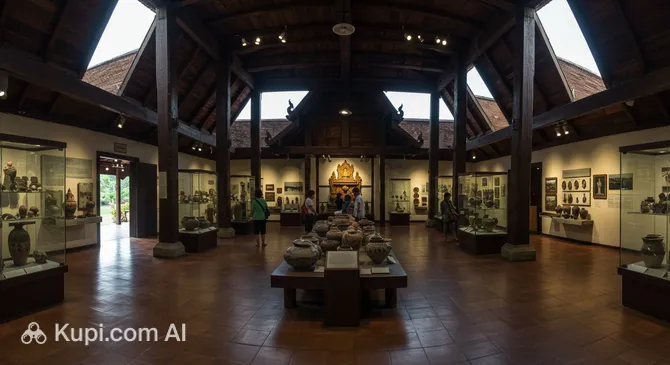
Dhanabadee Ceramic Museum
Dhanabadee Ceramic Museum. Иллюстрация. Источник: Kupi.com AI

Established at the site of the city's oldest factory, the museum is dedicated to the art of Lampang ceramics and, in particular, the legendary "chicken bowls". Here, visitors can see a unique combination of industrial heritage and fine craftsmanship. The main value of the complex lies in preserving traditional firing techniques in ancient kilns and demonstrating the evolution of design from simple household items to exquisite decorative pieces.

Inside the museum, an exciting journey through workshops awaits you, where masters still hand-paint the products. Lampang is considered the country's ceramic capital, and Dhanabadee is the "heart" of this craft—a place that honors the memory of the founder who discovered kaolin deposits in the area and turned a small production into a point of national pride.

Contacts

To inquire about workshops or book group tours, you can use the following contact details. The museum administration is active on social media, where they share news and photos of their latest ceramic collections.

How to contactContact
Address32 ถนนวัดจองคำ พระบาท ซอย 1 ต.พระบาท Amphoe Mueang Lampang, Chang Wat Lampang 52000, Thailand
Phone+66 61 273 3344
Websitewww.facebook.com

What to Do

The main reason to visit this museum is the opportunity to see the live production process. Every hour from 9:00 AM to 4:00 PM, organized tours are held (available in English), during which guides lead guests through all stages of creation: from mixing the clay to final painting and kiln firing.

For those who want to do more than just watch, there is a creative workshop. You can sign up for a painting workshop or pottery class to create your own "chicken bowl" or figurine. Please note that it is best to book these sessions in advance, at least 24 hours prior. Watching experienced artists bring patterns to life on clay with light brushstrokes is a uniquely meditative pleasure.

After the tour, be sure to stop by the showroom. It features a huge selection of products: from authentic traditional bowls to modern designer decor. Souvenirs in the shape of elephants are also sold here, with part of the proceeds going to support the local elephant hospital. This is a great chance to purchase high-quality gifts that will serve as a reminder of Northern Thailand's warm hospitality.

Getting There

Getting to this cultural center is easy, as it is located just 500 meters south of a major transport hub—the Th Phahonyothin/AH2 highway. This is the main road connecting the city with other regions, so following the signs will be quite simple even for independent travelers.

If you are traveling from central Lampang, the journey is approximately 5–7 kilometers. The most convenient way is to use local transport: tuk-tuks or songthaews (open pickup trucks) will take you to the museum entrance in 10–20 minutes. The cost of the trip usually ranges from 100–200 baht depending on your bargaining skills.

For those who prefer public transport, red songthaews run regularly from the Lampang Bus Terminal. If you are traveling by rental car, free parking is available for visitors on the museum grounds.

Ближайший город: Lampang

History & Facts

The history of this place began in the mid-1950s when Chinese immigrant E. Simyu Saechin discovered rich deposits of high-quality white kaolin in the vicinity of the city. This discovery was a turning point: together with like-minded partners, he founded the province's first ceramic factory, deciding to replace expensive imports from China with local products.

This is where the legendary "chicken bowl" was born in its Thai iteration. The design featuring a rooster, a peony, and a banana tree became so popular that it eventually became a true symbol of the region. The museum carefully preserves the memory of those times, including a massive ancient "dragon kiln" that was used for firing products for decades.

Interestingly, the factory managed to survive the severe economic crisis of 1997, when hundreds of other manufacturers closed. The founder's son, Panasit, found an old family bowl just in time and decided to revive the classic design, which led to a huge demand for exports. The museum in its current form opened its doors to the public in 2013, thanks to the initiative of the founder's children, who sought to preserve their family's industrial heritage.

Time Needed

To leisurely explore the exhibition and get acquainted with the production process, it is recommended to set aside about 1.5–2.5 hours for your visit. This time is sufficient for a standard guided tour, which lasts about an hour, followed by a visit to the souvenir shop.

If you plan to take part in a ceramic painting or pottery workshop, you should budget at least 3 hours. Working with clay requires focus and time, but you will leave with a unique souvenir created with your own hands.

Working Hours

The Dhanabadee Ceramic Museum welcomes guests daily, making it a convenient stop on any tourist's itinerary. The operating schedule is divided into two blocks with a lunch break: in the morning, doors are open from 9:00 AM to 12:00 PM, and after a midday break, the museum resumes work from 1:00 PM to 5:00 PM.

Keep this break in mind when planning your trip so you don't find yourself in front of closed doors at noon. Guided tours start at the beginning of every hour, with the last one usually beginning at 4:00 PM.

9:00 – 12:00, 1:00 – 17:00

Nearby

The city is famous for its craft traditions, so a visit to the ceramic museum can be easily combined with a walk to other interesting locations. Exploring the surroundings will allow you to better feel the atmosphere of provincial Thailand and see how modern life intertwines with history.

NameDistance
Krua Nuea Hom Lampang1.4 km
Wat Si Chum1.4 km
Lampang Museum1.5 km
Baan Sao Nak1.6 km
Central Lampang1.9 km
Kad Kong Ta Night Market1.9 km
Lampang Cultural Street Market1.9 km

Reached the end of the page?

That means the route is fully explored