Support

Wat Si Rongmuang

About

Hidden in the shade of majestic trees, this unique Buddhist complex is a rare example of Burmese architecture in Lampang. Wat Sri Rongmuang, founded at the turn of the 20th century, stands out among Thailand's shrines with its magnificent vihara, built entirely of golden teak.
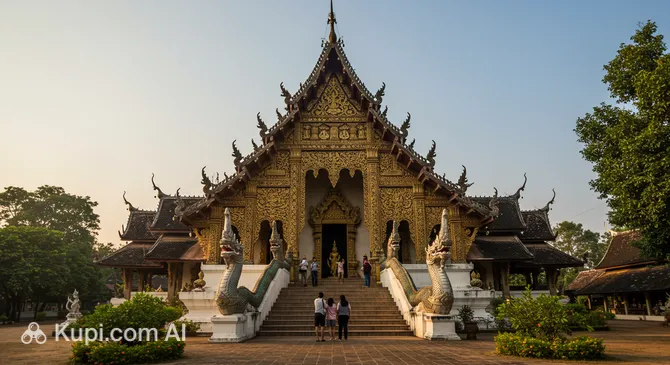
Wat Si Rongmuang
Wat Si Rongmuang. Иллюстрация. Источник: Kupi.com AI

The main architectural gem is the "Jong" wooden building, created by masters from Mandalay. Its facade and interior are decorated with intricate carvings, multi-colored glass inlays, and images of mythical creatures. The multi-tiered roof and carved columns highlight the influence of Shan culture and Burmese traditions, creating an atmosphere of exotic antiquity.

Inside the temple, you can see the revered Thep Than Chai Buddha image, carved from a single piece of teak. The site is popular not only with tourists but also with pilgrims who come here seeking peace of mind and inspiration in this "quiet corner" of history.

Contacts

To clarify information about visiting the attraction or finding its exact location, you can use the following details:

How to contactContact
Address7FRJ+268, 64 Thanon Wang Khwa, Tambon Sop Tui, Amphoe Mueang Lampang, Chang Wat Lampang 52100, Таиланд

What to Do

A walk through the grounds begins with exploring the facade of the main vihara, where you can spend hours admiring the mythical creatures and deities carved into the teak columns. Be sure to notice the stained glass—on sunny days, it creates a wonderful play of light inside the temple, which is worth capturing on camera.

Inside the temple, visitors often make requests to the statue of Thep Than Chai (Buddha in a belt), who, according to local beliefs, helps grant wishes quickly. You can also participate in a traditional offering ceremony or simply sit in silence, enjoying the scent of incense and the calm rhythm of temple life.

The surrounding garden with centuries-old trees is an ideal place for meditation and relaxation. While exploring the grounds, don't forget to look at the chedi and ubosot, which harmoniously combine elements of Lanna style and Burmese motifs, creating a unique cultural landscape.

Getting There

Finding this architectural masterpiece in Lampang is easy—it is located in the central Sop Tui district. The simplest and most authentic way to get there is to use a tuk-tuk or a colorful local songthaew taxi. If you are staying in the central part of the city, the temple grounds are well within walking distance.

For travelers arriving from Lampang Airport, a trip by taxi or rented scooter via Highway 1 will take about 30 minutes. For those coming from Chiang Mai, it is most convenient to use an intercity bus (travel time 1.5–2 hours) and then transfer to local transport upon arrival at the bus station.

Ближайший город: Lampang

History & Facts

Construction of this shrine began in 1900, thanks to the initiative and funding of Pho Tao Jong Tak Intha, an influential timber merchant of Shan descent. During that period, Lampang flourished as a center of the teak industry, and Burmese merchants often built temples as an act of spiritual gratitude. The main vihara took seven years to build by the best craftsmen brought specifically from Mandalay.

Interestingly, the complex was originally intended as a spiritual refuge in a sacred forest. According to the beliefs of the time, cutting down trees for industry required atonement to the forest deities. The construction of the temple became a symbolic gesture of reconciliation between man and nature.

By 1931, a large-scale restoration was carried out under the leadership of Sang To Rattanakamol. Today, the temple retains its historical appearance, standing as one of the few surviving examples of Burmese wooden architecture from the Lanna era to reach us in virtually its original form.

Time Needed

To leisurely admire the masterful wood carving, take memorable photos, and soak in the serene atmosphere, 1–2 hours is usually enough. This time is quite sufficient to see the main building and walk around the grounds.

If you plan to spend time in prayer or meditation under the shade of the trees, you should set aside about 3 hours. The compactness of the complex makes it easy to combine a visit here with other attractions in the city center.

Working Hours

The doors of the shrine are open to guests and parishioners daily from 06:00 to 18:00. The temple is open throughout the day without lunch breaks, allowing you to choose the most convenient time for a visit during daylight hours.

As special ceremonies may be held on Buddhist holidays, it is recommended to check official information resources or clarify the schedule with local guides before visiting.

06:00–18:00

Nearby

Exploring the temple's surroundings will allow you to dive deeper into the city's atmosphere and complement your cultural program with pleasant relaxation. Nearby are both historical sites and modern places for recreation and shopping.

NameDistance
Prasertsri Place0.6 km
Kelang Nakhon Public Park0.6 km
The Space Lampang0.7 km
Yang Dam (Chaloem Phra Kiat Overflow Weir)1 km
Lampang Clock Tower1.1 km
Fukujin Izakaya1.2 km
Wat Chiang Rai1.2 km

Reached the end of the page?

That means the route is fully explored