Support

Wat Wisunarat

About

Imagine a place where time seems to slow down, and every stone breathes history. Wat Wisunarat is the oldest active temple in Luang Prabang, serving as a true symbol of the spiritual resilience and architectural grace for which Laos is famous. Founded back in 1513, this monastery is striking for its unique appearance, where Laotian traditions are harmoniously intertwined with elements borrowed from the ancient Khmers and masters of Southern India.
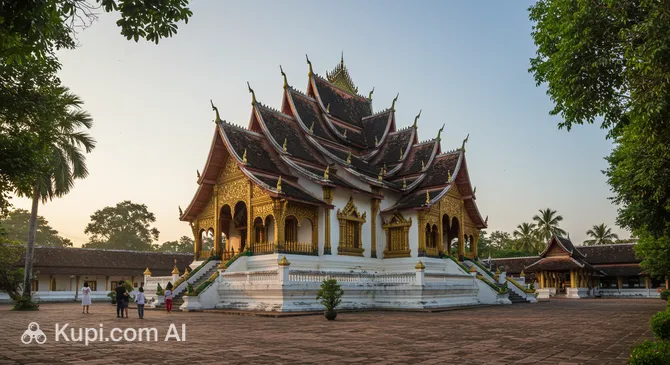
Wat Visounarat
Wat Visounarat. Иллюстрация. Источник: Kupi.com AI

The "highlight" of the complex is the famous That Makmo stupa, which locals affectionately call the "Watermelon Stupa" because of its unusual rounded shape. Inside the main hall, beneath high vaulted ceilings, an atmosphere of deep peace prevails. Here, you will see a unique collection of gilded wooden Buddha statues poised in the "calling for rain" mudra, and ancient stones from the 15th and 16th centuries that carefully preserve the memory of the Lan Xang kingdom's great past.

Surrounded by a quiet green landscape, Wat Wisunarat stands out with its distinctive wood carvings and characteristic roofs decorated with the tails of mythical nagas. It is not just a religious site, but a living open-air museum where you can touch the origins of Buddhist culture and enjoy the exquisite craftsmanship of ancient architects.

Contacts

For those planning a visit to Wat Wisunarat, it is helpful to have the exact coordinates of this historical site at hand. Although it is easy to navigate the ancient city, the address will help you find the entrance to the temple complex more quickly.

How to contactContact
AddressV4PQ+XF9, Луангпрабанг, Лаос

What to Do

A visit to this ancient monastery offers guests a rare opportunity to immerse themselves in the world of Buddhist aesthetics. Be sure to take the time to inspect the unique That Makmo stupa—its shape has no equivalent in the region and is considered one of the best backdrops for memorable photos. Pay attention to the roof of the main building, which is crowned with elegant figures of nagas guarding the peace of this sacred place.

Inside the temple, your attention will likely be drawn to the extensive collection of gilded Buddha statues. Many of them are crafted in rare poses specific to the Laotian school of sculpture. While walking through the hall, you can spend time admiring the details of the Khmer-style wood carvings and ancient inscriptions that tell stories of bygone times and royal offerings.

For those seeking solitude, the temple grounds are an excellent place for a quiet walk or meditation. To catch the most atmospheric part of the day, we recommend coming early in the morning. At this time, you can see monks in traditional orange robes and enjoy the tranquility in the soft light of the rising sun when there are still very few tourists.

Getting There

Finding Wat Wisunarat in Luang Prabang is quite easy, as it is located in the heart of the historical center. From the Mekong River embankment or the popular central streets, the temple is just a leisurely 10–15 minute walk. Such a walk allows you to better experience the slow pace of life in the ancient capital.

If you prefer transport, you can use local tuk-tuks (samlor) or rent a bicycle, which is a very popular way for tourists to get around. For those arriving from Luang Prabang Airport (LPQ), a taxi ride will take no more than 15 minutes. The temple is conveniently included in most walking tours of the UNESCO-protected Old Town.

For travelers using public transport, minivans (jumbos) that stop at the central bus station are a good option. From there, you can reach the monastery gates on foot in 5–10 minutes or hire a tuk-tuk to save your energy for exploring the site itself.

Ближайший город: Luang Prabang

History & Facts

The history of this sacred place dates back to the beginning of the 16th century. The temple was founded in 1513 by King Wisunarat, after whom it was named. In those times, Laos was the powerful kingdom of Lan Xang, and the monastery quickly became one of its primary spiritual centers. It was here that one of the country's most revered relics, the Phra Bang statue, was kept for a long time.

Initially, the structure was entirely made of wood, making it vulnerable to the elements. In the late 19th century, the building was severely damaged by a devastating fire, but it was carefully restored between 1896 and 1898. During the reconstruction, craftsmen used brick and plaster, striving to replicate the original architectural forms and decorative wooden elements as accurately as possible to maintain the continuity of generations.

Of particular historical value is the massive stone stupa, That Makmo, erected in 1503 at the initiative of the king's wife. Over five centuries, it has witnessed the flourishing and transformation of Laotian art. Today, the temple remains the oldest active monastery in the city, continuing the traditions established more than five hundred years ago by the rulers of Lan Xang.

Time Needed

To fully experience the tranquil atmosphere of the monastery and examine all the details, an average visitor will need about 1 to 2 hours. This is enough time to walk around the grounds, study the unique shape of the "Watermelon Stupa," and explore the collection of ancient statues inside the main hall.

If you are passionate about photography or enjoy meditative contemplation, it is worth setting aside a little more time for your visit. The morning hours, when the light falls softly on the carved nagas and gilded statues, are perfect for a slow immersion into the culture of this unique place.

Working Hours

The monastery doors are open to pilgrims and tourists daily, from Monday to Sunday. You can visit the sanctuary throughout the daylight hours: the temple is open from 08:00 to 17:00 with no lunch breaks.

As the schedule may change due to religious holidays or solemn ceremonies, it is advisable to check for current information via official resources or local guides before your visit.

08:00–17:00

Nearby

The monastery's location in the historical quarter allows tourists to easily combine their visit with other interesting sites. A walk around the area will reveal cozy restaurants, architectural monuments, and picturesque parks that complement the overall picture of the region's cultural heritage.

NameDistance
Utopia Bar & Restaurant0.2 km
Chabad House Luang Prabang0.3 km
Traditional Arts and Ethnology Centre0.4 km
Mount Phousi0.4 km
Le Bel Air Resort0.5 km
Luang Prabang Night Market0.5 km
Lost In Baan0.6 km

Reached the end of the page?

That means the route is fully explored