Support

Castle Of Van

About

Imagine a massive stone citadel rising majestically above the eastern shore of a legendary lake. Van Fortress is a grand historical structure located in the city of Van, a true gem of eastern Turkey. Built between the 9th and 7th centuries BCE by the masters of the ancient Kingdom of Urartu, this fortress is a remarkable example of rock-cut architecture and is currently on the UNESCO World Heritage Tentative List.
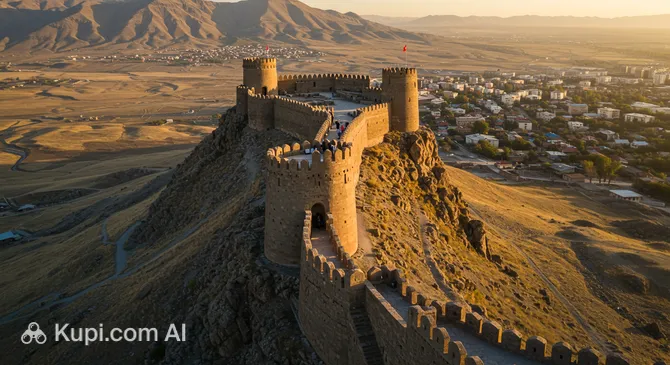
Van Castle
Van Castle. Иллюстрация. Источник: Kupi.com AI

The citadel sits on an impressive rocky hill about 100 meters high, stretching for almost one and a half kilometers. Its walls, built from giant basalt blocks at the base and mud brick at the top, served for centuries as a reliable defense for the capital, Tushpa. This site attracts travelers not only for its ancient history but also for its unique archaeological finds, including mysterious royal rock tombs and monumental cuneiform inscriptions.

Beyond its historical value, the fortress is one of the region's best viewpoints. It offers a breathtaking panoramic view of the blue expanse of the lake and the modern city, creating a striking contrast between deep antiquity and the present day.

Contacts

If you are planning a visit to this historical site, it is helpful to have current contact details. The fortress's official services and the regional culture department are always ready to assist tourists with necessary information. The table below provides the primary contact methods and the exact address of the attraction.

How to contactContact
AddressYalı, 65040 Merkez/İpekyolu/Van, Türkiye
Phone+90 432 223 11 11
Websitevan.ktb.gov.tr

What to Do

The main reason travelers come here is the opportunity to literally touch stones that are thousands of years old. Climb the gentle slope to the summit to explore ancient bastions and peer into the rock tombs of Urartian rulers like Argishti I. Don't miss the chance to see the famous "Meher Gate" and the steles with Assyrian cuneiform that celebrate the exploits of past kings.

Special attention should be paid to the Inscription of Xerxes the Great—it is the only Achaemenid-era monument of this scale located outside of Iran. The text, carved in three languages, remains in excellent condition. Photographers and landscape lovers will appreciate the panorama of Lake Van and the ruins of the Old City: from above, the ancient mosques and the foundations of Tushpa's residential quarters look like a living map from a history textbook.

If you are interested in archaeology, be sure to observe the ongoing excavations—new artifacts are often found here, shedding light on the life of the Urartian civilization. You can finish your walk with a picnic on the hillside in summer or a thoughtful exploration of the Anali-Kiz temple, soaking in the incredible energy of this "city in the rock."

Getting There

The attraction is conveniently located just 5 kilometers west of the modern city center. The easiest and fastest way to get here is by taxi, which takes about 10–15 minutes. For those who prefer local flavor and saving money, dolmuşes (shared minibuses) run regularly from the city bus station (Otogar), taking passengers directly to the foot of the fortress hill.

If you are arriving from Van Ferit Melen Airport, the drive takes about 30 minutes (a distance of approximately 20 km). The site's coordinates make it easy to set a route in your navigator, and there is a parking area at the visitor entrance.

For exploring the citadel itself, it is recommended to wear comfortable sports shoes, as the path to the summit follows sloping trails and ancient steps. Combining your trip with a visit to the adjacent Old City will make your itinerary even more fulfilling.

Ближайший город: Van

History & Facts

The history of this site dates back to antiquity, when the Urartian king Sarduri I laid the foundation of the citadel between 840 and 825 BCE. Van Fortress served as the heart of the great capital, Tushpa, and was designed to showcase the power and invincibility of the Kingdom of Urartu. For nearly three millennia, this strategic rock formation remained a key site for many empires, seeing a succession of Persians, Romans, Byzantines, Arabs, and Seljuks.

One of the most remarkable artifacts is the Inscription of Xerxes the Great, carved into the southern slope in the 5th century BCE. This unique trilingual text (in Old Persian, Elamite, and Babylonian) remains the only monumental Achaemenid inscription of its kind located outside the borders of modern-day Iran. It still impresses with its sharp lines and the preservation of the characters carved into the hard rock.

During the Ottoman era, starting from the 16th century, the fortress underwent significant changes. Under the leadership of renowned pashas, the walls were reinforced, and new defensive structures were built from rubble stone. At the same time, the Old City flourished at the foot of the hill with its unique mud-brick architecture, mosques, and churches, turning the site into an important administrative and cultural center of the empire. Today, Van is considered one of the oldest fortification monuments in the world, continuing to reveal its secrets through modern archaeological excavations.

Time Needed

To fully explore this majestic site, a typical visitor needs 2 to 3 hours. This is enough time to climb to the main bastions, view the ancient rock tombs, and study Xerxes' famous cuneiform in detail. You will also have time to take panoramic photos of the lake and rest while enjoying the bird's-eye views.

If you plan to supplement your tour with a walk through the ruins of the Old City and a visit to the mosques at its base, you should set aside about 4 hours or even half a day. Don't forget to factor in time for a leisurely descent and souvenir shopping to ensure your journey into the past is as comfortable and memorable as possible.

Working Hours

The historical complex welcomes guests daily. The fortress is open from Monday to Sunday, with a schedule that remains consistent throughout the week: 8:00 AM to 5:00 PM.

This schedule allows you to plan your visit for the early morning to avoid the midday heat, or for the late afternoon. However, it is recommended to arrive a couple of hours before closing to ensure you have time to see all the key sites before access to the grounds is restricted. Depending on the season, opening hours may vary slightly, so it is advisable to check with local guides before your trip.

8:00 – 17:00

Nearby

Exploring the surroundings of the fortress will allow you to immerse yourself deeper in the atmosphere of ancient civilizations and see rare monuments from different eras. Many interesting sites are within walking distance, making for a highly rewarding excursion.

NameDistance
Urartu Museum0.3 km
Van Museum of Archaeology and Ethnography0.4 km
Kurtuluş Park2.9 km
Kushane3.3 km
Van Menceli4.4 km
Niçe Cafe & Bar4.7 km
Hazrat Omar Mosque4.7 km

Reached the end of the page?

That means the route is fully explored