Support

Hanksville

About

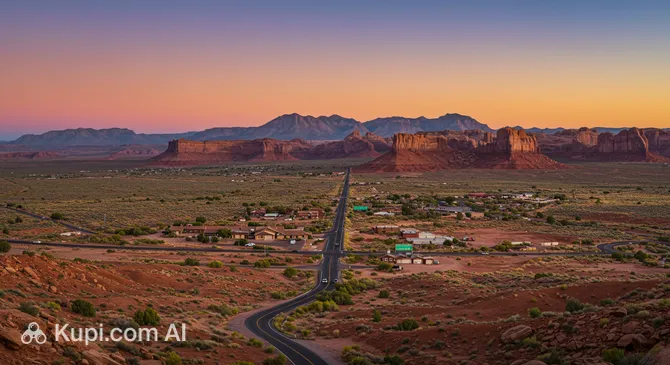
Hanksville is a small but surprisingly atmospheric settlement lost among the majestic desert landscapes of Utah. Despite its modest size, this town serves as a vital hub for travelers exploring the region's wilderness. Located in the USA, Hanksville attracts those seeking solitude and true adventure far from bustling metropolises, offering tourists a unique experience of immersion in the Wild West atmosphere.

Hanksville. Illustration.
Source: Kupi.com AI

The town is situated at the confluence of the Fremont River and Muddy Creek, surrounded by surreal canyons and plateaus. The climate here is typically desert: hot, dry summers give way to cool winters, creating special conditions for the local landscape's formation. Although the permanent population is only about 200 people, Hanksville's history is filled with the spirit of pioneers who managed to settle and build a life in these harsh but beautiful lands.

The main feature that has made the Hanksville area world-famous is the striking resemblance of its terrain to the surface of the Red Planet. Nearby is the famous Mars Desert Research Station (MDRS), where scientists simulate living conditions on Mars. Additionally, the town is an ideal starting point for trips to Capitol Reef National Park and Goblin Valley State Park, both known for their bizarre rock formations.

Hanksville is a place where time seems to slow down. If you dream of seeing alien landscapes without leaving Earth, or simply want to enjoy the silence of the desert under an endless starry sky, this colorful corner of Utah should definitely be on your travel itinerary.

Weather Overview

Hanksville's climate can be described as arid and desert-like, with pronounced seasonal contrasts. Expect hot summers with a scorching sun and cool, dry winters when nights become frosty. Precipitation is extremely rare here, so you likely won't need an umbrella, but sunscreen will be necessary for most of the year.

The heat peaks in July, when maximum daytime temperatures reach an average of 35.5°C. Winter brings a noticeable chill: in January and December, average figures hover around 0-1°C, and at night, the thermometer often drops to -4.6°C. Spring and autumn are considered the most pleasant times to visit: by May, the air warms up to a comfortable average of 18°C, and in October, it stays around 13°C.

Rain in this region is episodic; even in March, one of the "wettest" months, only about 5 days of precipitation are recorded. To pack your bags properly and choose the ideal dates for exploring the canyons, we recommend checking the detailed weather in Hanksville in advance.

Average monthly temperature

Average monthly precipitation

Interesting Facts

Hanksville is not just a quiet desert town, but a place full of amazing surprises and non-obvious historical details. Beneath its modest appearance lie unique sites and legends that not all travelers know about.

  • A gas station inside a rock. The local landmark "Hollow Mountain" is a unique gas station and convenience store literally carved into a massive sandstone monolith. Creating this structure in 1984 required over 100 cases of dynamite, and today visitors can see the raw stone walls right inside the shop.

  • A branch of Mars on Earth. The landscapes around the town so closely resemble the surface of the Red Planet that the Mars Desert Research Station (MDRS) was built here. In this complex, scientists and volunteers live in complete isolation, simulating the conditions of future space missions, and only go outside wearing spacesuits.

  • The "Wild Bunch" trail. In the late 19th century, Hanksville served as an important supply point for the legendary outlaw Butch Cassidy and his gang. The bandits often bought provisions here before disappearing into their impenetrable hideout, Robbers Roost, hidden in the labyrinth of nearby canyons.

  • A Jurassic-period graveyard. Just a few kilometers from town is the Hanksville-Burpee Quarry—one of the largest fossil sites in the USA. Here, in an ancient riverbed, paleontologists discovered thousands of dinosaur bones, including the remains of giant Diplodocus, Stegosaurus, and the predatory Allosaurus.

  • Life without lights. Due to its extreme remoteness, Hanksville remained cut off from the comforts of civilization for a surprisingly long time. Centralized electricity only reached local homes in 1960, making the history of settling this region even more impressive.

How to Get There

Hanksville is located in a secluded corner of Utah, far from bustling metropolises, so the journey here is already part of a true Wild West adventure. There is no direct air service to the town, and tourists usually have to fly into one of the regional transport hubs and then rent a car. You can study all ways to get to the town in more detail, but below we describe the most popular routes via the nearest airports.

The closest airport to Hanksville is Canyonlands Regional Airport (CNY), located in Moab. The distance to the center of Hanksville is about 95 km. This is a small regional airport accepting a limited number of flights, but it is the most convenient entry point for those wanting to minimize driving time. A car trip from here will take just over an hour.

A larger and more popular option is Grand Junction Regional Airport (GJT), located in the neighboring state of Colorado in the city of Grand Junction. The distance to Hanksville is approximately 207 km. This is a major regional transport hub with well-established connections. The drive in a rental car from here takes about 2–2.5 hours, passing through picturesque desert landscapes.

Alternatively, you can consider Provo Airport (PVU) in Provo, which is 222 km from Hanksville. This is the second busiest airport in Utah, offering more flight options. The drive from Provo takes about 2.5–3 hours. Given the region's remoteness, public transport is poorly developed, so renting a car at the arrival airport is practically a prerequisite for a comfortable trip.

For convenience, here is a summary of the main airports:

AirportPassenger trafficDistance
Canyonlands Field38 15195 km
Monument Valley2 000157 km
Page Airport16 500173 km
Grand Junction Regional Airport482 773207 km
Montezuma County Airport15 000219 km

Main Attractions

Hanksville serves as an ideal starting point for exploring some of the most unusual landscapes in the USA. The town's surroundings are a true open-air geological exhibition, where you can see surreal cliffs, colored hills, and narrow gorges. Below are the main attractions that bring travelers to this remote corner of Utah.

Goblin Valley State Park
Located north of the town, this valley is famous for thousands of bizarre sandstone formations resembling mushrooms or fairytale creatures—"goblins." The park's uniqueness lies in the fact that you can wander freely among the stone figures, exploring a labyrinth of erosion. This spot is particularly popular for family walks and photo sessions, as the soft sunset light gives the valley an especially mysterious look.

Little Wild Horse Canyon
One of the most famous slot canyons in the San Rafael Swell area. The route attracts tourists with its accessibility: no special equipment is required to complete it. The trail winds between high, smoothly curved walls of orange stone that, in some places, close in so tightly that you can touch both sides with your hands. This is a great opportunity to see a classic narrow canyon without extreme physical exertion.

Factory Butte
This massive, solitary monolith rises above the badlands, its outlines resembling a huge industrial building. Its ribbed slopes and the surrounding landscape of grey clay create a stark, almost lunar atmosphere. The location is immensely popular with landscape photographers and drone enthusiasts, while the adjacent Swing Arm City area attracts motocross fans.

Bentonite Hills
Located near the Mars Desert Research Station, these hills are striking in their color palette. The slopes are painted in alternating bands of red, purple, gray, and blue, creating a rainbow effect on the ground. Because of their "alien" appearance, this place is often compared to the surface of Mars. Keep in mind that the clay soil becomes very viscous when wet, so it is recommended to visit the hills only in dry weather.

Local Cuisine

Hanksville's culinary scene perfectly matches its spirit as a remote Wild West town. You won't find fine dining restaurants or exotic menus here; however, local establishments do an excellent job with their main task—providing travelers with a hearty and tasty meal after a long day exploring the canyons. The food here is simple, calorie-dense, and homey, representing classic American comfort food.

The main dish that is a must-try in Hanksville is burgers. Local diners are famous for their huge portions and juicy patties, often served with crispy onion rings. Don't forget to ask for the famous "fry sauce" with your french fries—a cult Utah condiment that is a special blend of ketchup, mayonnaise, and spices. Steaks and slow-cooked BBQ ribs are also frequently on the menu, perfect for meat lovers.

As for drinks, the town's signature treat is the thick milkshake. They are handmade, adding fresh fruit, chocolate, or nuts, and are so thick that they are often eaten with a spoon. It's the best way to cool down in the summer desert heat. Alcohol is available in local establishments, but the choice is usually limited to a few types of beer and wine, as the drinking culture here is reserved, characteristic of many small Utah towns.

The dining culture in Hanksville is as democratic and relaxed as it gets. There is no dress code: people typically walk into hotel and motel cafes and restaurants straight in their hiking gear and dusty boots. The main gathering spots are roadside diners and grill bars, where local farmers, geologists, and tourists from all over the world might sit at neighboring tables, discussing routes and sharing impressions of the valley's beauty.

Travel Tips

Traveling to Hanksville is an immersion into the wild beauty of Utah that requires careful preparation due to the region's remoteness and specific natural conditions. To ensure your trip goes smoothly and leaves only vivid impressions of its "Martian" landscapes, we have gathered several important practical recommendations.

  1. Clothing and Equipment. Desert weather is changeable: the sun can be scorching during the day, while temperatures drop sharply at night. Dress in layers (T-shirt, fleece, windbreaker) to adapt easily to changes. Be sure to bring comfortable trekking boots with good grip for walking on rocks and sand, as well as a wide-brimmed hat and sunglasses for UV protection.
  2. Transport. Public transport and taxi services (Uber, Lyft) are unavailable in Hanksville. Renting a car is the only solution; choosing a crossover or SUV with high ground clearance (4WD/AWD) is strongly recommended, as many roads to attractions are unpaved. Download offline maps in advance, as GPS signals often drop out.
  3. Finances. The official currency is the US Dollar (USA). A few local establishments (like the "Hollow Mountain" gas station or cafes) accept cards, but terminals can malfunction due to poor connection. Always carry a supply of cash (1, 5, 10, and 20 dollar bills) for tips and small expenses.
  4. Health and Safety. There are no pharmacies or hospitals in the town itself; the nearest medical help is over an hour away. Pack a comprehensive first-aid kit. The main threat is dehydration, so always have a water supply in your car—at least 4 liters per person per day, especially if you plan on hiking.
  5. Communication. The primary language is English. Be prepared for a "digital detox": mobile service is virtually non-existent outside the town itself. Wi-Fi is available in hotels and at gas stations, but speeds can be low. Inform your loved ones of your route in advance while you are still within network coverage.
  6. Local Etiquette. In small Utah communities, it is customary to greet strangers and be polite. But the main rule of etiquette here concerns nature: strictly follow the "Leave No Trace" principle. Pack out all your trash, do not build rock cairns, and do not leave inscriptions on the rocks.
  7. What to Avoid. Never enter narrow slot canyons if rain is in the forecast—the risk of flash floods is life-threatening, and water arrives instantly. Also, avoid walking on the dark, bumpy crust on the sand—this is "living" cryptobiotic soil, which takes decades to recover.
  8. Provisions. The choice of food and goods in Hanksville is extremely limited. We recommend stocking up on food, water, and all necessities at large supermarkets in neighboring towns (like Green River or Richfield) before entering this area, especially if you plan to cook for yourself.

Hanksville is a harsh but incredibly alluring land where civilization yields to the majesty of nature. By following these simple safety rules and respecting the laws of the desert, you can fully enjoy the cosmic panoramas and ringing silence of this unique corner of America.

Entertainment & Nightlife

Nightlife in Hanksville differs significantly from the conventional understanding of the word in big cities. Here, you won't find noisy nightclubs, DJ-led discos, or blocks of bars open until dawn. This is a town of about 200 people, where "nightlife" means a cozy dinner at a roadside diner, heartfelt conversations with fellow travelers, and contemplating one of the darkest and starchiest skies in the USA. The evening atmosphere here is permeated with desert tranquility and the spirit of the Old West.

The center of evening activity is the town's main street—Highway 24. This is where the primary establishments are located where you can spend time after sunset. The crowd in these venues is diverse: local farmers in cowboy hats might sit at neighboring tables with European tourists in trekking gear. There is no dress code—casual style or hiking equipment is perfectly appropriate here.

Since the choice of places is limited, every restaurant open in the evening becomes a point of attraction. Here are a couple of establishments worth visiting:

Duke's Slickrock Grill
Located at the Whispering Sands Motel, this place can be called the center of the town's social life. The interior is rustic, with plenty of wood, hunting trophies on the walls, and a fireplace creating a cozy atmosphere. Here, you can order a hearty steak, local burgers, and—importantly for Utah—beer or wine with dinner. It's the perfect place to relax after a hike and discuss routes with other travelers.

Stan's Burger Shak
A legendary spot that has been operating for many decades. Although it's more of a classic diner than a bar, it draws a crowd in the evenings. People come here for the famous milkshakes and huge portions of food. The atmosphere is highly democratic and nostalgic, reminiscent of the heyday of American road trips in the 1950s.

The main "night show" in Hanksville takes place outdoors rather than indoors. Thanks to its distance from large cities and lack of light pollution, the town's surroundings offer incredible conditions for stargazing. Just driving a couple of kilometers outside the lit streets will reveal the Milky Way in all its glory. Many tourists set up evening picnics or sit by campfires at campsites, enjoying the silence.

Practical Tips and Safety:

  • Opening Hours: Life in the town winds down early. Most establishments close at 8:00 PM or 9:00 PM, even during peak season. Plan your dinner in advance, or you risk going hungry.
  • Alcohol: Utah has strict alcohol laws. There are no standalone bars in Hanksville; alcohol is primarily served in restaurants when ordering food. Buying hard liquor at a shop here can be problematic, so it's better to take care of this in larger cities beforehand.
  • Safety: The town itself is perfectly safe for night walks; the crime rate is near zero. However, the main dangers are the darkness and wild animals. If you decide to walk or drive at night, be extremely careful: deer and coyotes often run onto the road. A flashlight is a must-have accessory.
  • Transport: There are no taxis or services like Uber here. You will have to get around on foot (the town is small) or in a rental car.

As for daytime entertainment, it takes on an educational and adventurous character in Hanksville. During daylight hours, tourists visit dinosaur excavation sites, such as the Hanksville-Burpee Quarry, or go on tours near the Mars Desert Research Station to see how scientists prepare for the colonization of other planets. The cultural program here is inextricably linked to the history of Earth and space.

Parks & Museums

In Hanksville itself and its surroundings, the concept of a "museum" takes on a special meaning. Here, history is not kept in glass display cases but under the open sky: in canyons, on old ranches, and in the workshops of folk craftsmen. The town and adjacent areas of the USA offer travelers a unique combination of geological wonders and monuments from the era of Wild West exploration.

Capitol Reef National Park
Hanksville serves as a convenient eastern gateway to this grand park. Besides natural beauty, it houses a true open-air history museum—the Fruita district. This is a former settlement of Mormon pioneers where time seems to have stood still at the end of the 19th century. Tourists can visit the perfectly preserved 1896 schoolhouse, peek into the historic Gifford Homestead, where fresh pastries made from old recipes are sold, and walk through the orchards planted by the first settlers. It's a rare chance to see how people lived in harmony with the harsh desert nature.

Wolverton Mill
This site is an outstanding example of early 20th-century engineering, located right on the grounds of the Bureau of Land Management (BLM) office in Hanksville. Built by gold prospector Edwin Wolverton, the mill is unique for its dual function: it was used simultaneously for sawing timber and crushing gold-bearing ore. The structure was carefully moved from the Henry Mountains and restored. Today, anyone can inspect this mechanism for free and appreciate the ingenuity of prospectors who worked with scarce resources.

Carl's Critter Garden
The most colorful cultural attraction right within the town limits. This is an eccentric gallery of folk art created by a local resident. Using old car parts, scrap metal, and agricultural tools, the artist populated his plot with fantastic creatures. Here you can see iron dinosaurs, giant insects, and caricature figures of cowboys. A walk through the garden is a fun immersion into modern American heartland folklore, which is especially popular with children and lovers of unusual photo sessions.

Hanksville-Burpee Dinosaur Quarry
For those interested in ancient history, a visit to this quarry will be a real adventure. This is an active paleontological dig site where scientists regularly find Jurassic-period remains. Unlike traditional museums, here you can see the process of extracting Diplodocus and Stegosaurus bones from the rock in real-time. During the summer season, the Burpee Museum of Natural History often conducts tours and educational programs here, allowing tourists to feel like real paleontologists.

Mars Desert Research Station (MDRS)
Although the station itself is a closed scientific facility where life on Mars is simulated, the surrounding area is of great interest as a geological park. The landscape here so closely resembles another planet that it can be considered a natural museum of planetary science. Travelers often drive along the dirt road to a permissible distance to see the futuristic white station modules against the backdrop of crimson hills. This place vividly demonstrates why Utah was chosen for space mission preparation.

Getting Around

Public transport as conventionally understood is completely absent in Hanksville. This tiny settlement of about 200 people, scattered along a highway, has no bus routes, let alone rail transport. It's vital for tourists to understand this at the planning stage: you will not be able to move around town or get to attractions without a personal vehicle.

There is no municipal fleet or shuttle taxis in town. The nearest intercity bus stops (e.g., Greyhound) are in major transport hubs hundreds of kilometers away (in Green River or Richfield). There is also no rail connection to Hanksville. Therefore, looking for flight schedules or transit maps here is pointless—all logistics fall onto the traveler's shoulders.

Since public transport does not function, the issue of passes, transport cards, or validators does not exist. You won't have to figure out payment zones or download local apps to buy tickets. The only transport costs you'll need to plan for are fuel for your vehicle. Note that gas prices in such remote locations are typically higher than the regional average.

Taxis and modern ridesharing services (Uber, Lyft) do not operate in Hanksville. It is impossible to call a car through an app because there are simply no drivers here. Attempting to hitchhike can also be an unreliable strategy due to low traffic. This is a critical point: if you arrive without your own car, you will be effectively stranded within one street.

The only real alternative for getting around is renting a car. This is an absolute necessity for any tourist in this region. It is strongly recommended to rent a car in advance at the arrival airport (Salt Lake City, Grand Junction, or Las Vegas). An SUV or crossover with high clearance is the best choice, as access to many natural attractions involves driving on dirt roads.

To move specifically within the residential area of Hanksville, you can use a bicycle if you brought one with you or rented it in another city (there are no bike rental points in Hanksville itself). The distances between motels, gas stations, and cafes are small and can be covered on foot while enjoying desert views, but walking is not suitable for full-scale exploration of the surroundings due to the vast distances.

Accommodation

The choice of accommodation in Hanksville, given its modest size and remoteness, is quite limited but possesses the special charm of the American heartland. Here, you won't find giant hotel chains or luxury five-star resorts. The bulk of the accommodation options consists of classic roadside motels, cozy guest cabins, and campgrounds, ideal for unpretentious travelers seeking a comfortable night's sleep after a busy day in the canyons.

The concept of "districts" in a town with one main street is quite relative. All available lodging options are concentrated along Highway 24. This is highly convenient for logistics: wherever you stay, a gas station, grocery store, and cafe will be within walking distance. Living here means being at a strategically advantageous point from which to head out to the national parks.

Places offering an atmosphere of full immersion in nature are particularly popular in this region. Hanksville and its surroundings have a well-developed infrastructure for road trippers: there are many RV parks with a full range of amenities. There are also "glamping" style options, such as stylized yurts or wagons, allowing you to spend the night in comfort amidst desert landscapes.

Booking Tips and Prices:

  • Book in advance. Since the number of rooms in town is measured in dozens rather than hundreds, accommodation sells out very quickly during peak seasons (spring and early autumn). It is recommended to start your search 2–3 months before your trip.
  • Price range. Generally, accommodation falls into the "budget" and "mid-range" categories. However, keep in mind that due to limited supply and remoteness from civilization, prices may be slightly higher than for similar motels in larger cities.
  • How to search. Most local motels are listed on major international booking platforms. Nevertheless, some small family-run guesthouses may not have online registration, so it sometimes makes sense to find their contact details on maps and call directly.

Nearby Cities

For those who want to explore the surrounding area, Hanksville serves as an excellent starting point for day trips to several interesting nearby locations:

Grand Junction. Located in the neighboring state of Colorado, this city is a major regional center known for its wineries and fruit orchards. It's a wonderful place for those wanting to trade harsh desert landscapes for green valleys, visit the Colorado National Monument, or simply enjoy urban comforts and shopping.

Provo. A large and dynamic city at the foot of the Wasatch Range. It attracts tourists with its museums, universities, and proximity to scenic Provo Canyon. You can find many options for cultural leisure and excellent restaurants here, making it suitable for a packed day trip.

Cedar City. Often called "Festival City," this town is famous for its theatrical and artistic events, including the renowned Utah Shakespeare Festival. Additionally, it serves as a gateway to high-altitude landscapes and offers coolness and greenery that contrast with the heat of Hanksville.

CityPopulationDistance
Moab5 300104 km
Manti3 300128 km
Price742136 km
Blanding4 122137 km
Wales152147 km

These nearby destinations provide a glimpse into the diverse culture and landscapes of the region.

Shopping & Souvenirs

Shopping in Hanksville is an experience that is radically different from visiting shopping centers in major cities. Given the tiny size of the town and its remoteness, you won't find fashion boutiques, outlets, or chain clothing stores here. Trade in this corner of Utah is entirely focused on the needs of travelers crossing the desert and on geology enthusiasts. The range of local shops is limited to essentials, tourist gear, and unique souvenirs created by nature itself.

Main Shopping Areas and Streets
All commercial life in Hanksville is concentrated along the main transport artery—Highway 24—and near its intersection with Highway 95. This is where the few shops, gas stations, and souvenir stands are located. Going "shopping" here is more like driving from one parking lot to another, as distances can be significant for pedestrians and sidewalks are practically non-existent.

Shopping Centers
There are no shopping centers, malls, or department stores in Hanksville or within a hundred-kilometer radius. If you need serious shopping for clothes, electronics, or branded items, it's best to do this in larger cities before arriving, such as Salt Lake City or Grand Junction. Local trade is strictly local and roadside in character.

Markets and Rock Shops
Instead of typical grocery or flea markets, Hanksville is famous for its Rock Shops. Since the region is rich in minerals, local enthusiasts open specialized retail points that often look like open-air museums. Here, in yards and on counters, samples of rock found in the surrounding deserts are displayed. These are the town's most colorful retail outlets, where you can chat with the owners and learn the history of each stone.

Souvenirs
In Hanksville, the choice of souvenirs is directly related to geology and the Wild West atmosphere. Here is what's worth bringing home as a keepsake:

  • Minerals and fossils. The most popular items are petrified wood samples, agates, geodes, and multi-colored pieces of sandstone. Some shops sell raw stones by weight.
  • Hollow Mountain merchandise. The famous Hollow Mountain gas station and shop sells branded t-shirts, caps, and mugs featuring its unique architecture.
  • Local products. In season, you can sometimes find homemade jams or honey produced on regional farms.

Hours of Operation and Payment
Shops in Hanksville typically operate from 8:00–9:00 AM to 6:00–8:00 PM. Gas stations with mini-marts may be open longer, but there are no 24-hour hypermarkets here. The official currency is the US Dollar (USA). While bank cards are accepted almost everywhere, it is highly recommended to carry a reserve of cash. Due to internet and communication outages in the desert, payment terminals may temporarily fail, and cash will be your only way to pay for water or gas.

Tax Free
In the United States, there is no federal VAT refund system (Tax Free) for tourists similar to the European one. Sales tax is added to the cost of the item at the checkout and is not refundable upon leaving the country. Sales tax in Utah varies, but there are no special procedures for its reimbursement for foreign guests in Hanksville shops.
Reached the end of the page?

That means the route is fully explored