Support

Kayenta

Attractions

About

Kayenta is a small but incredibly atmospheric town that serves as the main gateway to the legendary Wild West. Situated on a picturesque plateau in northeastern Arizona, this settlement looks as if it stepped right off the screens of classic Western movies. Geographically, it is located in the USA, surrounded by majestic cliffs and endless desert expanses that create a unique, breathtaking landscape.
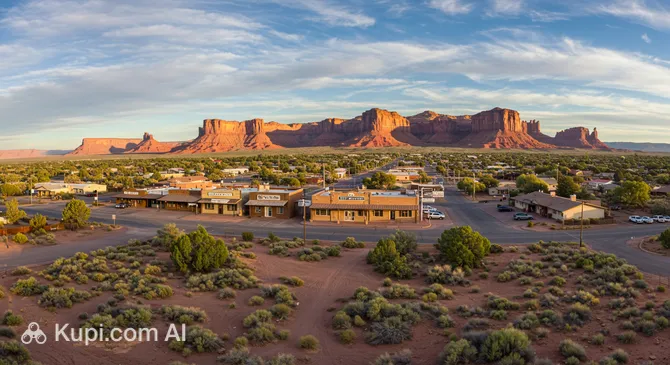
Kayenta. Illustration.
Source: Kupi.com AI

Despite its modest size and a population of about 5,000 people, Kayenta plays a vital role as the cultural and economic center of the Navajo Nation. This is where travelers can immerse themselves in an authentic atmosphere and discover the unique traditions of the local people. The rich history of Kayenta is inextricably linked with the heritage of indigenous peoples, whose culture and hospitality permeate every corner of this amazing place.

The main reason to visit the town is undoubtedly its proximity to the famous Monument Valley. Tourists from all over the world come here to see the fantastic red rocks with their own eyes, enjoy the ringing silence of the desert, and witness incredible sunsets that turn the sky into a picturesque canvas. Kayenta is an ideal starting point for photographers and adventurers dreaming of touching the rugged and eternal beauty of American nature.

Weather Overview

The climate in Kayenta is typical for the high-altitude desert of Arizona, characterized by hot summers, cool winters, and significant daily temperature fluctuations. The actual weather in Kayenta can change, but the general pattern remains stable year to year, making it easy to plan trips.

The summer months here are truly hot. The warmest period is July, with an average temperature of around 26.0°C and daytime highs reaching 32.5°C. June and August are also warm, and at the end of summer, the number of wet days increases slightly (up to 5 days per month), which can bring brief periods of freshness.

Winter in the town is cool and brisk. In January, the coldest month, the average temperature is just 0.2°C, and at night, the air cools down to -4.6°C. This period, as well as March, sees the highest number of days with precipitation (up to 6–8 days), though the total amount remains small. Spring and autumn offer the most comfortable conditions with moderate temperatures: for example, in April and October, average figures vary from 12°C to 13°C.

Expect hot, sunny summers and fairly cold winters with moderate cloud cover and rare precipitation.

Average monthly temperature

Average monthly precipitation

Interesting Facts

Beyond its famous landscapes and tourist routes, Kayenta holds many fascinating stories and cultural secrets. This town in the USA is not just a transit point, but a living encyclopedia of traditions and legends that reveal themselves only to curious travelers.

  • An Open-Air Hollywood Set. The surroundings of Kayenta, and especially the adjacent Monument Valley, have served as natural backdrops for dozens of iconic films. These landscapes shaped the image of the Wild West in world cinema: John Ford's classic Westerns were filmed here, as were the famous scenes from "Forrest Gump" that turned local roads into a pilgrimage site for movie buffs.

  • Talents of the Navajo Land. Many gifted artists, craftsmen, and storytellers live in Kayenta and are happy to share their creativity with guests. The town regularly hosts craft fairs and cultural events where you can not only see but also purchase unique handmade items—from traditional turquoise jewelry to ceramics and patterned textiles.

  • The Living Heart of the Navajo Language. The town is often called the "heart of the reservation" not just because of its geography. Kayenta is one of the few places where the ancient Navajo language (Diné) is not a museum piece but is actively used in daily life. Local residents carefully preserve their linguistic traditions, and you can easily hear the ancient speech in shops or on the streets.

  • Legends of Frozen Giants. According to local beliefs, the whimsical rock formations around the town are not just the result of erosion. In Navajo mythology, many rocks are considered petrified spirits or ancient warriors who possess special power and guard this land. Guides often say that every mountain has its own name and character, demanding respectful treatment.

How to Get There

Kayenta is a secluded town located among the desert landscapes of Arizona, and the journey here is an adventure in itself. Since the town is distant from major metropolises, travelers should plan their route in advance. You can find more about how to get to Kayenta by exploring various transport options, but the primary way to travel in this region remains the car.

Kayenta itself does not have an airport that accepts scheduled passenger flights. The nearest major hub is Flagstaff Pulliam Airport (FLG), located in the city of Flagstaff. It is approximately 218 km from Kayenta. This is a popular choice for tourists heading to the Grand Canyon and Northern Arizona. The journey from the airport by taxi or bus can take about 5 hours and 45 minutes, but renting a car will significantly reduce this time.

An alternative option is Durango-La Plata County Airport (DRO), located in Durango, Colorado. The distance to Kayenta is about 228 km. This airport is convenient for those traveling from the Rocky Mountains. Travel time by ground transport is approximately 6 hours. It is also worth mentioning Montezuma County Airport (CEZ) in Cortez. This is the closest airport to Kayenta (about 158 km), but it handles fewer flights. A transfer from here takes about 4 hours and 15 minutes.

For convenience, here is a summary of the main airports:

AirportPassenger trafficDistance
Monument Valley2 00032 km
Page Airport16 500109 km
Montezuma County Airport15 000158 km
Four Corners Regional Airport27 000181 km
Grand Canyon National Park Airport75 000190 km

There is no direct rail service to Kayenta. The nearest major Amtrak station is in Flagstaff, where the Southwest Chief train, running between Chicago and Los Angeles, stops. From the station in Flagstaff, tourists need to transfer to a rental car or use infrequent bus services to cover the remaining 200-plus kilometers to Kayenta.

Given the limitations of public transport, most travelers prefer to reach Kayenta by car via the scenic Highway US-163. This allows you to enjoy the famous views of Monument Valley even as you approach the town and provides freedom of movement throughout the region.

Main Attractions

Kayenta's main attractions were created by nature itself. This town in the USA is surrounded by fantastic geological formations that have inspired indigenous people and travelers for centuries. While many tourists view the town only as a transit point, there are several iconic spots here worth seeing for yourself.

One of the most impressive natural landmarks near the town is Agathla Peak, also known as "El Capitan." This majestic volcanic rock rises more than 450 meters above the surrounding plain north of Kayenta. The peak is considered sacred by the Navajo people and is a breathtaking sight, especially in the rays of the setting sun. It is an ideal spot for photographers wanting to capture the rugged beauty of the Arizona desert.

Another recognizable geological monument is Church Rock. This volcanic remnant got its name due to its resemblance to a church spire or bell tower. The rock is located near Highway US-160 and is clearly visible from the road. Several hiking trails lead to it, allowing you to get closer and appreciate the scale of this natural monument, which has served as a landmark for travelers for centuries.

In the very center of town is a unique historical attraction—the Navajo Code Talkers Exhibit. Despite its unusual location (the display is inside a local fast-food restaurant), this place holds immense cultural value. It houses memorabilia, photographs, and documents telling the story of the legendary Navajo Marines whose complex language was used to create an unbreakable code during World War II.

While Monument Valley is technically a separate park, it is inextricably linked with Kayenta. The town serves as the best vantage point for those who want to see the famous silhouettes of the "Mittens" and other mesas on the horizon. Many travelers stop on the outskirts of town simply to admire the panorama that has become a symbol of the Wild West.

Local Cuisine

Kayenta's culinary scene is a unique opportunity to immerse yourself in the culture of the indigenous people through flavors and aromas. In this town in the USA, you won't find refined haute cuisine restaurants, but you can enjoy hearty, simple, and incredibly tasty dishes prepared according to recipes passed down through generations.

The absolute king of the local table is Navajo fry bread. This is a fluffy, golden piece of dough fried in oil until crispy. It is served in two variations: as a dessert—drizzled with honey and sprinkled with powdered sugar—or as a base for savory dishes. Trying this bread is a must for any tourist, as it has long been a true gastronomic symbol of the region.

Perhaps the most famous local dish, the Navajo Taco, is built on fry bread. Forget the usual small corn tortillas: here, the toppings are piled right onto a large piece of hot fry bread. It's usually topped with ground meat, beans, fresh vegetables, cheese, and, of course, green chili peppers. This dish is so filling that one portion is more than enough to satisfy your hunger after a long walk through the canyons.

In addition to baked goods, local restaurants and cafes offer warming soups and stews. Mutton stew with vegetables is particularly popular, as are various dishes made from corn and beans—key ingredients in the Navajo diet. Food here is always served in large, home-style portions, emphasizing traditions of hospitality.

When it comes to drinks, it's important to remember the strict rules. Kayenta is located on reservation land where prohibition is in effect. This means alcohol is not sold in shops or restaurants. Instead of wine or beer with your meal, you'll be offered traditional herbal tea (Navajo tea), strong coffee, or sweet soft drinks. This is a great excuse to clear your palate and focus on the flavor of the food itself.

For those who want to do more than just eat, but also learn about local products, it's worth visiting the farmers' markets. Here, residents sell homegrown vegetables, fruits, and homemade preserves—jams and unique spices. If you're lucky, you might catch one of the food festivals that periodically take place in town. These are vibrant events with live music where you can not only taste the best treats but also participate in workshops on preparing traditional dishes.

Travel Tips

Preparing for a trip to Kayenta requires attention to detail, as this town in the USA lives by the special laws of the high-altitude desert and the traditions of the Navajo people. By following these simple recommendations, you can avoid awkward situations and make your journey as comfortable and safe as possible.

  1. Clothing and Gear. The climate here is desert, so the best clothing principle is layering. It can be hot during the day, but temperatures drop sharply after sunset, so even in summer, be sure to bring a fleece or windbreaker. Footwear should be closed-toe, comfortable, and have non-slip soles, as the terrain is rocky and dusty. Don't forget a wide-brimmed hat and sunglasses—the sun here is very intense.
  2. Transport and Getting Around. There is no public transport, subway, or reliable taxi services like Uber in Kayenta. The only way to get around comfortably is with a rental car. It is recommended to choose a car with high ground clearance (an SUV or crossover) if you plan to drive off paved roads. Always monitor your fuel level: distances between gas stations can be significant.
  3. Finances and Cash. The official currency is the US Dollar. Supermarkets, hotels, and gas stations accept cards, but you will definitely need cash in small bills. They are necessary for buying souvenirs from roadside vendors, paying entrance fees to some parks, or tipping guides. ATMs are available but few. Tipping in restaurants is welcomed at 15–20% of the bill.
  4. Health and Safety. The main health threat here is dehydration. Always carry a supply of drinking water at a rate of 2–3 liters per person per day. Pharmacies at the clinic (Kayenta Health Center) have limited hours and stock, so it's better to assemble a personal first-aid kit in advance. Be extremely careful when driving at dusk and night: horses, cows, and wild animals often wander onto unlit roads.
  5. Communication and Navigation. Mobile service in the town and surroundings can be unstable, and coverage is not available everywhere. Wi-Fi is usually only available in hotels and some cafes. We strongly recommend downloading offline maps of the region to your smartphone beforehand. The main language of communication is English, but many locals speak Navajo among themselves.
  6. Local Etiquette. The Navajo are hospitable but reserved people. A greeting of "Ya'at'teeh" will bring a smile and build rapport. Critically important: always ask for permission before photographing local residents, their homes, or ceremonies. Taking photos without asking is considered rude and an invasion of personal space.
  7. Strict Ban on Alcohol. Kayenta is located on reservation land where "prohibition" is in effect. Bringing in, selling, or consuming alcoholic beverages is strictly prohibited. Do not try to bring alcohol with you or ask for it in restaurants—this can lead to serious legal problems and fines.
  8. Time Differences. Pay attention to the clock. Unlike the rest of Arizona, which does not observe Daylight Saving Time, the Navajo Nation territory (including Kayenta) observes Daylight Saving Time (DST). This means that during the summer, the time in town may be an hour different from the time in Phoenix or at the Grand Canyon.

Observing these simple rules shows respect for the local culture and allows you to enjoy the majestic beauty of Arizona without unnecessary worries. Kayenta reveals its secrets to those who come with an open heart and a willingness to embrace its slow pace of life.

Entertainment & Nightlife

If you are looking for loud nightclubs, cocktail bars, or discos until dawn, Kayenta is not quite that place. It is important to understand the specifics of this region: the town is located on the territory of the Navajo Nation, where strict prohibition is in effect. This means that the sale and consumption of alcohol are completely prohibited here. You won't find any bars or liquor stores in town, and restaurants do not serve alcoholic beverages. The nightlife here has a completely different, calm, and contemplative character, perfect for relaxing after an eventful day.

Evening entertainment in Kayenta centers around good food and socializing. Local restaurants become hubs where tourists share their impressions. One of the most popular spots is Amigo Cafe, which has a friendly atmosphere and a menu offering an excellent mix of Mexican and traditional Navajo cuisine. Another well-known establishment is the Blue Coffee Pot Restaurant, famous for its hearty portions and authentic fry bread. Most places close quite early, around 9:00 PM – 10:00 PM, as life in the town follows the rhythm of sunrises and sunsets.

The main "night show" in Kayenta is put on by nature itself. Thanks to its distance from major metropolises and minimal light pollution, this region is one of the best places in the USA for stargazing. Simply stepping outside or driving a short distance from your hotel will reveal the incredibly bright Milky Way. Many tourists specifically plan evening photo sessions to capture the silhouettes of the rocks against the starry sky. The silence of the desert at night creates a mystical and fascinating atmosphere.

In terms of safety, Kayenta is a quiet place, but there are a few nuances to consider. Street lighting is minimal (to avoid interfering with the stars), so it's best to carry a flashlight for evening walks. It is recommended to stay within your hotel grounds or lit areas near restaurants. If you are driving at night, be extremely careful: livestock (horses, sheep) or wild animals often wander onto the roads and are difficult to see in the dark. Calling a taxi at night can be problematic, so it's best to rely on your own car or stay within walking distance.

The daytime program in Kayenta and its surroundings is just as busy. Travelers visit open-air museums, explore the trails of Monument Valley, and learn about history at the Navajo Cultural Center. The contrast between active daytime canyon exploration and quiet, starry evenings makes a trip here truly harmonious and unforgettable.

Parks & Museums

The cultural and natural landscape of Kayenta differs significantly from typical tourist centers. In this corner of the USA, you won't find classic city squares with manicured lawns or massive museum complexes. Instead, the town offers travelers grand open-air natural parks and intimate but incredibly significant exhibits telling the story of the Navajo heritage.

The undisputed highlight of the region is the Monument Valley Navajo Tribal Park. Although it is technically located on the state line, Kayenta serves as the main gateway to this natural wonder. This is not just a park, but sacred land with alien-like landscapes of red sandstone. Tourists come here to drive the 17-mile loop road among majestic mesas known as "buttes" and see the famous "Mittens." This place is fascinating because it allows you to feel the scale of the wilderness and the grandeur of Earth's geological history.

Another important natural area is the surroundings of Agathla Peak. This territory, located north of town, is an impressive example of a volcanic landscape. While there are no developed pathways here, the spot attracts hiking enthusiasts and photographers. The majestic black peak rising above the desert creates a dramatic contrast with the red sands and is an excellent spot for watching wildlife and birds in their natural habitat.

Among the town's museums, the most unusual and visited site is the Navajo Code Talkers Display. The uniqueness of this museum lies in its location—it is situated right inside the local Burger King restaurant. Despite the modest setting, the exhibit holds great historical value. It features uniforms, photographs, radio equipment, and documents telling the story of the Navajo Indians' feat, whose language was used to create an unbreakable code during World War II. This place is a must-visit for anyone interested in military history and cryptography.

To learn about the daily life of indigenous people, visit the Navajo Shadehouse Museum. Located near one of the town's hotels, it is a reconstruction of traditional dwellings. Here you can see hogans (traditional Navajo houses made of logs and earth), bread ovens, and weaving looms. This small complex allows tourists to visualize how the ancestors of modern Navajo lived and understand their deep connection to the land and nature.

Kayenta's historic Trading Posts serve as unique art galleries. These establishments, which have existed for decades, function as both shops and exhibition spaces. They house the best examples of applied art from local masters: intricate handmade rugs, elegant pottery, and turquoise jewelry. Visiting a trading post provides a chance to see the living art of the region, which isn't gathering dust behind glass but continues to evolve.

Insider tip: If you want to see the non-touristy side of town life, look out for the local flea markets that often spring up along the main roads on weekends. These are not official museums, but this is where you can find rare vintage items, chat with locals, and hear stories you won't find in guidebooks.

Getting Around

The public transport system in Kayenta has its own unique characteristics due to the town's size and its location in a sparsely populated desert area. Tourists should be aware that the standard urban network of subways, trams, or frequently running city buses does not exist here. The town is primarily oriented toward motorists.

The only form of regular public transport passing through town is the Navajo Transit System. This is a regional bus network connecting various settlements across the Navajo Nation. However, these buses are intended more for intercity travel (for example, to Tuba City or Window Rock) than for moving within Kayenta itself. Trips run according to a schedule that can change, and they do not run very frequently—usually a few times a day on weekdays.

The payment system on Navajo Transit buses is simple and traditional. Electronic passes, contactless cards, or mobile apps are not used here. Payment is made in cash to the driver upon boarding. Fares are very affordable and vary depending on the route, but tourists are strongly advised to carry small bills ($1, $5, $10) and coins, as the driver may not have change for large denominations.

Given the lack of inner-city transport, the main alternative for tourists is renting a car. This is not just a recommendation but practically a necessity for a comfortable trip through the region. Without your own car, getting to attractions, shops, or restaurants will be extremely difficult. There are few rental offices in the town itself, so it is better to rent a car in advance at a major arrival airport.

As for modern taxi and rideshare services (such as Uber or Lyft), you should not count on them in Kayenta. Due to the remote location and mobile network coverage issues, drivers are usually not available in the apps. There are local private carriers, but their services must be booked in advance by phone, numbers for which can be found at your hotel reception.

Walking is possible in the central part of town, where some shops and cafes are concentrated, but due to the long distances between facilities and the hot climate, it is not always convenient. There is no cycling infrastructure (lanes, city rentals), although traveling by bike along road shoulders is permissible if safety precautions are followed.

A practical tip for travelers: treat Kayenta as a car hub. Plan your movements independently, always keep an eye on the fuel level in the tank, and download offline maps to your smartphone, as you won't need public transport navigation here.

Accommodation

When planning a stay in Kayenta, it's important to remember that it is a small desert transit town rather than a classic resort. The choice of accommodation here is quite limited and consists mainly of mid-range hotels, motels, and roadside inns. You won't find luxury five-star complexes or boutique hotels with designer interiors here. The focus is on functionality, cleanliness, and convenience for travelers needing rest before visiting Monument Valley.

The geography of accommodation in the town is very simple. Practically all hotels are concentrated along the main transport arteries—Highways US-160 and US-163. This location is ideal for road trippers: you won't have to wander through local streets looking for a place to stay, and heading out to the sights in the morning takes just minutes. Living here is convenient specifically due to the logistics: shops, gas stations, and the few restaurants are within walking distance or a couple of minutes' drive from any hotel.

The town features well-known American hotel chains, ensuring a familiar standard of quality, as well as independent hotels managed by local residents. Rooms are usually spacious, decorated in a Southwestern style, and equipped with everything necessary: air conditioning (crucial in the desert), Wi-Fi, and parking. Many hotels offer breakfast, which is very convenient given the small number of cafes open in the morning.

Booking Tip: Due to its proximity to the world-famous Monument Valley, demand for accommodation in Kayenta is huge, especially during the high season (May to October). Hotels are often fully booked. It is strongly recommended to book your room 2–3 months in advance. Trying to find a vacancy on the day of arrival in summer may result in failure or the need to drive a hundred kilometers to the next town.

The price range in Kayenta can be described as mid-range to above average. Due to limited supply and high tourist flow, prices here are often higher than for similar-level hotels in larger cities. It is best to book through major online aggregators or directly on hotel websites. And don't forget the local specialty: you won't find alcohol even in your room's mini-bar due to the "dry law" in effect on the reservation.

Nearby Cities

For those who want to explore the surrounding area, Kayenta serves as an excellent starting point for day trips to several interesting nearby locations:

CityPopulationDistance
Monument Valley15430 km
Polacca800100 km
Page7 800109 km
Tuba City8 748110 km
Blanding4 122121 km

Each of these destinations offers its own unique experience to complement your Arizona journey:

Flagstaff is the largest city on the list, surrounded by the world's largest ponderosa pine forest. It is a lively university center with a historic downtown through which the famous Route 66 passes. Here you can visit the Lowell Observatory, where Pluto was discovered, or enjoy the cool mountain climate, which contrasts sharply with the desert around Kayenta.

Durango, located in Colorado, transports travelers to the atmosphere of the true Wild West and gold prospectors. The city is famous for its historic narrow-gauge railroad, where steam locomotives still run through picturesque gorges. It is an ideal place for history buffs and outdoor enthusiasts.

Winslow attracts fans of nostalgia for the "Mother Road"—Route 66. The city is known for "Standin' on the Corner Park," dedicated to the Eagles' hit song, and the historic La Posada Hotel, considered a masterpiece of Southwestern architecture. It is a cozy place for a short stop to immerse yourself in American pop culture of the last century.

These nearby destinations provide a great overview of the region's diverse culture and landscapes.

Shopping & Souvenirs

Shopping in Kayenta is a unique experience that has little in common with visiting standard malls or boutiques. In this small town in the USA, you won't find high-fashion stores or large department store chains. Commerce here is focused on two main goals: providing essentials for locals and travelers and selling authentic handmade items created by Navajo artisans. It is the perfect place to find true treasures of Indian culture rather than mass-produced goods.

The town's commercial life is centered along the main transport arteries—Highways US-160 and US-163. It is at the intersection of these roads and along them that you will find the main shops, gas stations with mini-marts, and souvenir stalls. This linear layout is convenient for road trippers: almost any shop can be spotted right from your car window as you drive through town on your way to Monument Valley.

There are no large shopping complexes in the metropolitan sense. The main shopping hub is the Kayenta Retail Center. This is a small open-air shopping area where the town's only large supermarket, a hardware store, a laundry, and several fast-food outlets are located. It's worth stopping here if you need to restock food and water, or buy hiking gear or camping supplies before heading into the desert.

The most interesting part of shopping in Kayenta is the roadside markets and trading posts. Along the roads, you will often find temporary kiosks and tables where local craftsmen sell their work. These are a kind of spontaneous flea market where you can buy items directly from the creators, bypassing middlemen. You should also pay attention to the souvenir shops at hotels and gas stations—you can often find unexpectedly high-quality items selected by the owners with great taste.

As souvenirs from Kayenta, it is worth bringing back items that reflect the rich Navajo heritage. First and foremost, this means silver jewelry with turquoise—the region's signature craft. Pay attention to the quality of the stones and the fineness of the work. Another valuable purchase would be handmade Navajo rugs with traditional geometric patterns; creating one such rug can take months. Pottery, dreamcatchers, dolls, and local spices are also popular. Buying these items is a direct contribution to supporting the local community.

Shops in town usually operate from 8:00–9:00 AM to 8:00–9:00 PM. The large supermarket may stay open longer, but small souvenir stalls often close at sunset. Regarding payment, supermarkets, gas stations, and official shops accept credit cards without issues. However, if you plan to buy souvenirs from roadside vendors or at small markets, be sure to carry cash (US dollars), as private artisans often do not have terminals.

There is no Tax Free system (VAT refund) in the US at the federal level, and Kayenta is no exception. Tourists pay the full price of goods, including applicable local sales taxes. On Navajo Nation territory, their own tax rates apply, which may differ from state rates, but there is no mechanism for foreign guests to reclaim these funds.

Reached the end of the page?

That means the route is fully explored