Support

Everglades & Francis S. Taylor Wildlife Management Area - WCA 3B

About

You can immerse yourself in Florida's pristine nature at one of the region's largest wildlife areas — the Everglades and Francis S. Taylor Wildlife Management Area (WCA 3B). This colossal territory, covering over 271,000 hectares, is an integral part of the famous Everglades ecosystem and is located in close proximity to Miami. Unlike typical parks, this is a wild expanse of freshwater marshes and wet prairies, crisscrossed by a complex system of canals and levees.
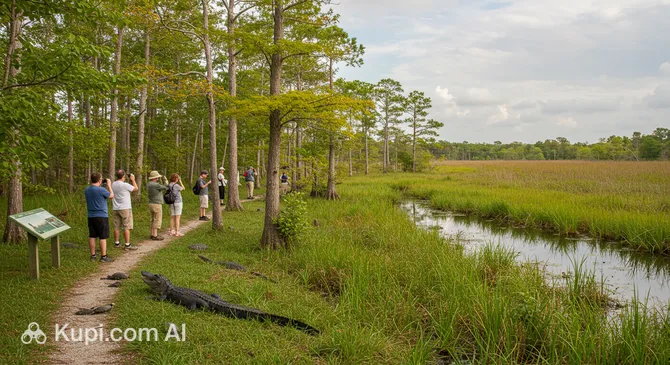
Everglades and Francis S. Taylor Wildlife Management Area (WCA 3B)
Everglades and Francis S. Taylor Wildlife Management Area (WCA 3B). Иллюстрация. Источник: Kupi.com AI

The reserve is managed by the Florida Fish and Wildlife Conservation Commission (FWC) and serves not only as a home to hundreds of animal species but also as a critical water reservoir for the entire USA. There are no typical enclosures here — this is true wilderness, where alligators, rare birds, and unique plants coexist in their natural environment. Visitors are drawn here by the chance to see the authentic landscapes of the "River of Grass," which have remained unchanged for centuries.

The WCA 3B territory plays a key role in regulating South Florida's water flow, protecting communities from flooding. For tourists, this place becomes a gateway to an amazing world where, instead of city noise, you hear only the cries of herons and the rustle of tall grass in the wind.

Contacts

To check current information regarding visiting rules and seasonal changes in the reserve's operation, you can use the following contact details:

How to contactContact
AddressФлорида, США
Phone+1 561-625-5122
Websitemyfwc.com

What to Do

The primary activity in the reserve is wildlife watching. From observation towers and along driveable levees, you can spot diverse fauna: from majestic Great White Herons and eagles to the famous Florida alligators. The Snail Kites are particularly impressive as they soar over freshwater pools in search of prey. Photographers will find endless inspiration thanks to the play of light on the water and the vast horizons.

For those seeking more active experiences, airboat tours are available. This is the only way to penetrate deep into the marshes and see the inner prairies that are inaccessible to hikers. Gliding over the water at high speeds, combined with guides' stories about the local ecosystem, provides a fresh perspective on this unique place.

Those who prefer a more relaxed pace can enjoy a picnic in specially equipped areas, such as the one at mile marker 35 on I-75. Information panels are also installed here, explaining the reserve's hydrological connection with the neighboring Big Cypress National Preserve. Anglers will appreciate the convenient boat ramps, allowing them to search for the best fishing spots within the labyrinth of canals.

Getting There

The reserve is located west of Miami. Given the vast size of the territory, the most convenient way to get here is by car, as public transportation to the boundaries of the protected area is virtually non-existent. The main routes are via I-75 (Alligator Alley), US 41 (Tamiami Trail), or US 27. The drive from the city center takes approximately 40–60 minutes depending on the chosen entry point.

For those planning a standard visit, it is recommended to head to mile marker 35 on I-75, where a well-maintained recreation area is located. If you prefer taking a taxi, be prepared for potential difficulties when calling for a return ride due to the remote location; it is better to arrange this with the driver in advance or rent a car for the entire day.

The interior regions of the reserve remain inaccessible to regular cars — you can only explore them by airboats or special swamp buggies accompanied by licensed operators, whose bases are located along the main highways.

Ближайший город: Miami

History & Facts

The history of this territory is closely linked to a massive project to protect Florida from flooding. In 1948, the US Congress approved a plan to build a system of canals and levees, which began in 1949 and was completed by 1962. This was when the Water Conservation Areas were established, including WCA 3B, which became a vital buffer between the wilderness and the growing cities of the East Coast.

The Miccosukee Indian Tribe plays a special role in the history of the reserve. In 1961, the tribe received federal recognition and, with it, the right to a perpetual lease of a significant portion of these lands. For the indigenous people, the Everglades is not just a protected zone, but a place for preserving traditions, performing rituals, and engaging in traditional practices such as fishing.

An important milestone in preserving the ecosystem was the "Everglades Forever Act," passed in 1994. It launched large-scale restoration efforts for water quality and the natural flow cycle, which had been disrupted by the construction of I-75 and US 41. Today, the Everglades and Francis S. Taylor Wildlife Management Area is the result of a complex compromise between human engineering and the needs of the wild.

Time Needed

When planning your visit, consider the type of recreation you prefer. For a brief introduction to the ecosystem, including a stop at an observation deck, a short walk along the levee, and a picnic, 3–5 hours will be sufficient.

If your plans include a full airboat tour, deep exploration of remote marsh areas, or fishing, it is best to set aside a full day. Factor in travel time from Miami and back so you can enjoy the silence and unique landscapes of the "River of Grass" without rushing.

Working Hours

The Everglades and Francis S. Taylor Wildlife Management Area is open to visitors daily. The primary operating hours are from sunrise to sunset, allowing tourists to catch the most beautiful times for birdwatching and photography.

Before your trip, it is recommended to check the official Florida Fish and Wildlife Conservation Commission website, as access to certain areas may be temporarily restricted during seasonal hunting periods or conservation activities.

Nearby

A visit to the reserve can be complemented by exploring other interesting locations nearby. Here you will find places for active family recreation as well as specialized farms that reveal Florida's nature from a new perspective.

NameDistance
Miccosukee Casino & Resort13.9 km
FIU Arena20.9 km
Patricia and Phillip Frost Art Museum21.7 km
Neighborhood Fish Farm22.6 km
Urban Air Trampoline and Adventure Park23.4 km
Pembroke Gardens24.6 km
Strictly Fish & Corals26.3 km

Reached the end of the page?

That means the route is fully explored