Support

New Bedford Whaling Museum

About

The New Bedford Whaling Museum is a unique historical space located in the heart of New Bedford in the USA. The museum occupies a former 19th-century candle factory that was once a center for processing spermaceti oil. This site serves as a true time capsule, carefully preserving the memory of the golden age of whaling and its colossal impact on the region's development.
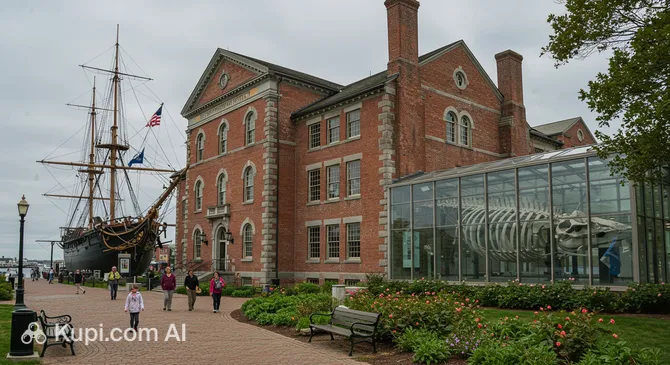
New Bedford Whaling Museum. Source: Kupi.com AI

The museum's collection is impressive in its scale, featuring over 200,000 items, ranging from authentic ship logs and maps to the personal belongings of sailors. Visitors can immerse themselves in the atmosphere of perilous sea expeditions and learn about the tragedies and triumphs that accompanied this harsh profession. The museum is managed by the Old Dartmouth Historical Society, founded in 1903.

Today, it is one of the most significant centers for studying American maritime history. Here, legends that inspired classics of world literature come to life, and the architecture of the building itself recalls the times when New Bedford was considered the whaling capital of the world.

Contacts

To plan your visit to the New Bedford Whaling Museum, it is helpful to review the contact information in advance. Official representatives of the institution are always ready to answer visitor inquiries by phone or through digital resources. Below are the key details to help you easily locate the museum and reach its administration.

Address 18 Johnny Cake Hill, New Bedford, MA 02740, USA
Phone +1 508-997-0046
Website whalingmuseum.org
Google Maps Open Map

What to Do

Inside the museum, guests will find many fascinating objects, including a 14-meter sperm whale skeleton. This impressive sight allows you to fully appreciate the majesty of these sea giants. Equally interesting is the massive Fresnel lens, taken from a mid-19th-century lighthouse, which once guided sailors through dense fog.

Strolling through the second-floor galleries, visitors can closely examine bone exhibits and collections of ship models. Special attention should be given to the whaleboats—light boats used for hunting. The museum also houses a unique vintage press and parts of a city clock from 1881, serving as a reminder of the city's industrial heyday.

For lovers of literature and history, there are exhibits dedicated to the legendary ship Essex. You can see the personal belongings of the crew, navigation charts, and the memoirs of cabin boy Thomas Nickerson. These artifacts tell the story that inspired the famous novel "Moby-Dick."

Getting There

The Whaling Museum is located at 18 Johnny Cake Hill, in the heart of New Bedford's historic district, near the bustling port area. If you are traveling from Boston, the drive southwest will take approximately one hour.

The museum is easily accessible via regional public transportation or by taxi from anywhere in the city. For those who prefer private vehicles, parking spaces are available near the port. Precise coordinates and navigation services will help you easily find this iconic former factory building.

History & Facts

The museum's history is inextricably linked to the rise of New Bedford, which in the 19th century was proudly nicknamed "The City that Lit the World." It was here that the whaling industry reached its peak, providing fuel for lamps across the nation. The museum was founded in 1903 by the Old Dartmouth Historical Society to preserve the region's rich heritage for future generations.

Brothers Joseph and William Wing made a significant contribution to the city's development, starting with a clothing store for sailors and, by 1870, controlling the largest whaling fleet in the United States. Their entrepreneurial spirit and the courage of the sea captains transformed a small settlement into a global industrial hub.

New Bedford gained worldwide fame through Herman Melville's novel "Moby-Dick." The book's story begins right here, which is no coincidence—the author himself set out to sea from this port. The tragic loss of the ship Essex in the Pacific Ocean, the details of which are presented in the exhibition, served as the primary inspiration for the great writer.

Time Needed

To fully immerse yourself in the maritime atmosphere and explore all the halls of the Whaling Museum in detail, it is recommended to set aside about 2–3 hours for your visit. This time is sufficient for a leisurely inspection of the main skeletons, ship models, and historical documents.

If you plan to carefully read the descriptions of the artifacts or participate in interactive programs, your visit might extend to half a day. Given the richness of the collection, it's best not to rush so you can truly feel the spirit of the old maritime era.

Working Hours

The museum maintains a consistent schedule and is open to the public daily. Guests can plan their visit for any day of the week, including weekends, as the doors are open from 09:00 to 17:00.

Nearby

Exploring the surroundings of New Bedford after visiting the museum will help you gain a complete understanding of this port city's history. The neighboring streets are steeped in maritime romance and are home to many architectural monuments from various eras.

A walk through the historic center will allow you to see old captains' houses and important public buildings that played a key role in sailors' lives. Below is a list of interesting sites within walking distance or a short drive away.

Name Distance (km)
New Bedford Port Society: Seamen’s Bethel and Mariner’s Home 0.1
Schooner Ernestina-Morrissey 0.3
Nathan and Polly Johnson House 0.5
New Bedford Armory 0.8
Joseph Bates Home 1.8
Fairhaven Hurricane Barrier 2
Rogers School 2
Fort Phoenix 2.1
Fort Phoenix State Reservation 2.4
Allen C. Haskell Public Gardens 2.9

Reached the end of the page?

That means the route is fully explored