Support

Utah State Capitol

About

The Utah State Capitol is not just an administrative building, but a true architectural gem, majestically rising on Capitol Hill in Salt Lake City, the capital of Utah, USA. It is here, within the walls of this monumental structure, that the state's history is made—Utah's government sessions are held and important decisions are reached. Its impressive appearance commands attention and serves as a symbol of the region's power and heritage.
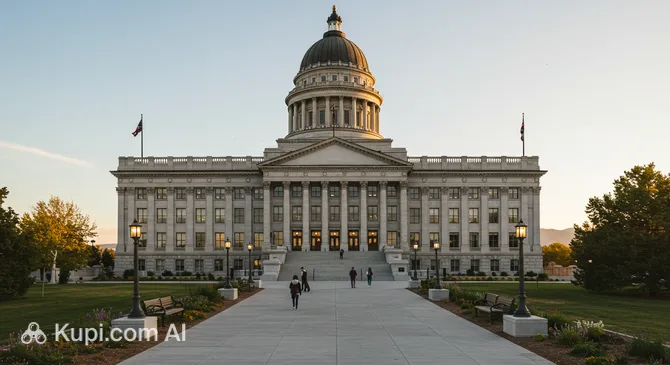
Utah State Capitol. Illustration.
Source: Kupi.com AI

Traveler photos:

Built between 1912 and 1916, the Capitol was designed in the Neoclassical Revival style. The architects sought to embody the majesty and harmony of the finest examples of classical architecture. Their work resulted in a building that is striking in its scale, exquisite facade details, and luxurious interior decor reflecting the richness of Utah's history and culture.

Thanks to its strategic hilltop location, the Utah State Capitol is visible from almost anywhere in Salt Lake City, making it one of the city's most recognizable and photographed landmarks. A visit to the Capitol is an opportunity not only to witness the state's political life but also to enjoy magnificent panoramic views of the city and surrounding mountains, while appreciating the skill of early 20th-century architects and builders.

Contacts

For the most up-to-date information regarding opening hours, available tours, and ways to contact the Utah State Capitol administration, it is recommended to visit the official website. Detailed information can also typically be found at Salt Lake City visitor centers or on Utah's official tourism portals.

How to contactContact
Address350 State St, Salt Lake City, UT 84114, USA
Phone number+1 801-538-3074
Websiteutahstatecapitol.utah.gov

What to Do

A visit to the Utah State Capitol offers a unique opportunity to immerse yourself in the region's history and culture. Inside the building, rich artistic decoration awaits you: numerous paintings and sculptures telling the story of key moments in Utah's history and its heritage. Special attention is drawn to the statues, including the figure of Brigham Young, the territory's first governor. The Capitol's luxurious interior is a work of art in itself, reflecting the site's historical significance and allowing visitors to feel the spirit of the era.

The grounds around the Capitol are equally interesting. In front of the main entrance, you'll see the famous bronze beehive—the symbol of Utah, representing the industriousness of its people and closely tied to its Mormon heritage. This same symbol also adorns the state flag. Upon climbing Capitol Hill, where the building is located, you can enjoy magnificent panoramic views of Salt Lake City and the surrounding mountain ranges. The landscape becomes particularly breathtaking when the mountain peaks are covered in snow, creating a truly unforgettable sight for all visitors.

Getting There

The Utah State Capitol is located on Capitol Hill in Salt Lake City, making it a prominent landmark. Thanks to its central position, this iconic USA attraction can be reached in several ways, depending on your preference and starting point.

One of the most accessible options is public transport. Salt Lake City has a well-developed city bus system, and convenient routes usually lead to major sites like the Capitol. We recommend checking the current schedule and bus numbers heading toward Capitol Hill in advance on the official transit service website or by using mobile trip-planning apps.

For those who value comfort and speed, a taxi ride or popular ride-sharing services are excellent choices. This is especially convenient if you are coming from the airport, the train station, or more distant neighborhoods of Salt Lake City. The trip from the city center to the Capitol usually doesn't take long, though you should account for potential traffic during rush hours.

If you are staying in the central part of Salt Lake City and enjoy walking, the stroll up to the Capitol can be a pleasant addition to your tour. For those traveling by personal or rental car, it is important to research parking beforehand. Public parking may be available near the Capitol, but the number of spots is sometimes limited, especially on weekdays or during events.

Nearest city: Salt Lake City

History & Facts

The history of the Utah State Capitol began in 1912 with the launch of an ambitious project. The contractors for this majestic building were George Morgan and James Stewart & Company. However, before the builders could get to work, massive preparations were required. The terrain chosen for the Capitol was initially unsuitable for construction, so by early 1913, steam shovels were already hard at work excavating and leveling the ground for the future structure.

In the spring of 1913, the next phase began: laying the foundation and installing massive steel columns to serve as the building's skeleton. At the time, the construction site was a literal small town. It featured shops for the workers' needs, offices for engineers and managers, and even a temporary railroad for the efficient delivery of building materials. Of particular note is the granite used for the Capitol's exterior—it was brought from the picturesque Little Cottonwood Canyon near Salt Lake City, as well as from mines in Alta, highlighting the building's connection to Utah's natural resources.

A landmark event in the construction history was the cornerstone-laying ceremony, which took place on April 4, 1914. This important event was attended by then-Governor William Spry. The grand opening of the Utah State Capitol, marking the completion of the massive project, was held on October 9, 1916. The total construction cost at the time was an impressive $2,739,538. Decades later, in 1978, Capitol Hill, where the building stands, was officially added to the USA National Register of Historic Places, serving as undeniable proof of its outstanding historical and cultural value.

Time Needed

To get a fairly comprehensive impression of the Utah State Capitol, tour its magnificent interiors, and walk around the grounds, most visitors will need about 2-3 hours. This is usually enough time to leisurely explore the building's architecture, admire the rotunda, examine the murals and sculptures, and enjoy the views of Salt Lake City from Capitol Hill.

If you plan to join one of the free guided tours often held at the Capitol, you should budget an additional hour. These tours allow for a deeper dive into the building's history and offer interesting facts about the state of Utah. For those who only want a quick look at the main highlights, 1-1.5 hours might be enough. However, to truly soak in the atmosphere of this iconic place and appreciate the details, it's better to set aside more time.

Working Hours

The Utah State Capitol is generally open to visitors year-round, allowing guests to explore its architecture and history. However, exact operating hours may vary, especially on holidays or during official events. Typically, the public areas of the Capitol are accessible during business hours on weekdays. Free tours are often conducted throughout the day, but their schedule is also subject to change.

As specific information regarding hours and the need for advance reservations or tour registration can change, it is highly recommended to check the official Utah State Capitol website or contact Salt Lake City visitor centers before your visit. This will help you get the most current information and plan your visit effectively, especially if you are interested in a guided tour.

DayOpening hours
Monday7:00 – 20:00
Tuesday7:00 – 20:00
Wednesday7:00 – 20:00
Thursday7:00 – 20:00
Friday7:00 – 18:00
Saturday7:00 – 18:00
Sunday7:00 – 18:00

Nearby

A visit to the Utah State Capitol will undoubtedly leave a lasting impression, but your experience of Salt Lake City would be incomplete without exploring its surroundings. The area around the Capitol is rich with other interesting sites that offer a deeper understanding of the culture, history, and modern life of Utah's capital. By taking the time to see nearby attractions, you can form a more complete picture of this wonderful city.

Exploring the Capitol's vicinity will allow you to discover both historical monuments and modern cultural venues, parks, and museums. Each of these places is unique in its own way and will add new layers to your journey through Salt Lake City.

NameDistance
Salt Lake Tabernacle0.7 km
Temple Square0.9 km
Salt Lake Tabernacle0.9 km
Utah Sports Hall of Fame Museum1.1 km
City Creek Center1.1 km
Cathedral of the Madeleine1.1 km
Land Cruiser Heritage Museum1.5 km

Have you reached the end of the page?

So the route has been studied inside and out