Support

Andijan

About

Welcome to Andijan, a vibrant and historic city located in the fertile Fergana Valley. As one of the most ancient cultural and economic hubs in Uzbekistan, it offers travelers a unique blend of traditional charm and modern dynamism. The city is renowned for its warm hospitality, lush gardens, and significant role in the region's development.

Geographically, Andijan is situated in the easternmost part of the country, near the border with Kyrgyzstan. It serves as the administrative center of the Andijan Region and is home to a population of approximately 441,700 people. The climate here is generally continental, contributing to the abundance of delicious local fruits, particularly the famous Andijan melons and grapes.

The city's past is rich with legends and significant events. It is famously known as the birthplace of Zahir-ud-din Muhammad Babur, a descendant of Tamerlane and the founder of the Mughal Empire in India. Exploring the history of Andijan allows visitors to trace the footsteps of great conquerors and merchants who traveled along the Great Silk Road, leaving behind a legacy that is still palpable today.

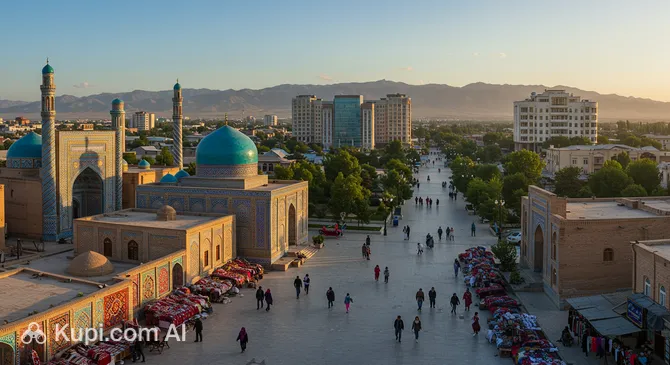
Andijan. Source: Kupi.Binoculars

Tourists are drawn to several key attractions that showcase the city's architectural and cultural beauty. The Jami Complex is a must-visit, featuring a grand mosque and one of the tallest minarets in the Fergana Valley, adorned with intricate geometric patterns. Another highlight is the Babur Literary Museum and the associated memorial park, which sits on a hill offering panoramic views of the city—a perfect spot for reflection and photography.

Whether you are strolling through its bustling bazaars or admiring its historical monuments, Andijan promises an unforgettable experience. We invite you to discover the heart of the Fergana Valley and enjoy the authentic atmosphere of this remarkable city.

Weather Overview

Travelers visiting the city can expect a continental climate characterized by distinct seasonal changes. Summers are typically hot and dry, with July being the warmest month, featuring average temperatures of 29.9°C and highs that can reach 37.3°C. This season sees very little rainfall, making it ideal for sun-seekers, though it is advisable to prepare for the heat.

Winters offer a stark contrast, bringing cooler weather with average temperatures in January dropping to around 1.5°C and lows occasionally dipping to -3.3°C. Spring tends to be the wettest time of year, with March experiencing up to 12 wet days, which helps nourish the region's famous gardens. To help you pack appropriately for your specific travel dates, you can view more detailed information about the weather in Andijan.

Interesting Facts

Beyond its well-known historical sites, Andijan holds a treasure trove of unique cultural features and dramatic stories that often surprise visitors. From high-flying birds to energetic rhythms, the city’s identity is shaped by more than just its architecture.

  • The Famous "Andijan Polka": The city is the birthplace of one of the most energetic and beloved folk dances in Uzbekistan. The "Andijan Polka" is not just a dance but a cultural phenomenon, characterized by its lightning-fast rhythm and intricate footwork. It is said to have been spontaneously created by a local musician at a wedding in the early 20th century and has since become a staple at celebrations across the country.

  • Champions of the Sky: Andijan is renowned among ornithologists for its unique breed of pigeons known as the "Andijan Tumbler." These birds are famous for their incredible endurance and acrobatic flying style. Local breeders take immense pride in them, as they are capable of soaring for up to 12 hours without landing, performing dramatic flips and tricks in mid-air.

  • A City Reborn: While Andijan is an ancient city with a history spanning over 2,500 years, you will notice that most of its architecture looks relatively modern. This is because a massive earthquake in 1902 leveled nearly the entire old city. The magnificent Jami Complex is one of the very few structures that miraculously survived the devastation, standing today as a resilient symbol of the past.

  • Legends of the Name: The origin of the name "Andijan" is shrouded in mystery and folklore. One popular legend suggests it was named after a princess, Adinajan, the daughter of the ancient ruler Afrasiyab, who was miraculously cured of a sickness in the region's healthy climate. Another theory links it to the "Andi" tribe, one of the ancient Turkic peoples who settled in this fertile valley.

How to Get There

Reaching this major city in the Fergana Valley is quite convenient due to its well-developed transport network. Whether you are arriving by air or rail, there are several options to suit your itinerary. For a complete overview of routes and travel tips, you can read more about how to get to Andijan.

The most direct way to arrive is via Andijan Airport (IATA: AZN), which is located just 9.8 km from the city center. It serves as a key local hub for domestic flights. A taxi ride from the terminal to the downtown area is quick and typically takes about 35 minutes. This is the best option for travelers wanting to avoid long ground transfers.

Alternatively, many travelers choose to fly into Osh Airport (IATA: OSS) in the neighboring city of Osh. Situated approximately 48.8 km away, it is a significant regional hub with high passenger traffic. However, since Osh is in Kyrgyzstan, the journey to Andijan involves crossing the border, which can extend the travel time to around 1.5 to 2 hours. Another option is Namangan Airport (IATA: NMA) in Namangan, located about 64.1 km from Andijan. The transfer by taxi or bus from there usually takes close to 2 hours.

For clarity, here is a summary of the main airports:

Airport Name City Passenger Traffic Km from City
Osh Airport Osh Large 48.8
Namangan Airport Namangan Medium 64.1
Fergana Airport Fergana Medium 68.2
Andijan Airport Andijan Medium 9.8
Kokand Kokand Small 117.0

If you prefer traveling by train, the city is well-connected to the national railway network. You can arrive directly at Andijan-1 Station, which is conveniently located about 8.1 km from the city center. The station handles regular connections from Tashkent and other major cities. Once you arrive, a taxi to the main hotels and attractions takes approximately 30 minutes.

In cases where direct tickets are sold out, you might consider arriving at the Namangan Railway Station in the city of Namangan, roughly 57.7 km away. From this station, you can take a taxi or a bus to Andijan, a journey that generally takes about 1 hour and 45 minutes.

Below is a list of the nearest railway stations:

Station City Passenger Traffic Km to Center
Namangan Railway Station Namangan Medium 57.7
Andijan-1 Station Andijan 8.1
Turtkul Paytug 11.0
Quva Railway Station Quva 33.4
Chartak Railway Station Chartak 48.2

Main Attractions

Exploring Andijan offers a mix of architectural grandeur, historical depth, and lively local culture. While the city has modernized, its key sites provide a window into its illustrious past as a Silk Road hub and the homeland of the Mughal dynasty's founder. Below are the top attractions that define the spirit of this ancient city.

Jami Complex

Standing as a testament to the city's resilience, the Jami Complex is the most significant architectural monument in Andijan. Built in the late 19th century, it includes a grand mosque, a madrasah, and a towering minaret that dominates the old city skyline. Notably, this complex is one of the very few historical structures that withstood the devastating earthquake of 1902. Tourists are fascinated by the intricate geometric patterns on the minaret and the serene atmosphere of the courtyard, making it a perfect spot for photography and appreciating traditional Islamic architecture.

Babur Memorial Park (Bog-i Shamol)

Located on the Bog-i Shamol hill, this expansive park is dedicated to Zahir-ud-din Muhammad Babur, the city's most famous son and the founder of the Mughal Empire. The site features a symbolic grave and a museum housing rare manuscripts, miniatures, and exhibits related to his famous memoir, the "Baburnama." Visitors flock here not only for the history but also for the breathtaking panoramic views of Andijan. It is a peaceful retreat where you can walk through landscaped gardens and reflect on the legacy of the great conqueror.

Jahon Bazaar

To truly feel the pulse of the Fergana Valley, a visit to Jahon Bazaar is essential. As one of the largest markets in the region, it is a sensory explosion of colors, sounds, and scents. Here, you can find everything from juicy local fruits and aromatic spices to traditional handicrafts. It is particularly interesting for tourists looking to buy authentic souvenirs, such as the renowned Andijan knives or traditional skullcaps (doppas), and to witness the vibrant, energetic daily life of the local people.

Andijan Regional Museum of Local History

For those keen on diving deeper into the region's past, this museum offers a comprehensive collection of over 60,000 exhibits. The displays range from ancient archaeological finds and numismatics to ethnographic items that showcase the lifestyle of the Fergana Valley's inhabitants through the ages. It is an educational stop that provides valuable context to the sights you see around the city, highlighting the area's development from ancient times to the modern era.

Local Cuisine

The culinary landscape of Andijan is as rich and diverse as its history, serving as a true gastronomic capital within the fertile Fergana Valley. The local cuisine is characterized by its hearty flavors, generous portions, and the use of fresh, locally grown ingredients. For food lovers, the city offers an authentic journey into Uzbek traditions, where every meal is a celebration of hospitality and community.

The crown jewel of the local table is undoubtedly Andijan Palov (Plov). Unlike versions found in other parts of the country, the Andijan variety is typically prepared with Devzira rice, a local red-brown grain known for its nutty flavor and firm texture. A unique regional twist worth seeking out is Kovatok Palov, where the dish is garnished with grape leaves stuffed with spiced meat, adding a delicate tartness to the savory rice. This iconic dish is traditionally cooked in large iron cauldrons (kazans) and is best enjoyed in the company of friends.

Beyond plov, the city is famous for its exceptional meat dishes. You simply must try the Shashlik, skewers of marinated beef or lamb grilled over hot coals to juicy perfection. Another local favorite is Somsa, a flaky pastry baked in a clay tandoor oven. In this region, they are often made larger and packed with a savory filling of minced meat, onions, and lamb fat, making for a satisfying street food snack that fuels the locals throughout the day.

The dining culture here revolves heavily around the traditional Choyhona (Tea House). These establishments are not just places to eat but social hubs where men gather to converse, play games, and enjoy leisurely meals. In the summer, locals prefer sitting on topchans (raised wooden platforms) placed in the shade of trees or near running water to escape the heat.

No meal in Andijan is complete without a pot of hot Green Tea (Ko'k choy). It is the standard beverage served before, during, and after meals to aid digestion and cleanse the palate. While alcohol is available in restaurants, the traditional way to experience local food is with endless cups of unsweetened tea. For dessert, the region's legendary sweet melons and grapes, grown in the sun-drenched fields of the valley, provide a refreshing and natural finish.

Travel Tips

Preparing for a trip to Andijan requires a bit of local know-how to navigate the cultural nuances of the Fergana Valley effectively. Here are some practical tips to help you travel comfortably, respect local traditions, and make the most of your visit.

  1. Clothing and Gear: Andijan has a sharp continental climate, so pack lightweight, breathable fabrics like cotton or linen for the scorching summers, and warm, insulated layers for the cold winters. Since this region is more traditional than the capital, modest clothing is highly recommended; both men and women should cover their shoulders and knees, especially when visiting religious sites like the Jami Complex. Comfortable walking shoes are a must for navigating the dusty streets and sprawling bazaars.

  2. Transportation: The most common way locals get around is by using the ubiquitous small white vans known as Damas, which function as shared taxis/marshrutkas. However, for tourists, private taxis are the most convenient and affordable option. While ride-hailing apps are expanding in Uzbekistan, in Andijan you may often need to hail a cab on the street; always agree on the fare before starting the ride to avoid misunderstandings.

  3. Finances: The local currency is the Uzbek Som (UZS). While Visa and Mastercard are accepted in some upscale hotels and larger supermarkets, cash is king in Andijan. You will absolutely need cash for taxis, small shops, tea houses, and the Jahon Bazaar. It is best to exchange money at official bank branches or withdraw from ATMs in the city center, as international cards may not work in smaller machines on the outskirts.

  4. Health and Safety: Andijan is generally a very safe city for travelers, but standard precautions apply. It is strictly advised to drink bottled water rather than tap water to avoid stomach issues. Pharmacies (marked as "Apteka") are plentiful, and many in the city center operate 24/7. Be cautious when crossing streets, as local traffic rules can be loosely interpreted by drivers.

  5. Communication: The primary language is Uzbek. While Russian is still widely understood, particularly by the older generation, English is not commonly spoken outside of major hotels or universities. It is highly useful to download an offline translation app and maps. Buying a local SIM card (e.g., Ucell, Beeline, or Mobiuz) is easy at official stores with your passport and ensures you stay connected.

  6. Local Etiquette: Hospitality is central to the culture here. When greeting people, a handshake is common for men, often accompanied by placing the right hand over the heart as a sign of respect. If you are invited to a local home or a traditional choyhona (tea house), always take your shoes off at the entrance unless told otherwise.

  7. What to Avoid: Avoid public displays of affection, such as kissing or prolonged hugging, as the Fergana Valley is socially conservative. Additionally, be mindful of how you treat bread; never place it on the ground or turn it upside down on the table, as bread is considered sacred in Uzbek culture.

  8. Market Wisdom: If you plan to visit the famous Jahon Bazaar, try to go early in the morning, around 8:00 or 9:00 AM. This is when the produce is freshest, the weather is cooler, and the market is bustling with authentic local life before the intense midday heat sets in.

By keeping these practical tips in mind, you will be well-prepared to navigate Andijan with confidence and ease. The locals are known for their incredible warmth and friendliness, and a little cultural awareness will go a long way in ensuring your journey is both smooth and memorable.

Entertainment & Nightlife

Nightlife in Andijan offers a distinctively traditional and relaxed experience compared to the high-energy club scenes of larger capitals. Instead of rowdy nightclubs or loud bars, the city's evening entertainment revolves around "gastro-nightlife"—long, leisurely dinners accompanied by live music, dancing, and socializing. The atmosphere is family-oriented and welcoming, with locals gathering to enjoy the cooler evening air after a hot day.

The heart of the evening activity can typically be found in the city center, particularly along the main avenues like Navoi Avenue and around the central parks. Here, the streets come alive with lights, and families stroll through the squares. For those seeking a lively venue, the Oltin Vodiy (Golden Valley) complex is a popular destination. It functions as a recreational park and dining hub where you can find restaurants serving local delicacies, often with live bands playing traditional and pop Uzbek music, creating a festive environment where dancing is encouraged.

While dedicated Western-style bars are rare, many larger restaurants serve alcohol and operate late into the night, effectively doubling as social clubs. A visit to a venue like Tantana or similar large banquet-style restaurants will give you a glimpse into how locals celebrate. The dress code in these establishments is generally "smart casual"—locals tend to dress up for dinner, so avoiding shorts and flip-flops is recommended to fit in with the respectful and slightly formal vibe.

For practical advice, the best time to head out is around 8:00 PM when the venues start to fill up. Prices are quite affordable by international standards; a lavish dinner with drinks and entertainment will cost a fraction of what it would in Europe. Getting around is easy with taxis, which are plentiful and cheap. It is advisable to use a taxi app or agree on a fare beforehand. The city is generally very safe for night walks, but as with any travel destination, it is wise to stick to well-lit, populated areas and avoid unlit backstreets.

Daytime entertainment in Andijan provides a cultural counterpoint to the evening's social dining. The Babur Music and Drama Theater is a cornerstone of local culture, offering performances that range from classical plays to musical concerts. For families, the local amusement parks offer various rides and attractions, making them perfect for a fun afternoon before the sun sets and the city transitions into its calm and hospitable night rhythm.

Parks & Museums

While Andijan is deeply rooted in history, it is also a city that breathes through its leafy avenues and honors its heritage in well-curated cultural institutions. Visitors will find that the city’s green spaces offer a cool respite from the Fergana Valley sun, while its museums provide a fascinating narrative of the region’s artistic and literary past.

Key Parks and Green Spaces

Babur Memorial Park (Bog-i Shamol) is the crown jewel of Andijan’s green spaces, perched atop a hill on the city's outskirts. This sprawling garden is not just a memorial but a botanical showcase, featuring a variety of trees and flowers that reflect the diverse flora described in Babur’s memoirs. Visitors can enjoy a leisurely climb up the stone stairs or take a cable car ride for spectacular views. The park is designed for contemplation, with quiet paths and shaded benches offering a panoramic outlook over the entire city and the surrounding valley.

For a more central experience, Alisher Navoi Park serves as the city's main recreational hub. It is a lively spot frequented by local families, especially in the evenings when the fountains are illuminated and the air cools down. The park features wide promenades lined with mature trees, amusement rides for children, and several cafes. It is an excellent place to observe local life, enjoy an ice cream, and escape the bustle of the urban streets.

Museums and Galleries

The Andijan Regional Museum of Local History is the primary custodian of the region's diverse heritage. The museum's collection is vast, covering everything from the natural history of the Fergana Valley to archaeological artifacts found in ancient settlements nearby. Visitors are often captivated by the ethnographic section, which displays traditional clothing, jewelry, and household items that paint a vivid picture of Uzbek life over the centuries. The exhibits also trace the evolution of the city from the Silk Road era to the modern day.

Another significant cultural venue is the Babur Literary Museum, located within the memorial park complex. This institution is dedicated entirely to the life and works of Zahir-ud-din Muhammad Babur. Inside, you will find rare manuscripts, miniatures, and copies of the "Baburnama" in various languages. The museum does an excellent job of contextualizing Babur not just as a conqueror, but as a poet, scientist, and statesman, making it a must-visit for history enthusiasts.

Historical and Architectural Sites

The architectural landscape is dominated by the majestic Jami Complex, which remains the most photogenic and historically significant site in the city. Comprising a mosque, minaret, and madrasah, its sheer scale and intricate brickwork are impressive. The minaret, soaring above the old town, is one of the tallest in the region. The complex is not merely a relic; it is an active part of the community, often housing local artisans who practice traditional crafts like woodcarving and embroidery within the madrasah cells.

Other Cultural Venues

Families traveling with children might enjoy a visit to the Andijan Zoo. While smaller than those in capital cities, it provides a pleasant diversion and hosts a variety of local and exotic animals. It is a popular weekend destination for residents and offers a relaxed environment for a casual stroll.

Authentic Experiences

For a truly authentic feel, explore the narrow alleys of the Eski Shahar (Old City) surrounding the Jami Complex. Here, away from the main roads, you can see traditional adobe architecture and perhaps stumble upon a neighborhood bakery making fresh non bread in a clay tandoor. Another insider tip is to visit the parks just before sunset; this is the "golden hour" when the locals come out to socialize, play music, and drink tea, offering a warm and welcoming atmosphere that you won't find at midday.
Getting Around

Public transport in Andijan is primarily road-based, relying on a dense network of buses and minibuses to keep the city moving. Unlike the capital, there is no metro, tram, or trolleybus system here. Instead, the streets are dominated by the iconic white Chevrolet Damas vans, which function as fixed-route marshrutkas. These small vehicles are the most popular and agile way to navigate the city, zipping through traffic to connect neighborhoods, markets, and the city center efficiently.

In addition to the ubiquitous vans, the city operates a fleet of standard urban buses (mostly Isuzu models) that serve major avenues and connect key landmarks. These offer a slightly slower but more spacious alternative to the cramped minibuses. They are particularly useful for travelers with luggage or those who prefer a more relaxed pace while observing the city streets from the window.

The payment system is straightforward and almost exclusively cash-based. There are no complex travel zones, magnetic cards, or ticket machines to worry about. You simply pay the fare directly to the driver or a conductor, usually upon exiting the vehicle. Prices are extremely affordable, typically costing a very small amount in the local currency. It is highly recommended to carry small banknotes and coins, as drivers may not always have change for large denominations.

For a more comfortable and private alternative, taxis are widely available and inexpensive. You can easily hail a car on the street, but for tourists, using mobile ride-hailing apps is the most convenient option. These apps operate effectively in the city, allowing you to book a ride without a language barrier and see the fixed price beforehand. If you choose to hail a taxi on the street, be sure to agree on the fare before getting in.

Travelers should note that public transport generally operates from early morning, around 6:00 AM, until late evening, roughly 9:00 PM or 10:00 PM. Service frequency drops significantly after dark, so it is wise to plan for a taxi if you are out late. While the system can seem chaotic at first glance due to the sheer number of vans, it is a reliable and authentic way to experience the local rhythm of life.

Accommodation

Where to Stay:

Accommodation in Andijan has evolved significantly in recent years, offering a mix of traditional hospitality and modern comfort. While you will not find many international luxury hotel chains here, the city provides a decent selection of locally run establishments. The options generally range from budget-friendly guesthouses and hostels to mid-range hotels that cater to business travelers and tourists alike. The hospitality standards are warm and welcoming, reflecting the culture of the Fergana Valley.

For most travelers, the best area to stay is the City Center. staying here places you within walking distance of major attractions like the Jami Complex and the lively bazaars. This area is bustling during the day and offers easy access to restaurants and cafes in the evening. Another convenient location is near the Andijan Railway Station, which is ideal for those arriving late or planning an early departure by train. However, the central district offers a more atmospheric experience of the city.

Travelers looking for a standard hotel experience will find several large establishments that offer modern amenities. Some of the well-known local names include the Bogishamol Hotel, known for its location and views, and the Hotel Andijan, which is a staple in the city's hospitality landscape. These hotels typically provide en-suite bathrooms, air conditioning, and breakfast, making them a comfortable choice for international visitors.

For a more authentic and affordable stay, consider booking a private guesthouse or B&B. These family-run places often offer a deeper connection to local life, with home-cooked breakfasts and personalized advice from hosts. Apartment rentals are also becoming available for those who prefer more privacy or are planning a longer stay.

Booking Tips and Prices

Prices in Andijan are generally very reasonable compared to Tashkent or Samarkand. A stay in a mid-range hotel is quite affordable, while guesthouses offer excellent value for budget travelers. It is advisable to book in advance if you are visiting during the peak seasons of spring (April-May) and autumn (September-October), as the best options fill up quickly. While major hotels appear on international booking platforms, many smaller guesthouses still rely on direct bookings or local travel agents. Additionally, keep in mind that while larger hotels accept credit cards, smaller establishments may prefer payment in cash (Uzbek Som).

Nearby Cities

Andijan serves as an excellent base for exploring the wider Fergana Valley, a region known for its dense population and rich cultural tapestry. The city is surrounded by several interesting towns and urban centers that are easily accessible for day trips. These nearby destinations offer a mix of industrial heritage, traditional craftsmanship, and ancient history, providing a deeper understanding of life in eastern Uzbekistan.

Just a short drive away lies Asaka, the closest major town to Andijan. It is famously known as the automotive heart of the country, hosting a large car manufacturing plant that drives the local economy. Slightly further is Shakhrikhan, a destination renowned among souvenir hunters and culture enthusiasts. This town is a hub for traditional artisans, particularly famous for its master knife-makers and vibrant textile markets.

For those interested in ancient history, Quva offers a glimpse into the past with its archaeological sites and is also celebrated for producing some of the sweetest pomegranates in the region. To the northwest lies the major regional center of Namangan. As one of the largest cities in the country, it boasts beautiful parks and a distinct local culture, making it well worth the hour-long journey.

Below is a list of nearby cities, sorted by their distance from Andijan, to help you plan your excursions:

City Distance (km) Population
Asaka 17 62,200
Shakhrikhan 22 71,400
Quva 37 46,400
Uchkurgan 38 40,000
Namangan 58 626,120

Shopping & Souvenirs

Shopping in Andijan offers a delightful mix of traditional Central Asian culture and modern convenience. As a historic trading hub on the Silk Road, the city continues to thrive on commerce, providing visitors with everything from bustling, centuries-old bazaars to contemporary retail centers. While it may not have the high-end luxury boutiques of a global metropolis, it excels in offering authentic local goods, vibrant textiles, and fresh produce that reflect the richness of the Fergana Valley.

For a stroll through the city's commercial heart, head to Navoi Avenue. This central artery is lined with a variety of shops selling clothing, electronics, and household goods. It is a lively area where locals do their daily shopping, and you can find smaller boutiques alongside cafes and restaurants. Walking here gives you a good sense of the modern local lifestyle while offering plenty of opportunities to window shop.

If you are looking for a more modern shopping experience, the Uzbegim Shopping Center is the city's premier destination. It is a large, multi-story complex that brings a Western-style mall experience to Andijan. Inside, you will find a range of international and local fashion brands, a supermarket, a cinema, and a food court. It is a popular spot for families and young people, especially in the evenings, and is a good place to find standard necessities or branded items.

However, the true soul of shopping in Andijan lies in its markets. The Jahon Bazaar (World Market) is legendary in the region and is a must-visit for any tourist. It is a sprawling city within a city where you can buy almost anything, from juicy melons and spices to fabrics and livestock. For a slightly smaller but equally authentic experience, the Yangi Bazaar (New Market) offers a wide selection of fresh vegetables, fruits, and local snacks. Be prepared for a sensory overload of colors and scents, and don't forget that bargaining is an essential part of the experience here.

When it comes to souvenirs, Andijan has several unique specialties. The region is famous for its craftsmanship, particularly Andijan knives (pichok), which are renowned for their sharp, curved blades and decorative handles. Traditional skullcaps (doppas) with distinct geometric patterns are also popular gifts. Additionally, given the region's agricultural wealth, bringing back high-quality dried fruits, nuts, or the local Devzira rice is a great way to share the flavors of Uzbekistan with friends back home.

Store hours in Andijan vary depending on the type of establishment. Modern shopping malls like Uzbegim typically operate from 10:00 AM to 10:00 PM daily. Bazaars and street markets, on the other hand, start much earlier, often opening at sunrise and winding down by late afternoon, around 5:00 PM or 6:00 PM. While supermarkets and mall stores generally accept credit cards (Visa and Mastercard), cash is absolutely essential for bazaars and smaller shops. ATMs are available, but it is wise to carry enough local currency (Uzbek Som) for day-to-day purchases.

Regarding tax refunds, Uzbekistan has introduced a Tax-Free system for foreign tourists at certain airports, allowing for a VAT refund on specific goods purchased at participating retailers. However, the number of eligible stores in regional cities like Andijan may be limited compared to Tashkent. It is advisable to look for the "Tax Free" signage at the entrance of larger shops and inquire directly with the staff before making significant purchases.

Reached the end of the page?

That means the route is fully explored