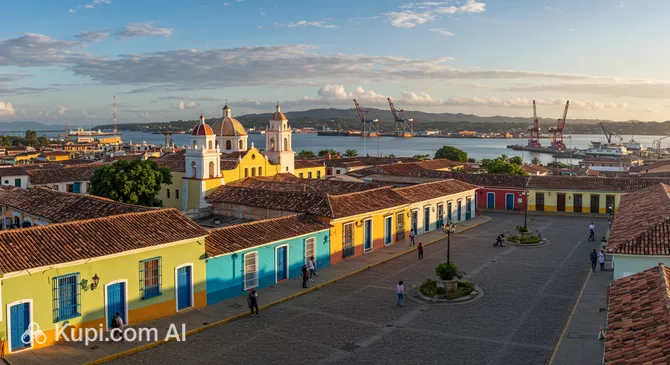
Coro is a city where time seems to have stood still in the era of Spanish colonial rule. Located in northwestern Venezuela, it is the administrative center of Falcón State and one of the oldest cities in South America. Founded in 1527, Coro managed to serve as the country's first capital and the site of the first bishopric on the continent. Today, it is a quiet provincial city with a population of over 280,000, preserving the unique charm of the past.
Coro. Illustration.
Source: Kupi.com AI
The city's uniqueness lies in its architecture, where Spanish and Dutch traditions are whimsically intertwined with the local Mudéjar style. Strolling through the cobblestone streets of the historical center, you will see hundreds of adobe buildings painted in bright colors and majestic temples from the 18th–19th centuries. It is thanks to this preservation that Coro's historical heritage was included in the UNESCO World Heritage list, although it currently requires special attention due to the whims of nature.
In addition to colonial aesthetics, Coro attracts tourists with its proximity to stunning natural landscapes, such as the famous dunes that approach the city's very boundaries. This place is ideal for those seeking an authentic atmosphere of South American history and culture rather than a mass-market tourist hub. We invite you to take a journey into this open-air museum to personally experience the spirit of one of the cradles of the Venezuelan nation.
Weather Overview
The city of Coro is dominated by a tropical climate, characterized by high temperatures throughout the year and pronounced dryness. A typical day here features bright sunshine and temperatures around +30°C to +33°C. Even in the coolest months, such as January and February, the thermometer rarely drops below +22°C at night, while daytime temperatures consistently warm up to a comfortable +30°C. Precipitation in the region is infrequent, which contributes to the formation of the unique desert landscapes surrounding the city.
The wettest period occurs in the fall, especially in October and November, when rainfall can reach 120–200 mm per month. During this time, rains can be very intense, which sometimes poses problems for the fragile adobe buildings of the historic center. If you are planning a trip, keep in mind that the city's climate involves constant heat, softened only by sea breezes. Strong winds sometimes blow dust from the Los Médanos dunes, so it's worth having sunglasses on windy days.
The hottest time is considered to be August and September, when daytime temperatures often reach +35°C. For comfortable sightseeing, it is best to choose morning or evening hours. Overall, Coro is a destination for lovers of eternal summer, where an umbrella might only be needed for a short period at the end of the year, while sunscreen will be your main companion at any time of the year.
Average monthly temperature
Average monthly precipitation
Interesting Facts
Coro is a city capable of surprising even the most experienced traveler with its historical paradoxes and unique status. Here are a few facts to help you get to know this place better:
The city was founded on July 26, 1527, by Juan de Ampíes, who, unlike many conquistadors, preferred to enter into a peace treaty with the local indigenous tribes based on respect for their traditions.
It was in Coro in 1531 that Pope Clement VII established the first bishopric in South America, making the city a vital religious center for the continent during the early stages of colonization.
The city's historic center contains exactly 602 protected architectural monuments, which is one of the highest densities of heritage sites in the region.
In 1578, due to constant pirate raids, the capital status was transferred to Caracas, as Coro's coastal location made it too vulnerable a target for sea robbers.
Despite its desert surroundings, the city suffers significantly from torrential rains: it was because of the erosion of adobe walls that UNESCO included the site on the List of World Heritage in Danger in 2005.
How to Get There
The transport accessibility of Coro allows tourists to get here by both air and land, although international travel usually requires a transfer. The region's main air hub is José Fausto Siqueros International Airport (IATA: CZE). It is located in close proximity to the city, making transfers to hotels quick and easy. The airport primarily serves domestic flights, connecting the city with Caracas; the flight from the capital takes only about an hour.
For those who prefer land travel, Coro is connected to the country's largest cities by a network of highways. A trip from Caracas by bus or car takes about 6 to 7 hours (a distance of approximately 500 km). Bus travel is a fairly popular method, as direct routes regularly depart from the capital's main terminals. If you are planning a complex itinerary, it is useful to check how to get to Coro in advance, taking current schedules into account.
Railway service in this region is poorly developed, so the main focus should be on buses and taxis. The nearby port of La Vela de Coro is very close and has great historical significance; however, today it is primarily used for local needs and small maritime transport. From Maracaibo, Coro can be reached by car in just 2–3 hours along a scenic coastal road.
Station
Passenger traffic
Distance
Altos de la Vanega
3
234 km
Main Attractions
The city's main treasure is its historic center, home to hundreds of colonial-era monuments. One of the most significant spiritual sites is the St. Ann's Cathedral Basilica of Coro. This majestic cathedral is one of the oldest in South America and impresses with its austere yet harmonious architecture, reflecting the religious fervor of the first settlers.
Punta Del Sol Shopping Center. Illustration.
Source: Kupi.com AI
Traveler photos:
Another important symbol of faith and history is the San Clemente Cross. It is linked to the city's very founding and is revered as a monument to the first Christian rites performed on this land. Surrounding it are cozy squares and old houses with characteristic iron windows, such as the famous Casa de las Ventanas de Hierro, which is definitely worth a visit during your walk.
One cannot overlook the natural wonder located on the outskirts of the city — Los Médanos de Coro National Park. This is a vast desert with golden dunes that constantly change shape under the influence of the wind. Tourists come here to admire the sunset, take spectacular photos, or try their hand at sandboarding. It is a sharp and exciting contrast between the colonial architecture of the center and the wild nature of the tropical desert.
Local Cuisine
The gastronomy of Coro is a vibrant blend of traditional Venezuelan recipes with an emphasis on products from the coastal region. The foundation of local cuisine consists of dishes made from corn, fresh seafood, and tropical fruits. The main thing every guest should try is arepas, corn flatbreads with various fillings ranging from cheese to shrimp. Also, don't forget to taste pabellón criollo — a hearty national dish of rice, black beans, shredded meat, and fried plantains.
Due to the proximity to the sea, you can always find fresh grilled fish or a rich fish soup in local restaurants. For a beverage, locals often choose chicha — a sweet and thick drink based on rice or corn — as well as refreshing exotic fruit juices that perfectly quench thirst in the hot tropical climate.
The dining culture in the city is quite relaxed. You will find authentic establishments in the historical center, such as Nativo, as well as modern snack spots. A popular choice for dinner is La Barra Del Jacal, where you can experience local flavors in a pleasant setting. If you want to try street food or find an affordable food court, head to the Punta del Sol Shopping Center, which offers both local specialties and familiar international dishes.
Travel Tips
Preparing for a trip to Coro will help you fully enjoy its historical grandeur and unique nature. Use these practical tips to make your journey comfortable and safe.
Clothing and essentials: It is hot in the city all year round, so choose light clothing made from natural fabrics. For walking the cobblestone streets of the historical center, comfortable shoes with a firm sole are essential. Don't forget a hat and sunscreen — the sun here is very intense, especially in the dunes.
Transport: It is best to explore the center on foot. For trips to national parks or shopping centers, use taxis, calling them through your hotel. Car rental is a great option for those who want to explore the Falcón state coast independently.
Finances: The official currency is the Venezuelan bolívar, but US dollars are accepted everywhere. International bank cards do not always work reliably, so be sure to have a supply of cash in small bills. Tipping in restaurants is welcomed (usually around 10%).
Health and safety: Follow standard precautions: do not walk alone after dark and keep your valuables with you. Always carry bottled water to avoid dehydration in the heat.
Communication: The main language is Spanish. English is understood only in large hotels and some tourist spots, so a few phrases in Spanish and an offline translator on your phone will be very useful.
Local etiquette: The people of Coro are friendly and hospitable. A greeting of "Buenos días" or "Hola" is a mandatory courtesy when entering a shop or cafe.
What to avoid: Do not take photos of government or military facilities. Also, try not to criticize the condition of historical buildings — locals are very proud of their heritage despite the difficulties in preserving it.
Seasonality: The best time to visit is the dry season. During periods of heavy rain, some adobe streets can become difficult to navigate, and some museums may close for maintenance.
By following these simple rules, you will discover Coro as an amazing city full of history and warmth. Have a pleasant journey!
Entertainment & Nightlife
Life in Coro flows at a leisurely pace, and classic nightlife is quite modest here. Instead of noisy night clubs, locals and visitors prefer to spend their evenings in cozy cafes and casual restaurants. The main spot for evening strolls and meetings is the historical center, where the soft lighting of colonial buildings creates a special romantic atmosphere.
If you are looking for a place for dinner with live music or pleasant conversation, check out La Barra Del Jacal or the Nativo restaurant. These places are popular with both tourists and residents. For those who prefer a more modern format with air conditioning and a variety of choices, the Punta del Sol Shopping Center is an excellent option, featuring food courts and relaxation areas popular in the evening.
Daytime entertainment is often culturally related: be sure to visit the local "Harmony" theater (Teatro Armonía), which is the center of the city's cultural events. For lovers of active recreation and unique experiences, trips to the Los Médanos dunes are popular, where overnight stays under the open sky are sometimes organized. Overall, Coro is a city for quiet, contemplative relaxation, while younger crowds often head to neighboring Maracaibo for lively parties.
Parks & Museums
Coro is rightfully considered the cultural capital of the region, and its museums are the best proof of that. One of the most interesting is the "Lucas Guillermo Castillo" Diocesan Museum, which houses a rich collection of religious art from the colonial period. For science lovers, the Urumaco Paleontological Museum is a must-see, with exhibits telling the story of the prehistoric inhabitants of these lands. Also worth mentioning is the Museum of Family Traditions, which offers a glimpse into the daily life of townspeople in past centuries.
The natural parks surrounding the city are impressive in scale and uniqueness. The undisputed leader is Los Médanos de Coro National Park. This is a unique desert zone with high dunes where you can feel like you're in the heart of the Sahara while being in the tropics. For contrast, visit the Xerophytic Botanical Garden, which features rare plant species adapted to the arid climate of Falcón State.
Although greenery within the city itself may seem modest due to the hot climate, the park areas outside more than compensate for it. For example, Sierra de San Luis National Park offers the cool shade of forests and picturesque waterfalls like Cataratas de Hueque. These places are ideal for ecotourism and allow for a break from the heat of the cobblestone streets in the historical center, such as the square near the San Clemente Cross or the area around the St. Ann's Cathedral Basilica of Coro.
Getting Around
The public transport system in Coro is primarily represented by buses and minibuses (route taxis). There are no subways or trams in the city, but due to its compactness (city area is about 44 km²), moving between districts does not take much time. Main routes pass through the major avenues, such as Rómulo Gallegos, which can see significant activity during peak hours.
For tourists, the most convenient way to get around within the historical center is on foot. The cobblestone streets and the proximity of the main monuments to each other allow for comfortable exploration without the use of transport. If you need to reach more distant locations, such as the Los Médanos National Park dunes, it is best to use a taxi or book a tour transfer.
Bus fares are usually paid in cash to the driver. There are plenty of taxis in the city, but it is recommended to agree on the fare in advance, as meters are rarely used. For those who value complete independence, car rentals are available in Coro, which will be particularly useful if you plan to travel outside the city to explore the natural attractions of Falcón State.
Accommodation
The choice of accommodation in Coro reflects its status as a cultural and historical center. You won't find massive hotel chain skyscrapers here, but the city is famous for its charming boutique hotels and guest houses (posadas) located in restored colonial buildings. Staying in such a place allows you to fully immerse yourself in the atmosphere of the old city.
The most popular area for tourists is the historic center. By staying here, you will be within walking distance of attractions like the St. Ann's Cathedral Basilica of Coro or the San Clemente Cross. Hotels in the airport area and near major shopping zones are also in demand, such as those near the Punta del Sol Shopping Center, where modern infrastructure is better developed.
During peak tourist season and local festivals, it is recommended to book accommodation in advance, as space in the best posadas is limited. The price range is quite wide: from budget rooms in private homes to elite colonial-style apartments. Most bookings are made through international services or directly through the websites of local guest houses.
Nearby Cities
Coro is an ideal starting point for traveling around the northwestern region of Venezuela, offering tourists a variety of landscapes—from colonial ports to modern metropolises. Just 37 kilometers away is the cozy Puerto Cumarebo, known for its coastal views and calm atmosphere, perfect for a short trip to the sea.
For those looking for more active urban life and shopping, Punto Fijo, located 65 kilometers away, is an excellent choice. It is a large industrial and commercial center on the Paraguaná Peninsula, easily reachable by car or bus in about an hour. Also of interest is the neighboring Las Piedras, which is closely linked to the region's economy.
Ambitious travelers might consider a trip to Maracaibo—the journey takes about 3 hours but rewards you with the opportunity to see the famous lake and its bridge. And if you have the necessary documents to cross the maritime border, 113 kilometers away is Willemstad, the capital of Curaçao, which can be reached by sea or air. Exploring the surroundings of Coro will allow you to see the full diversity of Venezuelan nature and culture.
Shopping in Coro is a blend of modern comfort and traditional flavor. The city is not a mecca for luxury brand lovers, but it offers interesting opportunities for purchasing authentic items and essentials. The main magnet for shoppers is the Punta del Sol Shopping Center. Its whimsically shaped architecture attracts attention in itself, and inside you will find many shops selling clothing, electronics, and gifts that are popular with locals.
Punta Del Sol Shopping Center. Illustration.
Source: Kupi.com AI
Traveler photos:
Besides this, it's worth checking out Fair Mall, located in the colonial zone, and the shopping stalls on Rómulo Gallegos Avenue. If you want to feel the city's true rhythm, head to the Municipal Market. This is the best place to buy fresh tropical fruits and spices and to experience the daily life of the townspeople. Most shops operate with a siesta break, which should be considered when planning your shopping trip.
As for souvenirs from Coro, the most popular items are those made by local artisans. Clay crafts reflecting the city's colonial motifs and souvenirs related to the Los Médanos desert theme are particularly sought after. In the historical center, near the San Clemente Cross, you can find small shops selling handmade items. Payment in large centers is usually possible with cards, but in markets and small shops, it is essential to have cash on hand.