Support

Bac Ninh

About

Bac Ninh is a true treasure trove of Vietnamese culture, nestled in northern Vietnam, just 30-35 kilometers from bustling Hanoi. The city is located in the fertile Red River Delta, which gives it a special atmosphere: a harmonious blend of picturesque rural landscapes, ancient pagodas, and modern urban quarters. Thanks to its proximity to the capital, Bac Ninh often serves as a convenient starting point for exploring the country's northern regions.
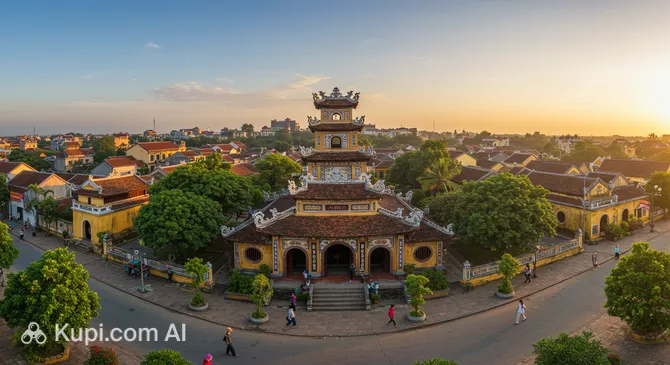
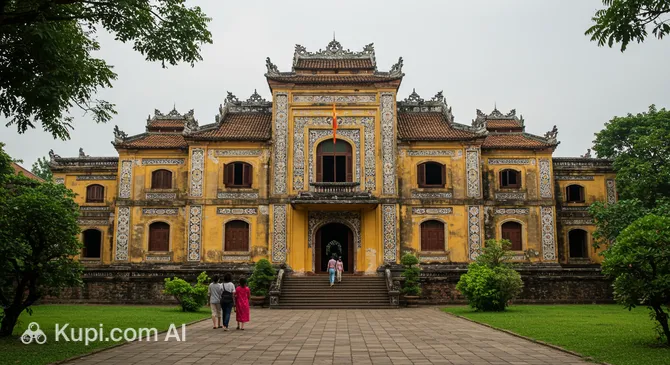
Bac Ninh. Illustration.
Source: Kupi.com AI

With a population of about 520,000 people, Bac Ninh is the administrative center of the province of the same name. It is the smallest province in terms of area but one of the most densely populated in Vietnam. Here, you can feel the energy of a modern Asian city, yet the spirit of antiquity lingers in the air. The city is not overloaded with tourists, allowing guests to immerse themselves in authentic Vietnamese life and enjoy the tranquility.

Bac Ninh is rightfully called the "land of heritage." It is home to about 1,600 historical and cultural monuments, including five sites recognized as national treasures of special value and four elements listed as UNESCO Intangible Cultural Heritage. Among them is the traditional "Quan Ho" singing, which is the region's hallmark. The city is famous for its ancient temples, pagodas, and traditional craft villages where you can discover unique local trades.

If you are looking for authentic experiences, want to touch rich history, learn about local traditions, and enjoy a peaceful atmosphere away from the tourist bustle, Bac Ninh will be a pleasant discovery for you. This city offers a unique immersion into the cultural heart of Vietnam.

You can find more interesting facts on the Bac Ninh city history page.
Weather Overview

The weather in Bac Ninh is characterized by a warm climate with clearly defined wet and dry seasons. Expect hot and humid summers, especially from May to September, when average temperatures range between 28-30°C (for instance, the average temperature in June is 30.3°C and 29.1°C in August), and this is the time with the most rainfall—the peak occurs in August with 14 mm and 26 rainy days. Winters, from December to February, are noticeably cooler and drier, with average temperatures around 17-19°C (e.g., 17.2°C in January) and minimal rainfall (1-2 mm). Transition months, such as April and October, offer comfortable weather with moderate temperatures and rainfall. For more detailed information, you can visit the Bac Ninh Climate page.

Average monthly temperature

Average monthly precipitation

Interesting Facts

Bac Ninh, a city with a rich history and culture, hides many surprising details behind its famous landmarks. Here are just a few little-known facts that will help you see this Vietnamese city in a new light:

  • Bac Ninh is the cradle of the famous "Quan Ho" folk singing, which is recognized by UNESCO as an Intangible Cultural Heritage of Humanity. This unique musical genre, performed by male and female duets, can often be heard at local festivals and celebrations, where it passes down centuries-old vocal traditions.

  • The Bac Ninh province is home to some of Vietnam's oldest pagodas, testifying to the region's deep Buddhist roots. Notable among them are the Dau Pagoda, founded as early as the 3rd century AD, and the Phat Tich Pagoda, dating back to the 7th century, which attract pilgrims and connoisseurs of ancient architecture.

  • Bac Ninh province boasts the highest concentration of traditional craft villages in all of Vietnam. For example, Dong Ho village is famous for its unique folk woodcut paintings, Phu Lang village for its authentic ceramics, and Dong Ky village for its skillful wood carving. Visiting these villages allows you to experience the country's living heritage.

  • The city and province of Bac Ninh have historically made a massive contribution to the development of education in Vietnam. Records show that during various historical periods, approximately one-quarter of all the country's doctoral degree holders lived here, highlighting the region's long-standing academic and intellectual traditions. Part of this rich history can be explored by visiting the Bac Ninh Museum.

Bac Ninh Museum. Illustration.
Source: Kupi.com AI

Traveler photos:

How to Get There

A trip to Bac Ninh usually starts with an arrival at one of Northern Vietnam's major transport hubs. Since the city itself does not have its own airport, tourists most often use the air harbors of neighboring metropolises, from where it is easy to reach the destination by car or bus. You can find all ways to get to the city on a dedicated page.

The most convenient and popular option is Noi Bai International Airport (IATA: HAN). It is located in the country's capital, Hanoi, but is only 28 km from the center of Bac Ninh. This is the region's main gateway with a huge passenger flow. A trip from here by taxi or transfer takes about 1 hour, making this route the most optimal for most travelers.

Another option is flying into Cat Bi International Airport (IATA: HPH), located in Hai Phong. The distance to Bac Ninh is about 79 km. The journey from this airport will take more time—approximately 2 hours and 20 minutes by car; however, this option may be convenient if you plan to visit the coast or find good deals on domestic flights.

For convenience, here is summary information on the main airports located relatively close to the city:

AirportPassenger trafficDistance
Noi Bai International Airport32.5 mln28 km
Cat Bi International Airport2.7 mln79 km
Van Don260 000140 km
Bai Thuong Airport1.2 mln155 km
Sam Neua65 000225 km

In addition to air travel, ground transport plays a vital role. Bac Ninh has excellent road connections with Hanoi and other provinces. Regular bus services run between the capital and Bac Ninh with high frequency. A railway line connecting Hanoi with the Chinese border also passes through the city, so you can arrive by train, although buses or taxis are often faster and more comfortable for tourists.

Main Attractions

Bac Ninh, a city rich in culture and history, offers travelers several remarkable sites that help deepen their understanding of this region of Vietnam. These include both historical monuments and cultural centers, each unique in its own way.

One of the primary places to explore the region's heritage is the Bac Ninh Museum. It houses exhibits detailing the history, culture, and traditional crafts of the province. A visit to the museum will be interesting for those who want to learn more about local life, art, and the developmental stages of this part of Vietnam.

Bac Ninh Museum. Illustration.
Source: Kupi.com AI

Traveler photos:

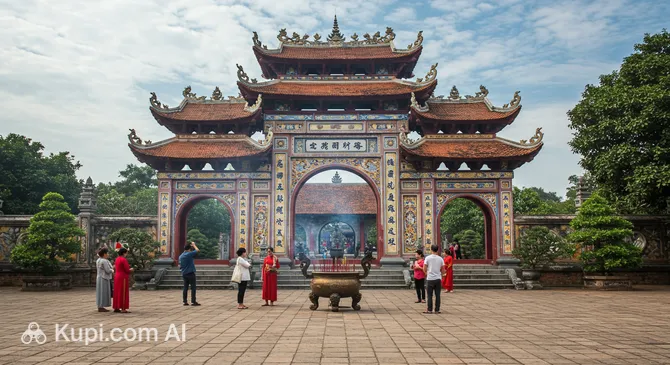
An important spiritual and architectural landmark of the city is the Ba Chua Kho Temple. This is not only a place of worship but also a magnificent example of traditional Vietnamese temple architecture. The temple attracts both pilgrims and tourists interested in the country's religious traditions and historical buildings. Its peaceful atmosphere and beautiful carved details make it a must-visit site.

Ba Chua Kho Temple. Illustration.
Source: Kupi.com AI

Traveler photos:

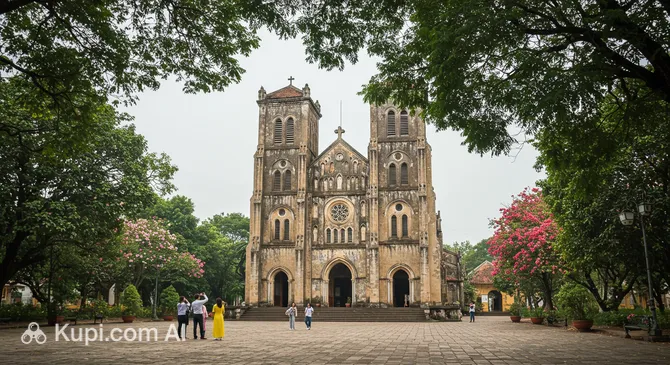
Another iconic structure in Bac Ninh is the Bac Ninh Cathedral. This impressive building serves as an important Catholic center and stands out architecturally against the backdrop of traditional Eastern buildings. The cathedral is interesting not only as a religious site but also as an architectural monument reflecting another facet of the city's cultural heritage.

Bac Ninh Cathedral. Illustration.
Source: Kupi.com AI

Traveler photos:

Local Cuisine

The cuisine of Bac Ninh is a true immersion into the world of authentic flavors, where culinary traditions are carefully preserved and passed down through generations. Travelers here can look forward to discovering vibrant and original dishes that reflect the region's rich culture. One symbol of local gastronomy that is definitely worth trying is bánh đa kê – crispy rice crackers with sesame. This is a popular snack, perfect for a quick bite while walking around the city.

A special place in Bac Ninh's culinary heritage is held by duck and chicken dishes, masterfully prepared with aromatic herbs and local spices that give them a unique taste. You should definitely try the rich local soups, such as bánh đa – a hearty rice flour noodle soup served with seafood or meat. Of course, one cannot overlook the famous Vietnamese spring rolls, which here are prepared with a filling of the freshest vegetables and herbs.

The food culture in Bac Ninh is very accessible. Locals and tourists alike enjoy eating both in restaurants and right on the street. Street food is a distinct and very important part of the gastronomic experience in Bac Ninh. In busy markets and at numerous mobile stalls, you can find various fried pies, sweet rice desserts, and fresh tropical fruits. If you want to try grilled dishes in a more formal setting, consider establishments like the Bam Bam BBQ and Hotpot Restaurant.

Bam Bam Hotpot & Grill Restaurant. Illustration.
Source: Kupi.com AI

Traveler photos:

Regarding beverages, strong green tea is particularly popular in Bac Ninh, as in all of Vietnam. It is an excellent thirst quencher and perfectly complements any meal. Among alcoholic drinks, you can find local beer as well as traditional rice wine.

The gastronomic life of Bac Ninh becomes especially vibrant during culinary festivals. These events attract the region's best chefs and give guests a unique opportunity to explore the full variety of local dishes, learn more about culinary traditions, and even participate in engaging masterclasses. Such festivals make the city even more attractive for foodies and lovers of authentic cuisine.

Travel Tips

Planning a trip to charming Bac Ninh? To make your journey through this interesting city in Vietnam go smoothly and leave only pleasant impressions, we have prepared some practical tips to help you better navigate on-site.

  1. Wardrobe and Useful Items: The climate in Bac Ninh, as in northern Vietnam, has distinct seasons. In summer (roughly from May to October), it is hot and humid—bring light, breathable clothing made of natural fabrics, sunscreen, a hat, and a raincoat or umbrella for tropical downpours. In winter (December to February), it can be quite cool, especially in the evenings and mornings, so a warm sweater, fleece, or light jacket will be very useful. Comfortable shoes are your best friend for walking around the city and its surroundings. Don't forget a universal adapter for electronics (Type A, C, and sometimes G sockets are common in Vietnam). When visiting temples and pagodas (such as Dau or But Thap Pagoda, if they are on your itinerary), choose clothing that covers your shoulders and knees as a sign of respect for local traditions.

  2. Getting Around the City: The primary way for tourists to move around Bac Ninh is often by taxi or motorbike taxi (known as "xe om"). We recommend using popular ride-hailing apps like Grab to know the fare in advance and avoid misunderstandings. Public buses also run around the city and between provincial towns, but navigating their routes without knowing Vietnamese can be difficult. Renting a car without a driver is not very common for tourists and can be challenging due to local traffic conditions; if you prefer private transport, it is better to consider renting a car with a driver.

  3. Money and Payments: The official currency is the Vietnamese Dong (VND). You can exchange currency (such as US dollars or Euros) at banks or authorized exchange offices; the rate at the airport upon arrival is usually less favorable. Credit and debit cards from international payment systems are accepted in large hotels, some restaurants, and supermarkets, but for daily expenses, especially at markets, in small cafes, and for motorbike taxi services, cash is necessary. ATMs are quite common in the center of Bac Ninh, but check your bank's potential fees for overseas withdrawals. An approximate daily budget can range from 700,000 to 1,500,000 Dong (about 30-60 USD) per person, excluding accommodation and major excursions. Tipping in Vietnam is not strictly mandatory but is always appreciated for good service (usually 5-10% of the bill in restaurants or a small amount for a guide/driver).

  4. Health and Safety: Pharmacies (in Vietnamese "nhà thuốc") are available in Bac Ninh, but not all are open 24/7, so carry a basic set of medicines for common ailments. For medical assistance, tourists are better off going to major clinics or hospitals; be sure to take out travel insurance before your trip that covers medical expenses. Bac Ninh is generally considered a relatively safe city for tourists, but standard precautions never hurt: keep an eye on your personal belongings, especially in crowded places (markets, bus stops), do not carry large sums of money or valuables unnecessarily, and try to avoid walking in poorly lit or deserted areas alone late at night. Drink only bottled or boiled water and wash fruits and vegetables thoroughly before eating.

  5. Language and Communication: The official language is Vietnamese. English is understood and spoken in the tourism sector (hotels, large restaurants, some shops) and among the youth, but overall its prevalence outside tourist centers may be low. It will be helpful to learn a few simple phrases in Vietnamese: "Xin chào" (Sin chow – Hello/Goodbye), "Cảm ơn" (Kam on – Thank you), "Bao nhiêu tiền?" (Bow nyew tyen? – How much does it cost?), "Không" (Khong - No). A local SIM card (e.g., from operators Viettel, Vinaphone, Mobifone) with mobile internet access is easy to buy upon arrival at the airport or at phone shops in the city. Wi-Fi is available in most hotels, cafes, and restaurants. Useful apps include Grab (for taxis and food delivery) and Google Translate.

  6. Local Etiquette: Vietnamese people are mostly friendly, hardworking, and hospitable. It is customary to greet with a slight nod of the head and a smile; handshakes are more common when communicating with men, especially in a business setting. Respect for elders is a very important part of the local culture. In public places, especially in temples and pagodas, try not to speak too loudly and behave discreetly. It is considered impolite and even offensive to touch another person's head (especially a child's), as the head in Vietnam, like in many Asian cultures, is considered a sacred part of the body. When photographing local residents, especially the older generation or during religious ceremonies, always politely ask for their permission.

  7. What to Avoid: To ensure your trip goes without trouble or misunderstanding, try not to engage in discussions on sensitive political topics or criticize the local government or iconic historical figures. Also, avoid public displays of strong anger, irritation, or excessive familiarity—Vietnamese people value restraint, politeness, and calmness in communication. You should not point at someone or something with your foot, as this is considered an extremely impolite gesture. Be careful when crossing the road, as traffic can be very chaotic.

  8. A Specialty of Bac Ninh – Quan Ho Singing: Bac Ninh and the neighboring Bac Giang province are the birthplace of the unique Vietnamese folk singing known as Quan Ho (Quan Họ Bắc Ninh), which is recognized by UNESCO as an Intangible Cultural Heritage of Humanity. These are melodic songs, usually performed by duets of men and women in traditional costumes. If you have the chance, be sure to try and attend a Quan Ho performance or even visit one of the local festivals (like the Lim Festival, held after the Lunar New Year), where this ancient art is presented in all its beauty. This will be an unforgettable cultural experience and allow for a deeper understanding of the region's soul.

We hope these tips help you better prepare for your trip to Bac Ninh and enjoy every moment of your stay in this interesting and authentic corner of Vietnam. We wish you an exciting and safe journey!

Entertainment & Nightlife

Evening in Bac Ninh offers guests and residents various opportunities for relaxation after a busy day. Although the city is not positioned as a center for 24-hour partying, you can find cozy places for dinner, socializing, and experiencing the local atmosphere, which becomes especially pleasant as dusk falls.

Most of the evening life in Bac Ninh is concentrated in the central part of the city. Streets such as Ngô Gia Tự and Lý Thái Tổ, as well as the areas around major hotels and modern shopping centers, come alive after dark. Numerous restaurants, cafes, and bars are located here. The atmosphere in most establishments is quite calm and conducive to conversation, although some bars may be livelier on weekends. The dress code is generally casual, and venues typically operate until late evening, with some staying open until midnight or slightly later on Friday and Saturday.

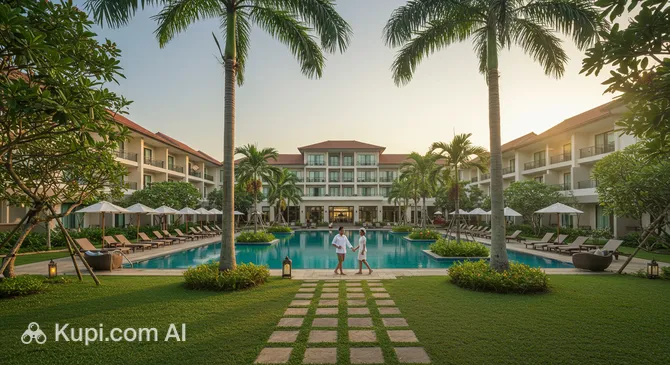
Among the venues where you can enjoy an evening is the Bam Bam BBQ and Hotpot Restaurant, popular for its hotpot and grill format, which is ideal for groups. Many hotels also offer bars or lounge areas for a more relaxed experience; an example is the Phoenix Resort Bac Ninh, where you can enjoy a drink in a comfortable setting. In addition to restaurants, the city features karaoke bars, which are very popular in Vietnam, and small local pubs where both locals and expats gather.

Phoenix Resort Bac Ninh. Illustration.
Source: Kupi.com AI

Traveler photos:

When planning your evening leisure, it is best to head to your chosen locations after 7:00 PM or 8:00 PM. Prices for food and drinks in Bac Ninh are considered moderate, especially compared to Vietnam's major tourist hubs. To get around the city after dark, it is convenient to use taxis or popular ride-hailing apps like Grab. Bac Ninh is generally a safe city for evening walks; however, it is always wise to observe standard precautions: keep an eye on your belongings and avoid poorly lit or deserted areas.

During the day, Bac Ninh also offers interesting leisure options. Guests can visit the Bac Ninh Museum to gain deeper insight into the region's history and culture. Architecture and spiritual site enthusiasts will appreciate local temples like the Ba Chua Kho Temple and significant religious structures including the Bac Ninh Cathedral. Strolls through city parks or along Nguyen Phi Y Lake are also pleasant additions to your itinerary.

Parks & Museums

Bac Ninh, a city with a rich cultural heritage, offers its guests both an immersion into history through museums and ancient temples, and the opportunity to relax amidst urban landscapes. While Bac Ninh may not be famous for extensive park zones in the traditional sense, you can find pleasant spots for walks and getting to know local life.

For those interested in the region's history and culture, the Bac Ninh Museum is a must-visit. It houses artifacts telling the story of the province's centuries-old history, its traditions, and the famous Quan Ho folk singing, recognized by UNESCO as an Intangible Cultural Heritage of Humanity. The museum's exhibition will help you better understand the uniqueness of this part of Vietnam.

Bac Ninh Museum. Illustration.
Source: Kupi.com AI

Traveler photos:

The city also takes pride in its historical and architectural monuments. One such iconic place is the Ba Chua Kho Temple. This is not just a religious structure, but also an important cultural center attracting pilgrims and tourists wishing to touch the spiritual life of Vietnam and admire traditional architecture. Another notable landmark is the Bac Ninh Cathedral, which stands out for its architecture and is an important religious center for the local Catholic community.

Ba Chua Kho Temple. Illustration.
Source: Kupi.com AI

Traveler photos:

Although Bac Ninh may not have large, world-famous parks, urban spaces and the areas around temples often offer greenery and a calm atmosphere for a break from the city's hustle and bustle. Walking through the city streets, especially in the morning or evening hours, can provide pleasant impressions and the chance to observe the daily life of local residents.

Bac Ninh Cathedral. Illustration.
Source: Kupi.com AI

Traveler photos:

For more authentic experiences, stop by the local markets—it's a great way to discover regional products and crafts. Also, don't miss the chance to visit small pagodas and communal houses (dinh), which are often hidden from the main tourist routes but hold the spirit of old Bac Ninh.

Getting Around

Moving around Bac Ninh is possible in several ways, and although there is no metro or tram system, the public transport network is sufficiently developed for the needs of tourists and locals. The foundation consists of buses and various types of taxis.

Buses are the most affordable type of transport in Bac Ninh. The city and suburban bus networks connect various districts and nearby settlements. Tickets are usually purchased directly from the conductor or driver when entering the bus. The fare is low, typically ranging from 5,000 to 10,000 Vietnamese Dong per trip. Specialized tourist passes or multi-trip cards for buses in Bac Ninh generally do not exist; payment is made for each journey. Be prepared for the fact that route information may be predominantly in Vietnamese. Bus operating hours usually cover the daytime, from early morning until evening.

Taxis are a more comfortable, though more expensive, way to get around. Both traditional taxi companies and popular mobile ride-hailing apps (such as Grab) operate in Bac Ninh. It is recommended to use official taxis with meters or check the cost of the trip in advance via the app to avoid misunderstandings. The approximate starting cost for a taxi ride is about 10,000 - 15,000 Vietnamese Dong, with subsequent payment by the meter (about 10,000 - 15,000 Dong per kilometer). Apps usually show an estimated cost before the ride begins. Payment in taxis is made in cash or by card if a terminal is available, and in apps—by a linked card or in cash to the driver.

Motorbike taxis (xe om) are a very common and authentic way of getting around, especially for short distances or in heavy traffic. Motorbike taxi drivers can be found on many streets or also booked via mobile apps. The price for a traditional "xe om" ride should be agreed upon in advance; a short trip around the city can cost between 15,000 – 30,000 Vietnamese Dong. This is a fast and economical option, but don't forget about safety measures and always wear the helmet that the driver is obliged to provide.

Practical tips for tourists: Always carry small cash, especially for paying bus fares or motorbike taxis where cards are not always accepted. If you plan to use taxis frequently, install a popular regional ride-hailing app on your smartphone—this will save time and ensure price transparency. Given the lack of unified travel passes, plan your transport expenses based on single trips. For short distances in the city center, it's quite possible to get around on foot. Bicycle rental is not very common as a form of public transport but may be available at some hotels or tourist zones for leisure rides.

There are no unique modes of transport in Bac Ninh, such as a historic metro or cable cars. The city's transport system is functional and oriented toward meeting the daily needs of its residents and guests.

Accommodation

In the city of Bac Ninh, travelers will find various accommodation options to suit different preferences and budgets. Choices range from budget-friendly guesthouses and small hotels to more comfortable mid-range hotels and modern apartment hotels. For those seeking a higher level of service, options with enhanced amenities are also available.

When choosing a place to stay in Bac Ninh, it is worth paying attention to areas with good transport accessibility and proximity to major infrastructure or sites of interest. The central areas of the city typically offer a wider variety of hotels and make it easier to move around the city and its surroundings.

Among the accommodation options in Bac Ninh, one can highlight the Phoenix Resort Bac Ninh, which offers guests comfortable conditions for relaxation. Overall, the city provides choices for both business travelers and tourists wishing to explore the region's culture.

It is recommended to book accommodation in advance, especially if your trip coincides with major local festivals or holidays when demand for hotels may be higher. The price range varies from budget options to mid-range and high-end offers. Most hotels can be booked through popular online platforms or directly on the hotels' websites.

Nearby Cities

For those who want to explore the surroundings, Bac Ninh serves as an excellent starting point for day trips to several interesting nearby locations:

CityPopulationDistance
Bac Ninh202 87415 km
Bac Giang201 59517 km
Hiep Hoa15 46823 km
Chi Linh220 42125 km
Hanoi8 246 60030 km

These nearby destinations provide insight into the diverse culture and landscapes of the region. For example, Hanoi, the capital of Vietnam, offers a rich historical heritage, busy streets, and the famous Hoan Kiem Lake. Hai Phong is a major port city known for its colonial architecture and proximity to Ha Long Bay. A trip to these and other cities will allow for a deeper acquaintance with Northern Vietnam.

Shopping & Souvenirs

Shopping in Bac Ninh offers tourists the opportunity to immerse themselves in local life and find authentic goods. Although the city may not compare to Vietnam's major metropolises in terms of the number of huge shopping malls, you can find interesting local shops and markets offering a unique shopping experience. The main focus should be on local handicrafts and traditional goods.

The primary shopping areas in Bac Ninh, as in many Vietnamese cities, are concentrated along the busy central streets. Strolling through the city center, you will find many small shops offering clothing, shoes, electronics, and daily necessities. It is also worth checking out the streets adjacent to local markets, where various stalls and shops can often be found.

Small shopping centers or department stores primarily oriented toward locals can be found in Bac Ninh. You shouldn't expect world-class giant malls here, but in such places, you can find stores of famous Vietnamese brands, food courts, and entertainment zones. For more extensive shopping in modern complexes, you might need to head to the country's larger cities.

Markets are the heart of Vietnamese commerce, and Bac Ninh is no exception. A visit to a local market will give you vivid impressions and the chance to purchase fresh produce, exotic fruits, local delicacies, spices, as well as inexpensive clothing, textiles, and household items. Souvenir products can often be found at markets too. Don't hesitate to bargain—it's part of the local culture.

From Bac Ninh, as from Vietnam in general, you can bring back many interesting souvenirs. Look for silk products, traditional "non la" conical hats, lacquerware, ceramics, and handmade items from local artisans. Bac Ninh province is known as the cradle of Quan Ho folk songs, so you can look for souvenirs related to this unique cultural tradition. Vietnamese coffee and tea are also popular.

Most shops in Bac Ninh are usually open from the morning (around 8:00-9:00 AM) until evening (8:00-9:00 PM), though some may close for a lunch break. Markets start operating very early in the morning. The primary method of payment, especially in small shops and markets, is cash (Vietnamese Dong, VND). Larger stores and some hotels may accept bank cards, but it is always better to have enough cash with you.

A Tax Free system for tourists exists in Vietnam, but it is typically applicable for large purchases in authorized stores and upon departure from international airports. Finding stores participating in the Tax Free program in Bac Ninh might be difficult. If you plan on major purchases, check the possibility of a tax refund directly at the store and keep all receipts.

Reached the end of the page?

That means the route is fully explored