Support

Phu Tho

About

Phu Tho is a cozy and authentic city located in northern Vietnam, approximately 80 kilometers northwest of Hanoi. It is nestled in a picturesque valley surrounded by green hills and endless rice fields, serving as a kind of "gateway" to the country's northwestern region. The city is located in the province of the same name, Phu Tho, which is known for its rich historical heritage.
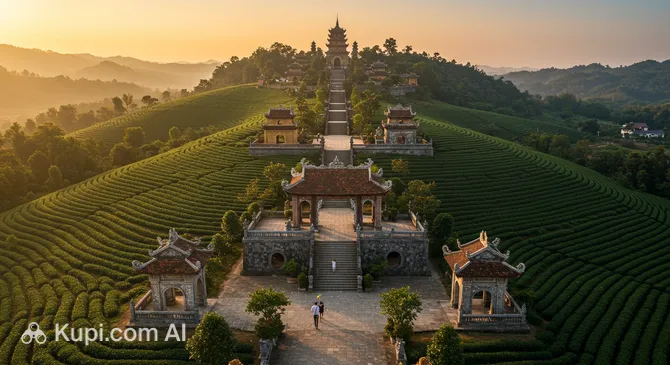
Phu Tho. Illustration.
Source: Kupi.com AI

With a population of about 91,650, Phu Tho retains the charm of a small Vietnamese city where life flows at a measured and calm pace. There is no hustle and bustle of megacities here, but there is an excellent opportunity to immerse yourself in an authentic atmosphere, enjoy leisurely walks, and take in views of the surrounding nature. Phu Tho plays an important administrative role and is the cultural and spiritual center of the province.

The city attracts travelers with its unique blend of history and modernity. Among its main features are ancient temples standing alongside cozy cafes, and traditional crafts carefully preserved by locals. Additionally, Phu Tho is famous for its vibrant folk festivals, providing an opportunity to touch the living culture of the region. Nature lovers will appreciate the chance for secluded walks through the surrounding hills.

If you are looking for a place for a harmonious vacation, are interested in history, and want to feel the authentic spirit of Vietnam, Phu Tho will be a real discovery for you. This city offers a unique experience where everyone will find something for themselves, whether it be cultural enrichment or a peaceful communion with nature.

More interesting facts can be found on the Phu Tho city history page

Weather Overview

The weather in the city of Phu Tho is characterized by warm and humid summers and cooler, dry winters. The average annual temperature varies, reaching its peak in June (around 29.4°C) and dropping to its minimum in January (around 17.0°C). Summer months, especially from May to September, bring the highest amount of rainfall, with August as the rainiest month (averaging 14 mm of rainfall and 26 rainy days). Winter months, such as January, February, November, and December, are significantly drier, with rainfall around 2 mm. Overall, expect warm summers with frequent rain and cooler, dry winters. For more detailed information on climatic conditions, you can visit the Phu Tho Climate page.

Average monthly temperature

Average monthly precipitation

Interesting Facts

Beyond its picturesque landscapes, the city of Phu Tho and its surroundings hide many surprising details and cultural treasures. Here are just a few interesting facts that will help you look at this corner of Vietnam in a new way:

  • Phu Tho is considered not just an ancient city, but the true cradle of the Vietnamese nation. According to legends, it was here that the first dynasty of rulers—the Hung Kings—originated, and the Hung Temple remains a place of pilgrimage for thousands of Vietnamese wishing to honor the memory of their ancestors.

  • One of the most unexpected modern attractions is a unique pedestrian bridge topped with a seven-story pagoda tower. This architectural innovation, which appeared in recent years, quickly became one of the symbols of the region and a favorite spot for photo shoots.

  • Phu Tho province, of which Phu Tho is the administrative center, is famous for its picturesque hills and tea plantations. Locals take pride in their skill in growing tea, which, thanks to the unique climate and fertile soils, turns out particularly fragrant here.

  • Every year, Phu Tho hosts one of Vietnam's most grand and significant celebrations—the Hung Kings Temple Festival. This is not just a celebration, but a massive cultural event with colorful processions, traditional dances, music, and unique rituals preserved since ancient times.

How to Get There

When planning a trip to this region, it is important to think through your route in advance. You can find out more about how to get to Phu Tho by exploring various transport options. Since the city is located relatively close to the capital, logistics usually do not cause difficulties for tourists.

There is no active civilian airport in the city of Phu Tho itself, so most travelers arrive via the air gateways of neighboring large cities. The main "gateway" is Noi Bai International Airport (HAN). It is located in Hanoi, approximately 64 km from Phu Tho. This is the largest transport hub in the north of the country, receiving flights from all over the world. The journey from the airport to the city by taxi or transfer will take about 2 hours.

Alternatively, you can consider Cat Bi International Airport (HPH), located in the city of Hai Phong. However, keep in mind that it is located much further away—about 169 km from Phu Tho. A car trip from here will be long and take approximately 4.5 hours. This option only makes sense if you are planning a combined route or found a very profitable flight specifically to Hai Phong.

For clarity, here is a summary of the main airports:

AirportPassenger trafficDistance
Noi Bai International Airport32.5 mln64 km
Sam Neua65 000164 km
Cat Bi International Airport2.7 mln169 km
Bai Thuong Airport1.2 mln170 km
Van Don260 000229 km

In addition to air travel, you can reach Phu Tho by land transport. An important railway line connecting Hanoi and Lao Cai (on the border with China) passes through the city. Trains in Vietnam are a colorful and budget-friendly way to travel. Bus services are also well-developed: comfortable buses and minibuses regularly depart from Hanoi's bus stations (such as My Dinh), delivering you to the center of Phu Tho in a couple of hours.

Main Attractions

The city of Phu Tho and its surroundings in the eponymous Vietnamese province offer travelers a unique combination of historical shrines and natural beauty. When planning a trip here, be sure to include the following iconic places in your itinerary.

The Hung Kings Temple Complex (Đền Hùng) is perhaps the most important attraction in the region and one of the sacred sites for the Vietnamese people. Located on Nghia Linh Mountain, this complex is dedicated to the legendary Hung Kings—the founders of the ancient Vietnamese state of Van Lang. A visit to the temples will not only introduce you to the origins of Vietnamese culture and history but also offer magnificent panoramic views. It is especially crowded here during the annual Hung Kings Festival, which attracts pilgrims from all over the country.

Xuan Son National Park (Vườn quốc gia Xuân Sơn) is a true paradise for eco-tourists and adventure lovers. The park is famous for its rich biodiversity, dense tropical forests, impressive limestone mountains, numerous caves, and picturesque waterfalls. Here you can go on an exciting trek, explore mysterious grottos, or simply enjoy untouched nature and the purest air.

Ao Chau Pond (Đầm Ao Châu) is often called the "miniature Ha Long Bay on land" for its peaceful beauty. It is an extensive system of freshwater lakes with many small, green-covered islands. Ao Chau is an ideal place for a relaxing holiday: here you can go boating, fishing, or simply enjoy the silence and picturesque landscapes, which are especially beautiful at sunrise or sunset.

Thanh Thuy Hot Springs (Suối khoáng nóng Thanh Thủy) offer an excellent opportunity for health and relaxation. This resort area is known for its natural mineral springs, whose water is rich in nutrients and possesses healing properties. Visitors can take hot baths, enjoy various spa treatments, and rejuvenate surrounded by beautiful nature.

Local Cuisine

The cuisine of Phu Tho is a real discovery for connoisseurs of authentic Vietnamese flavors, where special attention is paid to the freshness of ingredients and a harmonious combination of aromas. A gastronomic journey through this city promises vivid impressions and an introduction to unique local traditions.

Among the dishes that are a must-try in Phu Tho, banh chung stands out—a traditional rice cake filled with mung beans and pork, wrapped in banana leaves. Although it is often prepared for the Lunar New Year, this treat can be found year-round at local markets and family cafes. Be sure to also taste dishes made from fresh river fish, which are prepared here in many ways: steamed with aromatic herbs, fried to a crisp, or stewed in clay pots, served with rice and savory sauces.

Street food in Phu Tho is a separate chapter in the city's culinary book. At lively markets and numerous street eateries, you will be offered the famous pho noodle soup with meat, appetizing fried pastries with vegetables, and, of course, a variety of Vietnamese spring rolls. A specialty of the region are dishes and drinks using local tea grown on nearby plantations—ranging from refreshing beverages to original desserts. Among drinks, besides traditional green tea, fresh juices and tropical fruit smoothies are popular.

Locals and tourists most often enjoy their food in small family restaurants, at colorful markets where you can not only eat but also watch the cooking process, and in numerous street cafes. The gastronomic scene of Phu Tho is characterized by its accessibility and authenticity, offering an immersion into real Vietnamese culinary culture. The city is also known for its gastronomic festivals, during which the streets turn into a true celebration of taste where you can try a whole variety of local delicacies.

Travel Tips

Planning a trip to Phu Tho, the cradle of the Vietnamese nation? To ensure your trip goes smoothly and leaves only pleasant impressions, we have prepared some practical tips. They will help you better navigate the city and enjoy its unique atmosphere.

  1. Clothing and Essentials: The climate in Phu Tho is tropical monsoonal, with hot and humid summers (May-October) and cooler, drier winters (November-April). In summer, choose light, breathable clothing made of natural fabrics, a hat, sunglasses, and sunscreen. In winter months, a light jacket or sweater will come in handy, especially for evening walks. Be sure to bring comfortable shoes for long walks and visiting the Hung Kings temple complex. When visiting temples and pagodas, choose modest clothing that covers shoulders and knees. Don't forget a raincoat or umbrella, especially during the rainy season, and a universal adapter for electronics.

  2. City Transport: Getting around Phu Tho is most convenient by taxi or using motorcycle taxis (xe om). In Vietnam, taxi apps like Grab are popular, but their availability in Phu Tho is best checked on the spot. Public transport may be represented by local buses, but navigating their routes without knowing the language can be difficult. Motorbike rental is possible but requires an international driving permit and experience driving in Asian traffic conditions.

  3. Finances: The official currency is the Vietnamese Dong (VND). You can exchange money at banks or official exchange offices; try to avoid street money changers. Large hotels and some restaurants may accept credit cards, however, cash remains the primary means of payment at markets, in small shops and cafes. ATMs are available in the city, but before your trip, check with your bank for conditions of cash withdrawal abroad and possible fees. Tipping in Vietnam is not strictly mandatory but is always welcomed for good service (usually 5-10% of the bill in a restaurant or a small amount for a guide/driver).

  4. Health and Safety: There are pharmacies (nhà thuốc) in Phu Tho, but not all of them work 24/7. Basic medicines can be purchased without a prescription. It is recommended to carry a small first-aid kit with necessary medications. Be sure to get medical insurance before your trip. Phu Tho is considered a relatively safe city, however, observe basic precautions: keep an eye on your belongings in crowded places, do not leave valuables unattended, and avoid walking in poorly lit areas after dark.

  5. Language and Communication: The official language is Vietnamese. English proficiency among the local population, especially outside tourist sites, may be low. Learn a few basic phrases in Vietnamese: "Xin chào" (Hello/Goodbye), "Cảm ơn" (Thank you), "Bao nhiêu tiền?" (How much does it cost?). For ease of communication and internet access, it is recommended to purchase a local SIM card (e.g., from operators like Viettel, Vinaphone, Mobifone). Wi-Fi is usually available in hotels, cafes, and restaurants.

  6. Local Etiquette: Vietnamese people are hospitable and friendly. It is customary to greet with a slight bow or a nod of the head; you can say "Xin chào". Avoid loud talking and active gesturing in public places. When visiting temples, behave with restraint and respect local traditions. It is not customary to touch another person's head, as the head is considered a sacred part of the body. Always ask for permission before taking photos of local residents.

  7. What to Avoid: Try not to point at people or sacred objects with your finger—use an open palm instead. Do not raise your voice or openly show anger or irritation, as this is considered extremely impolite and can lead to a "loss of face" for all involved. Also, do not leave chopsticks sticking vertically in a bowl of rice, as this is associated with funeral rituals.

  8. Special Tip – Hung Kings Temples: Phu Tho is known as the ancestral land of the Vietnamese people, and its main attraction is the Hung Kings Temple Complex on Nghia Linh Mountain. Be sure to set aside time for a visit to touch the history of Vietnam. If your trip coincides with the Hung Kings Festival (usually in early April), you can witness grand celebrations, but be prepared for large crowds.

We hope these tips help you feel more confident and make your trip to Phu Tho truly comfortable and rewarding. We wish you an unforgettable experience getting to know this ancient and welcoming city!

Entertainment & Nightlife

When the sun sets over Phu Tho, the city doesn't go to sleep but offers its guests and residents various ways to spend the evening. While Phu Tho may not be famous for rowdy 24-hour parties like the megacities, you can find cozy spots for relaxation and entertainment that reflect the local flavor.

Evening life in Phu Tho is mainly centered around local restaurants, where you can enjoy Vietnamese cuisine in a pleasant setting, many of which stay open until late evening. Establishments serving "bia hoi" (fresh draught beer) are popular—a great place to soak up the authentic atmosphere. Karaoke bars are also widespread, being a favorite pastime for Vietnamese people. While the choice of large night clubs in the Western sense may be limited, the charm of Phu Tho's nightlife lies in discovering authentic local bars and music cafes. It is best to ask locals about specific popular spots or explore them yourself by walking through the lively streets. Occasionally, evening cultural events or night markets may take place in the city, offering street food and souvenirs.

Main points of evening activity are usually concentrated not so much in one clearly defined "nightlife center" but along the main streets connecting different city districts, especially those passing by local markets, which transform in the evening to offer street food and drinks. It is also worth looking into neighborhoods known for a cluster of family restaurants and traditional eateries, where the atmosphere becomes particularly lively after sunset. The vibe here is generally quite relaxed and friendly. The crowd is mostly local, providing an opportunity to observe the daily life of the residents. Most establishments do not have strict dress code requirements; a neat casual style is welcomed. Main activity starts after dinner and continues until late evening, though not always until the early morning.

The best time for evening walks and visiting establishments is after 19:00-20:00. Prices in Phu Tho are generally very affordable, especially compared to the major tourist centers of Vietnam. You can get around the city at night by taxi or using motorcycle taxis (xe om). It is recommended to use the services of official taxi companies or trusted mobile apps for calling transport, if available in the city.

Phu Tho is generally considered a fairly safe city. However, as elsewhere, it is worth taking basic precautions after dark: avoid poorly lit and deserted streets, and keep an eye on your belongings. If you plan to return late, it is better to think through your route in advance or use a taxi.

During the day, Phu Tho also offers interesting leisure options. Guests can visit local historical and cultural sites, stroll through city parks or squares, and explore the variety at daytime markets where life is in full swing. For a deeper immersion into the region's culture, you can visit local temples and pagodas. Although the city may not have large amusement parks or massive museum complexes, getting to know its authentic atmosphere and the hospitality of its residents is a pleasant experience in itself.

Parks & Museums

The city of Phu Tho, located in the Vietnamese province of the same name, offers its guests opportunities for both peaceful relaxation in nature and getting to know the rich cultural and historical heritage of the region. Here you can find both green oases and places that preserve ancient legends.

Although the city of Phu Tho itself may not boast extensive park ensembles, you can always find cozy squares and green zones to relax from the city bustle. These places are perfect for leisurely walks and observing the daily life of local residents. For a larger-scale immersion into nature and history, you should visit the Hung Kings Temple Historical and Cultural Complex (Đền Hùng). Located on picturesque wooded hills near the city, this complex is not only a major sanctuary in Vietnam but also a beautiful natural park where you can walk for hours enjoying the silence and beauty of nature.

A key cultural site that cannot be ignored when traveling through Phu Tho province is the Hung Vuong Museum (Bảo tàng Hùng Vương). It is located within the aforementioned temple complex and offers visitors a unique opportunity to learn more about the legendary dynasty of founders of the Vietnamese state and see valuable archaeological finds and artifacts. Within the city of Phu Tho itself, you may also encounter small exhibitions or cultural centers dedicated to local history and crafts, which allow for a deeper understanding of local traditions.

The main historical and architectural landmark of the region is certainly the Hung Kings Temple Complex. This place holds immense significance for the Vietnamese people, as it is here, according to legend, that the capital of the first Vietnamese state, Van Lang, was located. The architecture of the temples, pagodas, and mausoleums, harmoniously integrated into the natural landscape, leaves an indelible impression and allows you to touch the origins of Vietnamese culture.

For a more authentic experience during your stay in Phu Tho, it's worth visiting the local market. This is a bright and lively place where you can not only buy fresh fruit and local delicacies but also observe the daily life of the city's residents. Also, don't miss the opportunity to visit one of the small pagodas or communal houses (đình) in the city or its outskirts—this will help you better understand the spiritual life and traditional architecture of the region.

Getting Around

Getting around the city of Phu Tho is possible by public transport and taxi. Although the transport system here is not as extensive as in megacities, it allows you to reach the main points of the city and its surroundings.

The main form of public transport in Phu Tho is buses. They run on various routes, connecting the city center with its districts and some nearby settlements. Buses are the most economical way to get around, popular among both locals and tourists looking to save money.

For short trips and quick movement around the city, motorcycle taxis (xe om) are very popular. This is a common type of transport in Vietnam, and Phu Tho is no exception. A motorcycle taxi driver is easy to find on the city streets. This option is convenient for maneuvering in heavy traffic, if any, and for reaching places where buses do not go.

Also, taxi services are available in Phu Tho. Taxi cars can be found at special stands, near hotels, large stores, or called by phone. Some tourists prefer to use mobile apps for ordering a taxi if they work in the region, as this allows you to know the approximate cost of the trip in advance.

The fare payment system in Phu Tho is quite simple. On buses, payment is usually made in cash to the conductor or driver upon entry; it is recommended to have small change with you. The cost of a motorcycle taxi ride should be agreed upon with the driver in advance, before the trip begins, as there are no fixed tariffs. In taxis, meters are usually installed, but it wouldn't hurt to make sure one is present and working before the trip, or clarify the cost if the trip is carried out at a fixed rate to a certain area.

Tourists planning to use public transport in Phu Tho should keep a few things in mind. Information about bus routes and their schedules is best clarified with locals or at the hotel, as it is not always available online. Buses usually run from early morning until evening, but the frequency of service may decrease during off-peak hours. When using a motorcycle taxi, always wear a helmet, which the driver is required to provide. For taxi rides, choose cars from official services or use trusted apps.

As an alternative to public transport in Phu Tho, you can consider walking, especially if you are staying in the city center and plan to see nearby attractions. For longer trips or more freedom of movement, some tourists may consider renting a motorbike if they are confident in their driving skills and familiar with local traffic rules. Bicycle rental is less common but may be available at some hotels.

Accommodation

When planning a trip to Phu Tho, you will find a wide selection of accommodation options suitable for any budget and preference. The city offers economy guesthouses and cozy family hotels, as well as mid-range hotels with an expanded range of services. For those wishing to dive deeper into local life, short-term rental apartments and rooms in the private sector are available.

When choosing where to stay in Phu Tho, consider areas near the center or key transport hubs. This location will provide easy access to attractions, markets, and restaurants. While Phu Tho cannot boast an abundance of luxury resorts like some other tourist centers in Vietnam, you will easily find comfortable hotels with quality service here.

The price range for housing in Phu Tho varies from very budget options to mid-category hotels, allowing every traveler to find a suitable choice. For searching and booking, it is convenient to use popular online services such as Booking.com or Agoda, as well as checking offers directly on hotel websites. Contacting local travel agencies upon arrival is also possible, though the selection may not be as wide.

To guarantee the best conditions and prices, especially during national holidays or the high tourist season, it is recommended to book your stay in advance. Overall, finding a suitable place to stay in Phu Tho is not difficult if you determine your expectations and financial capabilities beforehand.

Nearby Cities

For those who want to explore the surrounding area, Phu Tho serves as an excellent starting point for day trips to several interesting nearby places:

CityPopulationDistance
Viet Tri277 53915 km
Tuyen Quang36 43039 km
Tan Son9 96640 km
Vinh Yen152 80142 km
Son Tay230 57744 km

These nearby destinations provide insight into the diverse culture and landscapes of the region. Each trip promises new discoveries, whether it's experiencing the lively capital life of Hanoi or exploring quieter cities like Viet Tri or Son Tay.

Shopping & Souvenirs

Shopping in Phu Tho offers tourists an immersion into the atmosphere of Vietnamese provincial life rather than the hustle and bustle of large shopping malls. Here you will find local goods and authentic markets rather than global brand boutiques. The city and its surroundings are famous for certain agricultural products, especially tea, as well as traditional handicrafts.

Main shopping opportunities in Phu Tho are concentrated in the central part of the city and along the main streets. Instead of dedicated shopping districts, shops and stalls here are often located around the central market or along busy transport arteries. Walking through the city, you can find small shops offering clothes, shoes, household goods, and, of course, local products.

Large modern shopping centers, common in megacities, are unlikely to be found in Phu Tho. However, there may be small local department stores or shopping complexes where you can find various goods under one roof. These can be food products as well as clothing, electronics, or household items.

The main place for shopping and getting to know local trade is undoubtedly the Phu Tho Central Market (Chợ Phú Thọ). It is the heart of the city's commercial life, where you can find fresh fruit, vegetables, meat, fish, spices, and ready-to-eat food. In addition, the market often sells clothing, textiles, household goods, and simple souvenirs. Visiting the market is a great opportunity to observe the daily life of the residents and feel the local flavor.

As souvenirs from Phu Tho, it's worth paying attention to local specialties. First and foremost is the green tea for which Phu Tho province is famous. You can also look for products from local artisans if they are represented at the market or in small shops—these could be woven items, simple ceramics, or textiles. Of course, traditional Vietnamese souvenirs like non la conical hats or silk products (though the selection may be more modest than in large tourist centers) may also be available.

Shops in Phu Tho are usually open from the morning, around 8:00-9:00, and work until the evening, around 20:00-21:00. Markets start very early, often from 6:00-7:00 AM, and may close earlier, especially the food stalls. The main method of payment, particularly at markets and in small shops, is cash (Vietnamese Dong, VND). In some larger stores or supermarkets, bank cards may be accepted, but it is better to always have enough cash with you. ATMs for withdrawing money are generally available in the city.

As for the Tax Free system, it exists in Vietnam for foreign tourists when making purchases of a certain amount in participating stores. However, in small cities like Phu Tho, finding stores with such a service may be difficult. The possibility of a VAT refund is more common in large tourist centers and international airports. If you plan on making large purchases, it's worth clarifying this issue directly in the store.

Reached the end of the page?

That means the route is fully explored