Support

Soc Trang

About

Soc Trang is a colorful and authentic city located in the picturesque Mekong Delta. It is a place where the traditions of three peoples—the Vietnamese (Kinh), Khmer, and Chinese (Hoa)—harmoniously intertwine, creating a unique cultural mosaic. The city attracts travelers not with noisy entertainment, but with its spiritual atmosphere, unique architecture, and the calm pace of life so characteristic of Asia's river regions.

Geographically, the city is the administrative center of the province of the same name in the south of Vietnam. The climate here is tropical monsoon, which ensures warmth all year round, while numerous canals and rivers make the landscape especially scenic. The city's population is about 300,000 people, allowing it to maintain a cozy atmosphere while still possessing developed infrastructure for receiving guests.

The centuries-old history of Soc Trang has left a bright mark on its appearance, turning the city into a real open-air museum. Here, more than anywhere else in the delta, the influence of Khmer culture is strong, which is reflected in everyday life, language, and, of course, in the religious buildings that are the main points of attraction for tourists.
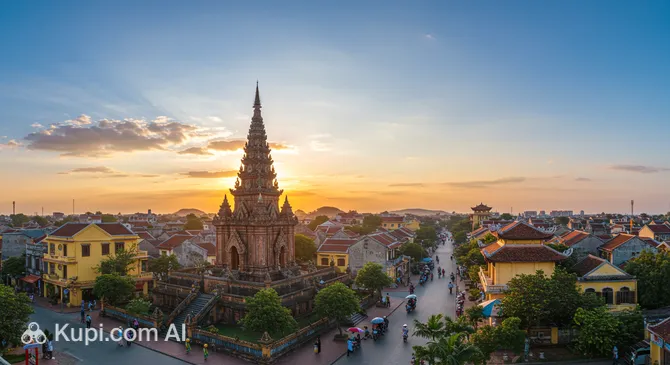
Soc Trang. Illustration.
Source: Kupi.com AI

Among the key attractions worth coming here for, the famous temples stand out. The Bat Pagoda (Chua Doi) surprises not only with its architecture but also with its garden, home to thousands of flying foxes. No less interesting is the Clay Pagoda (Chua Dat Set), known for its statues and candles created by hand from clay. In addition, Soc Trang is famous for its festivals, the most vibrant of which is Oc Om Boc, featuring exciting "ngo" boat races.

A visit to Soc Trang will be an unforgettable experience for those seeking authenticity and wanting to touch the deep culture of the region. We recommend including this city in your itinerary to try the famous Bun nuoc leo soup, stroll through the shady alleys of the pagodas, and experience the sincere hospitality of the local residents.
Weather Overview

The climate of Soc Trang is typical of the Mekong Delta region: tropical heat prevails, and the year is clearly divided into two seasons. The temperature background remains consistently high throughout all twelve months, with average values from +26°C to +30°C. The hottest period is traditionally April, when the air warms up to +33°C before the arrival of the monsoons.

Expect hot weather year-round with a long rainy season from May to November and a dry, sunny period from December to April. The dry season is characterized by minimal precipitation (0–3 mm per month) and clear skies, making it the most comfortable time for excursions. If you need details for trip planning, a detailed Soc Trang weather report is available on a separate page.

The wet season brings significant changes: from May, the number of rainy days increases sharply, peaking from July to October, when precipitation can fall almost daily (up to 30 days per month). Despite frequent downpours, the air temperature hardly drops, creating high humidity. November is a transition month when the rains gradually recede, giving way to the dry winter.

Average monthly temperature

Average monthly precipitation

Interesting Facts

In addition to its main attractions, Soc Trang holds many fascinating secrets and legends that give its history even more depth. This city, born at the crossroads of cultures, is full of amazing details that often escape the gaze of the average tourist.

Bat Pagoda. Illustration.
Source: Kupi.com AI

Traveler photos:

  • The Mystery of the Name. The city's name comes from the Khmer phrase "Srok Kh'leang," which translates to "Silver Warehouse" or "Treasury." Historians believe that in ancient times, the silver treasury of the Khmer rulers of the region was located here, emphasizing the historical significance of this place long before modern borders appeared.

  • Polite Temple Residents. The famous Bat Pagoda is known for its winged inhabitants, but few know the legend associated with them. Local monks claim that the thousands of flying foxes living in the garden never eat the fruit growing on the pagoda's grounds. The animals fly to neighboring gardens to search for food, as if showing respect for the sacred land that gave them shelter.

  • Eternal Fire of Clay. The city is home to the unique Clay Pagoda (Chua Dat Set), which houses giant candles weighing up to 200 kilograms. An amazing fact is that two of these candles were lit in 1970 and have been burning continuously ever since. According to the servants' calculations, their flame will last for several more decades, making them a kind of symbol of the eternity of faith.

  • Kingdom of Purple Onions. Soc Trang is the largest producer of purple shallots in the Mekong Delta. During the harvest season, the fields around the city and coastal zones are painted in bright purple tones. This ingredient is so important to the local economy and cuisine that it is often called the "purple gold" of the region.

How to Get There

When planning a trip to the Mekong Delta, it is important to think about logistics in advance, as the city does not have its own airport or railway station. You can study all ways to get to the city in detail, but most often travelers combine a flight to major neighboring centers with a bus or taxi ride.

There is no airport in the city of Soc Trang itself, but you can fly to Can Tho Airport (VCA) in Can Tho, which is located about 60.6 km from Soc Trang. This is the nearest air hub receiving domestic flights. The journey from here by taxi or transfer will take about 1.5 hours, making it a convenient option for those already in Vietnam.

For international travelers, the main gateway is Tan Son Nhat (SGN) in Ho Chi Minh City. This is the country's largest international airport, located 153.7 km from Soc Trang. Despite the greater distance, most flights from abroad arrive here. The journey from Ho Chi Minh City airport to Soc Trang by intercity bus or car usually takes from 3.5 to 4.5 hours depending on traffic.

For clarity, here is a summary of the main airports:

AirportPassenger trafficDistance
Can Tho Airport1.3 mln61 km
Ca Mau Airport200 000100 km
Con Dao450 000121 km
Tan Son Nhat International Airport41 mln154 km
Phu Quoc Airport4.1 mln226 km

As for rail transport, there are no railway stations in the city of Soc Trang itself or its immediate surroundings. The railway in Vietnam (the famous "Reunion Express") runs along the coast and ends in Ho Chi Minh City, without going deep into the Mekong Delta.

Therefore, it is impossible to reach Soc Trang solely by train. The optimal route for train lovers is to reach Saigon Station in Ho Chi Minh City and then transfer to a comfortable sleeping bus or a taxi, which will take you directly to the center of Soc Trang in a few hours.

Main Attractions

Soc Trang offers travelers a unique combination of cultural and gastronomic experiences. The city's main attractions reflect its rich Khmer heritage and the culinary traditions of the Mekong Delta.

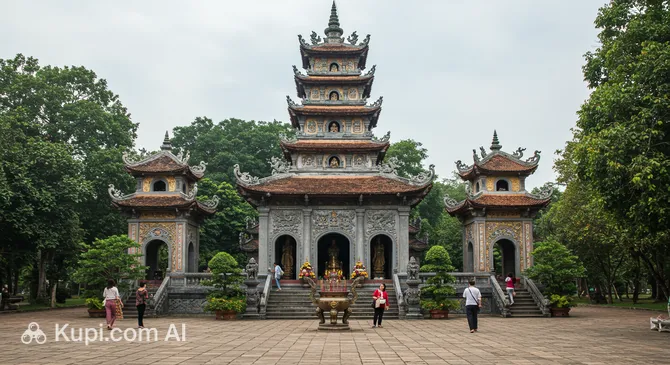
Central among the attractions is the famous Bat Pagoda (Chua Doi). This ancient Khmer temple impresses with its exquisite architecture, bright murals, and peaceful atmosphere. However, its main feature is the huge colony of giant flying foxes that have found refuge in the pagoda's garden. Watching these creatures, which are sacred to the monks, at sunset as they head out in search of food is an unforgettable sight for visitors.

Bat Pagoda. Illustration.
Source: Kupi.com AI

Traveler photos:

A trip to Soc Trang would be incomplete without exploring its cuisine. The city is famous for its unique soups. Be sure to try Bun nuoc leo with river fish, Soc Trang—a signature dish of the region, consisting of a rich broth with rice noodles, pieces of fish, and aromatic herbs. Its complex flavor, combining sweetness, acidity, and spice, is the hallmark of local gastronomy. Another interesting dish worth tasting is Bun goi da at Aunt Hang's. This is a type of noodle salad soup with shrimp, pork, and a thick sauce based on peanuts and fermented soybeans, served with fresh herbs and vegetables. Trying it in an authentic family cafe is a great way to immerse yourself in the city's culinary culture.

Local Cuisine

The gastronomic scene of Soc Trang is a vivid reflection of the region's multicultural history, where the culinary traditions of the Vietnamese, Khmer, and Chinese have mixed in one pot. Local cuisine is distinguished by the bold use of spices, fermented sauces, and the freshest gifts of the Mekong. Food here is not just about satisfying hunger, but a way to get to know the soul of the city, which is often called one of the gastronomic capitals of the delta.

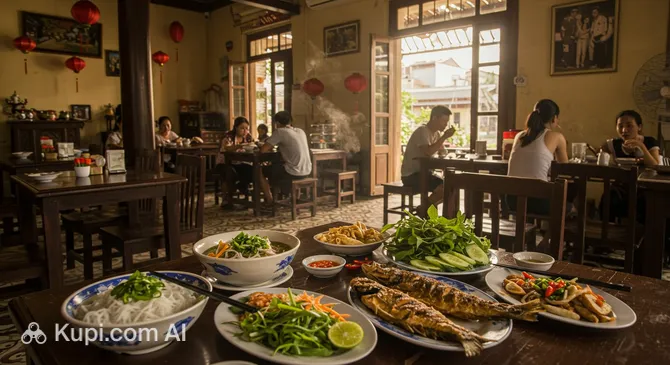
The undisputed king of local cuisine is the soup Bun nuoc leo with river fish, Soc Trang. The secret of its unique taste lies in the broth, which is cooked with the addition of a special "prahok" fish sauce, lemongrass, and coconut water. The dish is usually served with rice noodles, pieces of snakehead (river fish), shrimp, and crispy pork. Despite the specific aroma during preparation, the taste of the soup turns out surprisingly balanced and mild, making it a must-try for any gourmet.

Bun Nuoc Leo with Field Fish, Soc Trang. Illustration.
Source: Kupi.com AI

Traveler photos:

Another unique dish that is hard to find outside the province is Bun goi da at Aunt Hang's. Originally it was a spring roll (goi cuon) that locals decided to eat "deconstructed" in a bowl, pouring over a sweet and sour broth. The main highlight of this soup is a thick sauce based on tamarind and fermented soybeans, which gives the dish a characteristic piquant note. Combined with fresh herbs, bean sprouts, and shrimp, it creates a real explosion of flavor.

For those with a sweet tooth, Soc Trang is known as the birthplace of the famous Banh Pia cake. This flaky pastry with a filling of mung bean paste, durian, and salted egg yolk is sold on every corner. Locals often eat it while sipping hot green tea to balance the sweetness. The aroma of durian may seem unusual, but it is what makes this dessert a symbol of the city.

As for drinks, refreshing options are popular in the hot climate of the Mekong Delta. Freshly squeezed sugarcane juice (nuoc mia) with added kumquat for tartness is sold everywhere on the streets. An invariable attribute of life remains Vietnamese coffee with condensed milk (ca phe sua da), which is drunk strong and iced. Among alcoholic beverages, local rice wine is worth noting, which is sometimes infused with herbs or fruits, but it is better to try it in verified places.

The dining culture in Soc Trang is democratic and open. It is not common to hide in expensive restaurants behind closed doors. The most delicious and authentic food awaits you at morning markets and in small family cafes with plastic chairs set right on the sidewalk. Breakfast here is the main meal of the day, so it's better to head out for a soup tasting early, while the broth is at its freshest and the city is just waking up.

Travel Tips

Welcome to Soc Trang! To ensure your immersion into the unique culture of the Mekong Delta goes smoothly and leaves only pleasant memories, we have collected a list of the most relevant and proven practical recommendations for you.

  1. Clothing and Dress Code. Given the hot tropical climate, choose light clothing made of natural fabrics (cotton, linen). However, remember that Soc Trang is a city of temples. To visit pagodas, be sure to bring items that cover your shoulders and knees, otherwise you may not be allowed onto the grounds of the shrines. We also recommend wearing shoes that are easy and quick to take off (sandals or flip-flops), as you must remove your shoes when entering any temple premises.

  2. Transport. The most convenient and price-transparent way to get around is using the Grab mobile app (similar to Uber). You can order both a car and a motorcycle taxi (GrabBike), which will be significantly cheaper. City buses for tourists can be difficult due to the lack of a clear schedule, and long-distance walks are tiring due to the heat. Renting a scooter is only for experienced drivers.

  3. Finances. In Soc Trang, cash is king—Vietnamese Dong (VND). Bank cards are only accepted in large supermarkets (e.g., Co.opmart), shopping centers, and some hotels. In markets, street cafes, and souvenir shops, payment is possible exclusively in cash. Try to have small bills with you, as sellers may not have change for large banknotes. ATMs can easily be found in the city center.

  4. Health and Safety. It is categorically not recommended to drink tap water—buy only bottled water. Due to the humid climate, be sure to use mosquito repellent, especially in the evening and when visiting parks. Pharmacies can be recognized by the "Nhà Thuốc" sign; many basic medicines are sold there without a prescription.

  5. Communication. English is not widely spoken here; it is mainly spoken by hotel staff. For communication at markets and with drivers, be sure to download an offline translator and a map of the city. It is better to purchase a local operator's SIM card immediately upon arrival or at communication stores—mobile internet in Vietnam is cheap and fast, which will greatly simplify navigation.

  6. Local Etiquette. Vietnamese and Khmer people are very polite. You can greet locals with a slight nod and a smile. An important rule: never pat children on the head or touch the heads of adults—in Buddhist culture, this is the most sacred part of the body, and such an action is considered a gross insult. It is also customary to remove your shoes when entering private homes.

  7. What to Avoid. The main taboo is the public display of anger. Never shout or argue in public, even if a problem arises. In Asian culture, this leads to a "loss of face" and will only aggravate the situation; a smile and calmness will help solve the issue much faster. Also, avoid overly revealing clothing outside your room.

  8. Gourmet's Tip. If you decide to buy the famous local Banh Pia cake as a souvenir or snack, don't just grab the first packages you see in the supermarket. Ask locals or a guide where the bakeries are that sell these cakes warm, straight from the oven. The taste of a fresh dessert with a soft filling is radically different from the factory version.

Soc Trang is a welcoming and peaceful city where a sincere smile often replaces language skills. By following these simple tips, you will be able to feel confident and comfortable here, focusing on exploring the rich traditions and enjoying the atmosphere of this amazing corner of Asia.

Entertainment & Nightlife

Nightlife in Soc Trang differs significantly from bustling metropolises like Ho Chi Minh City. Here, you won't find the neon signs of massive nightclubs or red-light districts. Evening leisure in this provincial city is a quiet, measured pastime filled with local flavor, where the main activities are dinner with friends, walking through the cool streets, and, of course, karaoke.

The center of attraction in the evening is the area around Ho Nuoc Ngot Park (Hồ Nước Ngọt) and the central market. As dusk falls, the heat subsides, and locals head out onto the streets. The park turns into a lively venue with rides, glowing lights, and numerous street food stalls. It is an ideal place for safe night walks, where you can observe city life and feel the true atmosphere of the Mekong Delta.

Gastronomy is the main component of Soc Trang's nightlife. An evening here usually begins with a hearty dinner that smoothly transitions into long social gatherings. Local establishments stay open late, offering authentic dishes. Be sure to stop by a restaurant serving the famous Bun nuoc leo with river fish, Soc Trang. In the evening, the aroma of this soup becomes particularly enticing, and the atmosphere in the establishment feels homey and cozy.

Another excellent location for an evening meal is Bun goi da at Aunt Hang's. Here, you can not only enjoy a delicious meal but also see how local families relax. The style of most such places is extremely casual: plastic chairs, open terraces, and no strict dress code. Dress comfortably and simply—shorts and a T-shirt are perfectly appropriate.

If you're in the mood for music, head to the karaoke bars. This is the most popular type of night leisure in Vietnam. In Soc Trang, there are many establishments with "Karaoke" signs where you can rent a private room with good sound and service. For those who prefer a quieter holiday, night cafes (cà phê) are open, where you can drink iced coffee or a smoothie to the sounds of Vietnamese pop music. Western-style bars are rare here, but iced beer is served in almost any cafe.

As for daytime entertainment, it is cultural and educational in nature. The city offers visits to unique Khmer temples, such as the Bat Pagoda, as well as local museums. However, remember that most cultural sites close early, around 17:00, so plan your excursions for the first half of the day.

Practical Tips:

  • The best time to go out into the city is after 19:00, when a comfortable temperature sets in.
  • The average bill for dinner for two with drinks rarely exceeds 150,000 – 200,000 VND.
  • The city goes to sleep quite early: by 22:00–23:00, most restaurants close, and only karaoke bars and 24-hour shops remain open.
  • Soc Trang is safe for tourists, but avoid unlit alleys on the outskirts. To get around at night, it is most reliable to call a taxi through an app or ask the staff at an establishment to order a car for you.

Parks & Museums

Although Soc Trang is known primarily for its religious shrines, the city and its surroundings offer travelers the opportunity to relax in shady green areas and dive deeper into the region's history through museum exhibits. Here, nature harmoniously coexists with cultural heritage, creating an atmosphere of tranquility and cognitive interest.

For those seeking solitude with nature, the Tan Long Stork Garden is a real find. This is a unique nature reserve located in the suburbs, where thousands of white storks and other birds nest among dense bamboo groves and coconut palms. The sight becomes especially impressive at sunset when flocks of birds return to their nests, painting the sky in white tones. Another popular place for walking is Ho Nuoc Ngot Lake Park (Hồ Nước Ngọt). This is the "green lungs" of the city—a vast area with a large freshwater lake where lotuses bloom, and shady alleys perfect for picnics and morning jogs.

The cultural wealth of the region is vividly represented in local museums. The main one is the Khmer Culture Museum (Bảo tàng Khmer), located in a building constructed in a traditional architectural style. The museum's exhibition tells in detail about the life, religion, and art of the ethnic Khmers living in the Mekong Delta. Here you can see musical instruments, traditional clothing, agricultural tools, and ancient manuscripts on palm leaves. It is also worth looking into the Soc Trang Provincial Museum, which houses artifacts related to the revolutionary history of the region and its development in different eras.

Bat Pagoda. Illustration.
Source: Kupi.com AI

Traveler photos:

Among the historical and architectural monuments, a special place is occupied by the famous Bat Pagoda (Chua Doi). This is not just a temple, but a real architectural and natural complex, where ancient buildings are surrounded by a centuries-old garden. Tourists are attracted here not only by the exquisite decor and Buddha statues but also by the opportunity to see a colony of flying foxes living in the trees right on the territory of the shrine. Another significant object is the Khleang Pagoda—one of the oldest Buddhist temples in the province, dating back to the 16th century, which impresses with its wood carvings and harmonious proportions.

For lovers of unusual experiences, we suggest visiting the Nga Nam Floating Market in the early morning hours. Although it is located at some distance from the city center, this place allows you to see the living history of trade in the Mekong Delta, where boats loaded with fruits and vegetables create a colorful and noisy labyrinth on the water.

Getting Around

The public transport system in Soc Trang is relatively modest, which is typical for small provincial cities in the region. Here you won't find subways, trams, or trolleybuses. The main burden of passenger transport falls on the bus network, taxis, and private drivers, which gives moving around the city a special local flavor.

City and suburban buses (Xe buýt) are the most budget-friendly way to get around. The route network connects the city center with remote areas and neighboring provinces. Buses are usually painted in bright colors (often yellow or green) and run at intervals of 15–30 minutes. However, for sightseeing within the city, they are not always convenient, as stops can be far from the locations you need, and the schedule is not always strictly followed.

The most comfortable and popular option for tourists is the taxi. Official services (such as Mai Linh) operate in the city, and their cars are equipped with meters. In addition, mobile taxi-hailing apps such as Grab function actively here. Using the app removes the language barrier, allows you to see a fixed trip cost in advance, and pay for it with a linked card, which eliminates the need to look for small change.

For short trips and immersion in the atmosphere of local life, the motorcycle taxi (Xe ôm) is ideal. Drivers can be found at intersections, near markets, and attractions. If you catch a "xe om" on the street, the price must be agreed upon in advance, before the trip starts. The Grab app also has an option to order a motorcycle taxi (GrabBike), which often comes out cheaper and safer, as the driver is provided with a helmet for the passenger.

Fans of freedom of movement should consider renting a scooter. Rental points are often located at hotels or guesthouses. For a rental, you usually need to leave a passport or a cash deposit as security. Traffic in the city may seem chaotic, but speeds here are low, so experienced drivers adapt quickly. Bicycle rentals are less common, but some hotels provide bicycles to their guests for free for trips around the neighborhood.

The payment system in Soc Trang's public transport is predominantly cash. On buses, tickets are purchased from the conductor immediately after boarding; the cost depends on the distance of the trip and is usually very low. There are no transit cards or validators here. In taxis and shops, it's better to always have small Vietnamese Dong bills with you, as drivers often don't have change for large banknotes. Public transport operates from approximately 05:30 AM to 05:30–06:00 PM, so for late trips, rely only on taxis.

Accommodation

The hotel infrastructure in Soc Trang is primarily aimed at practical travelers and pilgrims. Here, you won't find luxury five-star resorts or representatives of major international hotel chains. The basis of the offerings consists of cozy middle-class hotels (2–3 stars), mini-hotels, and traditional Vietnamese guesthouses known as "Nha Nghi." This type of accommodation allows you to comfortably relax after an eventful day without overpaying for unnecessary luxury.

Where is the best place to stay: The most convenient area for tourists to stay is the city center (Phường 1 and Phường 2). By choosing a hotel in the vicinity of the Central Market or Ho Nuoc Ngot Park, you will be within walking distance of the main gastronomic points and transport hubs. This is a strategically sound decision, as many attractions, including the famous pagodas, are located near the center, and the area is full of life in the evening.

Price range and features: Soc Trang pleases with its democratic prices. Staying here is considered budget-friendly even by Vietnamese standards. A night in a tidy guesthouse or a small hotel will cost a very modest amount, while the rooms usually have everything you need: air conditioning, hot water, and Wi-Fi. Higher-level hotels (local "luxury" standard) offer spacious rooms and breakfast, but prices for them remain within the mid-segment.

Booking tips: During regular times of the year, finding a vacant room is not difficult even without a preliminary reservation—you can just arrive and check in (walk-in). However, the situation changes drastically during major holidays, especially during the Oc Om Boc festival (usually in November). During this period, thousands of guests flock to the city for the boat races, and accommodation is booked several months in advance. To find options, it is convenient to use popular international online platforms, but for the smallest family guesthouses, direct booking by phone or on-site may be required.

Nearby Cities

For those who want to explore the surrounding area, Soc Trang serves as an excellent starting point for day trips to several interesting nearby places. The city's convenient location makes it easy to reach neighboring provinces and get to know their unique features without spending much time on the road.

Just a few dozen kilometers away is Bac Lieu—a city steeped in legends about wealthy landlords of the past. Here it is worth visiting the luxurious house of the "Prince of Bac Lieu" (Cong Tu Bac Lieu), which has preserved colonial-era interiors, and seeing the modern wind farms on the coast, which have become a popular location for photo shoots. Also interesting is Can Tho, considered the capital of the Mekong Delta. A trip here will provide an opportunity to see the famous Cai Rang floating market, where trade is conducted directly from boats, and stroll along the picturesque Ninh Kieu wharf.

Lovers of flowers and romance should pay attention to Sa Dec. This cozy town is famous for its flower villages, which supply plants across the country, and the ancient Huynh Thuy Le House, associated with the story of Marguerite Duras's novel "The Lover".

CityPopulationDistance
Thuan Tien29 8061 km
Nga Bay101 19228 km
Vinh Chau183 91831 km
Bac Lieu240 04544 km
Long My71 96345 km

These nearby destinations provide an idea of the region's diverse culture and landscapes, perfectly complementing the impressions of your journey.

Shopping & Souvenirs

Shopping in the city of Soc Trang is, first and foremost, an immersion into local culture and gastronomy, rather than a chase after global brands. You won't find endless rows of high-fashion boutiques here, but you will be able to purchase unique authentic goods produced only in the Mekong Delta. Trade here is conducted in a measured and soulful way, and most purchases are made at colorful markets and specialized family shops.

The main shopping life of the city is concentrated around the Central Market and adjacent streets such as Hai Ba Trung and Hoang Dieu. Walking through this area, tourists can find clothing, shoe, fabric, and household goods stores. This is a great place to buy inexpensive summer clothes suitable for the hot climate or simply observe the busy daily life of the locals.

For those accustomed to modern comfort and air-conditioned premises, several shopping centers operate in Soc Trang. The most popular is Co.opmart Sóc Trăng—a large supermarket with a gallery of shops where you can buy everything from food to cosmetics and clothing at fixed prices. Also worth mentioning is Vincom Plaza Sóc Trăng, which offers a more modern shopping format with entertainment zones, a cinema, and brand departments.

The true heart of commerce is the Soc Trang Central Market (Chợ Sóc Trăng). This is a place where the aromas of fresh fruits, spices, and street food mix. Here you can buy exotic fruits at very low prices, fabrics with traditional patterns, and handmade products. The market is not just a trading platform, but a center of social life where it is customary to bargain and communicate with sellers.

Speaking of souvenirs from Soc Trang, one cannot fail to mention the famous Banh Pia cake. This is a flaky pastry with a filling of durian, green beans, and salted egg yolk, which has become a gastronomic symbol of the province. It is best to buy them at the company stores of major manufacturers, such as Tan Hue Vien. In addition, local lap xuong sausages and shrimp crackers are popular and make excellent tasty gifts for friends.

Shops in the city usually open around 8:00 AM and work until 9:00 or 10:00 PM. Markets start their activity much earlier—at dawn, around 5:00–6:00 AM, and activity there may subside by lunch. The main method of payment remains cash (Vietnamese Dong), especially in markets and small shops. Bank cards are accepted in shopping centers, large supermarkets, and some souvenir shops, but having a supply of cash with you is strictly recommended.

The Tax Free system is practically non-existent in Soc Trang. VAT refund processing is available mainly at large international airports and luxury shopping centers in metropolises such as Ho Chi Minh City or Hanoi. In small shops and markets in Soc Trang, you should not count on this service.

Reached the end of the page?

That means the route is fully explored