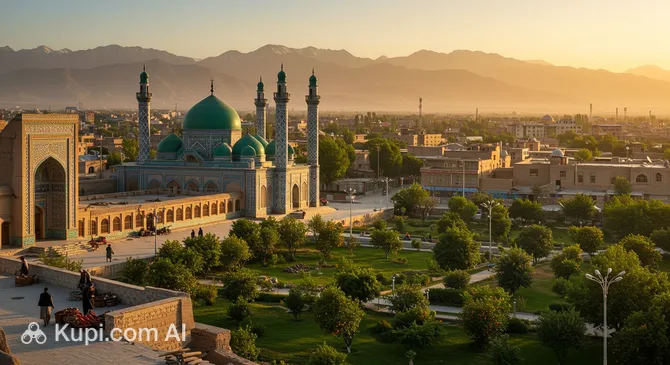
Jalalabad is the pulsating heart of eastern Afghanistan, a city that for centuries has served as a vital transit hub between the Hindu Kush mountain ranges and fertile valleys. Located on a plateau at the confluence of the Kabul and Kunar rivers, it possesses the unique atmosphere of a trade crossroads, where the caravan routes of the past meet modern transport arteries. Jalalabad is the administrative center of Nangarhar Province and is among the country's five largest cities, with a population of over 260,000 people.
Jalalabad. Illustration.
Source: Kupi.com AI
The city is famous for its strategic position on the route from Kabul to Peshawar in Pakistan. Thanks to its mild subtropical climate and advanced irrigation system, Jalalabad is often called the "City of Eternal Spring." It is a true oasis where the region's finest oranges, dates, and olives are grown. The rich history of this place dates back to the 2nd century BC, when the ancient Buddhist center of Nagarahara flourished here.
While Jalalabad is not a classic tourist destination, it attracts visitors with its authenticity. Here, you can see Nangarhar University, the oldest in the country, founded in 1963, and immerse yourself in the bustle of massive oriental markets that supply goods to the entire east of the country. Visiting the city provides a rare opportunity to see life in Afghanistan as it is: dynamic, hardworking, and deeply traditional.
Weather Overview
Jalalabad is characterized by a subtropical climate, which is significantly milder than in high-altitude Kabul. The city is located at an altitude of about 600 meters above sea level, which provides it with warm winters and very hot summers. If you are planning a visit, be sure to check the weather in Jalalabad by month.
The winter months (December–February) are pleasant and moderate: average daytime temperatures are around 13–15°C, and at night they rarely drop to 3–5°C. Summer, however, brings real heat—from June to August, the thermometer often stays at 35°C and above. The rainiest months are March and April, when most of the precipitation falls, contributing to the lush blooming in the valley.
Due to intensive agriculture and transit traffic, the city can sometimes experience dust or smog, especially during dry periods in autumn. The optimal time for a visit is spring, when the air is filled with the scent of citrus orchards, or late autumn, when the heat subsides, giving way to mild sunshine.
Average monthly temperature
Average monthly precipitation
Interesting Facts
Ancient Roots: The site of the modern city was once home to the ancient Buddhist center of Nagarahara, which is mentioned in sources dating back to the 2nd century BC.
Founded by Akbar: It is believed that modern Jalalabad was founded in the 1560s by the Great Mughal Emperor Akbar.
Citrus Capital: Due to its warm climate, the city is Afghanistan's main supplier of oranges and lemons, and its surroundings are lush with citrus groves.
First Modern City: According to some historical sources, Jalalabad is considered the first city in Afghanistan built according to a regular plan using architectural solutions that were modern for that time.
Multicultural Heritage: Despite the changes of recent decades, the city historically housed a small community of Sikhs and Hindus engaged in trade.
How to Get There
Jalalabad is a vital transport hub in eastern Afghanistan, connecting the nation's capital with the Pakistani border. The primary way to get here is by road, which plays a key role in the city's life. If you are planning a trip, detailed information can be found in the section on how to get to Jalalabad.
The main transport artery leads from Kabul. The journey by car or bus along the highway takes between 3 and 5 hours (approximately 150 km). The road passes through picturesque mountain passes; however, due to the large number of trucks transporting goods from Pakistan, traffic jams are common. From the southeast, the city can be reached from the Pakistani border via the Torkham border crossing located at the Khyber Pass. The journey from the border to the city takes very little time but requires passing through customs procedures.
The city is home to Jalalabad Airport (IATA: JAA), which is predominantly used for military purposes and domestic government flights. Regular civilian air service is limited here, so most travelers use land transport. There is currently no railway service in the region, although projects exist to link the city with Pakistan's rail network.
Internal connections with neighboring provinces, such as Kunar or Laghman, are carried out via regional roads. For example, a trip to Asadabad in the northeast takes about 1–2 hours. It is worth noting that during peak hours, the city's highways can be heavily congested due to transit cargo traffic.
In Jalalabad, there are virtually no typical Western tourist sites; however, the city is interesting for its landscapes and infrastructure. One of the main points of interest is the grounds of Nangarhar University. This institution is not only an educational center but also an important part of the urban environment, reflecting the region's drive for development and knowledge.
For those who want to feel the true rhythm of the city, the central markets are a must-visit. These are massive trading zones where everything is sold—from fresh citrus fruits and dates grown on nearby plantations to handicrafts and spices. The markets of Jalalabad are a key element of local life, where all the economic activity of the eastern zone is concentrated.
The panoramic views of the Kabul and Kunar rivers add a special charm to the city. Walking along the banks allows you to see the irrigation systems that transform the arid plateau into blooming gardens. The agricultural landscapes surrounding the city are an attraction in their own right, showcasing the skill of local farmers who grow rice, almonds, and sugarcane.
Local Cuisine
The culinary traditions of Jalalabad are inextricably linked to the fertility of its land. The main feature of the local cuisine is the abundance of fresh fruits and products grown in the plains. You should definitely try the local plov, which often includes dried fruits, almonds, and carrots, giving the dish a uniquely sweet taste. Traditional shish kebabs and lamb kebabs are served here with hot flatbread straight from the tandoor.
The city is famous for its citrus fruits, making freshly squeezed orange or lemon juice the most popular drink among residents. Equally important is tea (green or black with cardamom), which is the cornerstone of any social interaction. Jalalabad also has a developed production of sweets based on sugarcane, which is grown on nearby plantations.
The city's gastronomic scene is mainly represented by small restaurants and street stalls in the central districts. Locals often eat at establishments near the markets, where fresh poultry products and homemade snacks can be found. Street food is an essential part of the culture, offering passersby quick snacks like samsa or fried vegetables. The taste of Jalalabad is a combination of spices, the aroma of fresh bread, and citrus freshness.
Travel Tips
A trip to Jalalabad requires careful preparation to ensure your journey is comfortable and safe. Here are some practical tips from experienced travelers:
Clothing and Dress Code: Choose modest clothing that covers shoulders and knees. Men should avoid wearing shorts, and women are recommended to wear loose clothing and carry a headscarf. Comfortable closed shoes are essential, as the city streets can be dusty.
Transport: The main way to get around is by taxi. Always agree on the price before starting your journey. Be prepared for heavy traffic and a high volume of freight transport on the main streets.
Finances: Cash is king in the city. International credit cards are accepted almost nowhere, and ATMs may be unavailable. Carry a sufficient supply of Afghanis in small bills for the markets.
Health: Use only bottled water, even for brushing your teeth. It is recommended to carry a basic first-aid kit and sun protection, as the heat can be exhausting.
Communication: The main languages are Pashto and Dari. English is not widely spoken, mostly among university staff and international organizations. It is helpful to learn a few polite phrases in the local language.
Local Etiquette: Greet people with your right hand. Always ask for permission before taking photos of local residents or administrative buildings.
What to Avoid: Do not visit remote and sparsely populated areas (for example, District 6) after dark. It is also wise to refrain from discussing political topics.
Best Time to Visit: Plan your trip for winter or early spring (from November to April), when the air temperature is most comfortable for walking and there is no exhausting summer heat.
Jalalabad is a city with a strong character, and your respect for local traditions will be the key to a hospitable welcome.
Entertainment & Nightlife
Traditional entertainment like nightclubs, bars, or theaters cannot be found in Jalalabad. The city lives in strict accordance with local customs, so social life here is centered around markets, mosques, and family gatherings. The main leisure activity for locals is strolling through the central streets during sunset hours and visiting a chaihana, where the latest news is discussed over a cup of green tea.
During the day, events at Nangarhar University or visiting the fruit orchards on the outskirts of the city, which are particularly beautiful during the flowering season, can be of interest. For those seeking more modern forms of recreation, such as cinemas or concert halls, locals usually travel to Kabul, which is a few hours' drive away.
Safety after dark is primarily ensured in the central residential districts (Districts 1 to 5), where dense development and lighting create a comfortable environment. District 6, which consists of vacant land, is best avoided in the evening. It is recommended to travel around the city at night by taxi, which can be arranged through hotel administrators or found at central taxi stands.
Parks & Museums
The situation with public spaces in Jalalabad reflects its status as an industrial and agricultural center. There are virtually no specialized museums in the classic sense in the city. The main cultural and educational site is Nangarhar University. On its campus, you can feel the atmosphere of academic Afghanistan and occasionally visit exhibitions or events organized by students.
As for parks, their number is limited despite the abundance of greenery around. More than 40% of the city's territory is occupied by farms and plantations, which are green zones in themselves but are not always open to the public. Residents often use the banks of the Kabul and Kunar rivers as natural spots for outdoor recreation, where they can enjoy the coolness by the water on hot days.
The city's greenery is concentrated mainly in the first five residential districts. Here, you can find small squares that serve as meeting places for citizens. Nevertheless, for those seeking large-scale natural parks, the best option is to head outside the urban area into the river valleys, where irrigation canals create true oases amidst the semi-desert landscape.
Getting Around
The public transport system in Jalalabad is primarily represented by private taxis and small minibuses. The city is planned on a clear road grid, which makes navigation easier, but due to its status as a transit hub, the main highways are often congested with massive trucks heading to the border. During peak hours, movement can be difficult, and a lot of dust rises on the roads.
Taxis are the most convenient and accessible option for traveling within the city. You should always agree on the price of the trip in advance, as meters are not used in the cars. Minibuses (mashrutkas) are also popular, running between the main districts and markets. The fare in them is minimal, but they are often overcrowded, which can be inconvenient for the unprepared tourist.
There are no metros or trams in the city. For travel between cities (for example, to Kabul or the Pakistani border), intercity buses and taxis departing from central bus stations are used. It is worth noting that internal roads are being actively modernized and paved, but secondary streets in residential neighborhoods may remain unpaved.
Accommodation
Accommodation options in Jalalabad are primarily geared toward business travelers, trade representatives, and humanitarian aid workers. There are virtually no luxury five-star resorts here, but there is a selection of mid-range and budget hotels, located mainly in the central part of the city, near the markets and major transport interchanges.
For the most comfortable stay, tourists and expats are recommended to choose accommodation in Districts 1 through 5. These parts of the city are the most developed, with the main residential buildings and infrastructure concentrated here. Hotels in this area offer a basic set of services: Wi-Fi (often limited), air conditioning (essential in the summer heat), and local-style breakfasts.
It is best to book accommodation in Jalalabad in advance, as the city is an important transit point and vacancies in decent hotels can fill up quickly. Most hotels only accept cash, so it is important to ensure you have local currency on hand. If you are planning a long stay, you might consider renting an apartment, which is a popular option among foreign specialists.
Nearby Cities
Jalalabad serves as an excellent starting point for exploring the eastern regions of the country and border territories, offering travelers access to colorful cities and picturesque valleys.
Just 35 kilometers to the west lies the city of Mehtarlam, the administrative center of Laghman Province. A trip there allows you to see a completely different rhythm of life and enjoy views of mountain rivers. To the northeast, about a two-hour drive away, is Asadabad—the gateway to the scenic Kunar Province, known for its forests and rugged mountain terrain.
For those planning an international route, the Pakistani city of Peshawar, located 108 kilometers to the southeast, is of particular interest. The road to it passes through the legendary Khyber Pass, though you should consider the need for a visa and time for border crossing. You can also visit the small town of Parachinar, which is 68 kilometers away.
Exploring the surroundings of Jalalabad allows for a deeper understanding of the diversity of the eastern zone, where every city and every valley preserves its own unique traditions and history.
Shopping & Souvenirs
Shopping in Jalalabad is, above all, about experiencing its colorful oriental markets. The city does not have modern shopping malls with global brands; instead, traditional commerce flourishes here. The main shopping areas are concentrated in the city center and along the major highways connecting the region with Pakistan.
The primary items worth heading to the market for are agricultural products. Jalalabad is famous for its citrus fruits, dates, olives, and high-quality almonds. You can also find excellent dried fruits and spices that local traders bring from all over the eastern region. These make for great gastronomic souvenirs that keep well and carry the taste of the Afghan sun.
In addition to food, the bazaars widely feature products from local artisans: from traditional clothing and fabrics to household items made of copper and wood. Shops typically open from early morning until sunset, and on Fridays, many stalls may be closed. Only cash—Afghani—is accepted for payment, as calculating with bank cards is virtually impossible.