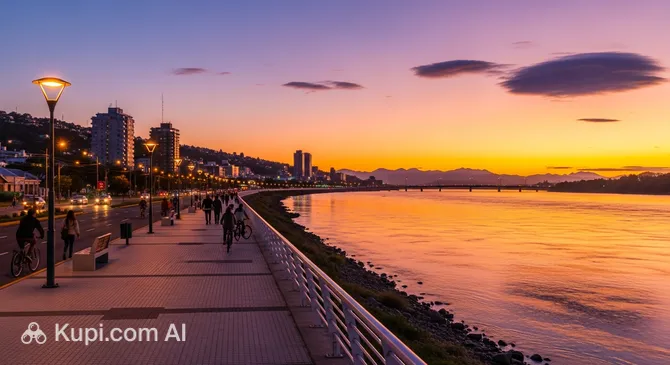
Imagine a place where fresh river waters meet the power of the Atlantic Ocean — this is where the Rio Grande Waterfront (Costanera Rio Grande) stretches out. This picturesque public space in the city of Río Grande serves as the main promenade for locals and visitors to the southernmost province that Argentina has to offer.
Rio Grande Waterfront. Illustration.
Source: Kupi.com AI
Traveler photos:
Located just a few hundred meters from the city center, the waterfront is the perfect vantage point for contemplating rugged Patagonian nature. Here, panoramic views of the river estuary open up, allowing you to feel the unique atmosphere of a "city at the edge of the world," where the industrial rhythm of the port coexists with the tranquility of endless water expanses.
Today, it is a modern and well-maintained area that reflects the character of a thriving city with a population of about 100,000. While walking here, you can see elements of port infrastructure and get acquainted with the region's rich marine life while enjoying southern hospitality and a fresh ocean breeze.
Contacts
To find your way or clarify the details of the walking route, you can use the official address of this location. Although it is an open public space, it has a clear point in the city's navigation system.
Below are the main contact details for locating the site:
The main charm of this place lies in the opportunity for leisurely strolls while breathing in the salty sea air. The Rio Grande Waterfront is a true paradise for photographers: local sunrises and sunsets are famous for their incredible pink and orange hues, which reflect beautifully in the water.
Local fishermen can often be found on the shore. For the city's residents, fishing is not just a hobby, but an important part of their cultural identity, so observing their steady work adds a special flavor to the walk. It is a great place to see how a real port city in the south of the country lives, watching the movement of ships and the activity of the piers.
Nature lovers should bring binoculars: the landscapes of Tierra del Fuego, with their rolling plains and specific vegetation, create a unique backdrop for spotting local birds and marine fauna. The tranquility of the streets and the sound of the surf make this location ideal for resetting and reflection.
Getting There
Finding your way to the coast is easy, as the Rio Grande Waterfront is located just 560 meters from the central part of the city. The easiest way to get here is on foot, following General Güemes (Gral. Güemes) street, which will lead you directly to the waters of the Atlantic.
For those who prefer comfort, local taxi services are always available — a ride from central hotels or the station will take just a few minutes. Travelers with cars can reach the city via National Route No. 3, which runs along the coast and connects this remote settlement with the rest of the country.
The city itself occupies a strategic position in the northeast of Tierra del Fuego, right at the mouth of the river, making the embankment its natural geographical and cultural center. It is a convenient starting point for exploring the southernmost region of the planet.
Nearest city: Rio Grande
History & Facts
The history of this place is inextricably linked to the settlement of the harsh lands of Tierra del Fuego. Although the official founding date of the city is July 11, 1921, the first settlers appeared here much earlier. Back in 1893, the Salesian mission "Nuestra Señora de la Candelaria" was established, becoming an important cultural and religious center in this desolate land.
The shoreline owes its development to the rapid growth of sheep farming at the end of the 19th century. Vast steppe plains attracted farmers who created enormous estancias here, and the waterfront served as an important point for maritime logistics. A short but vibrant gold rush also added adventurous pages to the region's annals, drawing seekers of fortune from all over the world.
Over time, the settlement transformed into a major industrial and port hub. Today, a walk along the waterfront allows you to touch this multifaceted history — from missionary roots and the era of the estancias to its modern status as one of the key cities of southern Argentina.
Time Needed
When planning a visit to the coast, you should be guided by your own preferences. If your goal is a quick introductory walk and a few striking photos, then 30–45 minutes will be quite sufficient.
However, to fully experience the melancholic beauty of Patagonian nature, watch the local fishermen, or wait for the famous southern sunset, we recommend setting aside 1 to 2 hours. This will allow you to take a leisurely walk through the entire landscaped area and enjoy the silence at the edge of the world.
Working Hours
Since the Rio Grande Waterfront is an open public urban space, it is accessible for visiting 24 hours a day, daily. You can come here early in the morning to catch the sunrise or late in the evening for a walk under the starry sky.
While access to the area itself is not limited by time, before planning special events or excursions, it is worth checking the city's official website to clarify information about potential city festivals or maintenance work.
Open 24 hours
Nearby
A stroll along the shore is just the beginning of your acquaintance with this southern city. Exploring the surroundings of the waterfront will help you better feel the local flavor and learn more about the maritime and local history of the region.
Within walking distance, there are many monuments and interesting locations that will naturally complement your itinerary: