Support

Plaza 9 de Julio

About

Plaza 9 de Julio is the historical and cultural heart of the city of Salta, located in northwestern Argentina. The founding and layout of the entire city began from this very spot in 1582. The square was named after the most important date for the country — Argentina's Independence Day, celebrated on July 9. Today, it is not just a historical monument but a hub of social and cultural life, constantly bustling with activity.
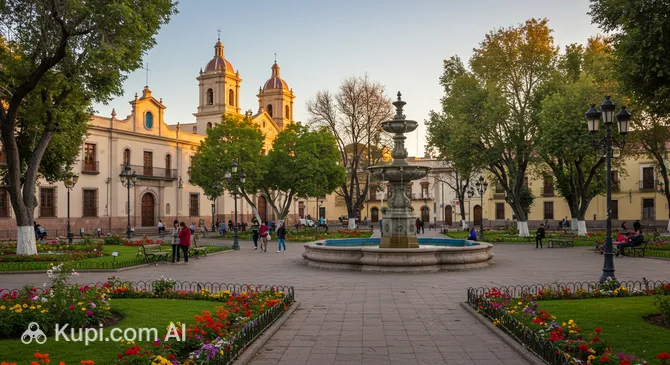
Plaza 9 de Julio. Illustration.
Source: Kupi.com AI

Traveller photos:

The square is a classic example of Spanish colonial architecture. While similar squares named after Independence Day can be found in many cities across the country, Plaza 9 de Julio in Salta is considered one of the most beautiful and well-preserved. Its main feature is the picturesque arcades that almost entirely surround its perimeter and have been preserved to this day in nearly their original form. Cozy galleries, numerous palm trees, and orange trees create a unique atmosphere conducive to leisurely strolls and relaxation. In the center of the square stands the monument to General Juan Antonio Álvarez de Arenales, a hero of the War of Independence and former governor of Salta.

Plaza 9 de Julio is surrounded by the city's most significant buildings, representing great architectural and historical value. Here you will find the magnificent Salta Cathedral, built in the Italian Neo-Renaissance style, the ancient Cabildo building, which now houses the Historical Museum of the North, and the famous Museum of High Altitude Archaeology (MAAM), which houses unique Inca mummies. These attractions make the square a must-see on any traveler's itinerary.

This place is ideal for getting acquainted with the rhythm of life in Salta. Many cafes and restaurants are nestled under the ancient arches of the galleries, where you can enjoy a cup of coffee or try local cuisine while watching the passersby. In the evenings, street musicians often gather in the square, filling the air with the sounds of Argentine music and creating a truly magical atmosphere.

Contacts

Since Plaza 9 de Julio is a central public space, it does not have a specific contact phone number or email for tourists. Finding it is very easy: the square is located in the heart of the city of Salta, between Mitre, España, Zuviría, and Caseros streets, and serves as the main landmark for travelers. You can reach it on foot from anywhere in the center, as well as via numerous public transport routes that stop at central stations.

How to contactContact
AddressCaseros 500, A4400 Salta, Argentina
Phone+54 387 416-0900
Websitewww.salta.gob.ar

What to Do

Plaza 9 de Julio is not just a transit point but a complete destination for relaxation and discovering the culture of Salta. It is perfect for leisurely walks, during which you can admire historical buildings dating back to the 17th and 18th centuries. Most of them are designed in an elegant neoclassical style, making the square a beautiful backdrop for photos. You can spend hours sitting on a bench in the shade of trees, watching the steady pace of city life and enjoying the performances of street musicians who often gather here in the evenings.

The main activity on the square is exploring its surrounding architectural and cultural treasures. Be sure to visit the majestic Salta Cathedral, which houses the Pantheon with the remains of heroes of Argentina's War of Independence. Nearby is the old town hall, or Cabildo, which now houses the Historical Museum of the North. Also worth noting are the Church of Saint Francis and the Convent of Saint Bernard, which complement the unique architectural ensemble of the square and are important historical monuments.

Additionally, the square serves as an excellent starting point for further exploration of the city. Salta's main streets radiate from it like rays, and by walking along them, you can discover even more interesting places, shops, and restaurants. By starting your day exploring the sights on the square, you can easily plan your further route through this charming Argentine city.

Getting There

Plaza 9 de Julio is located in the heart of Salta, making it the primary landmark for all travelers. Due to its central location, the simplest and most pleasant way to reach it is on foot. If you are staying in the city center, you can walk to the square in just a few minutes while enjoying the colonial architecture and bustling streets. The square serves as the intersection of key city arteries, making it easily accessible from any part of the historical center.

For those arriving in Salta or staying in more distant areas, there are several convenient transportation options. From Martin Miguel de Güemes International Airport (SLA), located approximately 6–7 kilometers from the city, you can reach the center by taxi or private transfer (remis); the trip will take about 20–30 minutes. City buses also run from the airport and the main bus station to the center — a more budget-friendly option. Most public transport routes pass through the center, so just look for a bus heading toward "centro" or "Plaza 9 de Julio".

Getting around the city itself is also straightforward. Taxis in Salta are an affordable and convenient means of transport. A ride from any district of the city to Plaza 9 de Julio will be quick and inexpensive. Simply tell the driver "Plaza 9 de Julio," and they will easily take you to the city's main landmark, known to every local. You can also use car rental services if you plan to explore not only the city but also its scenic surroundings.

Nearest city: Salta

History & Facts

The history of Plaza 9 de Julio is closely intertwined with the founding of Salta itself. Originally, Spanish conquistadors built a fortress on this site, which served as a strategic outpost for colonizing the northwestern lands. This fortress was securely protected by natural moats filled with water. The fortification's primary purpose was to resist the warrior Diaguita tribe inhabiting these territories.

The city of Salta was officially founded on April 16, 1582, by the Spanish conquistador Hernando de Lerma. It was intended as an important military and transport hub, ensuring communication between Lima and Buenos Aires. As the city grew and developed, the defensive moats around the fortress were filled in, and the city's main square gradually took shape in their place. Its advantageous geographical position and proximity to the rich silver mines of Potosí contributed to Salta's rapid transformation from a simple military settlement into a prosperous commercial center.

The square received its modern and symbolic name in honor of a key date in the country's history — Argentina's Independence Day, celebrated on July 9. Thus, this place became not just the geographical center of the city but also an important symbol of national identity, preserving the memory of the historical events that led to the birth of an independent state.

Time Needed

For a brief introduction to Plaza 9 de Julio, including a leisurely stroll around its perimeter, taking photos, and resting on one of the benches in the shade of the trees, you will need about 1–2 hours. During this time, you can fully feel the atmosphere of this historical site, admire the colonial architecture of the buildings with their picturesque arcades, view the monument to General Arenales, and simply watch the city life that revolves around this square.

If you plan a deeper immersion, your stay will increase significantly. Plaza 9 de Julio is surrounded by key Salta attractions, such as the Cathedral, the Historical Museum of the North (Cabildo), and the Museum of High Altitude Archaeology (MAAM). Visiting at least one of these museums will add at least 1.5–2 hours to your itinerary. To explore the square itself without rushing, visit the two main museums, and end the day with dinner at one of the many cafes under the arcades, it is worth dedicating half a day or even more. This will allow you not only to see but to truly experience the cultural and historical heart of Argentina.

Working Hours

Plaza 9 de Julio is a public space open to visitors 24 hours a day, year-round. Since it is the city's central square, entry is free, and no ticket booking or advance registration is required. You can come here at any time of day or night that is convenient for you to enjoy its atmosphere.

While the square itself is always accessible, it is worth considering that the surrounding attractions, such as the Cathedral, the Historical Museum of the North (Cabildo), and the Museum of High Altitude Archaeology (MAAM), operate on their own schedules. Also, cafes and restaurants located under the famous arcades have their own working hours. To get the most up-to-date information on possible events, concerts, or temporary restrictions related to city holidays, it is recommended to check local listings or tourist information centers in Salta.

Open 24/7

Nearby

Visiting Plaza 9 de Julio is just the beginning of your journey into Salta's rich cultural heritage. The square itself is the heart of the historical center, and its surroundings are literally packed with attractions located just steps away from each other. A walk through the adjacent streets will allow you to dive deeper into the atmosphere of the colonial city and discover many interesting places.

Exploring the area around the square won't take much time but will significantly enrich your experience. Most key museums, churches, and cultural centers are located within a short walking distance, making Plaza 9 de Julio the perfect starting point for your itinerary in Salta.

NameDistance
Museum of High Altitude Archaeology0.1 km
Museum of the North0.1 km
Museum of Contemporary Art of Salta0.1 km
American Cultural Center0.1 km
San Francisco Church and Convent, Salta0.2 km
Explora Salta Museum Complex0.2 km
Fray Luis Giorgi Museum of Sacred Art0.2 km

Reached the bottom of the page?

Looks like you know this route inside out