Support

Mount Buffalo

About

Mount Buffalo is not just a point on a map, but a legendary natural landmark situated on a picturesque plateau in the Australian Alps. While many search for it as a town, it is actually a magnificent national park where the majesty of wilderness reigns. Stretching across the state of Victoria, Australia, this corner of the world offers travelers a unique experience of connecting with the elements.

Geographically, the park sits at an elevation of over 1,700 meters above sea level, ensuring fresh air and breathtaking landscapes. There is no permanent urban population or residential quarters in the traditional sense; life in Mount Buffalo is defined by the rhythms of nature and the changing tourist seasons. The nearest settlements are Bright and Myrtleford, which serve as gateways to this mountain region.
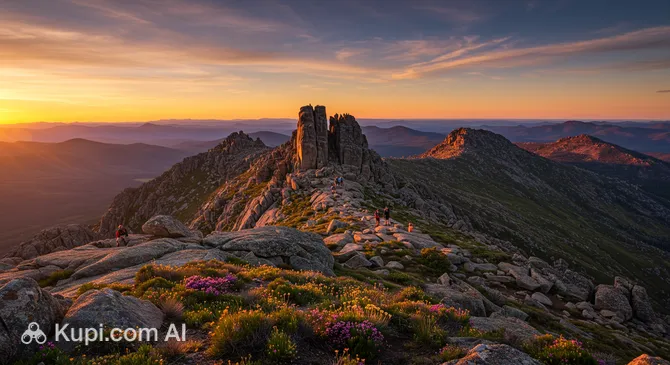
Mount Buffalo. Illustration.
Source: Kupi.com AI

Rooted deep in the past, the history of tourism in Mount Buffalo makes this national park one of the oldest and most respected on the continent. It was here, amidst granite cliffs and deep gorges, that the traditions of Australian mountain climbing and winter recreation were born. The park covers an impressive area of 310 square kilometers, providing endless opportunities for exploration.

Among the main natural treasures, The Horn stands out — the highest and most recognizable point of the massif, offering fantastic panoramas, especially at dawn. Equally popular is the picturesque Lake Catani, which has become a favorite spot for picnics and leisurely strolls. Visitors can also enjoy views of the vast Ovens and Buckland valleys, spreading out at the foot of the mountains.

Mount Buffalo is a must-visit for anyone dreaming of adventures in untouched nature or simply looking for a place to take a deep breath of clean mountain air and completely reset away from the city hustle.

Weather Overview

When planning a trip to the mountain plateau, it is important to consider that the climate here has specific characteristics typical of high altitudes. The weather in Mount Buffalo changes depending on the season, offering tourists both warm sunny days for hiking and a bracing chill.

Summer is considered the most favorable time to visit. In January, the average temperature is around 21.4°C, with daytime temperatures reaching a comfortable 27.6°C. However, even during this warm season, you should be prepared for changeable weather: statistics show about 10 days of rainfall per month.

Winter months bring a significant cold snap. July is the coldest month, with night temperatures dropping to 2.1°C and a daytime maximum barely reaching 9.6°C. This is also the wettest period of the year: in August, for example, up to 14 rainy days are recorded, so waterproof clothing is a must-have in your luggage.

Expect moderately warm summers with occasional rainfall and cold, wet winters with low night temperatures. Spring and autumn serve as mild transitional seasons: by March, the temperature stays at a pleasant 17–23°C, while by May, it freshens noticeably to 13°C during the day.

Average monthly temperature

Average monthly precipitation

Interesting Facts

Beyond the breathtaking landscapes and granite cliffs, Mount Buffalo holds many fascinating secrets and historical records. This place played a key role in shaping the travel culture of the continent, and here are a few facts that confirm it:

  • The Cradle of Tourism. Mount Buffalo was opened to travelers as early as the 19th century. An alpine club was founded here in 1883, and by 1887, the first guidebook was published with detailed descriptions of trails for hiking and pack-horse trips. Remarkably, some of these historical trails have been preserved and are still used by tourists today.

  • An Architectural Icon. One of the park's hallmarks is the Mount Buffalo Chalet, built in 1910. This building is a true historical monument and has been considered a symbol of the park for over a century. Its terraces offer the same panoramic valley views that attracted the first Victorian tourists.

  • Skiing Pioneers. In the early 20th century, this was the birthplace of downhill skiing in Australia. Mount Buffalo became one of the country's first resorts where people began to ski. Today, this tradition lives on in the form of 14 kilometers of cross-country ski trails and specially equipped areas for family snow play.

  • A Source of Inspiration. The park's unique nature has attracted creative people for decades. Ancient rocks, misty forests, and waterfalls have served as muses for many famous artists, photographers, and writers, while local legends about secret corners of the plateau are passed down from generation to generation.

How to Get There

Mount Buffalo is a high-altitude national park that can be reached exclusively by road. A journey here usually begins with a flight to one of the cities in Victoria or New South Wales, followed by a trip in a rented vehicle. To find out all the route details and plan your trip, visit the more details on how to get to Mount Buffalo page.

There is no airport in Mount Buffalo itself, as it is a protected natural area. The nearest hub for domestic flights is Albury Airport (IATA: ABX), located in the city of Albury, approximately 73 km from the park. This is a convenient option for those already in Australia. A trip from here by taxi or transfer will take roughly 2 hours and 10 minutes.

For international tourists, the main gateway is Tullamarine Airport (IATA: MEL) in Melbourne. It is located about 204 km from Mount Buffalo. Despite the distance, it is the region's largest aviation hub with a huge passenger flow, receiving flights from all over the world. The drive by car or bus from Melbourne to the park takes about 5.5 hours, though the scenic views of regional Victoria make the journey enjoyable.

For clarity, here is a summary of the main airports used to reach the region:

AirportPassenger trafficDistance
Albury Airport300 00073 km
Wagga Wagga Airport225 000182 km
Snowy Mountains Airport25 000200 km
Tullamarine Airport35 mln204 km
Bendigo30 000221 km

Since rail services do not reach the mountain plateau directly, the primary mode of transport remains the car. Many tourists prefer to rent a car at their arrival airport to have the freedom to navigate the park's winding roads and easily reach lookouts and waterfalls.

Main Attractions

Mount Buffalo is a treasure trove of natural wonders, where every bend in the trail reveals new spectacular views. The park is famous for its granite formations, crystal-clear waterfalls, and panoramic viewpoints that let you feel the grandeur of the Australian Alps. Here are a few places that should definitely be included in your travel itinerary.

One of the most impressive locations is The Gorge. This is a grand granite canyon with sheer cliffs that are truly breath-taking. Safe viewing platforms are installed here, offering incredible views over the Ovens Valley and distant mountain ranges. The historic chalet building is nearby, and a walk along the edge of the gorge allows you to appreciate the scale and power of local nature, especially at sunset when the rocks turn golden.

For fans of unusual geological formations, The Monolith is a must-see. This is a giant balancing rock rising above the Lake Catani plateau. The climb to it is an exciting adventure, and the reward is a 360-degree panoramic view. The Monolith looks as if it’s about to fall, making it a popular spot for striking photos.

For those seeking freshness on a hot day, Ladies Bath Falls is the perfect spot. Located at the base of the mountain, these cascades fill natural stone pools with pure mountain water. The name dates back to the early 20th century when men and women bathed separately, and this secluded corner was reserved for the ladies. Today, it’s a wonderful place for a picnic and a refreshing dip among smooth granite boulders.

Another hallmark of the park is The Cathedral. This impressive pile of massive rocks truly resembles the silhouette of a Gothic cathedral. The formation is popular not only with tourists admiring its shape but also with rock climbers. The trail leading to the summit of the neighboring peak, The Hump, allows you to see the "Cathedral" in all its glory and enjoy the silence of the high country.

Local Cuisine

Since Mount Buffalo is a national park and not a town, you won't find the usual dining districts or busy streets lined with restaurants here. "Local cuisine" in this location is primarily a unique culture of high-altitude picnics and the use of the rich bounty of the High Country region, which is famous for its fertile lands and farms.

The gastronomic experience here is inextricably linked to the products travelers purchase in neighboring gateway towns like Bright or Myrtleford before heading up to the plateau. The region is famous for its chestnuts, walnuts, and juicy berries. You should definitely try the local farmhouse cheeses (especially those from the Milawa Valley) and smoked trout, which is raised in cold mountain rivers. These delicacies, complemented by fresh artisan bread, make for the perfect lunch at an altitude of over a mile.

In terms of drinks, the foothills of the Victorian Alps offer a wealth of choices. The King Valley, located at the base of the massif, is considered the Australian home of Prosecco — this light sparkling wine is perfect for a summer break. The region is also known for its full-bodied red wines and a thriving craft brewing culture. Local breweries often use pure mountain spring water and hops grown in neighboring valleys for their brews.

The dining culture within the park itself focuses on being at one with nature. Instead of restaurants, specially equipped BBQ areas are popular here. One of the most picturesque locations for a meal is the shores of Lake Catani, where you can have lunch in the shade of eucalyptus trees. Tourists typically bring their own food, setting up atmospheric lunches with views of granite cliffs and gorges. It’s important to remember that dining infrastructure at the summit is limited, so you should take care of your provisions in advance.

Travel Tips

A trip to Mount Buffalo National Park is a true immersion into the world of wilderness, which requires a bit more preparation than a standard city trip. To ensure your adventure in the Australian Alps is comfortable and safe, we have prepared a list of important practical recommendations.

  1. Clothing and Gear. Mountain weather changes rapidly, so dress in layers. Even in summer, be sure to bring a windbreaker and a fleece jacket, as the summit is always cooler than the valley. Comfortable trekking shoes with good grip are essential for walking on granite rocks. Don't forget sunscreen (SPF 50+) and a hat — the sun in Australia is very strong even on cloudy days.
  2. Transport. There is no public transport to the park or its summits. The only way to reach the attractions is by rental car. Make sure your tank is full, as there are no petrol stations on the mountain (the nearest are in Bright). If traveling in winter (June to September), you are legally required to carry snow chains, even if there is no snow on the road.
  3. Finances and Shopping. The official currency is the Australian Dollar (AUD). Keep in mind that there are no ATMs, shops, or currency exchanges within Mount Buffalo itself. All food, water, and necessities should be bought in advance in nearby towns (Myrtleford, Porepunkah, or Bright). Campsite payments are often made online in advance, so take care of your booking before entering areas with poor signal.
  4. Health and Safety. The nearest pharmacies and medical centers are in Bright (about 45–60 minutes from the summit). Always carry a personal first-aid kit and a sufficient supply of drinking water. Be mindful of the local fauna: in summer, snakes can be found on rocky trails, so watch your step and stick to marked routes.
  5. Communication and Navigation. The primary language is English. Mobile reception (Telstra has the best coverage) is available on open peaks and near the chalet, but the signal often drops in gorges and forests. It is highly recommended to download offline maps or bring a paper guide. The Emergency Plus app is useful for providing your exact coordinates to rescuers in case of an emergency.
  6. Rules and Etiquette. The park strictly follows the "Leave No Trace" principle. All rubbish, including organic waste, must be taken with you — there are no bins on the trails. When meeting others on narrow mountain paths, it is customary to greet fellow hikers and give way to those walking uphill.
  7. What to Avoid. Strictly avoid lighting fires outside designated areas, and on Total Fire Ban days, the use of fire is categorically prohibited — this is a safety matter for the entire region. Also, never feed wild animals, especially wombats and parrots: human food harms their health and makes them aggressive.
  8. Local Tip. When planning your route, download the VicTraffic app or check the Parks Victoria website before heading out. Roads can sometimes be closed due to snow, fallen trees, or maintenance work, and it's better to know this before starting the climb up the winding road.

Following these simple rules will allow you to enjoy the majestic beauty of Mount Buffalo without any extra worries. Be prepared for the whims of the weather, respect nature, and this unique corner of Victoria will give you truly unforgettable memories!

Entertainment & Nightlife

It’s important to understand that Mount Buffalo is a national park where the silence of the wilderness prevails over the noise of a metropolis. You won't find neon signs, 24-hour clubs, or noisy discos directly on the mountain plateau. "Nightlife" within the park itself is primarily the romance of camping: watching myriads of stars that shine especially bright away from city lights, and quiet conversations by the campfire in designated areas.

However, if you're looking for music, socializing, and delicious cocktails, the center of evening leisure is the town of Bright, located at the foot of the mountain (about a 45–50 minute drive). This is where life buzzes after sunset on Gavan Street and Ireland Street. The atmosphere in local venues is very friendly and relaxed, with an "après-hike" style: people come here in comfortable clothes after a day in the mountains to discuss trails and unwind.

Among the most popular places to spend a great evening are:

  • Bright Brewery — an iconic spot on the banks of the Ovens River. This is not just a brewery but a real social hub for the region. It often features live music, hosts Sunday Sessions, and serves excellent craft beer brewed with mountain water.
  • Reed & Co. Distillery — for fans of more refined drinks. This is an atmospheric distillery bar specializing in gin infused with local mountain botanicals. The interior is industrial-style, and the crowd here prefers a leisurely tasting of signature cocktails.
  • The Alpine Hotel — a classic Australian pub with a rich history. Here you can find billiards, hearty dinners, and a lively crowd of locals and tourists. It's a great place to immerse yourself in the authentic atmosphere of regional Australia.

Most establishments close quite early by big-city standards — kitchens stop serving around 8:30–9:00 PM, and bars close by midnight. The average check for dinner with drinks will be around 40–60 AUD per person. When planning your evening, keep in mind that taxi services (Uber or local operators) are limited in this region, especially late at night, so it's better to arrange a transfer in advance or designate a "sober driver."

Safety and night driving. The Bright area and its surroundings are considered very safe for walking: the crime rate here is extremely low. However, the main danger at night is the roads. The path from Bright to the Mount Buffalo campgrounds is a winding mountain road without lighting. After dark, wildlife such as wombats, kangaroos, and deer frequently venture onto the road. Driving at night requires maximum concentration and low speeds.

As for daytime entertainment not related to hiking, the region offers cultural relaxation in the valleys. You can visit the Bright Art Gallery, which showcases local landscape artists, or stop by the Bright Museum, located at the railway station, to learn more about the gold rush era. Gastronomic tours of the Ovens Valley wineries and farms are also popular, often including tastings of cheeses, berries, and honey.

Parks & Museums

Mount Buffalo is a unique place where the boundaries between museum exhibits and wild nature are blurred. Here, the role of manicured city parks is played by ancient alpine meadows and dense eucalyptus forests, while the historical heritage is captured not in display cases, but in the architecture of historic buildings and the memorial sites of early explorers.

Since Mount Buffalo is a national park, the concept of a "green zone" covers its entire territory, but there are several specially equipped spots perfect for relaxed outdoor recreation.

Eurobin Creek Picnic Area is a picturesque oasis at the very foot of the mountain. Unlike the harsh granite peaks, it has the atmosphere of a cool, damp forest with tree ferns and soft grass. It is the perfect place for a first stop: picnic tables are available, and you can enjoy the sound of the water before beginning the climb up the winding road.

Cresta Valley is a vast open area on the plateau that was once the center of downhill skiing. Today, this spacious field surrounded by cliffs serves as a magnificent platform for wildlife watching. You can often find kangaroos and wombats peacefully grazing among wildflowers here. The valley is great for leisurely walks with children, as the terrain is relatively flat.

While there are no traditional museums with tour guides at the summit, your cultural curiosity can be satisfied by exploring the history of the region's development and visiting nearby cultural centers.

The Mount Buffalo Chalet Grounds are essentially an open-air museum. Although the wooden building itself, constructed in 1910, is currently closed to the public, a stroll across its terraces and through the preserved gardens immerses you in the atmosphere of the early 20th century. Information boards around the building tell the story of the "Grand Old Dame" of the Victorian Alps, and the complex is considered the largest wooden structure in Australia.

Bright Art Gallery, located in the nearby town of Bright, is the region's main cultural hub. It regularly hosts exhibitions of local artists inspired by the beauty of Mount Buffalo, as well as the famous Autumn Art Exhibition. It's an excellent place to see how the park's majestic landscapes are interpreted in painting and photography.

Among the historical sites, the Stone Shelters hold a special place. These small structures scattered across the plateau were built in the 1930s to protect skiers and tourists from sudden bad weather. They are made of local granite and blend harmoniously into the landscape, serving as a reminder of the harsh conditions faced by tourism pioneers.

For those looking for unusual experiences, we suggest finding the historic cricket pitch located right in front of the Chalet. This is perhaps one of the highest and most scenic playing fields in the country's history. Imagine gentlemen in whites playing a match against the backdrop of the bottomless gorge — this is exactly what leisure looked like here a hundred years ago.

Getting Around

It's important to note right away that Mount Buffalo is a vast national park and mountain plateau, not a traditional town with residential areas. Therefore, there is absolutely no internal public transport system in the usual sense: no metro, trams, trolleys, or shuttle buses. Movement within the park is carried out exclusively via roads and hiking trails.

The only link between this region and "civilization" is Victoria's regional transport network — V/Line. Combined routes (train + bus) allow you to get from Melbourne or Albury to the towns nearest the park: Bright, Porepunkah, and Myrtleford. V/Line buses are comfortable and air-conditioned, but they only drop passengers off at the foot of the mountains and do not climb onto the plateau itself.

Because of this, a rental car is the primary and practically only means of transport for tourists. This provides the necessary freedom to visit remote lookouts, waterfalls, and lakes, where distances can be several kilometers apart. The road up the mountain (Mount Buffalo Road) is sealed and in good condition, but it is a winding mountain road that requires confident driving skills.

Regarding fares and payment, there is no need to pay for transport within the park itself since it doesn't exist. Entry to Mount Buffalo for passenger vehicles is currently free (unlike some other alpine resorts). If you use V/Line buses to reach the region, tickets must be purchased in advance online on the carrier's website or at major railway stations (such as Southern Cross in Melbourne). The "myki" card system has limited use here (only on part of the rail journey); for long-distance buses, a paper or electronic ticket with a reserved seat is usually required.

As an alternative to private transport, you can consider local taxi services or private transfers from the town of Bright. This is a convenient but rather expensive option, especially if you plan to spend the entire day on the mountain. Booking a car through popular apps (Uber and similar) is practically impossible within the park due to a lack of drivers and unstable mobile reception, so transfers should be arranged with local companies in advance.

For active travelers, the bicycle is a popular way to get around. Road cycling is very well-developed here, and the climb up the mountain is considered a prestigious challenge for cyclists. However, using a bicycle as general transport to see all the sights will be difficult due to significant elevation changes and long distances.

During the winter season (June to September), transport logistics have specific requirements. While there are no regular shuttle buses up the mountain, some private tour operators organize day ski tours from Bright. If you are driving your own car in winter, you must carry snow chains — it is the law. They can be rented at petrol stations and ski shops in the towns at the foot of the mountain.

Accommodation

Choosing accommodation for a trip to Mount Buffalo has an important distinction: since it is a protected national park, there are no active hotels or resorts directly on its territory. Travelers must choose between two options: spending the night in a tent amidst the wilderness on the plateau itself or comfortable accommodation in the towns at the foot of the mountain range.

Inside the Park (Camping). For those who want maximum connection with nature, the only equipped place to stay is the Lake Catani Campground. It operates seasonally (usually from November to April) and offers basic amenities: toilets, hot showers, and BBQ areas. This is a budget-friendly option that allows you to wake up in the heart of the Alps, but it requires having your own gear.

In the Surroundings (Hotels and Apartments). Most travelers prefer to stay in the nearest settlements located 20–45 minutes from the park entrance. The most popular spot is the town of Bright. It offers a full range of accommodation: from affordable motels and backpacker hostels to luxury boutique hotels and spacious family cottages. A quieter alternative is the village of Porepunkah, located right at the base of the mountain, where "holiday parks" with cozy cabins and caravan sites are popular.

Prices range from budget (a campsite costs about 30–50 AUD) to mid and high-range (hotel rooms and house rentals in the valley start from 150 to 400+ AUD per night). Accommodation in the towns is usually booked through popular online aggregators or directly on hotel websites.

Booking Tip: Mount Buffalo and its surroundings are an extremely popular destination. Campsites at Lake Catani must be booked through the official Parks Victoria website several months in advance, especially for the Christmas holidays and Easter. It is also recommended to look for accommodation in Bright early, as rooms sell out very quickly during the autumn leaf-fall season and festivals.

Nearby Cities

For those looking to explore the surroundings, Mount Buffalo serves as an excellent starting point for day trips to several interesting nearby locations:

Just an hour's drive from the mountain range lies the city of Wangaratta. It is a vibrant regional center known for its annual jazz festival and rich history. Tourists come here to visit the majestic Holy Trinity Cathedral, stroll through picturesque parks along the Ovens and King rivers, and immerse themselves in the legends of the famous bushranger Ned Kelly. Additionally, the city serves as a gateway to gastronomic regions famous for their cheeses and wines.

A little further north, on the border between Victoria and New South Wales, is Wodonga. Located on the banks of the mighty Murray River, this city attracts fans of water sports, fishing, and peaceful walks along the embankments. You can also visit an interesting cultural center and learn more about post-war immigration history at the Bonegilla Migrant Experience museum, located nearby. It's a great place for a change of scenery after the mountain landscapes.

For those willing to drive a bit further for art and agritourism, Shepparton is an interesting destination. This city in the heart of Australia's "fruit bowl" is famous for its art museum (SAM) and the unusual Moooving Art exhibition of painted cows scattered across streets and parks. Here, you can taste the freshest local produce and enjoy the creative atmosphere of the Goulburn Valley region.

CityPopulationDistance
Bright2 40015 km
Mount Hotham42 km
Falls Creek46 km
Wangaratta17 37758 km
Wodonga18 94866 km

These nearby destinations provide insight into the diverse culture and landscapes of the region, complementing the wilderness experience of the national park with the comfort of urban infrastructure and cultural discoveries.

Shopping & Souvenirs

General Overview

It is important to note right away that there are no shops directly within the Mount Buffalo National Park. This is a protected natural area where peace and quiet prevail. All shopping is concentrated in the picturesque towns at the foot of the mountain range that serve as gateways to the park. You won't find massive malls or luxury boutiques here, but the region is famous for its cozy shops selling local products, high-quality outdoor gear, and unique crafts by local artisans.

Main Shopping Areas and Streets

The center of gravity for shopping enthusiasts is the town of Bright, located just 45 minutes from the summit. The main shopping artery is Gavan Street and the adjacent Ireland Street. These are very atmospheric, tree-lined avenues where most of the shops are located. Here you can stroll leisurely, browsing through clothing stores, souvenir shops, and home goods stores while enjoying views of the mountains.

Shopping Centers

In this region of Australia, there are no large shopping centers in the typical metropolitan format. Instead, small shopping complexes and supermarkets (such as Woolworths and Coles) operate in Bright and Myrtleford, where tourists stock up on provisions before heading up the mountain. These are purely utilitarian places where you can find food, water, batteries, and basic household items.

Markets

Markets are the soul of the High Country region. If your trip falls on a weekend, be sure to visit the Bright Markets ("Make It, Bake It, Grow It"), which usually take place on the third Saturday of the month on the banks of the Ovens River. Here, farmers and artisans sell everything from the freshest vegetables and homemade bread to handmade jewelry. The Myrtleford Farmers Market (fourth Saturday of the month) is also popular, known for its emphasis on the region's Italian heritage and superb local produce.

Souvenirs

Since there are no souvenir shops on the mountain itself, memorable items should be purchased in the towns at the base. From Mount Buffalo and the surrounding area, it is worth bringing back:

  • Local delicacies: the region is famous for walnuts, chestnuts, honey, and olive oil.
  • Wine and gin: a bottle of Prosecco from the King Valley or craft gin with mountain botanicals makes an excellent gift.
  • Woolen products: high-quality socks, scarves, and throws made from merino wool, which are indispensable in the cool climate.
  • Gear: in local outdoor shops, you can find excellent hiking equipment that will serve you for many years.

Opening Hours and Payment

The pace of life here is relaxed. Most private shops open around 9:00–10:00 AM and close as early as 5:00 PM or 5:30 PM. On Sundays, many shops may work reduced hours or be closed. Large supermarkets stay open longer, usually until 8:00–10:00 PM. Credit cards are accepted almost everywhere, but for visiting markets and small roadside "farm gates," it is highly recommended to have cash on hand.

Tax Free

The country has a Tourist Refund Scheme (TRS). Tourists can claim a 10% GST refund on goods if the total on a single receipt from one store exceeds 300 AUD (including VAT) and they are taking the items out of the country. Since there are no large brand boutiques around Mount Buffalo, you are most likely to use this service when purchasing expensive hiking gear, jewelry, or artwork in local galleries.

Reached the end of the page?

That means the route is fully explored