Support

Perisher Valley

About

Perisher Valley is the heart of the Australian Alps, cozily tucked away amidst the picturesque landscapes of Kosciuszko National Park. It is hard to call this place a typical town: rather, it is a unique resort settlement that combines four ski villages: Perisher Valley, Smiggin Holes, Blue Cow, and Guthega. There is no hustle and bustle of a metropolis or high-rise business centers here; instead, an atmosphere of endless celebration, alpine coziness, and the genuine hospitality that Australia is so famous for prevails.

The resort is located at an altitude of about 1,700 meters above sea level, making it one of the highest and snowiest corners of the continent. Thanks to this location, the climate here is characterized by snowy winters, ideal for sports, and cool, fresh summers, perfect for hiking. Administratively, the village is part of a vast national park, so the permanent population here is small; however, during the season, thousands of travelers from all over the world flock here, filling the valley with life and energy.
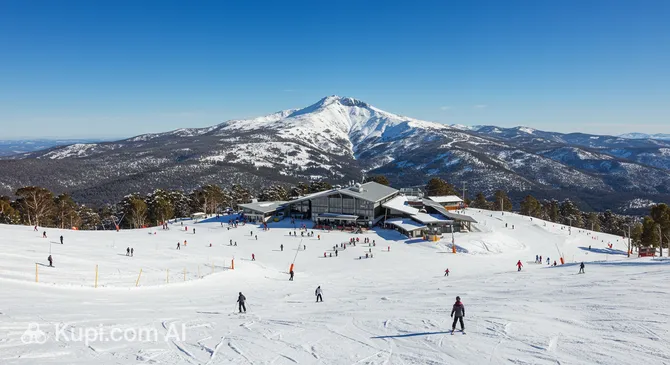
Perisher Valley. Illustration.
Source: Kupi.com AI

The main reason to visit this place is its unique atmosphere. In Perisher Valley, you will feel like part of a large, friendly company, where everyone is ready to share a smile or advice after an eventful day on the slopes. Despite the modern infrastructure, traditions are carefully preserved here, and by exploring the surroundings, you can learn about the rich history of Perisher Valley behind the creation of this massive complex. The combination of cozy chalets, evening lights, and majestic mountain panoramas creates the feeling of a fairy tale come true.

Among the key features of the resort, it is worth highlighting not only the magnificent slopes but also the surrounding nature. Here you can encounter rare representatives of Australian fauna and enjoy views of crystal-clear lakes and snowy peaks. Perisher Valley is an ideal choice for those seeking a harmonious combination of active sports, comfortable service, and relaxation surrounded by wilderness. Be sure to come here to breathe the purest mountain air and personally appreciate the scale and beauty of the Snowy Mountains.
Weather Overview

Weather:

The climate of Perisher Valley is typically alpine—harsh in winter and mild in summer—which is directly related to the resort's high-altitude location. Coolness prevails here even when the rest of the country swelters in the heat. To make your holiday comfortable, we recommend checking in advance what weather in Perisher Valley is expected during your trip, as mountain conditions can change rapidly.

Winter season (from June to August) is a time of cold and snowfall. The average air temperature stays around +2.7°C...+3.5°C, and often drops below zero at night (the minimum in July is about -0.7°C). This is the wettest period of the year: snow or rain falls an average of 13–16 days per month, creating an ideal base for the ski slopes.

Summer (from December to February) here is very comfortable and fresh. The average temperature in January, the warmest month, is +17.8°C, and the daytime maximum reaches +23.2°C. This is a wonderful time for hiking; however, be prepared for precipitation—even in summer, there are up to 14 rainy days per month.

Expect a pleasant, non-hot summer with occasional rain and cold, snowy winters that create excellent conditions for winter sports.

Average monthly temperature

Average monthly precipitation

Interesting Facts

Beyond its famous slopes, Perisher Valley hides many surprising details that make it a truly special place in Australia. Here are a few interesting facts that will help you look at this resort from a new perspective.

  • Perisher Valley is not just one resort, but an entire alliance of four interconnected ski areas. Travelers can move freely between them right on skis or a snowboard, exploring a massive territory. It is here, at the Perisher Ski Resort, that the only eight-seater high-speed chairlift in the Southern Hemisphere is located.

  • The name of the surrounding national park — Kosciuszko — was given in honor of the Polish national hero Tadeusz Kościuszko. The first trails in these parts were blazed not by skiers, but by gold prospectors and explorers, whose routes still serve as the basis for some hiking paths today.

  • One of the resort's most spectacular forms of entertainment is night skiing. Several times a week, the slopes are illuminated for skiers and snowboarders, and the evening concludes with a grand fireworks show right over the snowy peaks, creating a magical atmosphere.

How to Get There

When planning a trip to the heart of the Snowy Mountains, it is important to think through your route in advance, as direct access to the resort has its own peculiarities. You can find out more about how to get to Perisher Valley on a special page that gathers all available options. The main flow of tourists arrives here via the nearest regional and capital air hubs, combining a flight with a car or bus trip.

The most convenient transit point for many travelers is Canberra Airport (IATA: CBR). It is important to note that it is located in the city of Canberra, about 141 km from the resort, rather than in Perisher Valley itself. This is a major transport hub with developed infrastructure. A trip from the airport to the ski slopes by rental car or transfer will take about 2.5–3 hours, passing through the scenic landscapes of New South Wales.

If you want to fly as close to the mountains as possible, consider Snowy Mountains Airport (IATA: OOM). It is located in the town of Cooma, just 52 km from Perisher Valley. Despite being a small regional airport, it is popular with skiers during the winter season. Travel time from here to the resort is approximately 1–1.5 hours by taxi or shuttle.

You can also use Albury Airport (IATA: ABX), located in the city of Albury, 136 km from the destination. This is another medium-sized option, convenient for those traveling from the state of Victoria. The road to Perisher Valley will take about 3 hours.

For clarity, here is a summary of the main airports used to reach the region:

AirportPassenger trafficDistance
Snowy Mountains Airport25 00052 km
Albury Airport300 000136 km
Canberra Airport2.8 mln141 km
Merimbula Airport72 100144 km
Wagga Wagga Airport225 000162 km

Regarding rail connections, it is important to note that there are no direct trains to Perisher Valley or Cooma. The nearest major railway station is in Canberra (Kingston station). Travelers from Sydney can reach the capital by train and then transfer to a bus. Regular bus services connect Canberra and Cooma to the resort area, especially during the ski season. Many people cover the final stretch of the journey on the unique Skitube rack railway, which connects the Bullocks Flat parking area directly to the ski slopes.

Main Attractions

Perisher Valley is a place where nature and the elements act as the main architects. Here you won't find ancient cathedrals or dusty museum halls; the resort's attractions are majestic peaks, engineering wonders, and endless snow fields. A trip here is a chance to see how harmoniously wild Australian nature and modern tourism infrastructure can coexist.

The absolute center of attraction is the Perisher Ski Resort. It is the largest ski complex in the Southern Hemisphere, uniting four villages and offering guests over 1,200 hectares of skiable terrain. Tourists come here for the incredible variety of runs — from gentle slopes for beginners to steep descents for professionals. But even if you don't ski, the resort impresses with its scale, panoramic views, and the lively atmosphere of an alpine village lost in the Australian mountains.

Perisher Ski Resort. Illustration.
Source: Kupi.com AI

Traveler photos:

An integral part of the landscape and a true marvel of engineering is the Skitube Alpine Railway. This Swiss-designed rack railway runs through the mountain range and is not just transport, but a full-fledged attraction. The trip through the tunnel in the depths of the mountain provides a unique experience, and the views opening up upon exiting the underground section are breathtaking. It is the only train of its kind in Australia, and riding it is worth it at least once for the experience itself.

The resort is located within the vast Kosciuszko National Park. This is a nature reserve with a unique ecosystem where you can encounter wombats, echidnas, and kangaroos among the snow gums. The park is attractive at any time of year: in winter, it is a white fairy tale, and in summer, it is an ideal place for hiking to glacial lakes and blooming alpine meadows. This is also where the highest point of the continent, Mount Kosciuszko, is located; climbing it (or at least admiring it from afar) is a goal for many travelers.

Another iconic spot is Mount Perisher itself. By taking a chairlift to its summit, you will find yourself at one of the best viewpoints in the region. From here, a 360-degree panorama opens up over the valley and neighboring peaks of the Snowy Mountains range. It is an ideal place for memorable photos and enjoying sunsets, when the sun paints the snowy slopes in shades of pink and gold.

Local Cuisine

The gastronomy of Perisher Valley is a harmonious blend of hearty alpine traditions and Australian culinary ingenuity. Food plays an important role here: after an active day on the snowy slopes, tourists want to warm up and restore their energy. Local venues rely on high-quality products grown on New South Wales farms, offering guests a simple but incredibly delicious menu.

Among the main dishes that are a must-try are local beef steaks and tender lamb, grilled or slow-cooked in pots. For gourmets, dishes with wild mushrooms and fresh vegetables are a special delicacy. If you want to experience the true taste of the continent, order the famous kangaroo pie — it is a hearty and exotic local classic for foreigners. For dessert, pastries with wild berries and farm honey are often served.

Perisher Ski Resort. Illustration.
Source: Kupi.com AI

Traveler photos:

The beverage culture here is inextricably linked to the tradition of après-ski (post-ski relaxation). In bars and pubs, Australian craft beer is very popular, as are warming winter hits: aromatic mulled wine and hot apple cider. For those who prefer non-alcoholic options, there is always thick hot chocolate or freshly brewed coffee to help you perk up on a frosty morning.

The dining format in the valley is diverse: from quick snacks to long dinners by the fireplace. Street food is represented by food trucks and kiosks selling fresh croissants and traditional pies, which is very convenient for skiers in a hurry. The main gastronomic life bustles where the Perisher Ski Resort is located: food festivals, wine and cheese tastings are regularly held here, allowing guests to get acquainted with the products of local producers.

Travel Tips

Welcome to the winter fairy tale of the Green Continent! To ensure your trip to Perisher Valley is flawless and that the harsh high-altitude conditions don't catch you off guard, we have prepared a list of important recommendations to help save you time, nerves, and budget.

  1. Clothing and Gear. Mountain weather changes instantly, so use the layering principle: thermal underwear, fleece, and a windproof membrane. Critically important: the sun in the mountains of Australia is extremely aggressive even in winter due to the thin ozone layer. Be sure to bring sunscreen with SPF 50+ and high-quality goggles with UV protection to avoid face and eye burns.
  2. Transport Logistics. Inside the resort itself, ordinary cars are not used. If you arrived by car, you will have to leave it at the Bullocks Flat park-and-ride and take the Skitube train up. To travel from the station to the hotel with luggage, book a special tracked vehicle (Oversnow Transport) — wheeled suitcases cannot be pulled through the snow.
  3. Finance and Payment. Perisher Valley is almost entirely a cashless zone ("cashless society"). Most cafes, ticket offices, and shops only accept cards or phone payments. Cash may not be needed at all, and there are very few ATMs here. Tipping is not mandatory, but if you really liked the service, 10% of the bill will be accepted with gratitude.
  4. Health and Insurance. There is a medical center in the valley (Perisher Medical Centre) operating during the ski season, but serious help may require helicopter evacuation, which costs a fortune. Ensure your travel insurance covers active winter sports. Also, bring a personal first-aid kit: there are no 24-hour pharmacies at the resort.
  5. Connectivity and Apps. The best coverage in the mountains is provided by the Telstra operator; with other providers, the signal may drop. Be sure to download the official Perisher App. This is your main assistant: it features a real-time trail map, lift status, and weather forecast.
  6. Slope Etiquette. Australians highly value order and politeness. Never try to cut in line for a lift — it is considered extremely rude. It is customary to greet the staff and thank the lifties. Observe the "Alpine Responsibility Code": always yield to those below you on the slope.
  7. What to Avoid. The main mistake of car tourists is traveling to the mountains without snow chains. In the winter season, having chains in the trunk is legally mandatory for all two-wheel-drive cars, and the police check this regularly. Also, avoid walking on the ski runs — it is dangerous for you and obstructs those skiing.
  8. Park Pass. Remember that the resort is located within Kosciuszko National Park. To enter, you will need to buy a special Park Entry Pass. It can be arranged online or at a visitor center; the absence of a pass risks a substantial fine, as cameras record license plate numbers automatically.

Perisher Valley is a place where the spirit of camaraderie and love for nature reigns. By following these simple tips, you can focus on the main thing — enjoying the magnificent snowy expanses and the unique atmosphere of the Australian Alps!

Entertainment & Nightlife

Entertainment and nightlife in Perisher Valley have their own unique flavor, entirely dictated by the alpine vacation format. Here you won't find noisy metropolitan nightclubs with neon signs and strict face control. The local "scene" is classic après-ski: fun, lively, and casual relaxation in bars immediately after the lifts close. The epicenter of evening life is the area occupied by the Perisher Ski Resort, where skiers and snowboarders gather to discuss the day's successes over live music and the clinking of glasses.

Main activities are concentrated around the Perisher Centre and in bars at major hotels. One of the most famous spots is Jax Bar & Grill. This venue is renowned for its parties, cover band performances, and DJs. People come here to dance right in their ski boots, and the atmosphere is always charged with positivity. Another cult location is the bar at The Man from Snowy River hotel. This place has a more traditional pub atmosphere where you can listen to live music, play pool, and enjoy a pint of local beer by the fireplace.

Perisher Ski Resort. Illustration.
Source: Kupi.com AI

Traveler photos:

The crowd here is as relaxed and friendly as it gets. There is practically no dress code: in most venues, guests in sportswear are welcome for dinner and parties, although for visits to a la carte restaurants, such as the famous White Spider, it is worth changing into casual style. Venues usually fill up around 4:00 PM–5:00 PM and buzz until midnight, as most tourists prefer to get a good night's sleep before the next day of skiing.

A unique feature of evening entertainment in Perisher Valley is Neon Night Skiing. Usually on Tuesdays and Saturdays (during peak season), the Front Valley run is floodlit, allowing for skiing under the starlit sky. The evening often concludes with a colorful fireworks display launched right over the snowy peaks. This spectacle draws hundreds of spectators and creates a true festive atmosphere.

Practical Tips:

  • Prices: Be prepared for "resort pricing." The cost of drinks and food in the evening here is higher than the average in Australian cities.
  • Transport: Moving between hotels at night can be difficult. Taxis are scarce, and walking through the snow in the dark can be unsafe due to ice and snow-clearing machinery. It is better to choose venues within walking distance of your accommodation or use the hotel's internal shuttle, if provided.
  • Safety: The area is exceptionally safe in terms of crime; the main threats are the cold and slippery roads. Dress warmly, even if you just plan to run from the bar to the hotel.

As for daytime entertainment off the slopes, the choice is limited. There are no cinemas, theaters, or large shopping centers in Perisher Valley. The cultural program is replaced by nature contemplation and spa treatments in hotels. If you want a change of scenery, you can head to the neighboring town of Jindabyne, which has a cinema and a bit more variety in terms of urban infrastructure.

Parks & Museums

Perisher Valley is a unique place where the boundaries between the town and wilderness are practically blurred. Since the resort is located in the heart of a conservation area, there are no typical city parks with benches; instead, tourists are surrounded by the endless expanses of the national park and majestic mountain landscapes. Cultural life here is also inextricably linked to the history of mountain exploration and the development of skiing.

Parks and Natural Areas

The main and, essentially, only park surrounding the village on all sides is Kosciuszko National Park. It is a massive biosphere reserve listed as a UNESCO World Heritage site. In winter, it is a white kingdom for skiers, and in summer, it turns into a carpet of alpine meadows and blooming eucalyptus forests. Here you can see unique glacial lakes, ancient granite boulders, and encounter wild animals in their natural habitat.

For fans of scenic walks, the Porcupine Rocks natural area is particularly popular. The trail to these granite formations starts near the Perisher residential area. The route passes through thickets of snow gums and opens up breathtaking panoramas of the Thredbo River valley. It is an ideal place to enjoy the silence and majesty of the Australian Alps away from the noise of the lifts.

Perisher Ski Resort. Illustration.
Source: Kupi.com AI

Traveler photos:

Museums and Galleries

Unlike large cities, you won't find big museum complexes here, but the region's history is carefully preserved by enthusiasts. The main cultural object is the Perisher Historical Society Heritage Display. The exhibit is located directly in the Skitube terminal building. It gathers unique photographs, vintage ski equipment, and artifacts telling the story of how the Perisher Ski Resort transformed from wilderness into a world-class winter sports center. This place is a must-visit for those who want to understand the pioneering spirit of the Snowy Mountains.

While not a museum in the classic sense, the Skitube terminal building itself and the engineering structures around it deserve attention as monuments to technical thought. The construction of the railway through the mountain was a turning point in the valley's history, and elements of this grand project are today perceived as part of the resort's historical heritage.

Insider Tip

If you find yourself here during the summer season (January-February), don't miss the chance to see the blooming of wild alpine flowers. During this time, the slopes usually covered in snow are painted in yellow, purple, and white tones thanks to millions of buttercups and billy button daisies — a sight that many consider even more impressive than the winter landscapes.

Getting Around

The transport system in Perisher Valley is unique and significantly different from typical urban infrastructure. As it is a high-altitude resort, there are no subways or trams in the classic sense. The main transport artery is the Skitube Alpine Railway — a Swiss-style rack railway. It connects Bullocks Flat station (where there is a large free parking lot located below the snow line) with the terminal in Perisher Valley and Blue Cow station. For most tourists, this is the most convenient and safest way to reach the slopes, avoiding the challenge of driving on snowy mountain roads.

The role of bus service is performed by free shuttles circulating within the resort area. During the winter season, they regularly transport skiers between the parking lots in Smiggin Holes and the central station in Perisher Valley. These buses run with high frequency (approximately every 15 minutes) during lift operating hours, making it easy to move between different ski zones without needing a personal car or the train.

The fare system here is fully integrated into the resort service. All tickets for the Skitube and lifts are loaded onto a single card — the Mountain Access Card (often simply called the Perisher Card). This is a reusable RFID card that needs to be purchased once and then topped up online. Paper tickets or tokens are not used here. Validation happens automatically: turnstiles at train stations and lifts read the card as you pass through the gantry. It is recommended to keep the card in your left jacket pocket, separate from your mobile phone.

As an alternative to a typical taxi, a specialized Oversnow Transport service operates here (usually managed by Hans Oversnow). Since the movement of ordinary cars in the resort's residential zone is prohibited in winter due to snow, you can only get from the Skitube terminal to your chalet or hotel with luggage using this transport. These can be specially equipped tracked SUVs or snowmobiles. The service is paid, and it is better to book your ride in advance, especially if you are arriving late in the evening.

For tourists, it is important to remember a few practical nuances. It is more cost-effective to buy Skitube tickets online in advance as part of a lift package. Trains run on a schedule that varies depending on the day of the week, but service usually stops at night, so if you are planning a late dinner in another part of the valley, keep an eye on the time of the last trip. Car-sharing and bike rentals are not relevant inside the village itself during the winter period; here, skis and snowboards replace bikes, and the lifts effectively function as public transport, linking the four resort villages into a single network.

Accommodation

Choosing accommodation in Perisher Valley is a key stage in planning a winter holiday, as the resort offers a format of "on-snow" accommodation that is unique to Australia. You won't find typical city blocks here; instead, guests have access to cozy club lodges with a warm home atmosphere, private chalets, and comfortable mountain hotels. There are virtually no budget hostels directly on the slopes — inexpensive accommodation should be sought outside the snow zone.

In terms of location, staying in the central villages of Perisher Valley and Smiggin Holes is considered the most prestigious and convenient option. By staying here, you get the main advantage — ski-in/ski-out access, where you can hit the slopes literally from the hotel doorstep. For those seeking more privacy, the Guthega area is suitable. If the priority is saving money or a vibrant nightlife with a large choice of restaurants, many tourists prefer to base themselves in the town of Jindabyne, located a 30-minute drive away, and travel up to the mountains daily by car or Skitube train.

For those who want to be at the epicenter of events, accommodation offered directly by the Perisher Ski Resort is the ideal solution. Staying within the resort complex provides maximum proximity to the lifts, ski schools, and all necessary infrastructure, allowing you not to waste precious time on commuting.

Booking Tip: Demand for accommodation in the valley is colossal, especially during peak season (July and August). It is worth planning your trip well in advance: the best options are booked 6–12 months out. Note that many lodges set a minimum stay (usually 2 or 5 nights).

The price range at the resort varies from moderate to high. "On-snow" accommodation always costs more than staying down in the valley. You can book accommodation through the resort's official website, specialized ski agencies, or popular online platforms. Before booking, be sure to clarify the logistics: many hotels cannot be reached by a standard car in winter, and you will need to book a special transfer (Oversnow Transport) from the train station.

Nearby Cities

For those who want to explore the surroundings, Perisher Valley serves as an excellent starting point for day trips to several interesting nearby places:

The absolute favorite for a cultural trip is the capital of Australia — Canberra. The city, designed from scratch, impresses with its geometric precision and abundance of greenery. Here, travelers can visit the National Gallery, Parliament House, and the Australian War Memorial, as well as enjoy a stroll around the artificial Lake Burley Griffin. This is a unique opportunity to swap mountain landscapes for capital architecture and world-class museums.

If you are interested in Australian outback life, it is worth paying attention to the city of Wagga Wagga. Located on the banks of the Murrumbidgee River, it is famous for its magnificent botanical gardens and mini-zoo. It is the largest inland city in New South Wales, where you can experience true regional flavor and relax on a river beach that is among the best in the country.

History buffs and fans of unusual attractions might enjoy Goulburn. It is Australia's oldest inland city, preserving many colonial-era buildings. The city's hallmark is the "Big Merino" — a giant concrete statue of a ram symbolizing the region's wool industry, where tourists often stop for memorable photos.

CityPopulationDistance
Smiggin Holes2 km
Bullocks Flat5 km
Crackenback10 km
Thredbo15 km
Jindabyne6 54718 km

These nearby destinations provide an insight into the diverse culture and landscapes of the region.

Shopping & Souvenirs

General Overview

Shopping in Perisher Valley has a pronounced seasonal and thematic character, entirely synchronized with the rhythm of life at a ski resort. As this is a high-altitude settlement, you won't find huge outlets or high-fashion boutiques here. The main range of local shops is tailored to the needs of skiers and snowboarders: high-quality sports equipment, warm clothing, and accessories. Nevertheless, the infrastructure is designed so that guests can buy everything they need for a comfortable holiday, from essential groceries to pleasant trifles, without leaving the slopes.

Main Shopping Areas

The center of all commercial activity is the Perisher Centre, located in the resort's main village, Perisher Valley. It is here, under the same roof as the Skitube train terminal, that most retail outlets are concentrated. Strolling through the complex's galleries, you will find specialized stores such as Slopestyle Mountain Sports, a pharmacy, and a small supermarket. In other villages, such as Smiggin Holes or Blue Cow, the choice is much more modest and usually limited to small kiosks with essentials and rental points.

Shopping Centers

There are no large malls here in the usual urban sense. Their role is performed by the aforementioned complex serving the Perisher Ski Resort. This is a multifunctional space where shopping is combined with service: here you can not only buy a new jacket or goggles but also find ticket offices, a ski school, and restaurants. Such compactness is very convenient for tourists: everything you need is within walking distance of the lifts.

Perisher Ski Resort. Illustration.
Source: Kupi.com AI

Traveler photos:

Markets

Classic street markets are absent directly in Perisher Valley due to the harsh climatic conditions and the resort's specificity. If you want to visit traditional farmers' fairs or flea markets, you will have to descend from the mountains to the neighboring town of Jindabyne, located about 30 minutes away. Local markets (such as the Jindabyne Hall Markets) are held there regularly, selling fresh Snowy Mountains region produce, home-baked goods, and local handicrafts.

Souvenirs

As a memento of their trip, tourists most often bring home branded clothing with the resort's logo: high-quality warm hoodies, T-shirts, beanies, and gloves that will keep them warm at home. In souvenir shops, you can also find photo albums with breathtaking views of the Australian Alps, soft toys in the form of wombats, kangaroos, or echidnas, as well as local gastronomic souvenirs, such as honey or jams produced on farms in the foothills.

Opening Hours and Payment

Shops during the ski season work seven days a week, usually adjusting to the lifts' operating schedule — opening around 8:30 AM and closing at 5:00 PM or 5:30 PM. The grocery supermarket may stay open a bit longer so guests can buy food for dinner. Cashless payments are widespread throughout Australia, and Perisher is no exception. Visa and Mastercard are accepted everywhere, from ski pass offices to souvenir shops; many terminals support contactless payment (PayWave), Apple Pay, and Google Pay. Cash is practically unnecessary here.

Tax Free

Tourists leaving Australia can use the Tourist Refund Scheme (TRS). If you buy goods totaling 300 Australian dollars (AUD) or more from one store (you can combine several receipts from the same store) no earlier than 60 days before your flight, you can claim a 10% GST refund at the departure airport. Be sure to ask the seller for a "Tax Invoice" and keep the receipts to present at customs before flying home.

Reached the end of the page?

That means the route is fully explored