Support

Strahan

About

Strahan is a miniature gem hidden on the rugged and beautiful west coast of Tasmania. The town is nestled on the shores of the picturesque Macquarie Harbour, surrounded by dense forests and majestic mountains that seem to embrace this secluded corner. It is a place where time slows down, allowing travelers to enjoy the silence and complete harmony with the wild nature.

Despite its modest size and a population of only about 700 people, this town plays an important role in the region's life. This is where you can discover the true, pristine Australia, far from the hustle and bustle of major metropolises. The nearest large city, Hobart, is almost 300 kilometers away, giving Strahan a special atmosphere of isolation and tranquility. The local climate, cool and humid, encourages the lush growth of evergreen forests, creating landscapes of incredible beauty.
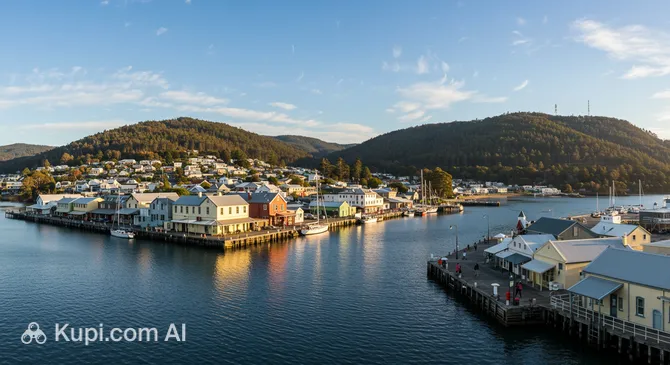
Strahan. Illustration.
Source: Kupi.com AI

In the past, the settlement was a bustling port and fishing center. The rich history of Strahan is inextricably linked with the exploration of these remote lands, logging, and maritime industries. Today, the town serves as the main gateway to the national parks and conservation areas of Western Tasmania, while retaining the charm of an old seaside village.

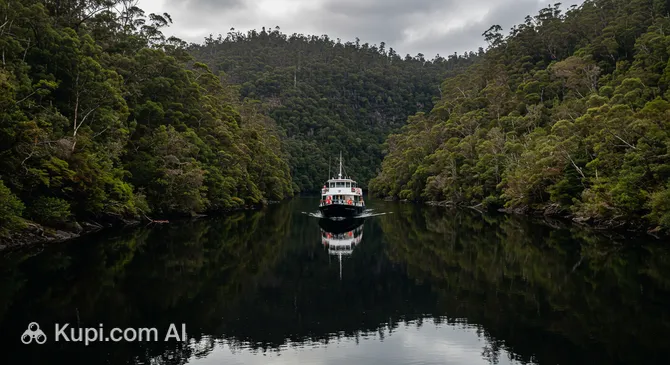
Strahan is the perfect starting point for unforgettable adventures. Popular cruises on the legendary Gordon River start from here, where the dark waters provide a mirror-like reflection of ancient trees. Travelers can also visit the mysterious Sarah Island or head out to explore the trails of the World Heritage-listed Franklin-Gordon Wild Rivers National Park.

If you are looking for a place where you can breathe in the purest air, admire fantastic sunsets over the bay, and feel the spirit of exploration, Strahan will be the perfect discovery for you. Come here to see how history and nature intertwine in an amazing dance at the edge of the world.
Weather Overview

The weather in Strahan is shaped by the winds of the Southern Ocean, creating a mild but humid maritime climate, perfect for sustaining the lush greenery of the local forests. Summers here are comfortable and not hot: in January, the average temperature is about 15.9°C, with maximums rarely exceeding 19.2°C. Winter months bring a chill; for example, in July, the thermometer averages 8.4°C, dropping to 6.4°C at night.

Precipitation is an integral part of this region's atmosphere. The number of rainy days varies from 12 in February to 23 in August, making an umbrella or raincoat an essential traveler's accessory. Expect moderately warm summers and cool winters with a high probability of rain throughout the year. To properly prepare for Tasmania's changeable conditions, we recommend checking the detailed weather in Strahan before your trip.

Average monthly temperature

Average monthly precipitation

Interesting Facts

In addition to its main attractions, Strahan holds many fascinating secrets that reveal this rugged land from an unexpected side. History and nature are so closely intertwined here that they have given rise to unique legends and facts.

  • Tasmania's "Green Gold." The forests around the town are home to ancient Huon Pines, which can live for several thousand years. The wood of these trees is so valuable and durable that local craftsmen make unique souvenirs from it, and Huon oil is used in cosmetics and perfumes.

  • Mountain Optical Illusion. The surrounding landscapes can deceive a traveler's eyes: the local mountains are composed of white quartzite. Because of this, even on the hottest summer day, the peaks appear covered in snow, creating a stunning contrast with the green forests.

  • Ancient Reflections. The popular Gordon River Cruises allow you to see a unique phenomenon: due to tannins from plants, the river water has a dark tea-like tint. In calm weather, this turns the water's surface into a perfect mirror, flawlessly reflecting the ancient forest.

  • Prison on a Paradise Island. Sarah Island, located nearby in Macquarie Harbour, looks like a picturesque historical monument today. However, in the 19th century, it was one of the harshest prisons in the British Empire, from which, according to legends, escape was practically impossible due to the freezing ocean and impenetrable jungle.

Gordon River Cruises. Illustration.
Source: Kupi.com AI

Traveler photos:

How to Get There

A journey to this secluded corner of Tasmania is the start of a great adventure, allowing you to enjoy the island's wild beauty. Since direct flights to the town itself are limited, the main route usually involves flying to one of the state's major transport hubs followed by a scenic drive. You can find out more about how to get to Strahan by exploring all available route options.

The most popular choice for tourists is a flight to Hobart International Airport (IATA: HBA). This is Tasmania's main air gateway, receiving most flights from the mainland. The straight-line distance from Hobart to your destination is about 196 km, but the journey along winding roads will take longer—expect about 4.5–5.5 hours of driving. The route follows the Lyell Highway, famous for its breathtaking views of the highlands.

An alternative and convenient option is flying into Launceston Airport (IATA: LST), located 171 km from the town. The drive from there takes about 4 hours 40 minutes. If you want to shorten your ground travel time, you can consider Burnie-Wynyard Airport (IATA: BWT) or Devonport Airport (IATA: DPO). They are closest to the west coast, and the drive from them takes between 2 to 3.5 hours.

For planning convenience, we have prepared a table with the region's main airports:

AirportPassenger trafficDistance
Burnie Wynyard Airport82 100132 km
Devonport Airport119 616143 km
Launceston Airport1.4 mln171 km
Hobart International Airport2.8 mln196 km
King Island Airport54 000280 km

It is important to remember that rail services in Tasmania are not used for regular passenger travel between cities. The famous West Coast Wilderness Railway is exclusively a tourist attraction, not a way to get from point A to point B. Therefore, a car (either rented or as part of a tour) remains the only reliable way to get around. The roads here are very scenic but winding, so we recommend allowing extra time for photo stops.

Main Attractions

Despite its modest size, Strahan offers travelers a rich program that combines immersion in the wild with an introduction to the dramatic history of Tasmania's colonization. The main attractions here are linked to the unique landscape of the west coast and the heritage of the first settlers.

The undisputed leader among tourist routes is the famous Gordon River Cruises. This is a journey into the heart of the UNESCO World Heritage wilderness. Tourists are drawn by the opportunity to see ancient rainforests where thousand-year-old Huon pines grow and to enjoy the "mirror river" phenomenon: in calm weather, the tannin-stained dark water perfectly reflects the surrounding greenery, creating a mesmerizing visual effect.

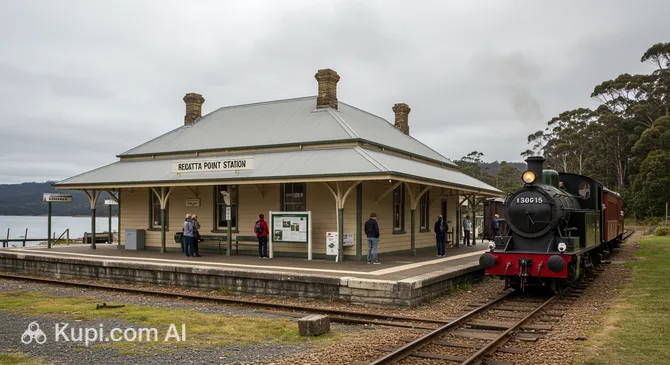
For those interested in railway history and engineering, a visit to Regatta Point Station is a must. This is the departure point for the legendary West Coast Wilderness Railway. The restored historic station serves as a gateway to a breathtaking steam-powered journey through steep gorges and dense forests, allowing visitors to feel the atmosphere of past centuries and learn about the hardships of the pioneers.

Regatta Point Station. Illustration.
Source: Kupi.com AI

Traveler photos:

Another iconic site is Sarah Island. Located in Macquarie Harbour, this island was once the harshest penal colony in the British Empire. Today, it is a site of ruins set against picturesque nature, accessible by boat. Tours here are made fascinating by theatrical stories told by guides about convict life and daring escapes, creating a vivid contrast with the beauty of the surrounding landscapes.

Hiking enthusiasts should head to Hogarth Falls, located in People's Park. It is an easy and pleasant walk through mixed forest that takes about 40 minutes. The spot is popular not only for its picturesque waterfall but also for the chance to see platypuses in the creek—unique Australian animals often spotted here at dusk.

Complete your introduction to the region at Ocean Beach—Tasmania's longest beach, stretching for over 30 kilometers. Swimming here is dangerous due to strong currents, but it is an ideal place to witness the power of the Southern Ocean, walk along the dunes, and watch incredible sunsets as the sun sinks directly into the crashing waves.

Local Cuisine

Strahan's culinary scene is an ode to freshness and the bounty of the Southern Ocean. Since the town is an important fishing port, the basis of the local menu is high-quality seafood that reaches the table literally hours after being caught. There are no pretentious fine-dining restaurants here, but there are cozy establishments with honest and delicious food where the focus is on the natural flavor of the ingredients.

The main gastronomic symbol of the region is Atlantic salmon. There are large fish farms in the waters of Macquarie Harbour, so the salmon here is always exceptionally fresh. It is served in many forms: smoked, grilled with local herbs, or as delicate sashimi. Another delicacy that is a must-try is the Southern Rock Lobster (crayfish). This dish is considered festive, but local establishments prepare it simply so as not to overpower the sweet taste of the meat.

For a more casual bite, classic fish and chips is perfect. In Strahan, this isn't just fast food; it's a local tradition: fish (most often trevally or shark, which is called "flake" here) is fried in a light batter and served with crispy chips. It's customary to enjoy this dish right on the waterfront, admiring the sunset over the harbor, but be careful with the cheeky seagulls, who are also not averse to snacking on local fish.

As for drinks, Tasmania is famous for its cool-climate wines. In the town's restaurants, you will certainly be offered a glass of local Pinot Noir or sparkling wine, which pair perfectly with seafood. You should also pay attention to craft beer and cider made from Tasmanian apples. Fans of spirits will appreciate the presence of Tasmanian whisky and gin in bars, which have won numerous international awards.

The dining culture here is relaxed and informal. Locals and tourists prefer to dine in hotel pubs or small cafes with water views. It is important to remember that the pace of life in regional Australia is slow, and the kitchens of many establishments close quite early, around 20:00–20:30. An interesting gastronomic experience is offered by Gordon River Cruises: during the journey, a buffet lunch is often served on board, where you can sample local cheeses, cold cuts, and smoked salmon while enjoying the wilderness views.

Travel Tips

A trip to Strahan is a face-to-face encounter with Tasmania's wilderness, so proper preparation is more important here than anywhere else. To ensure your holiday is as comfortable as possible and without surprises, we have gathered the most relevant recommendations for this secluded corner of Australia.

  1. Clothing and Gear: The weather on Tasmania's west coast is unpredictable and changes instantly. The main principle is layering. Even in summer, be sure to bring a high-quality windproof and waterproof jacket (raincoat), as well as a warm fleece jumper. Footwear should be comfortable, closed-toe, and preferably waterproof, as forest trails are often damp. An umbrella may be useless here due to the wind; hoods are a better choice.
  2. Transport: There is no public transport or common taxi services like Uber in Strahan. Car rental is the only reliable way to travel around the region. Be prepared for winding roads; if you suffer from motion sickness, stock up on appropriate medication. The town itself is compact, and the center is pleasant to explore on foot.
  3. Finances: The official currency is the Australian Dollar (AUD). Bank cards are accepted almost everywhere (Visa, Mastercard), but it's still worth having some cash for small purchases or tips. ATMs are scarce in the town and may only be found at the post office or supermarket. Tipping is not mandatory, but 10% for good service in a restaurant will be accepted with gratitude.
  4. Health and Safety: Strahan is a very safe place with a low crime rate. However, there is only a small medical center, and the nearest major hospital is in Burnie (about a 2-hour drive). The pharmacy operates on standard hours and closes early, with no 24-hour pharmacies available—bring a supply of necessary medications. Watch your step in the forest: snakes may be active during the warmer months.
  5. Communication: The main language is English. Note that mobile coverage on the west coast can be unstable. The best coverage is provided by Telstra; other providers (Optus, Vodafone) may lose signal outside the town center. Wi-Fi is available in most hotels and cafes, but speeds may be lower than usual. We recommend downloading offline maps of the area in advance.
  6. Local Etiquette: Tasmanians are very friendly and open. It is customary to greet shopkeepers, drivers, and even passersby on quiet streets. Life here moves slowly, so don't rush the staff in cafes—relaxation is part of the local culture. It is extremely important to treat nature with respect: littering in the forest or on the beach is considered highly disrespectful.
  7. What to Avoid: Categorically avoid driving at dusk and night outside the town. This is when wild animals (wallabies, wombats, possums) move onto the roads in large numbers, and the risk of a collision is very high. Also, do not feed wild animals—it harms their health and disrupts the ecosystem.
  8. Extra Tip: Plan your dinner in advance! In Strahan, restaurant and cafe kitchens close very early, often as early as 20:00. If you haven't booked a table or arrived by this time, you risk going hungry, as there are no 24-hour shops here.

By following these simple tips, you can avoid everyday troubles and fully focus on the main thing—the incredible beauty of ancient forests and the rugged charm of the Southern Ocean. Strahan loves prepared travelers and generously rewards them with unforgettable impressions.

Entertainment & Nightlife

Nightlife in Strahan is strikingly different from the noisy entertainment of big cities. You won't find nightclubs with loud music, discos until dawn, or neon districts here. Evening leisure in this secluded corner of Australia is set to the rhythm of the wild: it is quiet, cozy, and soulful. Most activity is concentrated around the Esplanade and Wharf Road, where the main hotels and pubs are located.

The central event of the evening for most tourists is the famous open-air theatrical production, "The Ship That Never Was." It is the longest-running play in the country, performed daily at 17:30 near the Visitor Information Centre. The play tells an incredible and true story of a convict escape, actively involving the audience in the action. After the performance, the crowd usually moves to local bars to discuss the show over a glass of Tasmanian beer or wine.

The atmosphere in the town's establishments is extremely relaxed and friendly. There is no dress code: a comfortable fleece and jeans are much more appropriate than evening wear here. It is important to remember that most restaurant kitchens close quite early, around 20:00–21:00, so it's better not to delay dinner. After this time, life slows down, and the main entertainment becomes contemplating the starry sky, which seems particularly bright in these latitudes due to the lack of light pollution.

As for daytime entertainment that flows into evening relaxation, tours related to history and nature dominate. Guests often visit Regatta Point Station to immerse themselves in the region's past before dinner. Also popular are the lengthy Gordon River Cruises, which return in the afternoon, often marking the start of evening leisure at the port.

In terms of safety, Strahan is one of the quietest places on the planet. You can walk safely at any time of day; however, consider the poor street lighting outside the center. If you plan to return to your hotel on foot late at night, be sure to bring a flashlight. Taxi services are limited, and calling a car at night can be problematic, so it's better to arrange a transfer in advance or plan to walk.

Parks & Museums

The cultural and natural heritage of Strahan is inextricably linked to its unique location on the edge of the Tasmanian wilderness. You won't find massive museum complexes of metropolitan scale here; however, the entire town feels like a living open-air museum, surrounded by majestic forests and the ocean.

Among the green spaces, People's Park holds a special place. It is a cozy and well-kept corner of nature, perfect for picnics and quiet walks. Its main feature is the picturesque trail leading through mixed forest to Hogarth Falls. A walk here allows you to see giant eucalypts and tree ferns, and if you're lucky, encounter a platypus in the creek.

For those who want to feel the power of the elements, Ocean Beach is a must-visit—a multi-kilometer strip of sand washed by the turbulent waters of the Southern Ocean. This site is not a park in the classic sense but serves as a primary natural recreational area for watching sunsets and the migration of mutton-birds (short-tailed shearwaters). A deep immersion into the region's nature is offered by Gordon River Cruises, whose route passes through the Franklin-Gordon Wild Rivers National Park.

You can dive into the region's history at the West Coast Reflections exhibition center, located within the Visitor Centre. The exhibition tells a fascinating story of the difficult lives of convicts, the heroic work of loggers and miners, and the history of preserving the local forests. It's an excellent starting point for understanding how the character of the west coast was formed.

Special attention should be given to Regatta Point Station. It is not just a transport hub but a real historical monument where the atmosphere of the steam engine era is preserved. The station building and surrounding area serve as a museum of railway history, detailing the construction of the unique rack-and-pinion railway through impenetrable jungle.

Regatta Point Station. Illustration.
Source: Kupi.com AI

Traveler photos:

Craft and aroma enthusiasts should stop by the old Morrison's Huon Pine Sawmill. Here, you can not only see the processing of the legendary Huon Pine but also learn about woodworking traditions passed down through generations. The gallery at the sawmill offers unique wooden items, serving as both a museum and a shop.

Insider Tip: For the best panoramic view of the town and harbor, head up Water Tower Hill. This spot is often overlooked by guidebooks, but it is from here that a breathtaking perspective opens up over the jagged coastline and town rooftops, especially impressive in the light of the setting sun.

Getting Around

Given the miniature size of Strahan, with a population of only about 700 people, there is no public transport system in the sense a city dweller would expect. There is no metro, trams, trolleys, or an extensive network of city buses. All infrastructure is compactly located, so the main way to get around the center remains walking.

The only type of regular bus service is intercity buses that connect Strahan with other Tasmanian towns. The main operator is Tassielink Transit. Buses run several times a week on routes to Burnie, Queenstown, and Hobart. This is more of a way to get to or from the town than a means of transport within the settlement itself.

Payment System and Tickets:

For trips on Tassielink intercity buses, it is recommended to purchase tickets in advance online on the carrier's official website. In some cases, a ticket can be bought from the driver for cash, but seat availability is not guaranteed. Fare depends on the zone and distance. There are no special transport cards operating within Strahan.

Practical Tips and Alternatives:

Since local public transport is absent, tourists should consider the following options:

1. Car Rental. This is the most convenient and popular way to get around. A car will allow you not only to move freely around the town but also to reach remote attractions like Ocean Beach or the waterfalls. It is better to look for rental agencies in the major arrival cities (Hobart, Launceston) or book in advance.

2. Walking. The town center, waterfront, and main docks are all within walking distance of each other. The walk from most hotels to the port takes no more than 10–20 minutes.

3. Taxis and Transfers. Taxi services in Strahan are limited and there are very few cars. Hailing a taxi on the street is almost impossible; the ride must be booked by phone in advance. Services may be suspended in the evening and at night.

4. Bicycles. Some hotels and guest houses offer bike rentals for their guests. This is a great way to see the surrounding area in good weather.

Features:

While not public transport in the classic sense, the historic West Coast Wilderness Railway operates in the town. The steam trains are used exclusively for tourist excursions through rainforests and gorges, immersing passengers in the atmosphere of the past, but they do not serve as utility transport from point A to point B.

Accommodation

Despite its modest size and distance from civilization, Strahan offers tourists a decent choice of accommodation options to suit various needs. The hotel stock here ranges from budget caravan parks and cozy bed and breakfasts to comfortable motels and even luxurious cottages with harbor views. A feature of local housing is its atmospheric nature: many hotels are located in restored historic buildings, preserving the spirit of the pioneer era.

When choosing a place to stay, it's worth considering the town's geography. The most popular and convenient area is The Esplanade and the streets adjacent to the waterfront. Staying here, you will be within walking distance of cafes, souvenir shops, and main transport hubs. This is a strategically sound decision for those planning morning Gordon River Cruises, as the docks will be literally across the street from your room.

Another popular location is the hilly area above the town, offering spectacular panoramic views of the sunset over Macquarie Harbour. For lovers of peace and quiet, options closer to West Strahan Beach or in the forested outskirts are suitable, where you can feel a total connection with nature. If you are interested in railway history, it is convenient to consider accommodation near the historic Regatta Point Station, to embark on your vintage train journey without haste.

Booking Tip: Accommodation in Strahan is a scarce resource, especially during peak season (December to February) and during Australian school holidays. It is strongly recommended to book rooms at least 2–3 months before your trip. Otherwise, you risk facing a total lack of availability or having to choose from the most expensive options.

The price range in the town can be described as "mid-plus." While there are budget caravan sites and hostel beds, most high-quality accommodation falls into the mid to high price segment. Booking is available through all major international online platforms; however, many small family-run hotels and cottages also welcome direct bookings through their websites, sometimes offering more flexible terms.

Nearby Cities

For those looking to explore the surroundings, Strahan serves as an excellent starting point for day trips to several interesting nearby locations. This region of Tasmania is famous for its rugged beauty, historical heritage, and unique landscapes that differ significantly from each other even over short distances.

Just a 40-minute drive along a winding and scenic road is Queenstown. This town is known for its "lunar" landscapes—barren hills that gained their appearance due to intensive copper mining and deforestation in the past. Today, this colorful place attracts history buffs and photographers wanting to capture the dramatic contrast between the orange rocks and the surrounding greenery.

A little further north lies historic Zeehan, which in the late 19th century was called the "Silver City" due to its rich deposits of silver-lead ores. A walk down the main street will reveal beautifully preserved Edwardian architecture, including the grand Gaiety Theatre. It is a great opportunity to immerse yourself in the atmosphere of the mining boom that shaped the west coast.

Below is information about the major towns in the region and the straight-line distances to them:

CityPopulationDistance
Queenstown1 79021 km
Ulverstone14 109131 km
Burnie27 174131 km
Devonport23 046138 km
Smithton3 881146 km

These nearby destinations provide insight into the diverse culture and landscapes of the region, from industrial heritage to lively port towns.

Shopping & Souvenirs

General Overview: Shopping in Strahan cannot be called large-scale or diverse in the usual sense of urban tourism. You won't find fashion boutiques, chain brands, or huge shopping galleries here. However, the town is famous for its unique handicrafts that cannot be bought anywhere else in the world. The main value of local shopping is authenticity and the connection to the region's history, especially the traditions of working with rare wood species.

Main Shopping Areas/Streets: All the commercial life of this compact settlement is concentrated along the waterfront—The Esplanade. This is where souvenir shops, small galleries, and workshop stores are located. A walk along the Esplanade allows you to peek into cozy little shops where local craftsmen sell their work. Another focal point is the wharf area, home to cruise terminal buildings and the historic railway station.

Shopping Centers: There are no large shopping centers or malls in Strahan. For groceries, essentials, and household items, there is an IGA supermarket located on Reid Street. This is the only place in town resembling a general store where tourists can replenish their provisions.

Markets: There are no regular open-air flea or farmers' markets in the town. Their role is filled by open woodworking workshops, such as the famous Morrison's Huon Pine Sawmill. This place functions as a permanent exhibition and shop where you can buy wooden items straight "off the machine" while watching the creation process.

Souvenirs: The main souvenir to bring back from Strahan is anything made from Huon Pine. This rarest of woods has a unique aroma that lasts for decades and does not rot. Tourists buy everything from simple cutting boards and coasters to exquisite sculptures and furniture. Tasmanian honey (especially from Leatherwood flowers), wool products, and books on convict history are also popular.

An excellent choice of commemorative gifts can be found in the souvenir shops at major attractions. For example, Regatta Point Station offers a wide range of themed souvenirs related to the railway and the region's history. It's also worth checking the shop at the terminal where the Gordon River Cruises depart—they often feature quality clothing, jewelry, and local delicacies.

Opening Hours and Payment: Shops in Strahan usually open around 9:00 or 10:00 AM and close quite early—at 5:00 or 5:30 PM. The supermarket may stay open a bit longer, until 6:00 or 7:00 PM. Bank cards (Visa, Mastercard) are accepted almost everywhere, but having a small amount of cash is useful for minor purchases. Operating hours may be reduced on weekends and public holidays.

Tax Free: Since Strahan is part of Australia, the Tourist Refund Scheme (TRS) applies here. If you make a purchase of AUD 300 or more at a single store (and get a single tax invoice), you can claim a refund of the Goods and Services Tax (GST) when leaving the country. Given the high cost of quality Huon Pine items, this option can be very relevant for travelers purchasing expensive pieces of art or furniture.

Reached the end of the page?

That means the route is fully explored