Support

Hallerbos

About

Hallerbos (Hallerbos), often called the Blue Forest, is a truly unique natural wonder located near Brussels in Belgium. This beech forest owes its worldwide fame to a breathtaking phenomenon: every spring, its ground is covered with millions of wild bluebells (hyacinths), creating a vast, magical carpet of deep blue-violet.
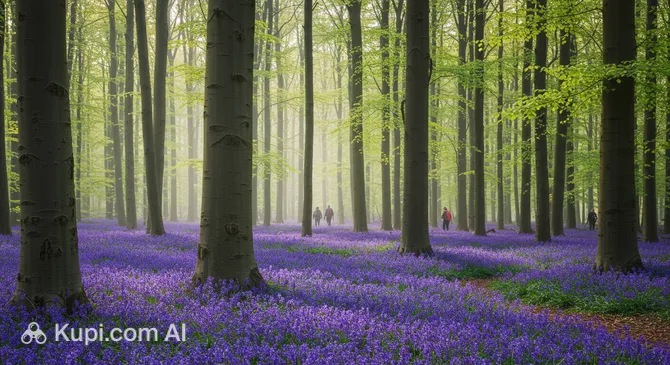
Hallerbos. Illustration.
Source: Kupi.com AI

Traveler photos:

This picturesque woodland spreads across nearly 600 hectares and holds the status of a nature reserve. The sight of Hallerbos in bloom is so impressive that it seems as if the sky itself has descended to earth, painting everything around in delicate shades. Walking along its paths during this period provides an unforgettable experience and a sense of touching a fairy tale.

The atmosphere in Hallerbos, especially during the bluebell bloom, is filled with mystery and charm. The forest attracts photographers and nature lovers from all over the world who want to see this ephemeral wonder with their own eyes. It is one of those places where the beauty of nature appears in all its glory, leaving a deep impression on every visitor.

Contacts

Since Hallerbos is a forest and nature reserve, it is recommended to check the official website or visit tourist information centers in Brussels for the latest information on opening hours, visitor rules, and the best ways to get there. Natural sites like this usually feature well-marked trails and information boards for visitors' convenience.

How to contactContact
AddressHogebermweg, 1500 Halle, Belgium
Phone number+32 2 658 24 60
Websitewww.hallerbos.be

What to Do

Hallerbos, also known as the Blue Forest, offers visitors a truly unforgettable experience, especially in the spring. The main attraction here is the enchanting bloom of wild bluebells. During this time, the forest floor is covered with a solid blue carpet of millions of flowers, creating a fairy-tale landscape among the tall beech trees. This natural wonder attracts photographers and nature enthusiasts eager to witness this unique phenomenon.

To fully enjoy the beauty of Hallerbos, it is recommended to visit during the first 7 to 10 days of the bloom. This is when the young, tender green leaves of the beeches create a particularly picturesque contrast with the deep blue of the bluebells. The forest takes on a special charm early in the morning or later in the evening, when the scent of the flowers is most intense. At dawn, when the morning light and a light mist envelop the area, the atmosphere becomes truly mysterious and surreal.

In addition to viewing the bloom, guests of Hallerbos can enjoy fascinating walks along specially designated forest trails. This is a wonderful opportunity not only to take amazing photos but also to admire other plants, including the majestic giant sequoias that also grow in the forest. It is important to remember that Hallerbos is a protected area, so picking flowers here is strictly forbidden, as it is essential to preserve this fragile beauty for future visitors.

Getting There

Getting to the famous Hallerbos forest, renowned for its carpets of wild bluebells, is quite easy as it is located near Brussels, in the vicinity of the town of Halle. This makes it a popular day-trip destination for locals and tourists alike who want to enjoy the natural beauty of Belgium.

If you are planning to drive from Brussels, head south along the relevant motorway. The drive usually takes very little time, depending on traffic. Having your own transport offers flexibility in choosing your visit time and the opportunity to explore the surrounding area.

For those who prefer public transport, the best option is to take a train from Brussels to the town of Halle. The rail network in Belgium is well-developed, and trains run regularly. Upon arrival in Halle, you can reach Hallerbos by taking a local bus that passes the forest or by using a taxi. During the bluebell blooming season, special shuttles may be organized, or bus services may be increased.

Nearest city: Brussels

History & Facts

Hallerbos, also known as the "Blue Forest", is more than just a picturesque corner of Belgium; it is a place with a rich and ancient history. The first written records of this woodland date back to 686 AD. During the Roman Empire, the current Hallerbos was part of a vast primeval forest, predominantly beech, that stretched from the banks of the Rhine and Moselle to the North Sea. Imagine the secrets these lands hold!

Until the tragic events of the early 20th century, Hallerbos was part of one of Europe's largest beech forests, spanning south of Brussels. Unfortunately, the First World War caused immense damage to the forest—it was almost entirely destroyed. However, like witnesses to bygone eras, some ancient oaks and beeches managed to survive the destruction and still grace the woodland today, serving as reminders of its former majesty.

Following the end of the war, a large-scale reforestation program began. These greening efforts bore fruit, and today we can admire the results of this painstaking work. It was thanks to this program that new trees grew where others had been felled, and every spring the ground beneath their canopy is covered by a magical carpet of millions of wild bluebells (hyacinths). It is these flowers that give the forest its unofficial name, the "Blue Forest", and that incredible, almost fairy-tale atmosphere that attracts thousands of visitors.

Time Needed

To fully enjoy a walk through Hallerbos and its magical atmosphere, it is recommended to set aside at least half a day. This will be enough time to leisurely stroll along the picturesque forest paths, admire the unique landscapes, and, of course, take plenty of beautiful photos—especially if your visit coincides with the wild bluebell blooming season.

If you plan to visit Hallerbos specifically during the bluebell bloom, which usually occurs in the spring months (April–May), there are a few things to consider. To experience the most intense floral fragrance and the special, almost magical lighting, it is best to arrive early in the morning or later in the evening. The forest is particularly beautiful during these hours, and there are typically fewer visitors, allowing you to enjoy a connection with nature in a more peaceful setting.

Therefore, when planning a trip to Brussels and wishing to see this natural wonder, allow enough time in your itinerary for Hallerbos. Half a day will give you a general impression, but if you want to explore different routes and dive deeper into the forest's atmosphere, you could dedicate a whole day to it, especially during the peak bloom.

Working Hours

Hallerbos, being a nature reserve, is open to visitors year-round. There are no set opening hours for the forest, so you can visit at any time. However, for the best views and for safety reasons, it is recommended to plan your walk during daylight hours.

Since entry to Hallerbos is free, advance booking or registration is usually not required. The most popular time to visit is spring, especially from April to May, when the forest is transformed by the blooming wild bluebells (hyacinths). Keep in mind that during these months, especially on weekends, the forest can get quite crowded.

5:00 – 23:00

Nearby

After you have enjoyed the unique atmosphere and beauty of Hallerbos, don't be in a hurry to leave the area. Exploring nearby attractions can significantly enrich your trip to Brussels and lead to new discoveries. Often, it is in these less obvious places that true tourist gems are hidden.

There are many interesting sites near Hallerbos and within Brussels itself that can diversify your journey. To help you plan your further route, we have prepared a list of some of them, including approximate distances:

NameDistance
Coloma Castle7.5 km
Gaasbeek Castle10.7 km
Horta Museum13.8 km
La Cambre Abbey13.9 km
Zero Latency Brussels14.5 km
Escape Hunt Brussels14.6 km
Brussels Centre Midi Hotel14.6 km

Have you reached the end of the page?

So the route has been studied inside and out