Support

Municipal Theater of Rio de Janeiro

About

The Municipal Theater in Rio de Janeiro is not just a stage, but a true jewel of Brazil's cultural life. Located in the city center, it is one of the most significant and beautiful opera and ballet houses in the country. Opened in the early 20th century, it became an architectural symbol inspired by the Paris Opéra Garnier, attracting art lovers from all over the world.
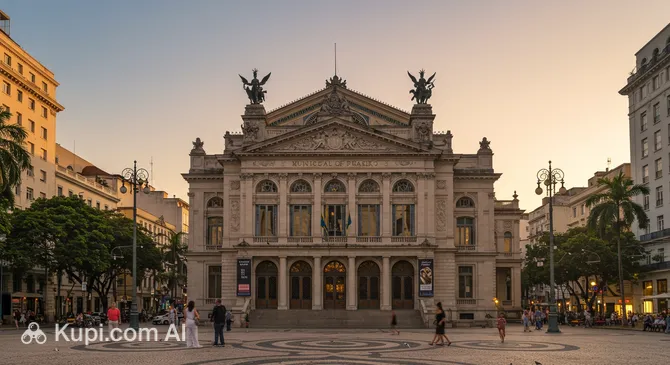
Municipal Theater of Rio de Janeiro. Illustration.
Source: Kupi.com AI

Traveler photos:

The theater building, designed in a lavish Neo-Renaissance style, is striking for its rich decoration both inside and out. It is adorned with sculptures by the outstanding Brazilian master Henrique Bernardelli, as well as paintings and frescoes by Rodolfo Amoedo and Eliseu Visconti. The exquisite mosaics and stained glass, created by invited European masters, add special artistic value, filling the space with light and color.

The Municipal Theater is one of the largest in Brazil—its hall is capable of seating 2,357 spectators. The theater maintains its own symphony orchestra, choir, and ballet company. Attending a performance within these walls or taking a tour of the building will allow you to touch the rich history and culture of not only Rio de Janeiro but the entire country, leaving you with unforgettable impressions.

Contacts

To plan your visit to the Municipal Theater, check the repertoire, or purchase tickets, it is recommended to use official sources. The most reliable information regarding opening hours, available guided tours, and current productions is always available on the theater's official website.

How to contactContact
AddressPraça Floriano, S/N - Centro, Rio de Janeiro - RJ, 20031-050, Brazil
Phone number+55 21 2332-9134
Websitetheatromunicipal.rj.gov.br

What to Do

To get the most out of your visit to the Municipal Theater, it's worth planning ahead. The highlight is, of course, the chance to see a performance. It is highly recommended to check the schedule on the official website and book tickets online, especially if you are interested in popular opera or ballet productions—seats often sell out very quickly. The theater's repertoire is diverse and includes not only classics but also performances by the symphony orchestra and modern dance troupes.

If your visit to Rio de Janeiro doesn't coincide with a show you're interested in, don't miss the chance to explore the theater's interior. During the day, guided tours are conducted through the building, allowing you to peek into the luxurious halls, see the interior details up close, and even view the stage. These tours are a great way to learn more about the history of this cultural symbol of Brazil and take stunning photos. Please note that group sizes are limited, so it's best to purchase tour tickets in advance.

Getting There

The Municipal Theater is located in the heart of Rio de Janeiro, in its central district, making it very convenient for tourists to visit. Thanks to its prime location on Floriano Square (Praça Floriano), reaching this iconic landmark is easy from any part of the city, regardless of your preferred mode of transport.

The simplest and most convenient way to reach the theater is by public transport. The nearest metro station, Cinelândia, is literally just steps away from the building. This makes the trip quick and helps you avoid traffic jams. Additionally, numerous bus routes pass through the city center, with stops located in the immediate vicinity of the theater. The light rail (VLT) system also passes right by the theater.

If you prefer comfort, you can use a taxi or a ride-sharing app. The address of the Municipal Theater is well-known to all local drivers, so you won't have to spend much time explaining where you need to go. A taxi ride from tourist districts such as Copacabana or Ipanema is fast and convenient, especially in the evening when heading to a performance.

Nearest city: Rio de Janeiro

History & Facts

The history of the Municipal Theater began in the early 20th century when the city's mayor, Pereira Passos, decided to give Rio de Janeiro a new cultural stage. A competition for the best design was announced, which concluded in an intriguing way: the works of Brazilian Francisco de Oliveira Passos (the mayor's son) and French architect Albert Guilbert received an equal number of votes. In the end, it was decided to merge both projects into one, which, according to press reports of the time, sparked rumors of favoritism and added a curious detail to the history of this architectural masterpiece.

Construction began on January 2, 1905, and was unique in its own right: the building's foundation was laid on 1,600 wooden piles. The work lasted four and a half years, and the finest masters of the era were invited to decorate the interiors. The famous Henrique Bernardelli worked on the sculptures, while artists Rodolfo Amoedo and Eliseu Visconti handled the paintings. Masters from Europe were specially commissioned to create the magnificent mosaics and stained glass windows that still captivate visitors today.

The grand opening of the theater took place on July 14, 1909, in the presence of the President of Brazil, Nilo Peçanha. Over the years, as the theater's popularity and the city's population grew, the building had to be expanded in 1934 to accommodate everyone. Later, between 1975 and 1978, the theater underwent a massive reconstruction that helped preserve its historical appearance and improve technical facilities for future generations of spectators.

Time Needed

When planning a visit to the Municipal Theater, consider how much time you're willing to dedicate to it. For a general introduction to this architectural masterpiece, 1 to 2 hours is sufficient. During this time, you can leisurely admire the building from the outside, appreciate its Neo-Renaissance style, take photos, and join an organized guided tour. A standard tour of the theater lasts about 45 minutes and allows you to see the luxurious interiors without purchasing a ticket for a performance.

If you want to get the full experience and immerse yourself in the city's cultural life, plan to attend an opera or ballet. In this case, you will need 3 to 4 hours for your visit. The performance itself usually lasts 2–3 hours, but you should also factor in time to reach the venue, find your seats, and perhaps enjoy the atmosphere during the intermission. Such an evening will provide unforgettable emotions and allow you to fully appreciate the grandeur of one of Brazil's main cultural symbols.

Working Hours

The Municipal Theater in Rio de Janeiro is open to visitors year-round. The theater's box office operates on the following schedule: Tuesday to Friday from 10:00 AM to 6:00 PM, and on Saturdays, Sundays, and holidays from 10:00 AM to 5:00 PM. Monday is a day off. On performance days, the box office remains open until the start of the show, allowing you to purchase tickets just before the performance begins. Here you can buy tickets for both shows and guided tours of the building.

For those who want to see the magnificent interior without attending a show, guided tours are available. These are typically offered on weekdays (Tuesday to Friday) and on Saturdays. However, the schedule may vary, so it is highly recommended to check the current tour times on the theater's official website or at the box office before your visit. Since tour group sizes are limited, tickets should be booked in advance to guarantee your spot.

DayOpening hours
Monday10:00 – 18:00
Tuesday10:00 – 18:00
Wednesday10:00 – 18:00
Thursday10:00 – 18:00
Friday10:00 – 18:00
SaturdayClosed
SundayClosed

Nearby

Visiting the Municipal Theater is a wonderful opportunity to experience the cultural heart of Rio de Janeiro. However, to make your day even more fulfilling, it's worth exploring the surrounding area. The theater is located in the city's historic center, and several other iconic landmarks are just a few minutes' walk away, helping you dive deeper into the atmosphere of this amazing metropolis.

A stroll through this district will give you a comprehensive view of Brazil's cultural and architectural diversity. Modern cathedrals, colorful streets, and historic monuments stand alongside the majestic theater building. This is a great chance to combine an opera or ballet performance with a short walking tour of the city's key landmarks. Below is a list of interesting places located within walking distance.

NameDistance
Lapa Arches0.5 km
Masonic Palace of Lavradio0.6 km
Circo Voador0.6 km
Rio Scenarium0.8 km
Candelária Church0.9 km
National Monument to the Dead of World War II0.9 km
Centro Cultural Banco do Brasil0.9 km

Have you reached the end of the page?

So the route has been studied inside and out