Support

Tijuca National Park

About

Tijuca National Park (Parque Nacional da Tijuca) is a true green oasis in the heart of bustling Rio de Janeiro, located in Brazil. This park is considered one of the largest urban tropical forests in the world, covering an impressive area of about 39 square kilometers. What makes this place unique is that it is a man-made forest, replanted in the 19th century to restore the ecosystem and freshwater sources damaged by coffee and sugar plantations. Today, it stands as a brilliant example of successful ecological restoration.

The park's territory is a realm of the Atlantic Forest with its rich biodiversity. Here, amidst the dense vegetation, you can encounter many species of animals and plants, some of which are rare. Tijuca's landscapes are breathtaking: picturesque mountain peaks, over 30 waterfalls, mysterious caves, and numerous viewpoints offering spectacular views of the city await travelers. One of the most famous is the Vista Chinesa (Chinese View) lookout, adorned with a Chinese-style pavilion.
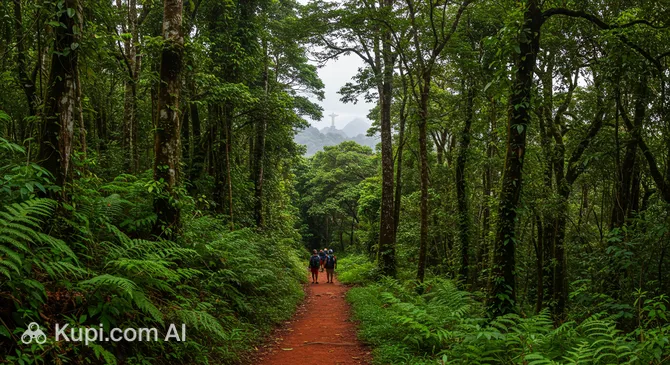
Tijuca National Park. Illustration.
Source: Kupi.com AI

Traveler photos:

The crown jewel of the park is undoubtedly Mount Corcovado, topped by the world-famous statue of Christ the Redeemer—a symbol not only of Rio but of all Brazil. Additionally, the park is home to other iconic sites, such as the monolithic Pedra da Gávea rock, which attracts hiking enthusiasts, and the Serra da Carioca mountains. Tijuca National Park offers a unique opportunity to combine an encounter with wildlife with visits to cult attractions, making it a must-see on any traveler's itinerary.

Contacts

To get the most up-to-date information about the operation of Tijuca National Park, including access hours for specific sectors, trail conditions, and visitation rules, it is recommended to consult official sources. Below are the main contacts for the park administration.

Since the park is a vast natural territory with numerous entrances and routes, direct telephone communication can be difficult. The best way to plan your visit is to check the information on the official website in advance.

How to contactContact
AddressEstr. da Cascatinha, 850 - Alto da Boa Vista, Rio de Janeiro - RJ, 20531-590, Brazil
Websiteparquenacionaldatijuca.rio

What to Do

Tijuca National Park offers visitors a vast array of activities, turning a visit into a true adventure in the heart of the metropolis. For outdoor enthusiasts and hikers, there are dozens of trails of varying difficulty. These routes lead to picturesque waterfalls, hidden caves, and historical sites, such as the old Alcantara Bridge or the Chinese-style pagoda gazebo. During your walk, you can enjoy birdwatching, encounter exotic butterflies, and explore the unique plants of the Atlantic Forest.

The park is also a popular spot for more extreme activities. Rocky peaks like Pedra da Gávea and Pedra Bonita attract rock climbers and hiking fans, offering not only challenging routes but also breathtaking panoramas. Furthermore, there are paths for cyclists throughout the park, and numerous clearings are perfect for a quiet picnic in nature. Special mention goes to the approximately thirty waterfalls scattered throughout the forest, most notably Cascatinha Taunay—the highest in the park.

Of course, the main magnet for visitors is the opportunity to ascend Mount Corcovado, home to the world-famous Christ the Redeemer statue. This route, passing through the park's lush greenery, is an unforgettable experience in itself. From the summit, the famous panoramic view of all Rio de Janeiro opens up, from Guanabara Bay to the famous beaches, making a visit to Tijuca Park a mandatory part of any city guest's program.

Getting There

Tijuca National Park is conveniently located within the city limits of Rio de Janeiro, making it easily accessible from various parts of the metropolis. You can reach this green oasis in several ways, choosing the one that suits you best. Among the most popular options are taxis, rental cars, or public transport, such as city buses.

If you value comfort and flexibility, traveling by car or taxi is the best solution. This is especially convenient given that the park has several entrances leading to different sectors and attractions, such as Mount Corcovado or the Pedra da Gávea rock. For those who prefer to use public transport, there are bus routes that stop near the park area. From the stops, you will typically need to walk a bit, which is a great way to start your encounter with nature.

Many tourists also choose organized guided tours. This is a wonderful opportunity not only to reach the park worry-free but also to learn more about its history, flora, and fauna while following a pre-planned route. At the same time, independent travelers need not worry: information boards, maps, and signs are posted throughout the park to help you easily navigate the numerous trails and find your way to the most interesting spots.

Nearest city: Rio de Janeiro

History & Facts

The history of Tijuca National Park is a fascinating story of nature's rebirth through human effort. Few people know that this lush green expanse in the heart of Rio de Janeiro has a dramatic past. Back in the 18th century, these lands were almost completely deforested due to active clearing for coffee plantations, livestock farming, and fuel production. This intervention led to serious ecological consequences: streams began to dry up, the city was threatened with drinking water shortages, and the mountain slopes became prone to devastating landslides.

Realizing the scale of the impending catastrophe, authorities in the mid-19th century took decisive steps toward reforestation. A massive program was launched, during which millions of saplings typical of the Atlantic Forest were planted. This project became one of the world's first and most successful examples of ecological restoration, turning a devastated area back into a flourishing tropical paradise and protecting the city's water resources. Thus, the Tijuca Forest we see today is largely a man-made wonder.

The area received its official status as a national park on July 6, 1961, when the Tijuca Forest, the famous Mount Corcovado, and the Pedra da Gávea rock were combined into a single protected zone. In 1991, the park was recognized as a UNESCO Biosphere Reserve, further highlighting its global significance. Today, Tijuca National Park is managed by the Chico Mendes Institute for Biodiversity Conservation and serves as a powerful reminder of the importance of nature preservation and how human will can correct the mistakes of the past.

Time Needed

When planning a visit to Tijuca National Park, it is important to budget your time wisely to get the most out of the experience. For a quick look at the main, most accessible attractions, such as the Cascatinha Taunay waterfall and the Vista Chinesa lookout, it is recommended to set aside at least half a day. Many organized tours last about four hours and cover these key points.

However, to truly feel the scale and diversity of this unique urban forest, it is better to plan for a full day. This will give you the chance to explore several hiking trails of varying difficulty leading to hidden waterfalls, caves, and peaks with breathtaking panoramic views. For instance, a hike to Tijuca Peak or Pedra da Gávea alone can take several hours. A full day in the park allows you to combine visits to iconic sites with leisurely strolls, wildlife watching, and perhaps even a picnic in one of the picturesque spots.

Working Hours

Tijuca National Park is open to visitors year-round, allowing you to enjoy its beauty in any season. The park's main operating hours are daily from 8:00 AM to 5:00 PM. During the summer, these hours may be extended until 6:00 PM, though this should be double-checked. A pleasant feature is that entry to the main park area is free, although there may be a fee for visiting specific attractions, such as the Christ the Redeemer statue.

It is important to remember that the park is vast and divided into several sectors, each of which may have its own rules and access hours. For example, the operating hours for the area around the Christ statue on Mount Corcovado or the Vista Chinesa lookout may differ from the park's general schedule. No advance booking is required for simple entry into the park, but if you plan to visit specific popular sites or join an organized tour, it is best to check if tickets need to be purchased in advance. Before your visit, it is highly recommended to check up-to-date information on the park's official website to plan your day in the best possible way.

8:00 – 17:00

Nearby

A visit to Tijuca National Park is an immersion into the wild in the very heart of the metropolis. However, to fully appreciate the multifaceted nature of Rio de Janeiro, it is worth exploring other nearby attractions. Discovering the surroundings will allow you to see how the tropical forest harmoniously coexists with city blocks, cultural centers, and famous sports facilities.

Thanks to the park's convenient location, reaching other iconic city sites is easy. Just a few kilometers from Tijuca's green trails, completely different experiences await you—from exploring the underwater world to soaking in the atmosphere of major sports events. This is a great opportunity to diversify your itinerary and see the different faces of Rio in a single day.

NameDistance
Tal Pai Aquarium5.3 km
Coco Bambu Amusement Park6.2 km
Júlio Delamare Aquatics Centre7.4 km
Big Jump USA9 km
Boa Praça Bar11 km
Fogo de Chão11.5 km
Arpoador11.5 km

Have you reached the end of the page?

So the route has been studied inside and out