Support

Museum of Tomorrow

About

The Museum of Tomorrow (Museu do Amanhã) is not just a museum, but a true symbol of futuristic architecture and scientific progress, located in the port area of Rio de Janeiro, Brazil. This modern science center, situated on Mauá Pier, invites visitors on a fascinating journey to explore the future of our planet and humanity. The museum's exhibitions focus on global themes such as climate change, sustainable development, and technological innovation.
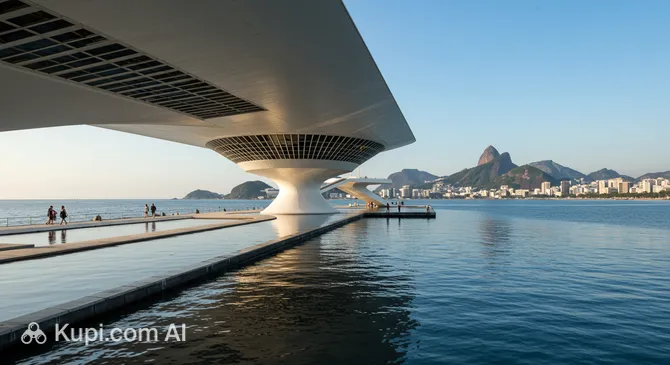
Museum of Tomorrow. Illustration.
Source: Kupi.com AI

Traveler photos:

The building itself is the main exhibit and one of the city's architectural gems. Designed by the famous Spanish architect Santiago Calatrava, it captures the imagination with its unusual shape, resembling either a spaceship or the skeleton of a giant prehistoric animal. This unique structure was part of a large-scale urban renewal project, harmoniously blending into the surrounding landscape.

The museum's architectural design is thought out to the smallest detail. The building features massive cantilevered structures: one, 75 meters long, faces the city, and the other, 45 meters long, points toward the waters of Guanabara Bay. At the same time, the building's height does not exceed 18 meters—an intentional choice to avoid blocking the view of neighboring historic buildings, such as the Sao Bento Monastery. The Museum of Tomorrow is a place where science, art, and bold architectural thought unite to inspire reflection on the future.

Contacts

To plan your visit, check opening hours, and purchase tickets, it is best to consult the museum's official resources. All up-to-date information, including details on temporary exhibitions and special events, is available on the website.

How to contactContact
AddressPraça Mauá, 1 - Centro, Rio de Janeiro - RJ, 20081-240, Brazil
Websitemuseudoamanha.org.br

What to Do

A visit to the Museum of Tomorrow is a thrilling interactive adventure. The main exhibition takes you through five key zones: "Cosmos," "Earth," "Anthropocene," "Tomorrow," and "Us." Each of these zones, through engaging experiments, games, and multimedia installations, prompts reflection on our origins, the present, and the future. You won't just be a passive observer; you'll become an active participant, exploring complex ideas about how our actions affect the planet and what kind of future we can build together. This makes the visit not only educational but truly engaging.

Beyond the main exhibition, the museum offers other experiences. Take a stroll through the pedestrian park surrounding the pier. From here, you'll find magnificent panoramic views of Guanabara Bay and the historic Sao Bento Monastery, making it a perfect spot for photos and a relaxed break. The museum itself, with its innovative design, is dedicated to themes of sustainable development and ecology, which are reflected in every detail.

Be sure to note the building's unique architectural features. One of the main highlights is the movable "wings" on the roof—dynamic slats with integrated solar panels that follow the sun's movement throughout the day, providing the museum with renewable energy. This is a clear example of how science and design can work together to create a sustainable future, which is the central theme of the museum.

Getting There

Getting to the Museum of Tomorrow is quite simple, as it is located in the heart of Rio de Janeiro on Praça Mauá (Mauá Pier). This central and easily accessible part of the city was significantly revitalized, turning into a popular public space. Thanks to this convenient location, visitors have several easy ways to reach this futuristic landmark.

One of the most convenient modes of public transport is the modern VLT light rail (Veículo Leve sobre Trilhos). It was launched in preparation for the 2016 Olympic Games and runs through the entire port area. You need the Parada dos Museus stop, which is in the immediate vicinity of the museum. You can also reach the city center by metro; the nearest station is Uruguaiana, from which you can walk to the museum or transfer to the VLT. Additionally, many bus routes pass through the city center, making the museum accessible from various parts of Rio.

If you prefer more comfort, you can always use a taxi or popular ride-sharing apps. A trip from tourist areas like Copacabana or Ipanema doesn't take much time, depending on traffic conditions. Furthermore, walking to the museum from nearby downtown attractions, such as the Olympic Boulevard, can be a pleasant part of your route, allowing you to enjoy the renovated waterfront and views of Guanabara Bay.

Nearest city: Rio de Janeiro

History & Facts

The history of the Museum of Tomorrow began quite recently, but it is closely linked to an important stage in the life of Rio de Janeiro. Its grand opening took place on December 17, 2015, in the presence of the then-President of Brazil, Dilma Rousseff. The construction of this ambitious project was made possible by the support of the Roberto Marinho Foundation, and its cost reached an impressive sum of approximately 230 million Brazilian reais. These investments were aimed not just at creating a new museum, but at reimagining an entire urban district.

The museum's creation was the centerpiece of a massive port area redevelopment project known as Porto Maravilha. This work was carried out as part of the preparations for the 2016 Summer Olympics, and the Museum of Tomorrow became one of the primary symbols of the revitalized Rio. It was not just the construction of a new building, but a true urban intervention that fundamentally changed the social dynamics and public use of this part of the city, transforming a previously neglected area into a vibrant and attractive space.

Despite its youth, the museum quickly entered the list of Rio de Janeiro's iconic landmarks. However, a curious fact is that in its early stages, it was more popular among foreign tourists than among Brazilians themselves. As of 2018, many locals were still not very familiar with this futuristic architectural marvel. Over time, it has naturally gained recognition at home, becoming an essential part of the city's cultural life and a symbol of its drive toward the future.

Time Needed

For a complete and leisurely exploration of the Museum of Tomorrow's main exhibition, it is recommended to set aside 2 to 3 hours. This is usually enough time to immerse yourself in the museum's interactive environment, explore the five key sections, and participate in multimedia installations without feeling rushed. Since the museum focuses on visitor interaction, a shorter visit may not allow you to fully appreciate all its ideas and exhibits.

The actual time of your visit may vary. If you want to delve deeper into all the details, watch all the video materials, and visit temporary exhibitions, the visit may take up to 4 hours. It's also worth considering that the architecture of the building itself and the surrounding park with views of Guanabara Bay deserve separate attention. Therefore, when planning a trip to Rio de Janeiro, it is best to allocate about half a day for the Museum of Tomorrow to enjoy both its internal content and its impressive exterior without haste.

Working Hours

The Museum of Tomorrow is open to visitors from Tuesday to Sunday, from 10:00 AM to 6:00 PM, with the last entry allowed until 5:00 PM. Monday is the official day off when the museum is closed. It is important to remember that on national holidays, admission may be free, which attracts a large number of people and can result in long queues. Before your visit, it is recommended to check the latest information on the official website, as opening hours are subject to change.

We strongly recommend purchasing tickets online in advance. This will help you avoid long waits in line, especially during peak tourist season or on free admission days. Online purchasing allows you to book a ticket for a specific date and time, ensuring your entry at the scheduled hour. Additionally, discounted rates or free admission are available for many categories of visitors, including students, children under 5, and seniors over 60, so it's worth checking this information before buying your ticket.

DayOpening hours
Monday10:00 – 17:00
Tuesday10:00 – 17:00
WednesdayClosed
Thursday10:00 – 17:00
Friday10:00 – 17:00
Saturday10:00 – 17:00
Sunday10:00 – 17:00

Nearby

A visit to the Museum of Tomorrow is just the starting point for exploring the revitalized district of Rio de Janeiro. The museum is located in the port area, which has been completely transformed and is today a bustling cultural and entertainment hub. A stroll through the surroundings will allow you to dive deeper into the city's atmosphere, where futuristic architecture sits alongside historical monuments and vibrant street life.

Exploring nearby attractions will enrich your experience and help you form a more complete picture of the versatility of Brazil and its cultural capital. Just a few minutes' walk or a short VLT tram ride away, you will find many interesting places—from historical squares to modern entertainment complexes.

NameDistance
Rio Art Museum0.4 km
Largo de São Francisco da Prainha0.6 km
Pedra do Sal0.7 km
Candelária Church0.8 km
Centro Cultural Banco do Brasil0.8 km
Rio de Janeiro Aquarium1.3 km
Rio Scenarium1.7 km

Have you reached the end of the page?

So the route has been studied inside and out