Support

Koh Kong

Attractions

About

Koh Kong is not just a city, but a true gateway to one of the most picturesque and mysterious parts of Southeast Asia. Nestled on the shores of the Gulf of Thailand, at the foot of the majestic Cardamom Mountains, this administrative hub offers travelers a unique combination of sea breeze and tropical forest aromas. For those discovering Cambodia, Koh Kong becomes a symbol of seclusion and adventure, standing in stark contrast to the bustling metropolises with its rhythmic and calm atmosphere.

Geographically, the city occupies a strategically important position in the west of the country, near the border with Thailand. Here, the jungle comes right down to the sea, and numerous rivers wind through the greenery as they rush toward the ocean. With a population of about 33,591 people, Koh Kong retains the charm of a small provincial town where life flows slowly and the streets are filled with the friendliness of the local residents.
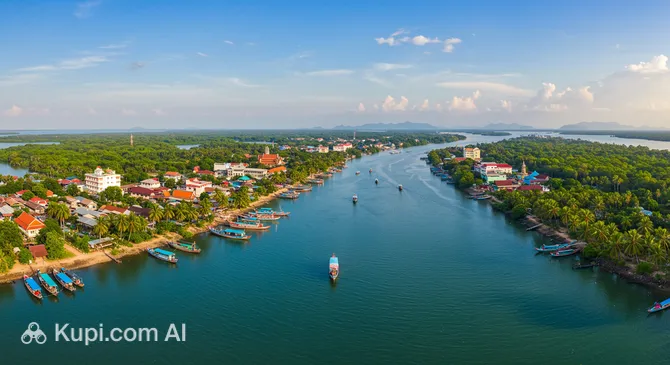
Koh Kong. Illustration.
Source: Kupi.com AI

The greatest treasure of this destination is its incredible nature. The city serves as an ideal starting point for exploring dense forests where wild flora and fauna have been preserved in their pristine state. Tourists come here to go trekking, see powerful waterfalls, or take a boat trip through protected conservation areas. Although the region is known today primarily as an ecotourism hub, the history of Koh Kong also holds many interesting pages, adding depth to the perception of this land.

Among the key places worth visiting are the famous mangrove forests of the Peam Krasop Sanctuary and the picturesque waterfalls in the surrounding areas. Koh Kong is perfect for those seeking a balance between comfort and the opportunity to touch the wild nature. If you dream of an authentic experience and real adventures far from the beaten tourist paths, this city will be an excellent choice for your journey.
Weather Overview

The climate of Koh Kong is typical for the tropical zone of Cambodia: it is warm and humid all year round. Thanks to its proximity to the sea and mountains, the weather can be changeable, but this is exactly what gives the region its special charm, filling the jungle with life. To plan an ideal trip, it's worth considering the seasonality, and the detailed weather in Koh Kong by month will help you choose the best dates for your visit.

The temperature regime in the city remains comfortable and stable throughout the year. The average air temperature fluctuates in the range of 25.6°C to 27.3°C. The hottest month is usually April, when the thermometer often exceeds 30°C during the day. In winter months, such as December and January, the nights become slightly cooler, with lows around 22°C, creating excellent conditions for sleep and evening walks.

The main difference between the seasons is the amount of rainfall. The beginning of the year (December, January) pleases with relatively dry weather and a minimum number of rainy days (about 8–9 per month). However, with the arrival of May, the situation changes: the rainy season begins, reaching its peak in July and August when precipitation can fall almost daily (up to 30 rainy days per month). Expect a hot spring, a humid summer with frequent refreshing showers, and drier, comfortable winter months.

Average monthly temperature

Average monthly precipitation

Interesting Facts

In addition to its main natural attractions, Koh Kong holds many fascinating secrets and legends that give this land a special mystical charm. Here are some surprising facts that will help you look at this city from a new perspective:

  • A regional engineering record. The Koh Kong Bridge, which connects the city to the mainland, is considered one of the longest in Cambodia. Its construction was a real breakthrough, turning a once-isolated and hard-to-reach corner into a popular destination for travelers.

  • Home to rare animals. Thanks to its unique location at the very gateway to the Cardamom Mountains, the city's surroundings serve as a sanctuary for endangered species. In the dense, virtually untouched jungle, you can find elusive inhabitants such as the clouded leopard and the Asian elephant.

  • The magic of glowing water. Locals often talk about an unusual natural phenomenon at the mouths of some rivers. At certain times of the year, the waters here begin to shimmer mysteriously, which is linked to the activity of bioluminescent organisms, creating the effect of an "underwater starry sky."

  • Legends of lost treasures. Koh Kong's history as an important trading post on the way to Thailand has spawned many myths. Old-timers pass down stories of ancient tribes living deep in the forests and of treasures hidden in the impassable thickets centuries ago.

How to Get There

A journey to this border city can be a real adventure, as there are no direct flights, and the route usually involves combined modes of transport. You can find out all ways to get to the city on a separate page, but here we will look at the main transport hubs through which it is most convenient to build your route.

The city of Koh Kong itself does not have its own airport, so travelers have to choose one of the nearest aviation hubs in neighboring provinces or even in the neighboring country. One convenient option for those coming from Thailand is Trat Airport (IATA: TDX). It is located in Trat, Thailand, approximately 103 km from Koh Kong. This is a small but cozy airport. The journey from there to the Cambodian border and then to the city will take about 2.5–3 hours by taxi or minivan, including time for border control.

If you plan to arrive via the capital of Cambodia, your destination will be Phnom Penh International Airport (IATA: PNH). This is the country's largest transport hub, receiving many international flights. It is located in Phnom Penh, about 203 km from Koh Kong. The journey by bus or taxi along scenic but sometimes winding roads will take about 4–5 hours. This is the most popular route for those who want to combine the trip with a visit to the capital.

Another domestic option is Sihanouk International Airport (IATA: KOS), located in the resort city of Sihanoukville, about 135 km from Koh Kong. This is a regional hub that often receives flights from other Asian countries. Travel time by taxi from here is about 3.5 hours. The road runs along the coast and through national parks, making the trip quite picturesque.

For clarity, here is a summary of the main airports:

AirportPassenger trafficDistance
Trat Airport80 987103 km
Sihanouk International Airport55 000135 km
Phu Quoc Airport4.1 mln194 km
Phnom Penh International Airport2.5 mln203 km
Siem Reap International Airport1.4 mln237 km

Railway communication in this region is poorly developed. There is no train station in the city of Koh Kong, and no trains run here. The nearest active lines are in Phnom Penh and Sihanoukville, but they are rarely used by tourists for travel toward Koh Kong due to inconvenient schedules and a lack of direct connections. Therefore, you should not rely on the train when planning your route to this specific city.

The main way to reach Koh Kong remains road transport. After arriving at any of the listed airports, you will need to transfer to a bus, minivan, or taxi. The road to the city passes over beautiful bridges and mountain passes, and the quality of the surface on main highways (especially RN48) has significantly improved in recent years, making the journey more comfortable.

Main Attractions

The main attractions of Koh Kong are inextricably linked to its unique natural environment. This city serves as a starting point for exploring the wild jungles, rivers, and the coastline of the Gulf of Thailand. Here, you won't find pompous palaces or huge amusement parks; instead, there are places where you can feel complete harmony with nature and see Cambodia as it was hundreds of years ago.

One of the true gems of the region is the Peam Krasop Wildlife Sanctuary. It is one of the most extensive and well-preserved mangrove forests in all of Southeast Asia. For the convenience of tourists, long wooden walkways have been built here, winding directly over the water among the intricately intertwined tree roots. A walk along the "Mangrove Alley" allows you to observe crabs, mudskippers, and rare birds. For a more immersive experience, it is worth renting a boat and sailing through the narrow green corridors deep into the sanctuary.

Equally popular is the picturesque Tatai Waterfall, located in the heart of the Cardamom Mountains. It is a wide, two-tiered cascade that changes its character depending on the season. During the rainy season, it turns into a powerful, roaring torrent demonstrating the force of the elements, while in the dry season, the water becomes clear and calm, forming natural swimming pools. A trip to the waterfall often includes a relaxing boat ride down the river, surrounded by dense tropical forests.

Those seeking seclusion and seaside romance should visit Koh Kong Island. It is the largest island in the country and remains remarkably undeveloped. Here, travelers will find miles of deserted white-sand beaches, coconut palms, and azure waters. People come here on day trips to go snorkeling, swim in the pristine sea, and enjoy the silence far from civilization.

From a cultural perspective, the Khun Chang Khun Phen Stupa, located on a rocky islet at the mouth of the river, is of great interest. This place is steeped in local legends and folklore telling a story of tragic love. Beyond its spiritual significance, the stupa attracts tourists with magnificent panoramic views: it offers the best vantage point of the city, the river, and the vast expanses of the Gulf of Thailand, especially during sunset hours.

Local Cuisine

The culinary scene in Koh Kong is a vivid reflection of its geography: the generosity of the Gulf of Thailand meets the richness of the tropical forests here. For foodies, this city becomes a true discovery, as the journey of seafood from the fishing boat to the plate is as short as possible. The basis of the local menu consists of dishes made from the freshest shrimp, squid, and fish, prepared with sincere love for tradition and aromatic spices.

The main culinary symbol that is definitely worth trying is amok. This is delicate fish steamed in a banana leaf with thick coconut milk and a "kroeung" spice paste. In Koh Kong, this dish takes on a special quality due to the exceptional freshness of the ingredients. The region is also famous for its mangrove crabs. Their meat has a sweetish taste, and they are often served with a signature spicy sauce based on lime and fresh chili, which perfectly highlights the flavor of the seafood.

Exotic food lovers should look out for dishes featuring wild herbs and algae gathered from the surrounding forests and coastal waters. Local cuisine is not afraid to experiment: you can find unusual soups and salads full of vitamins here. For dessert or a street snack, fried banana pancakes or sweet pastries with shredded coconut are excellent choices. And while walking through the markets, it's impossible to pass by the stalls with durian, rambutan, ripe mangoes, and pineapples.

Regarding drinks, in Koh Kong's hot climate, there is nothing better than chilled coconut water, drunk straight from the nut. It is perfectly refreshing and restores energy after walks. Freshly squeezed tropical fruit juices, sugarcane juice, and herbal teas are also popular. For alcoholic drinks, locals and tourists most often choose light Cambodian beer, which pairs well with spicy and aromatic dishes during dinner.

The food culture in the city is democratic and open. It is not customary to hide behind the walls of expensive restaurants. The tastiest and most authentic food awaits you at the night markets and street cafes, where seafood skewers are grilled over an open fire right before your eyes. It is in such places, sitting at a simple table surrounded by locals, that you can truly understand the taste and soul of this coastal city.

Travel Tips

Welcome to Koh Kong—a city where dense jungles meet the waters of the Gulf of Thailand! To ensure your journey through this wild and picturesque corner of Cambodia is as comfortable and safe as possible, we have prepared a list of important practical recommendations considering the region's specifics.

  1. Clothing and Gear. The climate here is hot and humid, so choose loose clothing made of natural, breathable fabrics. Since the main activities involve trekking in the jungle and visiting waterfalls, be sure to bring comfortable closed shoes with non-slip soles, not just flip-flops. Don't forget a raincoat and a waterproof phone case, especially if you are traveling during the rainy season.
  2. Transport. There is no public transport in the traditional sense here. It is most convenient to get around the city by tuk-tuks (always agree on the price in advance!) or moto-taxis. For trips to waterfalls and sanctuaries, many tourists rent scooters, but only do so if you have confident driving skills, as roads outside the city can be difficult and traffic chaotic.
  3. Finances. Koh Kong is unique in that three currencies circulate freely: the Cambodian riel, the US dollar, and the Thai baht (due to the proximity to the border). Cards are accepted very rarely, only in large hotels, so always have cash with you, preferably in small bills. ATMs are available in the city center, but it's better to withdraw money in advance before heading to remote eco-lodges.
  4. Health and Safety. The main threat in the region is tropical insects. Be sure to use repellents, especially in the evening and when going into the forest. There are pharmacies in the city, but the range may be limited, so bring specific medications with you. The city is safe, but the streets are poorly lit, so it's better to move by transport rather than on foot after dark.
  5. Communication. English is understood in hotels and tourist restaurants, but in markets and with tuk-tuk drivers, you often have to communicate with gestures or using a calculator. Many local residents understand Thai. We recommend buying a local SIM card (e.g., Smart or Cellcard) for navigation, but note that connection may be lost deep in the mangrove forests.
  6. Local Etiquette. Greet locals with the traditional "sampeah" gesture (palms joined at the chest with a slight bow)—it always commands respect. When visiting Buddhist temples, knees and shoulders must be covered. In Khmer culture, the head is considered sacred, so never touch the heads of locals, even children.
  7. What to Avoid. Categorically do not drink tap water—buy only bottled water. Also, avoid independent hikes into dense jungles without an experienced guide: it's easy to get lost, and dangerous animals can be found in the wild.
  8. Careful on Beaches. If you plan a trip to Koh Kong Island or the wild beaches of the coast, beware of sandflies. Their bites are almost unnoticeable at first but itch for a long time afterward. A local life hack: apply coconut oil generously to your skin—it often helps repel these insects better than chemical sprays.

Koh Kong is a place where nature dictates its own rules, and if you follow them, this land will give you unforgettable impressions of meeting the real, untouched Asia. Prepare in advance, respect local traditions, and your adventure will be bright and worry-free!

Entertainment & Nightlife

The nightlife in Koh Kong is strikingly different from the noisy parties of Phnom Penh or Siem Reap. Here, you won't find neon-lit streets with endless bars and loud discos until dawn. Instead, the city offers a peaceful, relaxed atmosphere where evening entertainment is centered around watching sunsets, slow dinners, and conversation to the sound of the river. It's an ideal place to unwind after an intense day in the jungle or at the waterfalls.

The epicenter of evening activity is the riverfront. This is where tourists and locals flock as dusk falls. Life here wakes up around 5:00 PM, when the sun begins to set behind the Cardamom Mountains, painting the sky and water in incredible shades. In these moments, Cambodia reveals its most romantic and tranquil side to travelers. Most establishments here are open-air restaurants and bars on stilts or terraces where you can catch a refreshing river breeze. The dress code everywhere is as casual as it gets: shorts, t-shirts, and sandals are appropriate anywhere.

Among the specific venues worth visiting, Cafe Laurent stands out. This place is considered one of the best for watching the sunset thanks to its location right by the water and its cozy interior. They serve a mix of Khmer and Western cuisine, and unobtrusive music plays in the evening. Another popular gathering spot for travelers is Lin's Restaurant. This establishment is famous for its hospitality and delicious food, making it a great meeting place for expats and tourists alike. There is a friendly atmosphere here, perfect for swapping stories with travelers from all over the world over a cold drink.

For those looking for more fast-paced entertainment, pay attention to the border zone near the bridge leading to Thailand. This is home to the large Koh Kong Resort complex, which features a casino. This place attracts many visitors from neighboring countries and offers a more lively setting with gaming halls and entertainment shows that run late into the night.

If you want to feel the local flavor, be sure to stop by the Night Market near the central roundabout. Although it is small, you can try inexpensive street food here: skewers, noodles, and desserts. The market stays open until about 9:00 PM or 10:00 PM and is a great spot for a budget dinner in an authentic setting.

Practical tips for night walks are simple: the city goes to sleep quite early, and many establishments close by 11:00 PM or midnight (with the exception of the casino). Street lighting in Koh Kong is weak or absent in places, so it is highly recommended to use tuk-tuks for getting around after dark. It is safe and inexpensive. It's best to agree on the price of the trip with the driver in advance. Walking through dark alleys away from the riverfront is not advisable to avoid meeting stray dogs or simply getting lost.

During the day, the city offers entirely different activities: eco-tours, kayaking, and trips to waterfalls, so evening relaxation in Koh Kong is, above all, a way to recharge in a cozy environment before new adventures in the wild nature.

Parks & Museums

The city of Koh Kong and its surroundings are, in essence, one giant open-air museum of nature, where instead of glass display cases, you are met with living mangrove forests, and instead of paintings, majestic panoramas of mountains and waterfalls. Although you won't find large, air-conditioned state museums in the city itself, the cultural and natural landscape of the region offers travelers something much greater—the chance to touch history and ecology in their natural environment.

Green Zones and Nature Parks

The main natural "treasure" of the region is certainly the Peam Krasop Sanctuary. It is a unique ecosystem where visitors can walk along specially equipped wooden walkways built through dense mangrove thickets. Here, nature is the main exhibit: tree roots are intricately intertwined above the water, creating a home for crabs and rare birds. In the center of the park is an observation tower offering a breathtaking view of the green carpet of jungle stretching out to the sea. This place is ideal for those who want to study the region's flora without traveling far from the city.

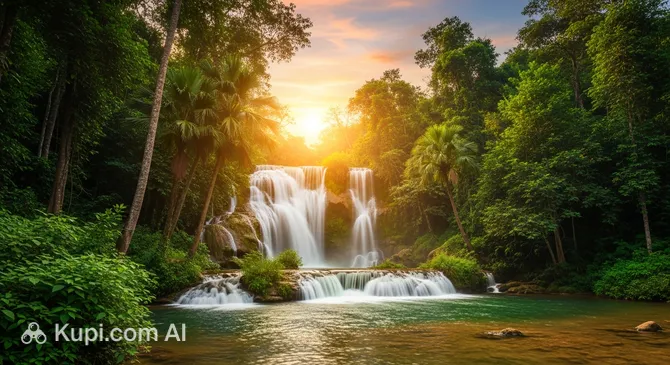
Tatai Waterfall. Illustration.
Source: Kupi.com AI

Traveler photos:

Another important natural area is the territory around the Tatai Waterfall. Although this site is outside the city limits, it functions like a nature park where you can spend the whole day. Here, the Tatai River forms wide cascades surrounded by tropical forest. Tourists come here not only for swimming but also to enjoy the silence of the wild, have a picnic on the rocks, or go on a mini-expedition in kayaks along the river, observing jungle life from the water.

Cultural and Historical Sites

Since there are no classical museums in Koh Kong, the role of guardian of history and legends is taken on by the Khun Chang Khun Phen Stupa. Located on a rocky islet at the mouth of the river, it is dedicated to the heroes of a famous Khmer epic about a tragic love triangle. This place holds great significance for local residents, who come here to pray and leave offerings. For tourists, the stupa is interesting as an architectural monument and an excellent observation deck, allowing one to see the city and the Gulf of Thailand from an unusual angle.

Religious architecture enthusiasts should visit Wat Tep Nimith—one of the city's main Buddhist temples. Its richly decorated facades and the calm atmosphere of its courtyard allow for immersion in the spiritual culture of Cambodia. The temple walls are often painted with scenes from the life of Buddha, making it a kind of art gallery telling of the beliefs and traditions of the Khmer people.

Insider Tip

For a unique experience, head to the Koh Kong riverfront at sunset. This is not just a walking area, but the real "heart" of city life, where you can see local fishermen preparing their boats for a night at sea. And if you want to see the Peam Krasop mangrove forests without the crowds of tourists, rent a boat at dawn—at this time, the water is especially calm, and the chances of seeing wild animals and birds are much higher.

Getting Around

The public transport system in Koh Kong is simple and intuitive, though it differs significantly from usual European standards. You won't find a metro, trams, or an extensive network of municipal buses with fixed schedules here. The city is quite compact, and its transport infrastructure is adapted to the slow rhythm of local life, relying mainly on private carriers and small vehicles.

The most popular and colorful way to get around is by tuk-tuks. In Koh Kong, you can find two types: the classic "remorks" (motorcycles with a carriage attached behind for passengers) and more modern three-wheeled auto-rickshaws, resembling Indian motor-rickshaws. Tuk-tuks are ideal for trips around the city with luggage or a small group. They are easy to find on the riverfront, near markets, and at the bus station. Drivers often offer their services to passing tourists themselves.

For solo travelers wanting to save money and reach their destination faster, there are moto-taxis (locals call them "motodops"). Drivers in vests or just on scooters wait at intersections. This is the most maneuverable type of transport, but the level of comfort and safety is lower than in a tuk-tuk. Always ask for a helmet before the ride, although drivers don't always have one.

The payment system in Koh Kong is exclusively cash-based. Transport cards, passes, or validators do not work here. It is customary to pay the driver personally at the end of the trip. Both local riels and small US dollar bills are accepted for payment. Important tip: always agree on the price before the ride starts. There are no fixed tariffs, and the cost depends on the distance and your bargaining skills. A short trip around the center usually costs between $1 and $2 (or the equivalent in riels).

In recent years, mobile apps for calling transport, such as PassApp ( a local analogue of Uber), have started working in the region. If you manage to use the app, it will save you from the need to bargain, as the price will be calculated automatically. However, in Koh Kong, coverage can be unstable, and hailing a vehicle manually is often faster and more reliable.

A popular alternative to public transport is scooter rental. This is perhaps the best way to explore the surroundings, including waterfalls and remote beaches, at your own pace. Rental points can be found in the city center and at many guesthouses. Rental usually requires a passport as a deposit or a cash deposit. Bicycle rentals are also available, which is great for leisurely rides along the riverfront and trips to the market.

If you plan to move only within the central part of the city, for example, from your hotel to the night market or the riverfront, you can easily get by on foot. Distances here are small, and traffic is not as dense as in large metropolises, making walks relatively comfortable, especially in the morning and evening hours.

Accommodation

The choice of accommodation in Koh Kong, while it may not boast the scale of large resorts, offers travelers an interesting variety: from simple and cheap guesthouses to unique eco-lodges tucked away in the jungle. The city's infrastructure is developing, catering to both transit tourists headed to Thailand and nature lovers coming for the sanctuaries and waterfalls.

The central part of the city is the most practical area to stay. Most budget hotels and guesthouses are concentrated here, around the roundabout and the main market. Staying in the center is convenient for its proximity to bus stations, banks, and evening food markets. Rooms here are usually basic but clean, equipped with air conditioning or a fan. This is an ideal choice for those planning active excursions and using the hotel only for sleeping.

For those seeking romance and beautiful views, the best solution is to stay on the riverfront. More atmospheric hotels and bungalows are located here, many of which are built on stilts right over the water. In the evening, these spots offer stunning views of the sunset over the Cardamom Mountains. Special mention should be made of the eco-resorts located further from the city, in the Tatai River area. Staying in floating tents or wooden cottages in the middle of the river allows you to fully immerse yourself in the sounds of nature, although you will have to get there by boat.

There is also a separate category of accommodation in the border zone (near the bridge to Thailand). Large casino-hotel complexes are located here. They offer a level of comfort close to international standards (swimming pools, spas, restaurants), but the atmosphere there is more specific and oriented towards gamblers.

Price range and booking:

  • Budget segment: Guesthouses in the center cost from $8 to $15 per night. This is the most common type of accommodation.
  • Mid-range: Comfortable rooms with a river view will cost around $20–$40.
  • Eco-luxury: Staying in secluded lodges on the river can cost from $50 to $100 or more, depending on the included services.

Booking tip: If you plan a trip during the "dry season" (November to March) or for the Khmer New Year (April), accommodation—especially popular eco-lodges on the river—should be booked in advance, sometimes several weeks ahead. At other times, you can find a room even upon arrival. Note that many small guesthouses are not listed on major online platforms, so sometimes contacting them directly via social media or phone can be more effective.

Nearby Cities

For those who want to explore the surrounding area, Koh Kong serves as an excellent starting point for day trips to several interesting nearby locations. Situated at the edge of the Cardamom Mountains and along the Gulf of Thailand coast, the city offers easy access to unique natural landmarks.

One of the most popular day trips is a visit to the famous Tatai Waterfall. Located just a few kilometers from the city, it offers refreshing swims, picturesque views, and the opportunity to take a boat trip along the river through mangrove thickets. It is an ideal spot for nature lovers and those seeking peaceful relaxation away from the city bustle. Another option is to explore the coast. You can head to one of the nearby fishing villages to get acquainted with local life or find a secluded beach for a picnic and relaxation. Such trips allow for a deeper immersion into the authentic atmosphere of coastal Cambodia.

While larger cities are a significant distance away and are better suited for multi-day journeys, information on some of them is provided below for your route planning.

CityPopulationDistance
Trat10 413102 km
Sihanoukville71 082124 km
Khlung10 835124 km
Pursat58 255136 km
Chanthaburi23 835146 km

These nearby destinations provide insight into the diverse culture and landscapes of the region, whether it's a short outing into nature or a longer trip to another city.

Shopping & Souvenirs

Shopping in Koh Kong is an immersion into the atmosphere of a typical border trade hub, where commerce plays an important role in daily life. You shouldn't expect glossy boutiques, designer outlets, or huge malls here; instead, the city offers colorful markets and small shops filled with goods of both local and Thai origin. Thanks to its proximity to the border, the range here is quite diverse: from the freshest seafood to consumer electronics and clothing at affordable prices. This is a place for practical shopping, not for chasing high fashion.

The city's commercial life is centered mainly in the center, near the roundabout and the bridge leading to the Thai border. The main streets adjacent to the central market are lined with family-run shops, pharmacies, and mobile phone stalls. Strolling here, you can find everything needed for a journey: from sunglasses and hats to quality trekking gear that might come in handy for excursions into the jungle or mountains.

There are no large shopping centers of the usual Western format in Koh Kong. Shopping here is more traditional and local in character. Instead of multi-story complexes, small supermarkets and mini-marts operate, selling imported food, drinks, and essential goods. If you need to buy cosmetics or specific items, it's best to look for them in specialized private shops along the main roads.

The heart of trade is the Koh Kong Market (Phsar Koh Kong). This is a large covered space where life buzzes from early morning. The market is divided into zones: one part sells clothing, shoes, jewelry, and housewares, while the other sells food. The rows of exotic fruits and vegetables, striking with a riot of colors, deserve special attention. In the evening, a small night market opens near the center, focusing more on street food, but you can also find stalls with inexpensive clothing and souvenirs there.

From Koh Kong, tourists most often bring back gastronomic souvenirs reflecting the richness of local nature. The region is famous for its dried seafood: shrimp, squid, and fish, which are significantly cheaper here than in other parts of Cambodia. It is also worth paying attention to wild honey collected in the forests of the Cardamom Mountains and the famous Cambodian pepper. As a memorable gift, you can purchase a krama—a traditional checkered cotton scarf which is a national symbol used by locals everywhere.

Markets start working very early, around 6:00 AM, and wind down trade by 5:00 PM. Private shops can stay open until 8:00 PM or 9:00 PM. Regarding payment, Koh Kong is unique in that three currencies circulate freely: the Cambodian riel, the US dollar, and the Thai baht. Prices in markets are often quoted in baht due to close economic ties with neighboring Thailand. Bank cards are accepted very rarely, mostly only in expensive hotels, so cash (preferably small denominations) is simply a necessity here.

Tax-free shopping (Tax Free) for tourists is not practiced in ordinary shops and markets in Koh Kong. Prices for goods initially include all taxes, and there is no procedure for VAT refunds. However, thanks to its border zone status, the cost of many imported goods here is already very attractive, which compensates for the lack of formal tax benefits.

Reached the end of the page?

That means the route is fully explored