Support

Chambord

About

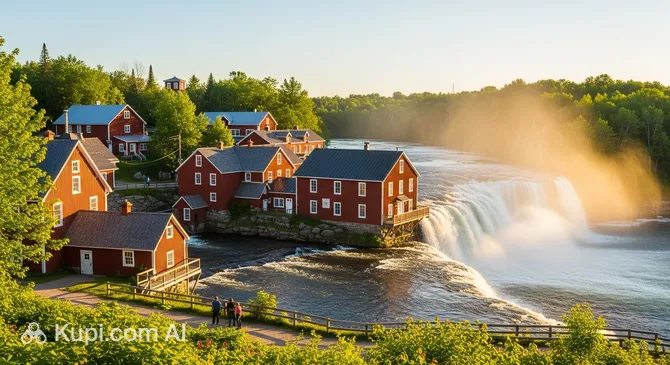
Chambord is a picturesque municipality located in the Saguenay–Lac-Saint-Jean region of the province of Quebec. Nestled on the southern shore of the majestic Lake Saint-Jean, this town attracts travelers with its stunning natural landscapes and calm, measured atmosphere. If you are planning a grand journey through such an amazing country as Canada, Chambord will be an excellent stop to experience the local flavor and take a break from the urban hustle and bustle.

Chambord. Illustration.
Source: Kupi.com AI

Geographically, the town occupies a strategically important position at the intersection of the region's main roads, which is why it is often called the "crossroads." With a population of about 2,900, Chambord maintains the cozy and friendly feel of a small community. The climate here is characteristic of the region: snowy winters create ideal conditions for snowmobiling, while warm summers draw tourists to the water. The rich history of Chambord is closely intertwined with the development of rail transport and industry, which has shaped the unique character of this place.

One of the main points of interest for guests is the historical village of Val-Jalbert. This is an impressive open-air museum where time seems to have stopped in the 1920s, and nearby thunders the powerful Ouiatchouan Falls, which are even taller than Niagara Falls. Additionally, Chambord serves as an excellent starting point for rides along the famous "Véloroute des Bleuets" (Blueberry Cycle Route). We recommend visiting this hospitable town to enjoy the fresh air, panoramic lake views, and Quebec's unique cultural heritage.

Weather Overview

The climate in Chambord is characterized by distinct seasonality, allowing tourists to enjoy a variety of activities year-round. Winters here are truly harsh and snowy: in January, the average temperature is around -12.6°C, and on the coldest nights, the air can cool down to -16.4°C. This time requires good gear but rewards travelers with the magical winter landscapes of the province of Quebec.

The summer season, on the other hand, delights with mild warmth, perfect for walks by the lake. In July, the warmest month, the air warms up to an average of 20.1°C, reaching a comfortable 24°C during the day. Expect a warm summer with occasional precipitation and cold winters, as wet days occur quite frequently—from 12 to 15 days per month throughout the year.

Spring and autumn here are cool and changeable, so layered clothing is the best choice. To pack correctly and plan outdoor activities, we recommend checking the weather in Chambord expected during your travel dates in advance.

Average monthly temperature

Average monthly precipitation

Interesting Facts

Chambord may seem like a quiet town, but behind its tranquility lie surprising facts connecting it to the history of France and the region's industrial past. Here are a few curious details that will help you look at this place in a new way:

  • A Royal Name. The municipality was named in honor of Henri d'Artois, Count of Chambord. He was the Legitimist pretender to the French throne in the 19th century, creating an unexpected historical link between this Canadian village and European monarchy.

  • A Waterfall Taller than Niagara. In the immediate vicinity of Chambord, on the grounds of the Val-Jalbert historical village, is the Ouiatchouan Falls. Its height is 72 meters, which is a full 20 meters higher than the famous Niagara, though it is significantly narrower.

  • A Ghost Town Next Door. Chambord serves as the main gateway to a unique open-air museum—Val-Jalbert. This is a real 1920s "ghost town" with preserved houses and a school, which was abandoned by its residents after the closure of the pulp mill, but is today perfectly restored for tourists.

  • The Railway Heart of the Region. For a long time, Chambord remained a key transport hub, as it was the arrival point for the railway connecting the isolated lake district with the rest of the world. This status as a "crossroads" determined the town's development and its architectural appearance.

How to Get There

When planning a trip to this picturesque region, it is important to think through the logistics in advance, as the town is somewhat distant from the province's main metropolitan areas. You can find more details on how to get to Chambord by studying the available routes. Most often, travelers choose a combined option: a flight to the nearest large city, followed by a trip in a rented car or by bus.

Since there is no airport in Chambord itself, it is most convenient to use the airports of neighboring cities. The closest option is Saguenay-Bagotville Airport (IATA: YBG), located in the city of Saguenay. The distance to Chambord is about 80 km. A trip by taxi or rental car along the regional highway will take only about 1 hour. This is an excellent choice for those flying on domestic routes.

For international travelers, the main hub will be Québec City Jean Lesage International Airport (IATA: YQB). It is located in Quebec City, approximately 189 km from the destination. The drive from there will take roughly 2–2.5 hours. The route passes through a picturesque nature reserve, so the travel time will fly by as you gaze at the beautiful scenery.

Below is information about the nearest airports for planning your route:

AirportPassenger trafficDistance
Saguenay-Bagotville Airport200 00080 km
Quebec City Jean Lesage International Airport1.7 mln189 km
Chibougamau Airport30 000234 km
Mont Joli Airport60 000285 km
Baie-Comeau Airport22 500294 km

If you prefer ground transport, you might consider arriving at major railway stations in the provincial capital and then continuing by car. The nearest major hub is the Quebec City Train Station (IATA: XLJ), located about 190 km from Chambord. The travel time from the station to the town by car is about 2.5 hours.

Another important transport point is the Sainte-Foy Train Station (IATA: XFY), located slightly further away at 195 km. This is a convenient transfer point if you are traveling by train from Montreal or Ottawa.

List of the nearest major railway stations:

StationPassenger trafficDistance
Quebec Railway Station1.2 mln190 km
Sainte-Foy Railway Station750 000195 km
Charny Station50 000200 km

Main Attractions

Despite its modest size, Chambord is a true treasure trove for travelers, offering a unique blend of industrial history and magnificent nature. The town serves as a gateway to several iconic regional sites that allow for a deep dive into early 20th-century Quebec atmosphere and the beauty of lakeside landscapes.

The undisputed gem of the region is the Village historique de Val-Jalbert (Val-Jalbert Historical Village). This is one of the best-preserved ghost towns in Canada, transporting visitors straight back to 1927. Tourists can stroll through the old streets, peek into the convent school and workers' houses, where period-costumed actors recreate the daily life of that era. The main natural attraction of the village is the powerful Ouiatchouan Falls, which can be admired from a glass lookout platform or by taking a cable car to the top.

For outdoor enthusiasts, Chambord is a key point on the map thanks to the famous Véloroute des Bleuets. This cycling route, which circles Lake Saint-Jean, passes right through the municipality. The section in Chambord is notable for its picturesque water views and convenient infrastructure. It is an ideal place to rent a bike and take a family ride, enjoying the fresh air and pastoral landscapes of "blueberry country."

Those seeking peace and tranquility should spend some time on the shores of Lake Saint-Jean. Chambord has several equipped recreation areas and roadside stops (haltes routières) where you can have a picnic or simply watch the sunset. The lake, which resembles an inland sea in scale, creates a special atmosphere. Fishing enthusiasts often gather here in hopes of catching the famous local fish—ouananiche (landlocked salmon), while photographers come for incredible shots of the water surface.

Local Cuisine

Chambord's culinary scene is inextricably linked to the traditions of the Lac-Saint-Jean region, which is famous for its hospitality and hearty dishes. The main star of the local table is undoubtedly the Tourtière du Lac-Saint-Jean. Unlike the classic Canadian meat pie, this version is a deep-dish slow-cooked meal where cubes of meat (pork, beef, and wild game) are simmered with potatoes under a thick pastry crust. This dish is a must-try to understand the taste of true Quebecois comfort.

Another local hallmark is blueberries (bleuets). The region is often called the "blueberry kingdom," and during the season, the berry is added to almost everything. We recommend that tourists try blueberry pie, jam, or the famous chocolate-covered blueberries found in local shops. Also, look out for soupe aux gourganes—a thick soup made from broad beans (fava beans), which historically was a staple for local farmers and is perfect for warming up on cool days.

As for drinks, there is a variety of flavors here. Beer enthusiasts should try the products of local microbreweries, which often experiment with adding spruce tips or forest berries. As a non-alcoholic alternative, spruce beer (bière d'épinette) with its characteristic coniferous aroma is popular, as are refreshing fruit drinks and juices made from wild blueberries.

The food culture in Chambord is characterized by informality and simplicity. Locals and tourists often dine at small roadside eateries called "casse-croûte," which serve excellent poutine with the freshest "squeaky" cheese curds (fromage en grains) produced at neighboring dairies. For a more leisurely dinner, family restaurants with lake views are ideal, with an emphasis on using seasonal farm products.

Travel Tips

Preparing for a trip to Chambord requires attention to detail, as this cozy municipality is in a region with a changeable climate and its own unique features. To ensure your trip to Canada and specifically to this picturesque lake district goes perfectly, we have gathered the most important practical recommendations for you.

  1. Clothing and Seasonality. The weather by Lake Saint-Jean can be unpredictable. In winter, a warm parka, thermal underwear, and waterproof boots are essential, as temperatures often drop below -20°C. In summer, despite warm days, evenings by the water can be cool and windy, so a fleece jacket or windbreaker in your suitcase is a must.
  2. Transport Accessibility. There is practically no local public transport in Chambord. The best solution is renting a car. This will give you the freedom to move between attractions and neighboring towns. If you come in summer, a bicycle is an excellent alternative for local outings—the infrastructure here is superb.
  3. Finances and Payment. The local currency is the Canadian dollar (CAD). In most places (Val-Jalbert museum, hotels, supermarkets), bank cards are accepted. However, for buying fresh berries at roadside kiosks or paying at small eateries ("casse-croûte"), it's better to have cash. Tips in restaurants are 15–20% and are an obligatory part of the service culture.
  4. Health and Safety. Chambord is a very safe place, but be vigilant on the roads at dusk and dawn: the risk of encountering moose or deer in this region is high. Pharmacies are available in larger neighboring settlements (e.g., Roberval), so it's best to bring a basic first-aid kit with you.
  5. Language Barrier. The primary language of communication is French. In the tourism sector, staff speak English, but you may not be understood in small shops or at gas stations. Download an offline translator and learn a few phrases, such as "Bonjour" (Hello) and "Merci" (Thank you)—the locals really appreciate respect for their culture.
  6. Connectivity and Internet. Mobile coverage in the town and along main highways is stable. However, as you go deeper into forested areas or go on long walks around the lake, be prepared for the signal to drop. Free Wi-Fi is usually available in cafes and tourist centers.
  7. Things to Avoid. Do not try to enter private property to reach the lake. Much of the shoreline is privately owned, and residents value their privacy. Use only public beaches and specially designated rest areas (haltes routières).
  8. Insect Protection. If your trip falls in June or early July, be sure to stock up on quality repellent. In wooded areas and near water at this time of year, there can be many black flies and mosquitoes that can spoil the experience of a walk.

By following these simple tips, you can avoid minor troubles and fully focus on the natural beauty and hospitality of Chambord. We wish you a smooth journey and many pleasant discoveries in the heart of Quebec!

Entertainment & Nightlife

Chambord is a place where nightlife has its own special, relaxed rhythm, dictated by the proximity to nature and the lifestyle of a small community. Here, you won't find noisy metropolis-style clubs with neon signs or 24-hour raves. Evenings in Chambord are made for enjoying the silence, the starry sky over Lake Saint-Jean, and warm conversation in cozy company. Once the sun sets, the main activity shifts toward gastronomic pleasures and relaxed rest after a day full of adventure.

However, if your soul craves music, dancing, and the clinking of glasses, you won't have to be bored. The center of attraction for those seeking more active evening leisure is the neighboring city of Roberval, located just a 10–15 minute drive away. That is where locals and tourists head to dive into the atmosphere of bars and pubs. The vibe in this area is friendly and casual: there is no strict dress code, and in most establishments, you will feel comfortable in regular casual clothes, whether it's jeans or even a fleece jacket after a walk in the woods.

For those looking for specific spots, we recommend checking out the venues in Roberval that are popular with Chambord residents. One of the nightlife hubs is Bar Le Bistro 679. It is a classic bar where you can play pool, listen to music, and stay late (the establishment often stays open until 03:00). It's always lively here, and it's a great spot to get a taste of the local flavor. In the summer season, Bar Terrasse La Jungle is an excellent choice. As the name suggests, its main feature is the outdoor terrace, where it's pleasant to sip a refreshing cocktail on a warm evening, enjoying the short northern summer.

If you prefer to stay in Chambord itself, your evening will likely revolve around a delicious dinner. The legendary Le Relais du Bleuet, while not a nightclub, is considered a must-visit. People come here in the evening to try famous blueberry dishes and enjoy a hearty dinner in a family atmosphere before bed. It's the perfect way to end the day for those who appreciate Quebec's gastronomic traditions.

When it comes to safety and logistics, it's important to remember a few rules. Chambord and its surroundings are exceptionally safe for walking; however, at night, the main "threat" becomes the wildlife. On unlit highways between towns, there is a high risk of encountering moose, so be extremely careful behind the wheel. Taxi services in rural areas do not operate as quickly as in big cities, and Uber may be unavailable here. If you plan on consuming alcohol at the bars in Roberval, arrange for a designated driver or book a local taxi well in advance.

Daytime entertainment in Chambord is no less engaging and often flows smoothly into evening gatherings. The main attraction remains the historical village of Val-Jalbert, where you can spend the entire day immersing yourself in history. Nature lovers will appreciate walks along the waterfront or bike rides that recharge your energy before a quiet and cozy evening in the heart of the Saguenay–Lac-Saint-Jean region.

Parks & Museums

Chambord offers travelers a harmonious combination of natural beauty and a deep dive into the past. This corner of the province of Quebec is famous not only for its panoramic views of the "inland sea"—Lake Saint-Jean—но also for its careful preservation of historical heritage. Green zones here are created for contemplation and relaxation, while museum sites literally allow you to touch the daily lives of the first settlers and the industrial era of the early 20th century.

For those who love relaxing by the water, the Chambord Municipal Beach (Plage municipale) is a true find. It is a well-maintained sandy strip on the shore of Lake Saint-Jean, where you can swim in the refreshing waters or have a picnic with your family. The beach is equipped with everything needed for a comfortable stay, and the endless water surface creates the illusion of being at a seaside resort. It is an ideal place to watch the sunset or simply enjoy a sunny day surrounded by picturesque landscapes.

A unique green space is the Fruit Park (Parc fruitier). This is not just a square, but a real community garden where edible plants grow: from honeysuckle and serviceberry to arctic kiwis and, of course, the famous local blueberries. The park is designed as a meeting place for generations and an educational platform where visitors can walk among fruit trees and shrubs, enjoying the aromas and peaceful atmosphere in the center of the municipality.

The main cultural attraction, known far beyond the city, is the Village historique de Val-Jalbert. This open-air museum complex is an authentic 1920s "ghost town," preserved after the closure of the pulp mill. Tourists can enter the old workers' houses, the school, and the store, as well as see the impressive Ouiatchouan Falls. This place doesn't just provide dry facts; it lets you experience history, feeling the spirit of the time and the power of the region's industrial past.

In the center of Chambord itself, look out for Saint-Louis Church (Église Saint-Louis). This architectural monument serves as a symbol of the community's spiritual life and bears witness to the resilience of the first settlers. The church building, designed in the traditional Quebec style, is interesting for its history, which is closely linked to the development of the railway and agriculture in the area. Visiting the church helps to better understand the cultural code of the local residents.

For those looking for the best photography angles, we recommend stopping at one of the lookout points (haltes routières) located at the entrance to the town from Highway 155. From here, a breathtaking view of Lake Saint-Jean opens up, which is especially magnificent during the golden hours of sunrise or sunset. This spot is often overlooked by hurrying tourists, but it is here that you can feel the true scale and majesty of the nature that Canada is proud of.

Getting Around

The public transport system in Chambord has its own specifics due to the small size of the municipality. It is important for tourists to understand that you will not find the infrastructure typical of megacities here: there is no subway, no trams, and no extensive network of city buses. Chambord is a cozy and quiet place where distances are relatively short and the pace of life is measured, so the primary means of transport for locals and guests remains a personal or rented car.

Nonetheless, Chambord is historically an important transport hub for the region. Intercar intercity bus routes pass through the town, connecting it with neighboring major centers such as Roberval, Alma, and Saguenay. It is best to purchase tickets for these buses in advance through the carrier's official website or at station sales points. Fares depend on the distance, but this is a reliable way to reach neighboring attractions if you are traveling without a car.

A unique feature of Chambord's transport system is the presence of a railway station served by VIA Rail. While it is more of an intercity communication method, the trains here are an important part of the local character. The station serves as a stop for routes going from Montreal to Jonquière and Senneterre. For tourists, this is an opportunity for a scenic journey; however, the train schedule is not suitable for daily short trips around town as services are infrequent.

As an alternative to public transport within the municipality, you can use taxi services. It is important to note that it is not customary here to "hail" a car on the street. Taxi services operate exclusively by telephone pre-order. We recommend having cash (Canadian dollars) with you, as not all drivers in rural areas are equipped with terminals for credit cards. Ride-sharing apps (like Uber) may not be available in this area, or the number of cars will be extremely limited.

In the summer season, the bicycle becomes a fully-fledged mode of transport. Thanks to the famous "Véloroute des Bleuets" route passing through the town, the cycling infrastructure here is excellently developed. You can easily move between your hotel, restaurants, and the beach on two wheels. Rental points are available both in Chambord and in neighboring settlements, and the flat terrain makes rides comfortable even for non-athletes.

For maximum comfort and freedom of movement, we strongly advise renting a car immediately upon arrival in the region. This will allow you to explore the surroundings of Lake Saint-Jean freely without depending on intercity bus schedules. Parking in Chambord is almost everywhere free and available, making a car trip the most convenient logistical option.

Accommodation

The choice of accommodation in Chambord perfectly matches its atmosphere as a quiet and cozy corner of the province of Quebec. You won't find huge chain hotels or high-rise hotel complexes here. The accommodation stock primarily consists of small motels, charming Bed and Breakfasts (B&Bs or gîtes), and campgrounds that allow you to get closer to nature. It is an ideal place for those seeking an authentic rural stay in the country of Canada.

Geographically, most accommodation options are concentrated along the main transport artery—Highway 169, which circles Lake Saint-Jean. Staying here is convenient from a logistics standpoint: you will always be near the road, yet many motels and cottages offer rooms with views of the water. Another popular area to stay is around the historical village of Val-Jalbert. It is worth staying here for the unique opportunity to live in restored 1920s houses or in a modern campground right at the base of the waterfall.

For budget-conscious travelers and outdoor enthusiasts, campgrounds are an excellent choice. During the summer season, this is the most popular type of accommodation, allowing for significant savings. The mid-price segment is represented by motels and guest houses, where you will be greeted with homey comfort and a hearty breakfast made from local products. If you are used to the standards of large hotels with a full range of services, it makes sense to consider options in the neighboring city of Roberval, which is only a 10–15 minute drive away.

Booking tip: The tourist season in this region is quite short, peaking in July and August. During this period, demand for accommodation, especially with lake views, is very high. We strongly recommend booking rooms or campsite spots 2–3 months before your trip. Booking is most often available through popular international online platforms, but many small B&Bs prefer direct contact via their own websites or by phone.

Nearby Cities

For those who want to explore the surrounding area, Chambord serves as an excellent starting point for day trips to several interesting nearby places:

Just an hour's drive away is Saguenay—a major urban center known for its impressive fjord that cuts deep into the land. It is an ideal destination for nature and outdoor enthusiasts: here you can go on a cruise along the Saguenay River, visit museums, or stroll through the lively urban districts of Chicoutimi, which are part of the city.

If you are up for a longer journey, we highly recommend visiting Quebec City. The provincial capital, located about two and a half hours away, is the only fortified city in North America north of Mexico. A walk through the cobblestone streets of Old Quebec and the view of the Château Frontenac will leave an unforgettable impression.

It is also worth checking out Jonquière, located very close by. This district, part of the Saguenay metropolitan area, is famous for its parks and cozy atmosphere, offering great opportunities for a quiet family holiday and learning about the region's industrial history.

CityPopulationDistance
Roberval10 22715 km
Alma30 90433 km
Saint-Félicien10 27838 km
Dolbeau-Mistassini14 10252 km
Jonquiere66 00060 km

These nearby destinations provide insight into the diverse culture and landscapes of the region, making your stay in Chambord even more fulfilling.

Shopping & Souvenirs

Shopping in Chambord is not about chasing global brands or spending hours walking through huge shopping centers. Rather, it is a cozy and tasty adventure that allows you to take home a piece of local flavor. Since the town is very small, commerce here focuses on authentic goods, artisanal crafts, and, of course, the gastronomic pride of the Lac-Saint-Jean region. Purchases here will be an excellent addition to your cultural program, allowing you to support local producers.

The town has no dedicated shopping districts or pedestrian streets with boutiques. All commercial activity is concentrated along the main transport artery—Route 169, which passes through the entire municipality. Traveling along it by car or bicycle, you will encounter small shops, craft stalls, and roadside kiosks. Special attention should be given to the souvenir shop on the grounds of the Val-Jalbert historical village. Even if you don't plan a long tour, the local general store (Magasin général) is worth a visit for unique retro-style goods.

There are no large shopping centers or malls directly in Chambord. For full-scale shopping, including clothing, electronics, and sporting goods stores, tourists are recommended to head to the neighboring city of Roberval, just a 10–15 minute drive away. There you will find shopping venues such as Carrefour Jeannois, which offers a wide selection of familiar Canadian and international brands, as well as supermarkets and pharmacies.

An important part of local shopping, especially in summer, are the seasonal markets and roadside stands. The region is famous for its berries, so from July to September, numerous kiosks open along the roads where farmers sell the freshest blueberries, raspberries, and vegetables. This is the best way to buy produce "straight from the field." Also, look for signs saying "Fromagerie" (cheese dairy)—local cheeses, especially fresh "squeaky" cheese curds, are considered among the best in the province.

When choosing what to bring back from a trip to Chambord, focus on gastronomy and history. Here is a list of the most popular souvenirs:

  • Blueberry products: Jams, syrups, tea, dried berries, and the famous chocolate-covered blueberries (bleuets enrobés de chocolat)—the region's main sweet symbol.
  • Val-Jalbert souvenirs: In the historical village, you can buy textiles, handmade soap, old-fashioned candies, and replicas of 1920s household items.
  • Local alcohol: Craft beer from the region's microbreweries or blueberry aperitifs.
  • Artisanal crafts: Knitted items, ceramics, or jewelry created by local masters.

Shop hours in Chambord may differ from the usual city rhythm. Small shops and souvenir stores are typically open from 9:00 or 10:00 to 17:00–18:00. On Thursday and Friday, larger stores in neighboring Roberval may stay open until 21:00. Note that in the low season (autumn-winter), some tourist spots may reduce their hours or close on weekends. Credit card payments (Visa, Mastercard) are accepted almost everywhere; however, for buying berries at roadside kiosks, it's better to have some cash in Canadian dollars on hand.

Regarding the Tax-Free system, Canada currently does not have a value-added tax (GST/HST) refund program for foreign tourists upon departure. Prices on store tags are listed without taxes. Be prepared for the final total at the register to increase by approximately 15% (federal GST + provincial Quebec QST).
Reached the end of the page?

That means the route is fully explored