Support

Dolbeau-Mistassini

About

Dolbeau-Mistassini is a charming town in the province of Quebec, renowned for its hospitality and incredibly picturesque nature. Located in the Saguenay–Lac-Saint-Jean region, it proudly bears the unofficial title of the "Wild Blueberry Capital of the World." This destination is perfect for those seeking a harmonious blend of active outdoor recreation and a peaceful, unhurried pace of life away from major metropolises.
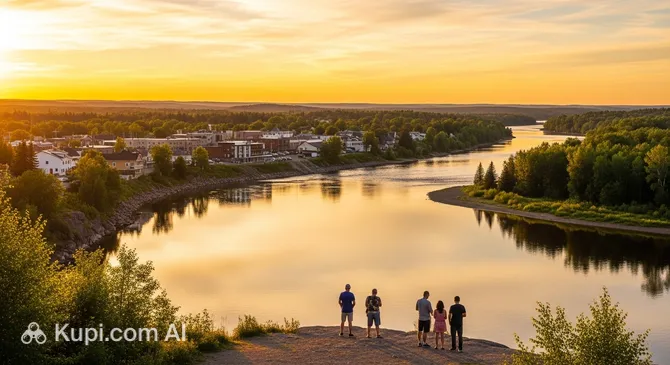
Dolbeau-Mistassini. Illustration.
Source: Kupi.com AI

Geographically, the city is situated at a unique point—at the confluence of two mighty rivers, the Mistassini and the Mistassibi, near the shores of the vast Lac Saint-Jean. When planning a trip to a country like Canada, tourists often include this route in their itinerary to enjoy the beauty of northern forests and vast waters. The town's population is just over 14,000 people, creating a cozy and almost family-like atmosphere where every guest is welcome.

Curious travelers will find the history of Dolbeau-Mistassini fascinating, as it is inextricably linked with the forestry industry, Trappist monks, and the development of these wild lands. The distinctive architecture and cultural traditions of the locals reflect the rich past of a region formed by the merger of two neighboring settlements into one prosperous municipality.

Among the main attractions is the magnificent Vauvert-sur-le-Lac-Saint-Jean tourist center, famous for its long sandy beaches and centuries-old pines. Equally impressive is the park at the Chute des Pères waterfalls, where you can walk along well-maintained trails and enjoy the power of the water. And, of course, if you find yourself here during the season, be sure to visit the famous Blueberry Festival, which is a vibrant hallmark of the city.

Dolbeau-Mistassini awaits guests ready to discover the true Canadian North with its endless landscapes and warm encounters. It is a wonderful stop for recharging, tasting local delicacies, and getting to know the unique culture of French-speaking Quebec.

Weather Overview

The climate of this region is characterized by distinct seasonality, offering tourists completely different conditions depending on the time of year. Expect a warm, comfortable summer with occasional precipitation and truly cold winters typical of the Canadian North.

Winter months here are harsh but beautiful in their own way. The coldest period is January, when the average temperature stays around -13.9°C, and nightly lows can reach -18.3°C. This time requires careful preparation and warm clothing, especially if you plan on long walks.

With the arrival of summer, the city is transformed. July is considered the warmest month: the thermometer often rises to 24.6°C during the day, creating excellent conditions for relaxing by the water. However, keep in mind that the weather in Dolbeau-Mistassini can be variable: about 14 days of precipitation are recorded during the summer months, so an umbrella or raincoat in your luggage won't go to waste.

Spring and autumn pass quite dynamically here. While the breath of winter is still felt in March with average temperatures around -4.9°C, by May the air warms up to a pleasant 16°C. September also delights with a mild climate, but by November, frosts return, marking the beginning of the cold season.

Average monthly temperature

Average monthly precipitation

Interesting Facts

In addition to its main attractions, Dolbeau-Mistassini holds many fascinating secrets and historical details that reveal themselves only to the most observant travelers.

  • The Monks' Sweet Legacy. The Mistassini sector is home to the famous Trappist monastery, founded back in 1892. The monks not only played a key role in developing the region's agriculture but also made the city famous for their signature treat—fresh blueberries coated in chocolate, a recipe considered a local culinary treasure and the perfect souvenir.

  • A Garden City in the Heart of the Taiga. The Dolbeau district was designed in 1927 as a model "industrial garden city" for paper mill workers. Its layout, featuring wide boulevards, abundant parks, and clear zoning, was inspired by English urban planning ideas of the time, making its architectural appearance quite different from typical older Canadian settlements.

  • A Name from Ancient Legends. The name "Mistassini" has deep roots and originates from the Cree language. The word "Mista-assini" translates to "big rock" or "boulder." This name refers to a massive stone that historically served as an important landmark for travelers and fur traders at the head of the Mistassibi River.

  • A Living Symbol of the Region. The cult of the wild berry is so strong here that the nickname "Bleuets" (blueberries) has officially stuck not only to the fruit but also to the residents of the Saguenay–Lac-Saint-Jean region themselves. Locals proudly carry this name, highlighting their resilience, vitality, and inseparable bond with northern nature.

How to Get There

Dolbeau-Mistassini is located in a picturesque region of Quebec, somewhat removed from the country's main transport arteries. This allows it to maintain a unique atmosphere of seclusion but requires tourists to plan their route carefully. You can find all the ways to get to the city and logistics details on a special page, while below we review the key transport hubs travelers usually pass through.

There is no airport in the city of Dolbeau-Mistassini itself, so air travel is conducted through neighboring cities. The closest convenient option is Saguenay-Bagotville Airport (YBG), located in the city of Saguenay, approximately 110 km from the center of Dolbeau-Mistassini. The journey from there by rental car or taxi takes about 1 hour and 30 minutes. For those flying from further away, the main hub will be Québec City Jean Lesage International Airport (YQB). It is located in Quebec City, at a distance of 241 km, and the transfer from there requires about a 3-hour drive.

For convenience, here is a summary of the main airports:

AirportPassenger trafficDistance
Saguenay-Bagotville Airport200 000110 km
Chibougamau Airport30 000194 km
Quebec City Jean Lesage International Airport1.7 mln241 km
Baie-Comeau Airport22 500296 km
Mont Joli Airport60 000297 km

Rail service in this region is less developed, and there is no train station in Dolbeau-Mistassini itself. Tourists who prefer trains will need to travel to the Quebec City Train Station (XLJ). The distance to Dolbeau-Mistassini is about 242 km, so the remainder of the journey must be completed by bus or car, which takes approximately 3 hours. Also available in Quebec City is the Sainte-Foy Train Station (XFY), located slightly further away, 247 km from the destination.

Below is information about the nearest train stations:

StationPassenger trafficDistance
Quebec Railway Station1.2 mln242 km
Sainte-Foy Railway Station750 000247 km
Charny Station50 000252 km

Main Attractions

Dolbeau-Mistassini offers travelers a unique combination of natural beauty and cultural heritage. The city and its surroundings are ideal for eco-tourism, learning about the history of northern settlement, or simply enjoying a relaxing break by the water. Here are several places worth including in your travel itinerary.

Parc de la Chute-des-Pères is perhaps the main natural attraction within the city limits. The park stretches along the turbulent Mistassibi River, where water thunders over rapids and cascades. Convenient walking trails have been laid out for tourists, allowing them to get as close to the river as possible and feel the energy of the water. It is an excellent spot for walks at any time of year, where you can take impressive photos or simply relax to the sound of the waterfall.

Lovers of beach vacations and vast waters should definitely visit the Vauvert-sur-le-Lac-Saint-Jean tourist center. Located on the shores of the massive Lac Saint-Jean, this sector is famous for its magnificent sandy beach that stretches for several kilometers. Surrounded by ancient pines, Vauvert offers not only swimming in warm water during the summer but also the opportunity to rent a cozy cottage to enjoy the peace and beauty of northern nature.

A special place in the city's culture is held by the Chocolaterie des Pères Trappistes (Trappist Fathers' Chocolate Factory). This is more than just a confectionery; it is the living history of the region. The Trappist monks, who settled here in the late 19th century, are known for their craftsmanship, and their main pride is chocolate-covered blueberries. Visiting the factory and its shop has become a tradition for all guests: here you can buy sweet souvenirs and learn about the role of the monastic community in developing the region's agriculture.

Also worth noting is Parc de la Pointe-des-Pères, located at the confluence of the Mistassini and Mistassibi rivers. This is a historically significant point from which the settlement's development began. Today, it is a well-maintained green area with picnic spots, a stage for events, and beautiful views of the water, frequently hosting city festivals and open-air concerts.

Local Cuisine

The gastronomic scene of Dolbeau-Mistassini is a true mirror of the Lac-Saint-Jean region, where the traditions of early settlers intertwine with the generous gifts of northern nature. Since the city bears the unofficial title of "Wild Blueberry Capital of the World," be prepared for this berry (which locals proudly call "bleuet") to be the star of your culinary journey, appearing in everything from desserts to sauces for main courses.

The most iconic treat that every guest must try is the famous Tourtière du Lac-Saint-Jean. Unlike the classic Quebec meat pie, this version is a deep-dish meal where the meat (pork, beef, and often wild game) is not ground, but cubed and slow-cooked for hours with potatoes in broth under a pastry lid. Another traditional specialty is soupe aux gourganes, a thick and hearty soup made from large beans and vegetables, which historically helped locals survive harsh winters.

Sweets hold a special place in the local cuisine. The ultimate gastronomic souvenir is considered to be chocolate-covered blueberries, produced by Trappist monks. The recipe for this delicacy is kept secret, and the combination of tart wild berries and high-quality chocolate leaves no one indifferent. During the harvest season, be sure to order a fresh blueberry pie (tarte aux bleuets) at local bakeries, served warm, often with a scoop of ice cream.

As for drinks, the region is famous for its experiments with local ingredients. Tourists are offered refined aperitifs and blueberry wines, which boast a rich color and berry aroma. For those who prefer non-alcoholic drinks, discover traditional spruce beer (bière d'épinette)—a refreshing beverage with a distinct coniferous flavor that is an integral part of Quebec culture.

The dining culture here is democratic and heartfelt. Locals enjoy visiting cozy roadside diners ("casse-croûte") that serve classic poutine with "squeaky" cheese curds produced on nearby farms. City restaurants often focus on seasonality, offering menus featuring local products, and in the summer, markets and festival grounds become the epicenter of gastronomic life, where food turns into a true celebration.

Travel Tips

Dolbeau-Mistassini is a welcoming corner of Quebec where nature dictates the rules and the pace of life allows for true relaxation. To ensure your trip to this land of forests, rivers, and blueberry fields—located in such a wonderful country as Canada—is as comfortable as possible, we have gathered several important practical recommendations.

  1. Clothing and Gear. The weather here is changeable, so layering is your best friend. In summer, be sure to bring a windbreaker and comfortable trekking shoes for walks by the waterfalls; in winter, thermal underwear and a windproof jacket designed for temperatures of -20°C and below are essential. Note: In June and July, there are many black flies and mosquitoes in the forests, so strong repellents and long-sleeved clothing are necessary for comfort.
  2. Transport Accessibility. Public transport within the city is limited and primarily oriented toward residents. To fully explore the region and visit the beaches of Lac Saint-Jean, it is strongly recommended to rent a car. This will give you freedom of movement, as taxi services exist, but catching a car on the street is nearly impossible—you must order in advance by phone.
  3. Finances and Payment. The official currency is the Canadian dollar. Credit and debit cards are accepted almost everywhere, including supermarkets and restaurants. However, if you plan to buy fresh blueberries, homemade pastries, or souvenirs at seasonal roadside kiosks, it is better to have cash. The customary tip in cafes and restaurants is the regional standard of 15–20% of the bill.
  4. Health and Safety. Dolbeau-Mistassini is a very quiet and safe city. The main threat is not people but wild animals on rural highways, especially moose at dusk—be extremely careful while driving. Pharmacies are located in the city center, but note that they are not open 24/7, so it's best to bring a basic supply of necessary medications.
  5. Language Barrier. The dominant language of communication is French. While staff in large hotels and tourist centers often speak English, you may not be understood in small shops or gas stations. Locals greatly appreciate respect for their culture: learn a few simple phrases like "Bonjour" (hello) and "Merci" (thank you)—this will instantly build rapport.
  6. Local Etiquette. Residents of the Saguenay–Lac-Saint-Jean region are famous for their friendliness and simplicity. It is customary to greet shop clerks, bus drivers, and even passersby on quiet streets. Be open and polite in your interactions, avoiding excessive formality; a sincere smile opens any door here.
  7. What to Avoid. Do not underestimate the wilderness: never stray from marked trails in national parks to avoid getting lost, and do not attempt to feed wild animals. Also, avoid negatively comparing local French dialects with European French—residents are proud of their unique accent and heritage.
  8. Seasonal Advice. If your trip falls in August, be prepared for the city to move to the rhythm of the Blueberry Festival. During this time, accommodation should be booked several months in advance. And remember: many small museums and attractions have reduced hours or close entirely outside the summer season (from mid-October to May).

By following these simple tips, you can avoid minor hassles and focus on the main thing—enjoying the unique atmosphere and natural beauty of this northern land. Dolbeau-Mistassini is ready to provide you with warm memories and delicious gastronomic discoveries, regardless of the season!

Entertainment & Nightlife

Nightlife in Dolbeau-Mistassini is characterized by a special northern coziness and friendliness. You won't find loud metropolitan clubs with neon signs open until morning here, but you will discover atmospheric pubs, microbreweries, and cultural venues where you can spend a great evening in the company of locals. Most of the action is centered around the main streets, where life continues to buzz after sunset.

The epicenter of evening entertainment is rightfully considered Boulevard Wallberg. It is here and in the adjacent blocks that the city's most popular establishments are located. The atmosphere is democratic and relaxed: there is no dress code in most places, and the style is casual and comfortable. The crowd is very diverse, ranging from youth and students to couples and tourists visiting to enjoy the region's nature.

If you want to experience the true taste of local leisure, be sure to check out these establishments:

  • Microbrasserie Le Coureur des Bois — this is perhaps the city's greatest pride. The venue combines a bistro and a craft brewery. Here, you should try beers inspired by northern nature (for example, with spruce tips or local berries) and order hearty snacks made from local products. In summer, there is a magnificent terrace that becomes a magnet for all residents.

  • Le Météore Pub et Spectacles — a unique place that functions as a pub, sports bar, and concert venue. It is an ideal choice for those who want to combine dinner with entertainment. It regularly hosts sports broadcasts, musical concerts, and stand-up comedy. The interior is modern, and the menu offers an excellent selection of grilled dishes and drinks.

  • Bar Vox Populi — an establishment with a more informal, "underground" atmosphere. This is a cooperative bar that positions itself as a place for socializing. People come here to play board games, listen to alternative music, and simply chat in a relaxed setting.

For lovers of cultural leisure, Cinéma Chaplin is open in the evenings, where you can watch the latest global and Canadian releases. And if you're interested in larger-scale events, check the schedule at Salle de spectacle Desjardins-Maria-Chapdelaine. This hall is the city's main stage, hosting touring artists, theater troupes, and musical groups.

Practical tips for nighttime outings:

Dolbeau-Mistassini is an exceptionally safe city, and you can walk here at night without fear, even alone. However, keep the harsh climate in mind: in winter, nights can be extremely cold, so dress warmly if you plan to move between bars on foot.

Transport at night can be tricky. Public buses do not run late in the evening, and services like Uber are not developed here. The only reliable way to get to your hotel is via local taxi. We recommend saving the numbers of local taxi services in your phone in advance, as catching a car on the street can be problematic, especially on weekends or holidays. The average bill in bars is moderate: a glass of beer will cost about 7–9 CAD, with cocktails being slightly more expensive.

Parks & Museums

Dolbeau-Mistassini is a city where majestic northern nature and unique culture intertwine in a wonderful way. Green zones here do more than just beautify the town; they tell the story of its settlement, while museums and historical sites allow for a deeper understanding of the Lac-Saint-Jean region's soul. For tourists, it's a great opportunity to combine active outdoor walks with an immersion into the rich heritage of French-speaking Canada.

Among the natural areas, Parc de la Chute-des-Pères holds a special place. This is a true oasis of wild nature within the city limits, stretching along the turbulent Mistassibi River. The park's main highlight is its impressive waterfalls and cascades, which can be admired from specially equipped observation decks. A network of walking trails spanning about 2 kilometers is perfect for light trekking, allowing you to enjoy the sound of water and forest landscapes without venturing far from civilization.

For those seeking more dynamic recreation, the Centre Plein Air Do-Mi-Ski is a real find. This vast natural territory is beautiful in any season. In summer, mountain biking trails and hiking paths through dense forest are open, while in winter, the park transforms into a hub for cross-country skiing and snowshoeing enthusiasts. Well-maintained trails and scenic terrain make this spot popular with both locals and visitors.

If you crave open spaces and water horizons, head to the Vauvert-sur-le-Lac-Saint-Jean tourist sector. Although best known for its beach, the surrounding pine forest and dunes create a unique ecosystem. A walk here feels like being at a seaside resort: the infinite surface of Lac Saint-Jean, soft sand, and ancient trees create an atmosphere of complete tranquility.

The region's cultural life is closely tied to the history of early settlers and monastic traditions. An important point of interest is the Chocolaterie des Pères Trappistes. As an active production facility, it also serves an important educational role. Visitors can learn about the lives of the Trappist monks, who played a key role in developing the region's agriculture, and see how past traditions are embodied in the famous blueberry sweets.

Near the city are two significant museums that are definitely worth visiting for a complete picture. In the neighboring village of Péribonka is the Musée Louis-Hémon. It is dedicated to the author of the famous novel "Maria Chapdelaine," which became a symbol of pioneer life. The exhibition immerses you in early 20th-century life and Quebec's literary heritage. Also interesting is the Moulin des Pionniers (Pioneer's Mill) in La Doré, where you can see a working water-powered sawmill from that era and learn about the hard labor of the loggers who shaped the region's economy.

Insider Tip: For a quiet and contemplative break, visit Parc de la Pointe-des-Pères at sunset. This historical site at the confluence of two rivers offers not only beautiful views but also a special energy—this is where the city began. It is particularly beautiful in the evening when the last rays of sun reflect in the waters of the Mistassibi.

Getting Around

The public transport system in Dolbeau-Mistassini has unique features typical of small towns in Quebec. You won't find a metro, trams, or a conventional network of city buses running every 10 minutes. The city's infrastructure is primarily oriented toward private vehicles, so tourists should research available alternatives for comfortable travel in advance.

The role of primary public transport is fulfilled by the Taxibus collective service. This is a specific system that works as a hybrid between a bus and a taxi. Boarding and disembarking occur strictly at fixed stops marked with special signs throughout the city, but the transportation is carried out by ordinary cars. The main advantage of this transport is its low fare, comparable to the price of a bus ticket.

A key nuance of using the Taxibus is the requirement for advance booking. A tourist cannot simply go to a stop and wait for a car. The trip must be ordered through a dispatch service by phone, generally no later than one hour before the desired departure time. Payment is made in cash to the driver (it's recommended to have exact change) or with pre-purchased tickets sold at some convenience stores (dépanneurs) and municipal offices.

As a more flexible alternative, classic taxi services operate in the city. It is important to remember that ride-sharing services and popular mobile apps for calling drivers are practically non-functional here. It is customary to order a car by phone, as catching a taxi on the street by "hailing" it is quite difficult in Dolbeau-Mistassini. This is the most reliable option if you need to reach a destination late at night or with a lot of luggage.

During the warmer months, from May to October, the bicycle becomes a popular mode of transport. The city is a major point on the famous Véloroute des Bleuets route, and the network of bike paths here is excellently developed. The terrain is relatively flat, allowing for comfortable travel between the center, parks, and waterfronts. Bicycle rentals are available during the tourist season, making this method not only eco-friendly but also pleasant for sightseeing.

Walking is only comfortable within the historic centers of the Dolbeau and Mistassini sectors, where cafes and shops are concentrated. However, given the distances between main attractions and residential areas, the most convenient solution for travelers remains renting a car. This provides complete freedom of movement and eliminates the need to depend on dispatcher schedules.

Accommodation

Accommodation in Dolbeau-Mistassini is characterized by home-like comfort and a lack of pretension. In this small town, you won't find high-rise international luxury hotel chains. The hotel stock primarily consists of comfortable motels, small family-run inns, and cozy Bed & Breakfasts (known as gîtes in the French style). The region is also famous for its outdoor lodging options, ranging from well-equipped campgrounds to picturesque chalets and cottages for rent.

When choosing an area, you should consider the purpose of your visit. If proximity to restaurants, shops, and nightlife is important to you, it's best to stay in the central part of the city, around Boulevard Wallberg. This will allow you to reach the main city attractions on foot. An alternative and very popular option is the Vauvert sector, located on the shores of Lac Saint-Jean. This is an ideal location for beach lovers and those seeking quiet, where accommodation is surrounded by pine forest, away from the city bustle.

An important planning tip: book your accommodation in advance. Despite the city's small size, demand for rooms is very high during the summer season (especially in July and August). If your trip coincides with the famous Blueberry Festival, you should look for lodging 2–3 months ahead, as vacancies within a radius of dozens of kilometers fill up very quickly.

The pricing policy in Dolbeau-Mistassini is quite democratic. Most accommodation options fall into the budget and mid-range price segments, making the trip accessible for families and road trippers. Rooms can be booked through major international online aggregators, but many local motels and cottages also accept bookings directly through their websites or by phone, which can sometimes result in better terms.

Nearby Cities

For those who want to explore the surrounding area, Dolbeau-Mistassini serves as an excellent starting point for day trips to several interesting nearby locations. The Saguenay–Lac-Saint-Jean region and its neighbors offer a rich selection of routes, from urban strolls to immersion in the province's history.

Just 45–50 minutes away is the city of Alma. It is a dynamic center often called the "City of Hospitality." Alma is perfect for a short visit: here you can walk through the lively downtown, visit the park on the banks of the Saguenay River, or check out the "Odyssée des Bâtisseurs" museum, which tells the story of the region's industrial development.

If you're willing to drive a bit further, about an hour and a half, you'll be met by Saguenay—a large city surrounded by stunning nature. This place is a must-visit for the famous Saguenay Fjord, one of the longest in the world. The city also includes the Jonquière district, known for its festivals and cozy parks, which is even closer to Dolbeau-Mistassini.

For those who don't mind a longer journey (about 3 hours one way), a trip to Quebec City will be a true journey back in time. The provincial capital, with its European charm, cobblestone streets, and the majestic Château Frontenac, is worth dedicating a full day or even an overnight stay.

CityPopulationDistance
Saint-Félicien10 27831 km
Roberval10 22740 km
Chambord2 90052 km
Alma30 90456 km
Jonquiere66 00089 km

These nearby destinations provide a great overview of the region's diverse culture and landscapes.

Shopping & Souvenirs

Shopping in Dolbeau-Mistassini is a calm and pleasant process, devoid of the hustle and bustle of major metropolises. While you won't find massive outlets or luxury global brand boutiques here, the city offers an excellent selection of stores for everyday needs, as well as unique places to purchase locally made goods. The city's commercial scene focuses on coziness and quality, with a particular emphasis on products from the Saguenay–Lac-Saint-Jean region.

The heart of the city's commercial life is Boulevard Wallberg. This central artery crosses almost the entire town and concentrates most of the shops, pharmacies, banks, and services. A stroll down the boulevard allows you to visit small private shops selling clothing and decor as well as chain stores. This is the best place to feel the rhythm of local life and find everything you need within walking distance.

For those who prefer a "one-stop shop" format, the main shopping destination is the Les Promenades du Boulevard mall. It is conveniently located directly on Boulevard Wallberg and serves as the primary retail hub of Dolbeau-Mistassini. It features popular Canadian clothing and footwear brands, electronics, and home goods stores, as well as various service centers, making it a convenient spot for handling any errands during your trip.

Seasonal markets and farm stalls deserve special attention. During the summer, particularly in August, the town literally lives for blueberries. Local producers set up temporary kiosks and sales points where you can buy the freshest berries gathered from the surrounding forests. It's also worth visiting the public market, where farmers offer cheeses, homemade preserves, and artisanal crafts that reflect the region's rich agricultural traditions.

The choice of souvenirs in Dolbeau-Mistassini is inextricably linked with its gastronomic symbols. The main gift to take home is products from the Chocolaterie des Pères Trappistes. Their famous chocolate-covered blueberries are known far beyond the region. Additionally, tourists often buy blueberry jam, syrups, local honey, and even blueberry wine. Those looking for unique items should look into the work of local artisans, often inspired by indigenous culture and forest themes.

Shops in the city usually operate Monday through Wednesday from 9:30 AM to 5:30 PM. On Thursday and Friday, hours are often extended until 9:00 PM, which is convenient for evening shopping. On Saturday, most locations close at 5:00 PM, and Sunday may be a day off or have shortened hours for smaller boutiques (supermarkets are typically open). Canadian dollars are accepted everywhere, as are credit and debit cards from major payment systems.

When making purchases, it's important to keep the tax system in mind. In the province of Quebec, two taxes are added to the price on the tag at the register: Federal (GST) and Provincial (QST), which together increase the cost by about 15%. There is currently no special tax refund system for tourists on ordinary consumer goods, so you should account for the final cost immediately.

Reached the end of the page?

That means the route is fully explored