Support

La Tuque

About

La Tuque is a picturesque town located in the heart of the Mauricie region in the province of Quebec. It is a place where endless forests meet the water’s edge, creating a unique atmosphere of tranquility and connection with nature. For travelers exploring a country as stunning as Canada, La Tuque is a true discovery, offering the perfect balance between urban comfort and the wild beauty of the north.

Geographically, the town occupies a strategically important position on the banks of the majestic Saint-Maurice River. With a population of about 11,000, it is the largest settlement in Upper Mauricie. The climate here is typically continental, with warm summers perfect for boating and snowy winters that transform the area into a fairytale kingdom for winter sports enthusiasts.
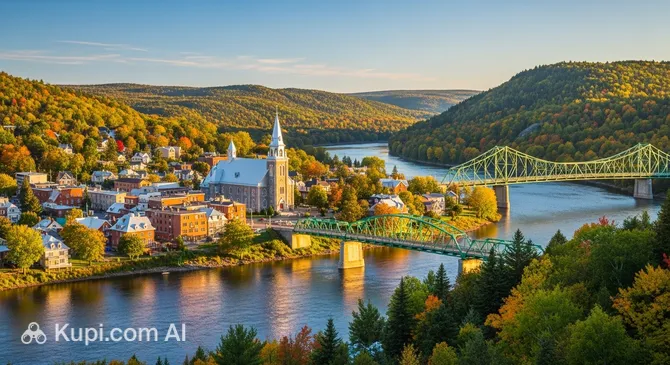
La Tuque. Illustration.
Source: Kupi.com AI

The name of the town has a curious origin. it is associated with a rock by the river whose shape reminded early settlers of a traditional knitted hat (a "tuque"). The history of La Tuque describes in detail how the settlement evolved from a trading post into a modern town. This past is inextricably linked to the forestry industry and the development of the region's natural resources.

Among the main attractions, Falls Park (Parc des Chutes-de-la-Petite-Rivière-Bostonnais) stands out. It is not just a natural site with breathtaking views and an observation tower, but also a cultural center where you can learn about local fauna and the heritage of the pioneers. Additionally, La Tuque is famous as the host of the prestigious international canoe race, the Classique internationale de canots de la Mauricie, which attracts athletes and spectators from all over the world every year.

La Tuque is a welcoming corner of the world that is definitely worth including in your itinerary. Whether you are looking for an adrenaline rush on snowmobile trails or peace on the riverbank, this town will provide you with unforgettable impressions and a warm welcome.

Weather Overview

The climate in this region features distinct seasonality, making the town attractive to visit at any time of year depending on your goals. To choose the perfect time for your trip and pack correctly, we recommend checking the detailed weather in La Tuque before you leave.

Winter here is severe and long, a real find for snow lovers. The coldest month is traditionally January, with an average temperature of -12.7°C, though the thermometer can drop to -17.2°C. February and December also remain frosty (averaging between -8.7°C and -10.8°C). The number of days with precipitation in winter ranges from 11 to 14, guaranteeing a stable snow cover.

Summer brings long-awaited warmth and comfortable conditions for outdoor recreation. July is the warmest month, when the air warms up to an average of 19.2°C, with highs reaching a comfortable 24.0°C. However, be prepared for nature's whims: summer sees the highest number of rainy days (up to 16 days in July), so a light raincoat won't hurt.

The shoulder seasons pass quite quickly. While March still sees freezing temperatures (averaging -4.3°C), by May the air warms up to 10.6°C. September also remains a pleasant time for a visit, with an average temperature of about 13.9°C, before the first serious frosts begin in November. Expect warm summers with occasional rain and cold winters with frequent snowfall.

Average monthly temperature

Average monthly precipitation

Interesting Facts

Behind the outward tranquility of this corner of Quebec lie curious facts that will surprise even those who know well what Canada is famous for. La Tuque is not just a point on the map, but a town with unique geography and a rich cultural heritage.

  • Territorial Giant. La Tuque is one of the largest municipalities by area in the province. Its territory covers more than 25,000 square kilometers, which is comparable to the size of entire countries, such as Slovenia or North Macedonia. At the same time, the vast majority of this land is dense forest and wilderness.

  • Home of a Cultural Icon. The town is proud to be the birthplace of Félix Leclerc—a legendary poet, composer, and singer who became a true symbol of Quebecois identity. His work had a colossal impact on Francophone music, and locals carefully honor the memory of their famous compatriot.

  • Seaplane Hub. Due to the vast number of lakes in the region, La Tuque has historically been an important hub for seaplanes. "Bush pilots" played a key role in supplying remote camps and fighting fires, making hydro-aviation an integral part of the local character.

  • The Damaged Symbol. Although the town's name comes from a rock resembling a knitted hat ("tuque"), it is impossible to see this natural landmark in its original form today. Part of the famous rock was blasted and leveled during road construction and urban expansion, but the legend of the "stone cap" lives on.

How to Get There

When planning a trip to this picturesque corner of Mauricie, it's worth thinking through your route in advance, as La Tuque is somewhat removed from major metropolitan areas. Usually, the path here lies through the province's main transport hubs with a subsequent transfer to ground transport. You can find out more about how to get to La Tuque to choose the most suitable travel option.

The town itself does not have a major airport for regular passenger flights, so travelers most often fly into nearby large cities. The nearest convenient air hub is Québec City Jean Lesage International Airport (IATA: YQB), located in Quebec City, about 128 km from La Tuque. The drive from there takes less than two hours.

For international flights, including from other continents, the main hub is Montréal-Pierre Elliott Trudeau International Airport (IATA: YUL). It is located in Montreal, at a distance of about 232 km. You can also consider the regional Saguenay-Bagotville Airport (IATA: YBG), located 166 km from the town.

Information about the nearest airports is provided below:

AirportPassenger trafficDistance
Quebec City Jean Lesage International Airport1.7 mln128 km
Saguenay-Bagotville Airport200 000166 km
La Macaza35 000190 km
St. Hubert Airport219 km
Montreal-Pierre Elliott Trudeau International Airport22.4 mln232 km

Rail connections are also oriented toward the major cities to the south. The nearest major stations are in Quebec City: Quebec City Train Station (IATA: XLJ), located 137 km away, and Sainte-Foy Train Station (IATA: XFY), 136 km from La Tuque. These are convenient points for transferring to a bus or a rental car.

If you are traveling through Montreal, the main hub will be the Downtown Train Station (IATA: YMY). However, keep in mind that it is significantly further away—more than 220 km from your destination.

List of nearest major railway stations:

StationPassenger trafficDistance
Sainte-Foy Railway Station750 000136 km
Quebec Railway Station1.2 mln138 km
Charny Station50 000140 km
St Lambert Railway Station453 291223 km
Downtown Railway Station11 mln224 km

Main Attractions

La Tuque is a true paradise for lovers of active recreation and nature, where urban infrastructure harmoniously coexists with wild forests. The town and its surroundings offer many places to enjoy the beauty of Canadian landscapes and immerse yourself in local culture. Here are several key attractions worth visiting.

Falls Park (Parc des Chutes-de-la-Petite-Rivière-Bostonnais). This is perhaps the town's main natural gem. The centerpiece here is not only the powerful waterfall but also an impressive 33-meter-high observation tower. Climbing to the top, tourists can enjoy a breathtaking panoramic view of the bends of the Saint-Maurice River and the vast forests of Upper Mauricie. The park features picturesque hiking trails and an interpretation center where you can learn about the flora, fauna, and the history of logging in the region.

La Tuque Ski Center (Centre municipal de ski La Tuque). Located very close to the town center, this resort is a magnet for winter sports fans. It features trails of various difficulty levels for skiers and snowboarders, as well as special areas for tubing, making the center an excellent place for family vacations. Thanks to high-quality lighting, you can also ski here in the evenings, enjoying the crisp air and cozy atmosphere.

Félix Leclerc Route. La Tuque is proud of its famous native—the poet and singer Félix Leclerc. The town has created a special cultural and historical route that leads travelers through places associated with the chansonnier's childhood and youth. This is not just a walk, but an opportunity to touch the roots of Quebec culture by viewing commemorative signs and historical buildings that inspired the legendary artist.

Generations Park (Parc des Générations). This picturesque urban park, located on the shores of Lake Saint-Louis, serves as a popular recreation spot for both locals and visitors. In the summer, it is pleasant to stroll along the promenade, have a picnic, or attend open-air concerts. It is the perfect place to relax after an active day and feel the steady rhythm of life in La Tuque.

Local Cuisine

The gastronomic scene in La Tuque is, above all, an embodiment of Quebec traditions combined with the hospitality of the Mauricie region. The local cuisine is hearty and simple, which is not surprising for a region with harsh winters and a developed culture of outdoor activities. Here, food is a way to warm up after a day on a snowmobile or to regain strength after a long hike through the forest.

The main culinary symbol that every tourist must try remains the legendary poutine. In La Tuque, this dish is treated with special care: crispy French fries, thick hot gravy, and, most importantly, the freshest cheese curds, which should have that characteristic "squeak" when you bite into them. In addition to the classic version, local establishments often offer variations with added smoked meat, bacon, or mushrooms.

Another important dish is tourtière. This traditional meat pie is the pride of French-Canadian cuisine. In the Upper Mauricie region, where hunting traditions are strong, game is often added to the filling, giving the dish a special, rich flavor. It's also worth trying local fish dishes, especially trout caught in the numerous rivers and lakes surrounding the town.

Regarding drinks, La Tuque actively supports the provincial trend for craft brewing. A local point of pride is the microbrewery La Pécheresse. Here you can taste unique beers inspired by the history and nature of the region. Fans of non-alcoholic drinks will enjoy maple syrup-based sodas or traditional spruce beer (bière d'épinette)—a non-alcoholic beverage with a specific coniferous aroma that is a real exotic treat for visitors.

The food culture in the town is casual and without pretense. Locals and tourists often eat at so-called "casse-croûte"—roadside snack bars that are particularly popular in the summer season. These are ideal places for a quick and delicious bite like burgers or "steamie" hot dogs (steamed). For a more substantial dinner, cozy family restaurants and pubs in the town center offer a relaxed atmosphere for friendly socializing.

Travel Tips

Preparing for a trip to La Tuque requires attention to detail, as this town sits at the intersection of comfortable civilization and wild, untamed nature. To ensure your adventure in the Mauricie region leaves only pleasant memories and goes smoothly, we have compiled a list of useful recommendations.

  1. Clothing and Equipment. The weather here dictates the rules: in winter, multi-layered thermal clothing, high-quality waterproof footwear, and a warm parka are necessary, as the frost can be severe. In summer, especially if you plan trips to the forest or lakes, it is critically important to have repellents—black flies and mosquitoes can be very active. Also, bring a type A or B plug adapter (American standard) if your devices have European plugs.
  2. Transport. La Tuque is a town where a car is a necessity rather than a luxury. Public transport is poorly developed and does not cover tourist routes outside the center. Renting a car is the best choice for freedom of movement. Local taxi services operate in town, but familiar apps like Uber may be unavailable or work intermittently.
  3. Finances. The currency is the Canadian dollar (CAD). Visa and Mastercard are accepted without issues in supermarkets, hotels, and restaurants. However, if you are heading to remote campsites or buying from small shops, it’s better to have cash. Don’t forget the tipping culture: in Canada, it is customary to leave 15–20% of the bill in cafes and taxis, as service is usually not included.
  4. Health and Safety. La Tuque is a safe and quiet town, but the main threat can come from the wilderness. Be extremely careful on rural roads, especially at dusk: moose wandering onto the road is a real danger. There is a hospital and pharmacies in town, but there may not be 24-hour pharmacies, so pack a basic first-aid kit in advance. The emergency services number is 911.
  5. Communication. The primary language is French. While many people in the tourism sector speak English, residents prefer their native language in daily life. Learning a few phrases, such as "Bonjour" (Good day) and "Merci" (Thank you), will go a long way. Mobile reception is stable in town, but signal may drop in the deep forest, so download offline maps in advance.
  6. Local Etiquette. Residents of La Tuque are known for their friendliness and simplicity. It is customary to greet bus drivers and shop assistants. Quebecers value personal space but are always ready to help if you ask politely. Keep your distance and wait your turn in lines—cutting ahead is considered poor manners.
  7. What to Avoid. Never underestimate distances or fuel consumption. When driving outside the town toward forests and lakes, make sure you have a full tank of gas. Gas stations in the wilderness can be very rare (every 50–100 km), and the risk of running out of fuel in the middle of the forest is a common problem for inexperienced tourists.
  8. Seasonal Advice. If you visit the region in autumn, remember it is hunting season. If you plan on hiking or walking in the forest, be sure to wear bright clothing or special orange safety vests. This is a matter of your safety that locals take very seriously.

La Tuque is a place where nature gets closer and people welcome guests with open hearts. By following these simple tips, you will feel confident and can focus on the main thing—enjoying the beauty of the Canadian North.

Entertainment & Nightlife

The nightlife in La Tuque has its own unique northern flavor. Here, you won't find noisy metropolitan clubs with neon signs open until dawn or massive dance floors. Evening leisure in this town is primarily about coziness, heartfelt conversation, and a warm atmosphere to relax after an active day in nature. Most of the action is concentrated in the town center, around Rue Saint-Louis and Rue Commerciale, where the main evening meeting spots are located.

The heart of the town's evening life is undoubtedly the microbrewery La Pécheresse. It’s more than just a bar; it’s a social hub where locals and tourists alike gather. The atmosphere here is as casual as it gets: there is no dress code, and on a Friday night, you can find a very diverse crowd at neighboring tables. The venue often hosts themed nights, quizzes, and small live music concerts, making it a major draw for younger crowds.

For those seeking a classic bar atmosphere, Bar La Voûte on the busy Rue Commerciale is an excellent choice. This establishment is very popular with locals and is known for its friendly environment. People come here to meet friends, have a drink in a relaxed setting, or watch a broadcast of a hockey game—a sport that has a cult following in Canada. Prices in La Tuque establishments are quite moderate: the average check for an evening with drinks is about 30–50 CAD per person.

The cultural side of nightlife is represented at the Complexe Culturel Félix-Leclerc. This is the region's main performing arts venue, regularly hosting evening plays, concerts by famous Quebecois performers, and comedy shows. If you want to spend a more intellectual evening and get to know Francophone art, be sure to check the complex's schedule before your trip. Events usually start at 8:00 PM.

In terms of safety, La Tuque is an exceptionally peaceful town. You can safely walk through the central streets even after dark. However, it is worth remembering that public transport practically doesn't run at night. If you stay late at a bar, it's better to save the number of a local taxi service (such as Taxi La Tuque) in advance, as hailing a car on the street is difficult and popular apps may not find drivers. Most establishments close around 2:00 or 3:00 AM.

In addition to evening entertainment, the town offers a rich program that transitions smoothly into evening relaxation. After visiting a local museum or walking through La Mauricie National Park, tourists often end their day in cozy central cafes, discussing their impressions of meeting the wilderness.

Parks & Museums

The cultural and natural landscape of La Tuque is inextricably linked with the history of forest development and the wealth of local flora and fauna. The town offers travelers a unique opportunity to combine walks through picturesque green zones with an immersion in the traditions of the Upper Mauricie region, where every museum or park tells its own chapter of life in this rugged but hospitable land.

Parks and Natural Areas

The undisputed dominant feature among the green zones is Falls Park (Parc des Chutes-de-la-Petite-Rivière-Bostonnais). This is a vast territory where nature appears in all its majesty. In addition to the famous observation tower, the park is permeated with a network of hiking trails that are perfect for peaceful walks. Here you can observe the seasonal changes of the forest, have picnics to the sound of falling water, and study information boards that tell about the local ecosystem. This is a place where the whole family can spend an entire day.

Within the town limits, Generations Park (Parc des Générations) is also worth your attention. Located in the center on the shores of Lake Saint-Louis, it is a well-maintained urban oasis. It is a favorite spot for locals for evening strolls, bike rides, and sunset meetings. In the summer, a fountain operates here, and the landscaped promenade allows you to enjoy the view of the water without leaving urban civilization.

Museums and Exhibition Spaces

For those who want to understand the region's history more deeply, the Nature and Fur Trade Interpretation Center, located within Falls Park, is a must-visit. The museum's exhibition is dedicated to the two main pillars of La Tuque's development: the timber industry and the fur trade. Here you can see the tools of the first settlers, learn about the life of loggers, and understand how the region's economy was formed.

Of particular interest is the O.P. Hélie Collection. This is an impressive collection of taxidermy animals that inhabit the forests of Mauricie. The exhibition allows for a detailed look at representatives of the local fauna—from majestic moose to birds of prey, which is especially educational for children and biology enthusiasts wishing to see those who usually hide in the thicket of the forest.

Art lovers should stop by the Art Gallery at the Félix Leclerc Cultural Complex. It regularly hosts exhibitions by contemporary Quebecois artists and photographers, reflecting the province's cultural code through the prism of visual art.

Architecture and Monuments

The town's architectural appearance is graced by the majestic Saint-Zéphirin Church (Église Saint-Zéphirin). Built in the mid-20th century, it stands out for its monumentality and interesting stained glass windows. This building serves not only as a spiritual center but also as an important landmark, reminding visitors of the religious traditions of the French-Canadian population.

Insider Tip

If you have a car, take the time to drive a bit north of the town toward the village of La Bostonnais to see the Ducharme Covered Bridge (Pont Ducharme). This historic wooden bridge, built in 1946, is one of the few surviving structures of its type in the region and is recognized as a historical monument. Photos against its red wooden walls are incredibly atmospheric.

Getting Around

The public transport system in La Tuque is significantly different from that of major metropolises. You won't find subways, trams, or trolleybuses here. Given the compactness of the town and its population of about 11,000, the transport network is quite modest and primarily oriented toward the social needs of local residents. For a tourist, this means that moving around the town requires advance planning.

The main form of public transport is city buses and shared taxis (taxibus) managed by the Transport collectif du Haut-Saint-Maurice service. The route network covers the town center, shopping areas, and major residential neighborhoods. However, keep in mind that intervals between buses can be long, and services often stop in the early evening and do not operate fully on weekends.

The payment system here is as simple and conservative as possible. Buses usually accept cash, and it is extremely important to have the exact amount (coins) with you, as drivers do not give change. Fares are affordable, costing a few dollars per trip. Multi-trip passes or monthly cards can be purchased at the town hall or specific points of sale, but for a short-term visit, using cash is more convenient.

A unique transport feature of La Tuque is its rail connection. The train station is located right in the town center and is served by VIA Rail. Trains traveling the Montreal–Jonquière or Montreal–Senneterre routes stop here. This is not just a way to get to the town, but also an opportunity to travel deep into the wilderness: the train can make "on-demand" stops (flag stops) right in the forest to let off anglers and hunters, which is a true local specialty.

Given the limitations of the bus network, the most popular alternative for tourists is taxis. Local services (e.g., Taxi La Tuque) operate reliably, but it is better to call for a car in advance, as hailing one on the street can be difficult. Taxi fares are metered; most drivers accept credit cards, but it's best to confirm this when getting in.

For complete freedom of movement, especially if you plan to visit natural attractions outside the town limits (such as Falls Park), renting a car is highly recommended. Car-sharing as it is known in big cities is not developed here, so you should rely on classic rental agencies. In warm weather, the town is very convenient for walking and cycling—distances in the center are small, and traffic is light.

Accommodation

The choice of accommodation in La Tuque reflects the character of the town itself: it offers practical and cozy options aimed at travelers who value proximity to nature and quality rest after an active day. You won't find luxury world-class chain resorts or high-rise hotel complexes here; however, the town offers a decent selection of places to stay—from classic motels to atmospheric forest cabins.

The main room stock is represented by mid-range hotels and motels. Most of them are concentrated along the town's main transport artery and near the central streets. These are strategically convenient locations for those traveling by car or snowmobile: gas stations, restaurants, and access to tourist routes are nearby. Rooms here are usually equipped with all the essentials, including Wi-Fi and ample parking, making them ideal for transit stops or short visits.

For those who want to fully immerse themselves in the atmosphere of the Mauricie region, a great option is to rent chalets or cottages outside the town limits. In the vicinity of La Tuque, there are many so-called "pourvoiries" (outfitters)—specialized recreation bases for hunters and anglers. Accommodations here range from simple wooden cabins without frills to comfortable log homes with fireplaces, located right on the shores of picturesque lakes.

The price range in the town can be described as moderate and affordable. The cost of a standard room in a hotel or motel stays at an average level characteristic of the province of Quebec. Bookings can be made through popular international online platforms, but for renting specific forest chalets or camping spots, it is often more reliable to contact the owners directly or use local tourism websites.

Booking tip: La Tuque is an extremely popular destination during two peak seasons: summer (fishing and kayaking time) and winter (snowmobile season). During these periods, as well as during major festivals, hotel vacancies disappear very quickly. We recommend booking accommodation at least 2–3 weeks before your trip to guarantee a comfortable stay.

Nearby Cities

For those who want to explore the surrounding area, La Tuque serves as an excellent starting point for day trips to several interesting nearby locations:

Shawinigan. Located closest to La Tuque (less than 100 km away), Shawinigan is an ideal place for a short visit. The city is famous for its unique theme park, "Cité de l'énergie," which combines science, history, and art. Here you can climb a high observation tower and enjoy a magnificent view of the Saint-Maurice River and the hydroelectric power stations.

Trois-Rivières. This city, located about an hour and a half away, is one of the oldest settlements in Canada. Tourists are attracted by its historical center with charming architecture, an old prison turned into a museum, and a lively waterfront. It is the cultural capital of the Mauricie region, where festivals and exhibitions are frequently held.

Quebec City. Although the drive takes a bit longer, a visit to the provincial capital is well worth it. It is the only fortified city in North America north of Mexico, and its historic district is a UNESCO World Heritage site. A walk through the narrow streets of Old Quebec and the view of the majestic Château Frontenac will leave an unforgettable impression.

CityPopulationDistance
Lac Edouard46 km
Rivière-à-Pierre2 00068 km
Hervey-Jonction69 km
Saint-Raymond9 61594 km
Shawinigan50 06097 km
These nearby destinations allow you to get a sense of the diverse culture and landscapes of the region.

Shopping & Souvenirs

Shopping in La Tuque is more practical and utilitarian in nature, reflecting the lifestyle of this northern region. You won't find huge outlets or high-fashion boutiques typical of major cities. However, the town offers excellent opportunities to purchase high-quality outdoor gear, essential goods, and unique products from local artisans. It is the perfect place to buy warm clothes for a Canadian winter or find authentic gifts that remind you of your trip through Mauricie.

Main shopping life is concentrated in the town center, especially on Rue Commerciale and the adjacent Rue Saint-Louis. A stroll along these streets will allow you to browse small private shops, pharmacies, and souvenir stores. A calm atmosphere prevails here, and shop owners often personally serve customers, adding a heartfelt touch to the shopping experience. This is the best place to find clothing, books, and sporting goods.

For a more concentrated shopping experience, visit Les Galeries La Tuque. This is the main and only large shopping center in town, located on Boulevard Ducharme. Under one roof, it houses a supermarket, clothing stores for popular Canadian brands, electronics, and home goods departments. It's a convenient spot to stock up on food before heading out into nature or to buy everything you need in one place.

During the summer season, the Public Market (Marché public) creates a special atmosphere, usually setting up in the town center. This is a meeting place for local farmers and artisans. Tourists can buy fresh berries (blueberries and strawberries), homemade jams, pastries, and seasonal vegetables. The market is not just a trading platform, but an opportunity to get acquainted with the gastronomic culture of the region.

As souvenirs from La Tuque, it's worth bringing back items related to the culture of the indigenous Atikamekw people. In local shops, you can find beautiful moccasins, leather goods, and handmade beadwork. Gastronomic gifts are also popular: locally produced maple syrup, wild berry products, and craft beer from the La Pécheresse microbrewery. For those looking for practical purchases, high-quality thermal clothing or wool blankets are excellent investments.

Shops typically operate from 9:00 AM to 5:30 PM from Monday to Wednesday. On Thursday and Friday, many retail outlets are open until 9:00 PM, which is convenient for evening shopping. On Saturday, the workday lasts until 5:00 PM, and Sunday is often a short day or a day off for smaller boutiques. Visa and Mastercard are accepted almost everywhere, as is cash in Canadian dollars. Contactless payment via smartphone is also widespread.

Tourists should remember that in Canada, sales tax is not included in the price shown on the tag. In the province of Quebec, about 15% (federal GST and provincial QST) is added to the cost of the goods at the register. The tax refund system (Tax Free) for foreign tourists in Canada was abolished several years ago, so you should not expect a VAT refund upon departure.

Reached the end of the page?

That means the route is fully explored