Support

Shawnigan Lake

About

Shawnigan Lake is a picturesque settlement located in the southern part of Vancouver Island in the province of British Columbia. This cozy corner, which Canada reveals to lovers of a peaceful vacation, is famous for its tranquil atmosphere and magnificent natural scenery. Life here centers around the freshwater lake of the same name, which is the heart of the community and the main magnet for tourists.

With a population of just over 4,000, Shawnigan Lake retains the charm of a small village where everyone knows each other and the rhythm of life slows down. The climate here is mild, typical for the region, with warm dry summers and wet but not too cold winters, making the town attractive to visit almost year-round.
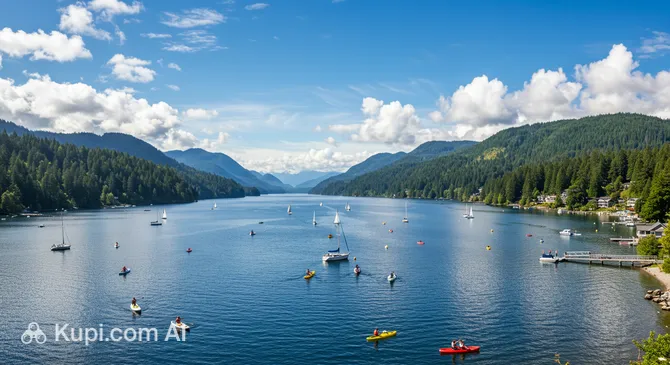
Shawnigan Lake. Illustration.
Source: Kupi.com AI

The main attraction is certainly the lake itself. It is a popular spot for swimming, fishing, boating, and water skiing. Additionally, the area is known for its educational traditions and the architecture of its private schools. The fascinating history of Shawnigan Lake has seen it transform from a logging village into a prestigious resort area, where historic cottages sit alongside modern villas.

Hiking enthusiasts should visit the nearby Kinsol Trestle — one of the tallest free-standing timber rail trestle structures in the world, offering breathtaking views of the Koksilah River valley. Old Baldy Mountain is also popular, as the climb is rewarded with a panorama of the lake and its surroundings.

Shawnigan Lake is the perfect place for those who want to escape the hustle and bustle of the city and enjoy the beauty of Canadian nature. Come here to breathe the fresh air, walk the forest trails, and experience true tranquility by the water.

Weather Overview

The climate in this picturesque corner of British Columbia is mild, which makes staying here comfortable for most travelers. To pack your suitcase correctly, it's worth checking in advance what the weather in Shawnigan Lake will be like during your trip.

Summer here is truly pleasant and perfect for relaxing by the water. The warmest months are July and August, when average temperatures are around 18–19°C, with highs reaching 24°C. This is also the driest time of year: the number of rainy days is minimal (only 3–5 per month), so nothing will stop you from enjoying the sun.

Winter is mild but wet. In December and January, the average temperature stays around 3–4°C, and even at night, the thermometer rarely drops below 0°C. However, this period sees the highest number of days with precipitation—up to 21 days per month—so an umbrella and a waterproof jacket will be necessary.

The transitional seasons also have their charm. May and September offer moderate warmth with average figures of 13–15°C, although rain returns more frequently in autumn. Expect a warm sunny summer and a cool, damp winter without extreme frost.

Average monthly temperature

Average monthly precipitation

Interesting Facts

Shawnigan Lake is not just a scenic resort, but a place with a rich past and unexpected features that not all travelers know about.

  • A Forge for Olympic Champions. Due to the unique lack of wind and the perfectly smooth water surface, the lake has become the unofficial capital of rowing. For decades, the national team sent by Canada has trained here, and these very waters have nurtured many gold medalists.

  • The Historic "Last Spike". In 1886, a milestone event for the region took place on the eastern shore of the lake at a spot called Cliffside. Prime Minister Sir John A. Macdonald ceremoniously drove the last golden spike into a tie of the Esquimalt and Nanaimo Railway, symbolically completing the construction of a vital transport artery.

  • The Canadian "Hogwarts". The village is home to Shawnigan Lake School—one of the most prestigious private boarding schools in the country, founded back in 1916. Its massive campus, with majestic buildings, manicured gardens, and strict traditions, resembles classic British educational institutions.

  • A Unique Microclimate. Locals often call the lake valley a "sun trap." Due to the local topography, it is often clear and warm here even on days when neighboring areas of Vancouver Island are shrouded in fog or rain.

How to Get There

When planning a trip to Vancouver Island, it is important to think through your logistics in advance, as this picturesque corner requires attention to route details. You can find all available options and details by clicking the link: more about how to get to Shawnigan Lake. The main flow of tourists arrives here via the nearest major cities, using a combination of flights and ground transportation.

There is no airport in the town of Shawnigan Lake itself, but you can fly into Victoria International Airport (IATA: YYJ), located in Victoria. This is the most convenient option, as the airport is only 16.1 km from your destination. The drive by taxi or rental car takes about 45 minutes, allowing you to quickly enjoy the island views.

For international flights, travelers often choose Vancouver International Airport (IATA: YVR), located in the city of Vancouver. This is the region's largest hub, situated approximately 69 km from Shawnigan Lake. The journey from here takes about 2 hours, including transfer time. You might also consider Nanaimo Airport (IATA: YCD) in the city of Nanaimo (47.6 km from the lake), with a travel time of about an hour and a half.

For clarity, here is summary information on the main airports:

AirportPassenger trafficDistance
Victoria International Airport1.9 mln16 km
Victoria Inner Harbour Airport200 00032 km
Nanaimo Airport375 00048 km
Friday Harbor Airport23 00048 km
Nanaimo Harbour120 00061 km

Railway communication in this region has its specifics. There is no train station in Shawnigan Lake itself, but you can arrive at Vancouver Station (XEA) in Vancouver, which is about 80 km away. From there, you can reach your destination using ferry services and ground transport, which will take a total of about 2.5 hours.

Below is information about the nearest major railway hub:

StationPassenger trafficDistance
Esbjerg Railway Station753 06066 km
Vancouver Railway Station265 62680 km

Main Attractions

While this cozy corner of British Columbia is primarily known for its relaxed atmosphere, there are several iconic spots that are definitely worth including in your travel itinerary. From impressive engineering feats to serene natural areas, the region offers locations that appeal to tourists with a wide range of preferences.

Kinsol Trestle. This structure is rightfully considered an architectural marvel of the region and one of the tallest wooden railway trestles in the world that has survived to this day. Rising 44 meters above the Koksilah River, the bridge is part of the popular Cowichan Valley Trail. Tourists come here for incredible photos, a sense of scale, and to walk literally among the treetops. After extensive restoration, the bridge is now completely safe and accessible for both pedestrians and cyclists.

Shawnigan Lake Museum. If you want to dive deeper into the past of this region, this small but exhibit-rich museum is an excellent stop. The exposition tells the fascinating story of the settlement's transformation: from logging camps and railway construction to becoming a popular resort. Special attention is paid to the history of the local elite school and the daily lives of early settlers, providing a better understanding of the community's unique spirit.

West Shawnigan Lake Provincial Park. This is one of the best public spots for access to the water, as a large portion of the shoreline is privately owned. The park is ideal for families: it features picnic areas, a convenient swimming beach, and shady paths. In summer, it is a hub for those looking to cool off in the clean lake water or head out for a boat ride.

Old Baldy Mountain. For lovers of active recreation and hiking, ascending this summit is a must. The route to the top is relatively easy but interesting enough for a light workout. The reward for your efforts is a spectacular panoramic view of all of Shawnigan Lake, and on a clear day, the Strait of Georgia and the Gulf Islands. It is the best viewpoint in the area to catch a sunset.

Local Cuisine

The culinary scene in Shawnigan Lake is inextricably linked to the bounty of the Cowichan Valley, often called the "Provence of Canada." Local cuisine is based on the "farm-to-table" philosophy: there is a high value placed on the freshness of ingredients grown in nearby gardens and farms. In the village's restaurants and cafes, you will find simple yet exquisite dishes whose flavor is determined by the quality of local products rather than the complexity of preparation.

When on Vancouver Island, it is impossible to ignore the gifts of the ocean, even in a settlement by a freshwater lake. Be sure to look for Pacific salmon prepared on a cedar plank or a thick, creamy seafood chowder on local menus. For dessert, you must try the famous Nanaimo Bar — a legendary Canadian treat made of chocolate, custard-flavored buttercream, and wafer crumbs. While its birthplace is the neighboring city, it is prepared here with special care.

The region is famous for its beverages, and Shawnigan Lake is no exception. The valley is an emerging wine region, so tourists should sample local wine varieties, especially whites made from Ortega grapes or light Pinot Noirs. Furthermore, the area is known for its craft cideries. A refreshing apple or pear cider produced locally is the perfect accompaniment to lunch on a warm summer day.

The food culture here is characterized by relaxation and a lack of pretension. Locals and tourists prefer cozy pubs and bistros with water views, where they can leisurely enjoy a meal in a friendly atmosphere. Picnics also hold a special place in gastronomic life: many travelers buy fresh bread, artisanal cheeses, and fruit at farmers' markets to set up lunch right on the lakeshore or in one of the parks.

Travel Tips

A trip to this scenic corner of British Columbia promises to be unforgettable if you prepare in advance and consider local specifics. We have gathered some useful recommendations to help make your stay on the shores of the lake as comfortable as possible and free from unnecessary worries.

  1. Clothing and Gear. The weather on Vancouver Island is changeable, so layering is your best friend. Even in summer, evenings by the water can be cool, so a light jacket or fleece is essential. During the shoulder seasons and winter, don't forget a waterproof windbreaker and comfortable trekking shoes, especially if you plan to walk to the Kinsol Trestle or along forest trails.

  2. Transport Accessibility. Shawnigan Lake is a small settlement where public transport runs infrequently and has limited routes. For freedom of movement, it is strongly recommended to rent a car. This will allow you to easily reach remote beaches, shops, and attractions. Taxi services are available, but wait times can be long, and apps like Uber work better in larger neighboring cities.

  3. Finances and Payment. The official currency is the Canadian dollar. Bank cards are accepted almost everywhere, including most cafes and shops. However, carrying some cash (5–20 dollar bills) is worth it for purchases at local farmers' markets or small kiosks. In Canada, there is a tipping culture: it is customary to leave 15–20% of the bill for good service.

  4. Health and Safety. The area is very quiet and safe in terms of crime; however, you should be mindful of wildlife. Bears and cougars live in the surrounding forests. While walking on trails, try to make noise or talk to avoid startling the animals. Note that the local pharmacy may close early (around 6:00 PM) and may not be open on Sundays, so it's better to put together a first-aid kit in advance.

  5. Connection and Communication. The main language of communication is English. Local residents are very friendly and open to dialogue. Wi-Fi is available in most hotels and cafes, but mobile signal may drop in the dense forest zones around the lake. It's better to purchase a SIM card upon arrival at the airport or in major cities (Victoria, Nanaimo), as the choice of mobile stores in the village itself is limited.

  6. Local Etiquette and Private Property. The lake is surrounded by many private residences. It is very important to respect private property boundaries: do not use other people's docks and do not walk through private yards to get to the water unless there is explicit permission. Use only marked public beaches and parks to avoid conflicts with residents.

  7. What to Avoid. Strictly avoid feeding wildlife, including raccoons, deer, and birds—this harms them and can result in a fine. Also, do not leave trash after picnics: locals are very protective of the ecology and cleanliness of their lake.

  8. Seasonal Advice. In summer, the village's population increases significantly due to vacationers and students from the local boarding school. If you plan a trip for July or August, book accommodation and tables at popular waterfront restaurants several weeks in advance, as demand often exceeds supply during the high season.

By following these simple tips, you can fully relax and immerse yourself in the atmosphere of tranquility that this wonderful region offers. May your introduction to Shawnigan Lake go smoothly and leave only warm memories!

Entertainment & Nightlife

Nightlife in Shawnigan Lake has its own unique, relaxed rhythm, which is fundamentally different from noisy metropolises. Here you won't find the neon signs of massive nightclubs or blocks pulsing with music until dawn. Evening entertainment in this village is primarily about cozy gatherings in gastropubs, dinners with sunset views, and heartfelt conversations with friends or locals.

The center of activity in the evening is the Shawnigan Village area and the establishments located along the shoreline. The atmosphere here is casual and friendly: there is virtually no dress code, and in most places, you will feel comfortable in anything from an evening dress to jeans and a fleece. The crowd is a mix of locals, summer residents from Victoria, and tourists seeking peace.

If you are looking for a place to spend the evening with a glass of wine or a cocktail, consider the following venues:

The Lakehouse at Shawnigan. This is perhaps the most famous spot for evening relaxation in the village. The restaurant is located right by the water and offers not only an excellent menu but also an extensive drink list. In the evenings, it often has a lively atmosphere, and you can enjoy lake views under the starry sky on the open terrace. This is an ideal location for a romantic dinner or a quiet end to the day.

Compass Mexican Bistro. If you're looking for something more colorful, this bistro in the village center is a great choice. You can try excellent Margaritas and authentic Mexican snacks here. The place is popular with locals thanks to its laid-back atmosphere and hospitality.

For those who still crave dancing and a bustling club scene, the best option is to head to the city of Victoria, located a 45-minute drive away. The choice of nightclubs and bars there is significantly wider. In Shawnigan Lake itself, "nightlife" usually winds down by 10:00–11:00 PM, although on Fridays and Saturdays, some pubs may stay open until midnight.

Practical Tips and Safety:

Shawnigan Lake is an extremely safe place. You can walk through the village center after dark without concern. However, the main "danger" at night is unlit roads and wildlife. Roadside areas often lack sidewalks, so if you are moving on foot, be sure to carry a flashlight or wear reflective elements.

Transport at night can be tricky. Taxi services here do not operate as quickly as in big cities, and services like Uber may be unavailable or have long wait times. It is highly recommended to arrange a transfer in advance or designate a "sober driver" if you plan to travel beyond walking distance from your hotel.

During the day, entertainment is more active. In addition to the already mentioned water sports, visiting local wineries and cideries, which often host tastings, is popular in the region. It is also worth stopping by small art galleries or visiting local craft fairs if your trip coincides with the weekend.

Parks & Museums

While Shawnigan Lake is primarily famous for its magnificent lake, the region offers travelers much more than just water sports. The town and its surroundings are rich in green spaces where you can enjoy the silence of the forest, and local cultural sites carefully preserve the memory of the first settlers and the community's development.

Mason's Beach Park. If you are looking for a place where village life is buzzing, this park is the perfect choice. Located in the heart of the village, it offers an excellent sandy beach that is particularly popular with families due to its shallow entry into the water. Community events are often held here, and comfortable benches make it a wonderful spot for watching sunsets over the lake. This is a great alternative to wilder spots if you value proximity to cafes and shops.

Spectacle Lake Provincial Park. This park is located just a few minutes' drive south of Shawnigan Lake and is a true oasis of wilderness. Its main feature is a scenic trail around a small lake, passing through a dense forest of Douglas fir and western red cedar. In summer, you can fish for trout here, and in winter, the lake often freezes over, turning into a natural outdoor skating rink, which attracts fans of authentic Canadian fun.

Memory Island Provincial Park. This tiny park, located on an island in the southern part of Shawnigan Lake, is a unique nature sanctuary. You can only get here by boat or kayak, which is a small adventure in itself. The island serves as a refuge for many birds and small mammals. Visitors are encouraged to keep quiet so as not to disturb the inhabitants of this secluded ecosystem.

The cultural life of the settlement is closely intertwined with its history, and although there are no massive museum complexes here, the local sites are distinguished by their warmth and attention to detail.

Shawnigan Lake Museum Exhibits. In addition to the general history of the region, the museum prides itself on its unique collections dedicated to the valley's famous figures. Of particular interest to tourists is the hall dedicated to the history of the Gibson family and the famous "Auntie," whose hospitality became legendary in the early 20th century. There is also an impressive collection of artifacts related to the development of rowing on the lake, explaining why this place is called the "cradle of champions."

Architectural Ensemble of Shawnigan Lake School. Although this is an active educational institution, its grounds are a veritable open-air architectural museum. The campus buildings, especially the majestic chapel, are built in the Collegiate Gothic style and resemble ancient English universities. Viewing these structures (usually available from the outer perimeter or on open house days) allows you to touch the elite educational culture for which Canada and British Columbia are famous.

Insider Tip: For those who want to avoid the crowds at popular beaches, we recommend visiting Old Mill Park. This spot on the eastern shore of the lake is less known to tourists but offers excellent swimming conditions and shady lawns for picnics. It preserves the atmosphere of old Shawnigan Lake—quiet and steady.

Getting Around

The transport system in Shawnigan Lake has characteristics typical of small rural settlements. There are no subways, trams, or trolleys here, and the rhythm of life does not involve heavy traffic. Because the village is stretched along the shoreline and the infrastructure is dispersed, it is important for tourists to plan their movements in advance.

The primary and virtually only form of public transportation is the bus, operated by BC Transit (specifically the Cowichan Valley Regional Transit System). The route network here is quite modest. The main bus lines connect the village with neighboring major centers like Duncan and Mill Bay. There is also a special commuter route that goes to Victoria, but it is primarily geared toward locals heading to work and runs mainly during peak hours on weekdays.

Paying the fare on buses is simple. The most common method is cash. Upon boarding the bus, you must drop the money into a special box next to the driver. Important: drivers do not provide change, so you need to have the exact amount in coins. For frequent travel, locals buy sheets of tickets or monthly passes, which are sold at some grocery stores and pharmacies in the region. Recently, an electronic payment system via the Umo mobile app has been introduced, but it is worth checking its availability for a specific route before your trip.

For tourists used to urban comfort, it is important to consider a few practical nuances:

— Bus schedules can be infrequent, especially on weekends and holidays. Intervals can be several hours long.

— Bus stops in rural areas often look like a simple pole with a sign, without a shelter or bench.

— To get the bus to stop, it is recommended to wave your hand to the driver as they approach, especially after dark.

— For route planning, it is best to use Google Maps or the official BC Transit website, where information is updated in real time.

Given the limited public transport, the best alternative is renting a car. This provides freedom of movement and the ability to reach remote attractions like the Kinsol Trestle or hidden beaches where buses do not run. Car sharing is not developed in the village itself, so it is better to rent a car upon arrival at the airport or in major cities.

Taxis are available, but unlike in large cities, it is impossible to hail a car on the street. Services must be ordered by phone in advance, and wait times can be 20 to 40 minutes, as cars travel from neighboring towns (like Cobble Hill or Duncan). Popular ride-hailing apps (like Uber) may work inconsistently or show no available cars in this area.

The railway deserves a separate mention. Tourists often see tracks passing through the region (the former E&N Railway), but it is important to know: passenger rail service on Vancouver Island was suspended many years ago. Trains do not run here, so do not rely on this form of transport, even if you see historic stations on maps.

For local excursions in good weather, a bicycle is a great option. The region is famous for its scenic trails, including the Trans-Canada Trail, which passes nearby. Moving between the main points of the village by bicycle is quite comfortable, though be prepared for hilly terrain.

Accommodation

The choice of accommodation in Shawnigan Lake reflects the relaxed and secluded nature of this resort settlement. Since it is a small community rather than a major tourist hub, you won't find high-rise chain hotels or massive "all-inclusive" complexes here. The main focus is on coziness, proximity to nature, and a home-like atmosphere.

Types of Accommodation:

The foundation of the local accommodation sector consists of vacation rentals and cottages. This is the most popular option among tourists, as it allows for renting a home with its own kitchen, terrace, and often direct access to the lake. There are also several charming Bed & Breakfasts (B&Bs) in the region where hosts offer not just a place to sleep, but home comforts and personal recommendations for your stay. Budget travelers might consider camping options in the surrounding parks, though their numbers are limited.

Areas to Stay:

When choosing a location, proximity to the water is the key factor.

  • Shawnigan Village: The most convenient area for those who do not want to use a car constantly. Staying here puts you within walking distance of Mason's Beach (a public beach), local cafes, the museum, and small shops.
  • The Shoreline: Renting a house directly on the lakeshore is the "gold standard" for a vacation in Shawnigan Lake. The west and east shores offer privacy and private docks, which is ideal for water sports enthusiasts.

Booking Tips:

Shawnigan Lake is an extremely popular summer destination for residents of Vancouver Island, so demand for housing during the high season (July–August) is very high. It is strongly recommended to book accommodation 3–5 months before your trip, especially if you are interested in weekends or holidays. Waterfront options are the first to be taken.

Prices and Booking Methods:

The price range varies from mid-range to high. Staying in a B&B or a small guest house will be cheaper, while renting a large villa by the water will cost significantly more and often requires a minimum stay (e.g., 3 nights or more). To find housing, it is best to use major online booking platforms or vacation rental websites, as many properties are managed directly by private owners.

Nearby Cities

For those looking to explore the surroundings, Shawnigan Lake serves as an excellent starting point for day trips. Thanks to its convenient location, it is easy to reach several interesting settlements in the region from here:

CityPopulationDistance
Duncan44 45115 km
North Saanich11 24917 km
Central Saanich16 81417 km
Sidney11 67218 km
North Cowichan29 67619 km

Among these destinations, a few cities stand out as perfect for a short and eventful journey:

Victoria. The capital of British Columbia is just a 45-minute drive south. It is a city with a distinct British flair, famous for its architecture, the majestic Parliament Building, and the picturesque Inner Harbour. People come here to visit the Royal BC Museum, stroll through historic streets, and enjoy traditional afternoon tea at the Empress Hotel.

Nanaimo. Located north of the lake, this port center is known as the "Harbour City." It is a great place for waterfront walks, visiting the historic Bastion, and, of course, tasting the famous dessert—the Nanaimo Bar—right here in its birthplace. The city also serves as a convenient gateway to other islands in the region.

Saanich. This district, bordering the provincial capital, attracts nature and garden art lovers. This is where the world-famous Butchart Gardens are located—a National Historic Site of Canada that dazzles with incredible floral displays at any time of year.

These nearby destinations allow you to get a full picture of the diverse culture and landscapes of southern Vancouver Island, harmoniously complementing a vacation at the lake.

Shopping & Souvenirs

General Overview

Shopping in Shawnigan Lake fully reflects the relaxed and slow-paced character of this resort settlement. You shouldn't expect large department stores or high-fashion boutiques here. Trade in the town is local and cozy: small family shops, art galleries, and essential goods stores. The main value of local shopping is the opportunity to find unique handmade items and fresh farm products while supporting local producers.

Main Shopping Areas and Streets

All commercial life is concentrated in the area known as Shawnigan Village. This is a small cluster of buildings along the main Shawnigan Lake-Mill Bay Road. Here, in a compact area, tourists will find everything they need: from a cozy coffee shop selling local chocolate to stores with gifts and home decor items. A walk through this area doesn't take much time but allows you to feel the true spirit of the community.

Shopping Centers

There are no major shopping centers in Shawnigan Lake itself. For larger-scale purchases, locals and tourists head to the neighboring village of Mill Bay (about a 10–15 minute drive), where the Mill Bay Centre is located. This is an open-air shopping complex with a supermarket, pharmacy, liquor store, and various services. If you are interested in full-scale urban shopping with mass-market brands, it is better to go to Duncan or Victoria.

Markets

While there is no large permanent market in the village itself, the region is famous for its farm stand culture. Traveling around the lake, you will often encounter small self-service kiosks where locals sell fresh eggs, seasonal vegetables, flowers, or homemade jam. Payment here is often based on trust (an honesty box). For the atmosphere of a large and bustling market, head to the famous farmers' market in the neighboring town of Duncan on Saturday mornings, which is considered one of the best on the island.

Souvenirs

From a trip to Shawnigan Lake, it's worth bringing back something that reminds you of nature and local craftsmanship.

  • Local Chocolate and Coffee: In the village center, you can buy handmade sweets that make an excellent gift.
  • Ceramics and Art: Local galleries and souvenir shops feature works by potters and artists from the Cowichan Valley.
  • Wine and Cider: A bottle from a local winery or cidery is a wonderful gastronomic souvenir.
  • Cowichan Sweaters: Famous warm wool sweaters with traditional Indigenous designs are a symbol of the region and are sold in specialized shops nearby.

Opening Hours and Payment

Shops in the village usually operate on a relaxed schedule: opening around 10:00 AM and closing at 5:00 PM or 6:00 PM. On Sundays and holidays, hours may be reduced. Credit and debit cards are accepted almost everywhere, as well as Canadian cash. Cash is especially useful if you plan to buy products from small farm stands along the road.

Tax Free

Tourists should remember that Canada does not provide a Tax Free (tax refund) program for ordinary consumer goods for foreign visitors. Sales tax (in British Columbia, this is a combination of GST and PST, totaling 12%) is added to the cost of the item at the checkout and is not refundable upon leaving the country.

Reached the end of the page?

That means the route is fully explored