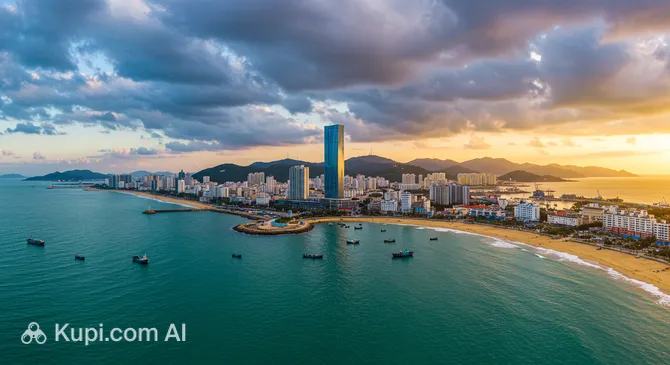
Fangchenggang is a dynamically developing coastal city located in southern China within the Guangxi Zhuang Autonomous Region. The city holds a strategic position on the coast of the Beibu Gulf, in close proximity to the border with Vietnam. Its modern appearance was formed relatively recently: it was officially established in its current status in 1993, when the port zone merged with Fangcheng County. Exploring the historical heritage of these places, one can trace the transformation of small settlements into one of the region's key trading hubs.
Fangchenggang. Illustration.
Source: Kupi.com AI
Geographically, Fangchenggang is a complex labyrinth of peninsulas and bays, giving it a truly maritime atmosphere. More than a million people live here, and although the city is primarily known as a giant port and logistics center, it is gradually acquiring the features of a cozy seaside resort. Visitors are attracted by the combination of industrial port power, modern neighborhoods, and peaceful coastal areas.
One of the city's main highlights is White Beach, which is called the westernmost point of the country's mainland coastline. A trip here is a great opportunity to see a "different" China: less hectic than Shanghai or Beijing, but permeated with the energy of maritime trade and the salty breeze. Fangchenggang invites those who seek authentic Southern Chinese landscapes and want to feel the rhythm of life at the junction of borders and elements.
Weather Overview
The climate of Fangchenggang is classified as subtropical marine, which defines the warm and humid weather throughout most of the year. Proximity to the Beibu Gulf gives the city refreshing sea breezes but also brings heavy rainfall during the summer period. When planning a trip, it's worth considering that the climate of Fangchenggang is characterized by pronounced seasonal humidity.
Summer in the city is long and hot: in July and August, the average temperature reaches +28...+30°C, and air humidity increases significantly. Winters here are very mild and short. For example, in January, the thermometer usually stays around +15°C, rarely dropping below +12°C. The driest month is December, when precipitation is minimal and the weather remains comfortable for walking.
Expect a sunny and hot summer with frequent but short tropical showers, and a dry, pleasant winter. Thanks to the sea influence, there are no extreme frosts here, making the city accessible for visiting at any time of year, although spring and autumn are considered the most favorable periods when the air temperature is most balanced.
Average monthly temperature
Average monthly precipitation
Interesting Facts
Fangchenggang is a unique hub that connects China with ASEAN countries via three routes: sea, land, and river.
The city is home to mainland China's westernmost beach, known as White Beach.
The modern history of the city as a separate prefecture-level city began quite recently — it received official status in 1993.
Due to its location on the last stretch of the Chinese coast before the border with Vietnam, the city serves as a vital transit hub for cross-border trade.
The population of this port giant, according to the 2020 census, exceeded one million people, highlighting its importance for the southern region.
How to Get There
The transport accessibility of Fangchenggang is due to its status as a major trade and logistics hub. The city is integrated into the general network of southern China, allowing tourists to combine various modes of transport for their trip. To plan your route optimally, it is worth studying all available ways to get to the city in advance, considering the proximity of major regional centers.
Although the city has its own airport identifier FCG, it is more often used as an auxiliary hub. The main flow of air travelers usually arrives through the major airports of neighboring cities (for example, Nanning) and then transfers to ground transport. For convenience, buses and taxis run between the air hubs and the city center.
Rail service is one of the most convenient ways to travel. Modern stations connect the city with key points in the Guangxi Zhuang Autonomous Region. Trains from Nanning and other metropolises allow you to reach the coast quickly and comfortably, avoiding potential congestion on the expressways.
Within the region, a network of intercity buses and high-speed highways is also developed. When planning a trip by car or bus during peak hours, consider the traffic load near the port and industrial zones, as freight traffic here is quite intense.
Main Attractions
While Fangchenggang does not claim the title of a museum-city with thousand-year-old relics, its main advantages lie in the natural beauty of its coastline and the scale of its modern infrastructure. The main point of attraction for tourists is traditionally White Beach. This place is famous for its light sand and status as the westernmost beach area of mainland China. Here, you can enjoy not only swimming in the sea but also picturesque sunsets that paint the Beibu Gulf in fantastic colors.
For those who prefer urban aesthetics, the modern embankments and walking zones along the water will be of interest. Walking along them, you can witness the city's role as a vital maritime hub: majestic merchant ships are often visible on the horizon, and the architecture of the new quarters emphasizes the rapid growth of the region. These public spaces have become a favorite holiday destination for both locals and travelers.
Another feature of Fangchenggang is its "border character." The areas adjacent to the trade zones, where the influence of neighboring Vietnam is felt, are of interest. If you are looking for a lively port city atmosphere rather than classic excursions, pay attention to the coastal park areas and infrastructure facilities that form the unique visual image of this southern outpost.
Local Cuisine
The culinary face of Fangchenggang is inextricably linked with the sea and the traditions of the Guangxi Zhuang Autonomous Region. The main hero of the local table is the freshest seafood: from various types of fish and shrimp to exotic shellfish. Local cuisine values the purity of flavor, so products are often steamed or flash-fried with minimal spices to highlight their natural freshness.
Traditional rice and noodle dishes typical of southern China are a must-try. Local rice noodles, served in fragrant broths or dry with various toppings, are particularly popular. Due to the proximity to the border, light notes of Vietnamese influence can be found in the city's gastronomy, making the menus of local establishments even more diverse and interesting for foodies.
The city's gastronomic scene is best revealed at night markets and in small family restaurants located near the embankments and port zones. It is here that you can see how locals choose live seafood directly from aquariums, which are then prepared over an open fire. For drinks, look for refreshing herbal teas and local beer, which perfectly complement a hearty meal of seafood.
Travel Tips
A visit to Fangchenggang will bring plenty of pleasure if you consider the specifics of this port and coastal city in advance. Here are some practical tips to help make your trip as comfortable and interesting as possible.
Clothing and Gear: Choose light clothing made from natural fabrics, as the city is almost always humid and warm. Don't forget comfortable shoes for walking along the embankments and sunscreen. In summer, be sure to carry an umbrella — tropical showers can start suddenly.
Transport: For getting around the city, it is most convenient to use taxis or ride-hailing apps (such as Didi). Buses are a great budget option, but they can be crowded during peak hours.
Finance: The main currency is the Chinese yuan. Large shopping malls accept cards, but for daily expenses and markets, be sure to install WeChat Pay or Alipay, as cash is accepted less and less frequently.
Health and Safety: The city is safe for tourists, but be careful near port zones due to heavy truck traffic. Drink only bottled water and use pharmacies, which are easy to find in central areas.
Communication: English is not widely spoken. Download an offline translator and carry a card with the hotel's name in Chinese. It's best to buy a SIM card immediately upon arrival at the airport or train station.
Local Etiquette: Chinese people value politeness. A simple nod or smile when greeting is enough. Don't be surprised by the noisy atmosphere in local restaurants — it's a sign that guests are enjoying the food.
What to Avoid: Don't plan important trips close to peak hours in the port areas — traffic jams can be significant. Also, you should not swim in unequipped places outside official beaches.
Additional Tip: Try to get to White Beach by sunset — it's one of the most beautiful sights in the region and won't cost you anything.
Fangchenggang reveals its best side to those who are ready for small adventures and willing to explore its leisurely maritime rhythm. Have a pleasant journey!
Entertainment & Nightlife
Entertainment in Fangchenggang is calm and measured, reflecting the overall atmosphere of the coastal city. The main centers for evening leisure are the city embankments and their surrounding neighborhoods. After sunset, locals and tourists gather here for walks by the water, enjoying the sea breeze and the illumination of modern buildings. This is an ideal time to visit open-air cafes, where you can taste fresh seafood and spend the evening in a relaxed setting.
The city's nightlife is not as grand as in megacities like Guangzhou; however, evening fun seekers will find local bars and karaoke halls (KTV), which are extremely popular in the region. Most establishments are concentrated in the central part of the city and in the popular beach areas. The crowd here is predominantly local, the atmosphere is friendly, and there is practically no dress code, making the experience as relaxed as possible.
Daytime entertainment includes visiting city parks and modern shopping complexes, which often house cinemas and play areas for the whole family. For those seeking more active leisure, boat trips are available. Overall, Fangchenggang offers a comfortable stay without unnecessary fuss, focused on contemplating sea landscapes and immersing yourself in the daily rhythm of the Southern Chinese coast.
Parks & Museums
The cultural and recreational landscape of Fangchenggang is largely determined by its coastal status. The city is not rich in classic art galleries or massive historical museums; however, it offers tourists excellent opportunities for outdoor recreation. The primary value here lies in the open public spaces and embankments, which serve as the main city parks.
Walking along the coastline, you can find cozy green squares and park areas designed specifically for residents to enjoy the sea air. Landscaping in the city is done with the subtropical climate in mind: there are many evergreen plants and palm trees, creating the atmosphere of a southern resort. These areas are especially popular in the early morning and at sunset, when the daytime heat subsides.
For those interested in the history of the region's development, the functions of an "open-air museum" are often performed by the port areas and new administrative districts, demonstrating the rapid transformation of the city. In Fangchenggang, recreation is distributed along the entire coastline, turning every walk by the water into a session of connecting with nature and modern urban art.
Getting Around
The public transport system in Fangchenggang is organized to meet the needs of both the million-strong population and intensive freight traffic. Buses form the backbone of city travel. The route network covers most areas, including residential quarters, shopping zones, and coastal territories. Buses are the most budget-friendly way to get around, and their schedules are usually strictly followed.
For faster and more comfortable trips, tourists often choose taxis or ride-hailing services via mobile apps. Several large platforms operate in the city, allowing you to call a car to any point. This is especially convenient for trips to remote beaches or port zones, where buses may run less frequently. The cost of taxi rides remains quite affordable for travelers.
An important feature of Fangchenggang is the port's influence on the traffic situation. Since the city is a key logistics hub, a large amount of freight transport can often be found on the main highways. Tourists are advised to allow extra time for travel during peak hours, especially if the route passes through areas connecting the port with the city's main exits. Bicycle rentals and electric scooters are also gaining popularity in coastal zones, offering a great way to explore the embankments without traffic jams.
Accommodation
For a comfortable stay in Fangchenggang, travelers are best off focusing on mid-range hotels and modern apartments. Since the city is an important business center, there is a wide range of hotels catering to business tourists and those passing through. The majority of quality accommodation is concentrated in central areas and along the coastline, where windows offer views of the gulf.
The choice of area for staying directly depends on the goals of the trip. If you are interested in relaxing by the water and walking along the embankments, you should look at hotels near the coastal zones. For those arriving in the city on business or for further transit, options near main transport hubs and shopping districts will be more convenient. Avoid staying on the outskirts near the industrial port zones, as there is less tourism infrastructure there.
The price range in the city is very democratic compared to major Chinese megacities. It is recommended to book accommodation in advance, especially if your trip falls during China's national holidays when domestic tourism increases sharply. Most hotels are available through popular international and Chinese booking services, and payment is most often accepted via mobile apps or national system cards.
Nearby Cities
Fangchenggang serves as an excellent starting point for exploring the southern coast of Guangxi and the border territories. The city's location allows for exciting day trips to neighboring regions to get acquainted with their culture and see how life on the border of two states unfolds.
One of the most popular destinations is the city of Dongxing, located just 43 kilometers away. This is a unique place where China literally meets Vietnam. On the other side of the border is the Vietnamese town of Mong Cai, and the atmosphere of cross-border trade is felt everywhere. You should also pay attention to Qinzhou — a large cultural and industrial center famous for its ceramics and historical monuments.
If you are looking for a complete seaside holiday, you can head to Beihai. This city is famous for its magnificent beaches and old quarters, which preserve colonial-era architecture. A trip there will take a bit more time but will offer plenty of impressions from the contrast between port industrialism and resort bliss.
Exploring the surroundings of Fangchenggang is an opportunity to see the diversity of the South Chinese coast, where modern ports sit alongside quiet fishing villages and bustling border markets.
Shopping & Souvenirs
Shopping in Fangchenggang is primarily a practical experience, oriented toward the daily needs of residents and the specifics of a port city. You won't find endless rows of global brand boutiques here, but you can immerse yourself in the atmosphere of lively markets and modern shopping centers that provide everything necessary for the rapidly growing metropolis. Main shopping areas are concentrated in the city center, where large malls with clothing, electronics, and household goods stores are located.
Tourists should pay special attention to the local seafood markets. These are not just places to shop but real centers of local life, offering a huge assortment of dried and cured fish, seaweed, and other delicacies from the Beibu Gulf. Such items often make excellent gastronomic souvenirs. You can also find Guangxi folk crafts at the markets, including traditional textiles and small sea-themed souvenirs.
Shops and shopping centers usually stay open until late evening, which is convenient for post-dinner strolls. Large malls accept bank cards, but for visiting markets and small shops, it's better to have mobile payment apps (Alipay or WeChat Pay) installed, as they are the standard in China. Shopping in Fangchenggang is an opportunity to purchase high-quality local goods and products at very attractive prices.