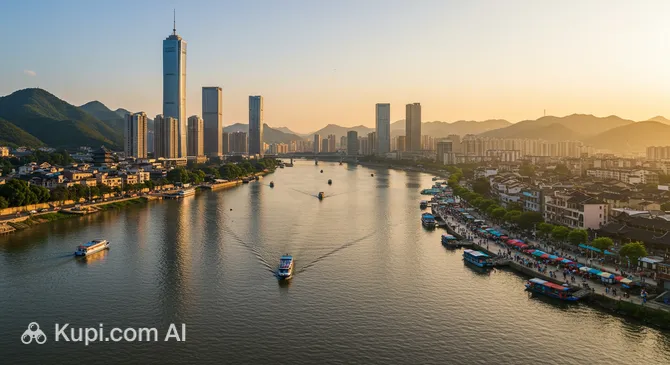
Hejiang is a fascinating corner of China, located in Sichuan Province. Its name, which literally translates as "confluence of rivers," perfectly describes the city's geographical essence: it grew at the meeting point of powerful waterways. It is a city with a deep history spanning more than a millennium and a half, where every cobblestone on its paved streets seems to be a witness to the changing of ancient dynasties.
Hejiang. Illustration.
Source: Kupi.com AI
With a population of over 630,000, Hejiang manages to maintain the atmosphere of an authentic Chinese province. Its architectural appearance is a picturesque blend of traditional residential quarters cascading down mountain slopes and modern infrastructure elements. There is none of the hustle and bustle of megacities here, making the city attractive to travelers seeking peace and authenticity.
The main feature of Hejiang lies in its layout: the uneven terrain determined the winding nature of the streets, creating a complex labyrinth among historical buildings. A visit to this city will be a real gift for those who appreciate the opportunity to see the "real" China, hidden from the mass tourist flow. We invite you to embark on this journey to feel the spirit of time in the heart of Sichuan.
Weather Overview
Hejiang is characterized by a humid subtropical climate, typical for Sichuan Province. Summers here are hot and quite rainy: in July and August, average temperatures reach +30°C, and sometimes even higher. June is considered the wettest month, with significant rainfall, so it's wise to always have an umbrella with you during this period.
Winters in the city are mild and relatively dry. In January, the average temperature is about +6°C, rarely dropping to critical levels. Spring and autumn are perhaps the best times to visit, when comfortable warm weather sets in, ideal for long walks through historical quarters and sightseeing architectural monuments.
When planning a trip, keep in mind the high air humidity, which is felt throughout the year. Expect warm summers with occasional thunderstorms and cool, overcast winters. This climate promotes lush greenery, making the city's surroundings especially picturesque at any time of year.
Average monthly temperature
Average monthly precipitation
Interesting Facts
Hejiang is one of the oldest administrative centers in the region: the county was officially established in 564 during the Northern Zhou dynasty.
The city's name consists of the characters 合江, where the first symbol means "meeting" or "union," and the second means "river," directly pointing to its location at the confluence of water arteries.
The city possesses an unusual topography: its main road and dozens of adjoining alleys precisely follow the curves of the mountain landscape, creating a natural "vertical" city.
Administratively, the county covers a vast territory, including 25 towns and 2 townships, making it a significant hub in Sichuan Province.
The architecture of Hejiang is considered a visual chronicle: here you can see buildings from different eras, from traditional Sichuan structures to modern functional homes.
How to Get There
The transport accessibility of Hejiang is largely determined by its proximity to the major administrative center of Luzhou. The county is conveniently connected to the main highways of Sichuan Province, making a trip here quite comfortable by both public and private transport.
The most popular way to reach Hejiang is to use the bus service. From Luzhou, which is about 23 kilometers away, suburban buses and taxis run regularly. The journey takes very little time, allowing you to plan even short one-day trips from neighboring metropolises.
For those who prefer traveling by train, the main arrival point will be the railway stations in Luzhou or other nearby large cities, from which you can easily transfer to local transport. The region's developed road network ensures a reliable connection between the county and key transport hubs in Southwestern China.
Main Attractions
The main draw for travelers in Hejiang is the historical center itself. Its unique layout is dictated by the uneven terrain: traditional houses are arranged in neat rows along the mountain slopes, creating a unique multi-level landscape. A walk through these winding, stone-paved streets allows you to fully immerse yourself in the atmosphere of ancient China.
Particular attention should be paid to Sutiy — a site that harmoniously complements the city's cultural landscape. This place attracts history and architecture enthusiasts who want to see how traditional forms are preserved in the modern rhythm of the county's life. Along the waterways, you can also find picturesque viewpoints offering views of the confluence of rivers that gave the city its name.
Beyond its architectural monuments, Hejiang is interesting for its daily life. Here you can observe the lifestyle of local residents who set up their shops right at the doorsteps of centuries-old houses. This combination of living history and hospitality makes sightseeing in the city a truly soulful and memorable experience.
Local Cuisine
The gastronomy of Hejiang is inextricably linked to the culinary traditions of Sichuan Province, which is world-famous for its vibrant and bold flavors. The main feature of the local cuisine is the use of the famous Sichuan peppercorn and a variety of hot spices. Be prepared for most dishes to have the characteristic "numbing and spicy" effect that gourmets appreciate so much.
Traditional Sichuan snacks found at street vendors in the historical part of the city are a must-try. The freshness of the ingredients and authentic recipes make an ordinary lunch a real adventure. The food culture here is simple and democratic: locals prefer small eateries and open markets where food is prepared right in front of you.
While it is difficult to single out one specific world-class restaurant in the county itself, the general atmosphere of hospitality in places like the surroundings of the Sutiy site allows you to enjoy a meal in picturesque surroundings. To complement the spicy dishes, be sure to order local tea — Sichuan is famous for its tea traditions, and a cup of hot tea will be the perfect end to a busy day.
Travel Tips
Preparing for a trip to such a unique city as Hejiang requires attention to detail. These practical tips will help you make your journey as comfortable and enjoyable as possible.
Clothing and Footwear: Be sure to bring comfortable shoes with good grip, as the city is built on slopes and you will have to walk a lot on uneven paved streets. Clothing should be light and breathable for summer, but don't forget a raincoat—the region is famous for sudden downpours.
Transport: Use buses from Luzhou to travel between cities. Inside Hejiang, it is best to get around on foot to feel the atmosphere of the old city.
Finances: The main currency is the Chinese Yuan. In small shops, cards are rarely accepted, so have a supply of cash or set up Alipay/WeChat Pay. ATMs are easier to find in larger centers like Luzhou.
Connectivity: It is recommended to buy a local SIM card (China Unicom or China Mobile) for access to maps and translators. Free Wi-Fi is available in hotels, but access to many familiar services may be restricted without a VPN.
Language and Communication: English is practically not spoken here. Download an offline translator in advance and carry a card with the name of your hotel and attractions in Chinese characters.
Etiquette: Be polite and show respect to elders. When visiting temples or private courtyards, try not to make noise and always ask for permission before taking photos of local residents.
What to Avoid: You should not plan a trip during the peak of the rainy season (June) if you do not like high humidity. Also, avoid discussing political topics in public places.
Extra Tip: Try to visit the city early in the morning—at this time, the old streets look most photogenic, and there are still few locals around.
By following these simple recommendations, you will be able to fully focus on the beauty and history of Hejiang without being distracted by everyday trifles. Have a great trip!
Entertainment & Nightlife
Entertainment in Hejiang is quiet and traditional, which perfectly fits its status as a historical settlement. The nightlife here does not feature noisy clubs; instead, it offers a cozy atmosphere of evening strolls along illuminated old streets. Most evening activity is concentrated in small local establishments and teahouses, where residents gather for leisurely conversations.
For those seeking cultural enrichment during the day, the city offers an introduction to craft traditions. You can peek into workshops where folk crafts are created or visit public spaces like Sutiy, where local events and gatherings are often held.
For more active recreation and modern entertainment centers, you should head to neighboring Luzhou, located just half an hour away. Nevertheless, it is Hejiang that offers a unique opportunity to enjoy authentic festivals and holidays held in accordance with ancient lunar calendars, turning the entire city into one large festive venue.
Parks & Museums
Although Hejiang itself resembles an open-air museum, its cultural map includes interesting sites that deserve attention. The main "exhibit" here is the ancient architecture: walking through the streets, it's as if you are turning the pages of 1,400 years of history. Traditional houses and public spaces, such as Sutiy, are living testaments to the county's rich heritage.
Natural areas around the city offer great opportunities for outdoor recreation. The confluence of rivers forms a picturesque shoreline, which in some places is developed as walking zones. These areas allow you to enjoy peace and beautiful water landscapes, which is especially valuable after visiting the bustling market quarters.
Information about temporary exhibitions or small private collections dedicated to local crafts is best obtained from local guides. Hejiang is a place where culture is not hidden behind display cases but lives in the details of old buildings, the layout of paved roads, and the traditions of the local community, creating a unique cultural landscape.
Getting Around
The core of Hejiang's transport system is an extensive network of bus routes connecting the county with the administrative center of Luzhou and surrounding villages. Buses are the most reliable and affordable way of travel for locals and tourists planning trips around the region.
Within the historical center of Hejiang itself, the best way to get around is on foot. Given the compact size of the old part of the city and its unique terrain with narrow paved streets and stairs, a car would be more of a hindrance than an advantage. The walking format allows you not to miss a single important detail of the ancient architecture.
For faster trips over short distances, you can use the services of taxis or motorcycle taxis, which are popular in this region. Fares are usually paid in cash or through payment apps common in China. Travelers are advised to prepare the name of their destination in Chinese in advance to simplify communication with drivers.
Accommodation
Accommodation options in Hejiang are geared toward travelers seeking proximity to historical heritage. Small guesthouses and cozy mid-range hotels predominate, many of which are decorated in a traditional style that allows for a deeper feel of the provincial flavor. By staying in such a place, you can enjoy views of the ancient streets right from your room window.
For tourists who prefer hotel chains with a wide range of services, it is recommended to consider accommodation options in neighboring Luzhou. Thanks to the short distance — only 23 km — you can easily reach the sights of Hejiang while enjoying all the advantages of the developed urban infrastructure of a large center.
During peak tourist seasons and local festivals, accommodation in the county may be in high demand. We advise booking your rooms in advance through popular services or directly. Prices for accommodation here are generally very affordable, making Hejiang an excellent choice for a budget-friendly yet experience-rich trip.
Nearby Cities
Hejiang is an excellent starting point for exploring the picturesque corners of Sichuan Province and neighboring regions. Due to its convenient location, you can easily reach several significant cities from here, each with its own unique character.
Just 37 kilometers away is Luzhou — a major center known for its production of famous Chinese spirits and developed modern infrastructure. Another interesting destination is a trip to Chishui, the journey to which is less than 30 kilometers. This city is famous for its natural beauty and unique landscapes, which are ideal for ecotourism.
For those ready for slightly longer trips, the path is open to Dazu, famous for its rock carvings, which are included in the UNESCO World Heritage list. The surroundings of Hejiang are rich in both natural parks and historical monuments, making the region an ideal place for the inquisitive traveler.
Shopping & Souvenirs
Shopping in Hejiang is primarily about getting to know the local flavor and traditional crafts. You won't find huge shopping malls with global brands here, but you can experience the charm of shopping in small stores run by local families for many years. It is an ideal place to find authentic souvenirs that reflect the spirit of ancient Sichuan.
Main shopping activities are concentrated on the historical streets in the city center and near iconic sites like Sutiy. Here you can purchase handmade goods, traditional textiles, and, of course, the famous Sichuan spices, including the renowned peppercorn, which makes an excellent gift for cooking enthusiasts.
The city's markets deserve special attention: they are true centers of local life, selling the freshest produce and household items. Shops usually operate from early morning until late evening. For payments, it is best to have cash or set up mobile payment systems, as international bank cards are rarely accepted in small shops.