Support

Wulong

About

Nestled within the mountainous landscapes of the Chongqing Municipality, Wulong is a breathtaking destination that captivates travelers with its dramatic natural beauty and serene atmosphere. Far removed from the hustle of major metropolises, this area offers a refreshing escape into a world of towering limestone cliffs, deep gorges, and lush forests. It is a place where nature takes center stage, making it a jewel in the crown of China for outdoor enthusiasts and photographers alike.

Geographically, Wulong is situated along the lower reaches of the Wu River in the southeast of Chongqing. The region is defined by its rugged terrain and karst topography, which creates a spectacular backdrop for the local community. With a population of approximately 14,000 in its central area, the town retains a welcoming, small-scale charm that serves as the perfect base for exploring the vast wilderness that surrounds it. The climate here is generally mild and humid, though the higher elevations offer cool, misty retreats during the summer months.
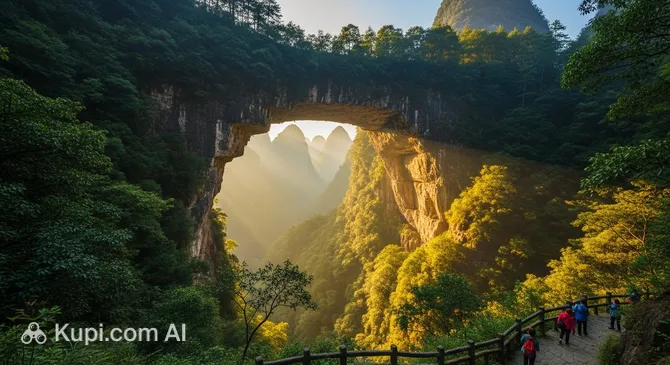
Wulong. Source: Kupi.Binoculars

While the region is famous for its geological wonders, the history of Wulong is equally fascinating, stretching back centuries and intertwined with the rich traditions of the Ba culture. The area has long served as a vital passage through the mountains, and its heritage is preserved in the local customs and the enduring spirit of its people.

Visitors are primarily drawn to the Wulong Karst National Geology Park, a UNESCO World Heritage site that boasts some of the most stunning scenery on Earth. The undisputed highlight is the Three Natural Bridges (Tianlong, Qinglong, and Heilong), a trio of magnificent stone arches that span the Yangshui River gorge. These natural giants are so impressive that they have served as filming locations for major international movies. Another key attraction is Fairy Mountain (Xiannu Mountain), known as the "Switzerland of the East" for its rolling alpine meadows and grazing horses, offering a stark and beautiful contrast to the deep valleys below.

Whether you are hiking through ancient ravines, exploring the magnificent Furong Cave, or simply breathing in the fresh mountain air, Wulong promises an unforgettable journey. It is a destination that invites you to slow down and marvel at the artistic power of nature.

Weather Overview

The climate in Wulong is generally mild and humid, shaped significantly by its mountainous topography within the Chongqing Municipality. Visitors can expect distinct seasons that offer different perspectives of the region's natural beauty. Generally, the area avoids extreme temperature fluctuations, providing a relatively comfortable environment for travel year-round, though layering is always recommended due to the elevation.

Winters are chilly but rarely freezing, with average temperatures in January dropping to around 5.2°C and lows near 2.4°C. In contrast, summers are warm and pleasant rather than scorching; August sees average highs of roughly 29.2°C. Precipitation is a constant factor, with a significant number of wet days occurring throughout the year, peaking in late spring and early summer. Because rain is frequent, it is wise to consult the detailed guide on the weather in Wulong when planning your specific dates to ensure you pack appropriate gear for the conditions.

Interesting Facts

Beyond the majestic scenery that greets the eye, Wulong holds fascinating secrets and cinematic claims to fame that often surprise visitors. From Hollywood blockbusters to unexpected winter sports, there is more to this region than just stone and water.
  • A Hollywood Backdrop: The dramatic scenery of the Three Natural Bridges was a key filming location for the blockbuster Transformers: Age of Extinction. Fans visiting the valley can even find a large replica of a Transformer standing guard near the site, marking its permanent spot in cinema history.

  • A Historical Remake: The ancient-looking Tianfu Official Post Station, nestled at the bottom of a gorge, might look centuries old, but it was actually meticulously rebuilt for Zhang Yimou’s film Curse of the Golden Flower. It authentically recreates a Tang Dynasty outpost that once served as a vital courier stop along the ancient road.

  • Skiing in the "Furnace": Despite Chongqing being known as one of the "Three Furnaces" of China due to its scorching summers, Wulong's Fairy Mountain offers a rare alpine escape. It is one of the few places in the southern part of the country where visitors can enjoy outdoor skiing and snowy landscapes during the winter months.

  • A Global Cave Contender: The Furong Cave is not merely a local attraction; it is scientifically recognized as one of the three greatest caves in the world, often compared to Mammoth Cave in the US and Clamouse Cave in France. It contains nearly every type of karst deposition feature known to geologists.

How to Get There

Reaching the scenic landscapes of Wulong is an adventure in itself, with options ranging from direct flights to nearby scenic spots or high-speed rail connections through major regional hubs. Whether you are arriving from within China or from abroad, planning your route is essential for a smooth journey. For a comprehensive guide on all available transport modes, you can read more about how to get to Wulong.

For travelers seeking the most direct access to the famous karst scenery, Chongqing Xiannyushan Airport (CQW) is the closest option. Located in Wulingshancun, approximately 17 km from the center of Wulong, this airport specifically serves tourists visiting Fairy Mountain and the surrounding geology park. A taxi or bus from here typically takes about 45 minutes. Although it handles a smaller volume of passengers, its proximity makes it an incredibly convenient choice for domestic travelers looking to land right on the doorstep of Wulong's attractions.

International travelers or those connecting from major Chinese cities will likely arrive via Chongqing Jiangbei International Airport (CKG). Situated in the metropolis of Chongqing, this large international hub is about 117 km from Wulong. It offers extensive flight connections and serves millions of passengers annually. From the airport, the journey to Wulong by road takes approximately 3 hours and 15 minutes, though many visitors opt to transfer to a train or bus in Chongqing city for the final leg of the trip.

For clarity, here is a summary of the main airports:

Airport Name City Passenger Traffic Km from City
Chongqing Jiangbei International Airport Chongqing High 116.9
Dazhou Jinya Airport Dazhou Medium 193.1
Wanxian Airport Wanzhou Medium 176.0
Qianjiang Wulingshan Airport Qianjiang Low 106.1
Chongqing Xiannyushan Airport Wulingshancun Low 16.9

While Wulong has its own local rail connections, many travelers transit through the major railway hubs in the region. One of the primary gateways is Chongqingbei Railway Station (Chongqing North), located in the city of Chongqing, approximately 122 km from Wulong. As a key transit point, it connects to high-speed lines across the country. If you arrive here, you can expect a road transfer of around 3.5 hours to reach Wulong, or you can transfer to a local train heading directly into the mountains.

Another significant hub is Chongqing West Railway Station, also situated in Chongqing about 129 km away. This massive station handles a very high volume of passengers and serves as a major node for the region's rail network. Similar to the North station, a taxi or bus ride from here to Wulong would take roughly 3.5 hours. These stations provide reliable entry points for those exploring the wider Chongqing Municipality before heading to the karst valleys.

Below is a list of the nearest major railway stations:

Station City Passenger Traffic Km to Center
Chongqing West Railway Station Chongqing Very High 129.3
Wanzhou North Railway Station Wanzhou High 180.3
Chongqingbei Railway Station Chongqing 121.8
Enshi Railway Station Enshi 201.4
Shapingba Railway Station Chongqing 130.4

Main Attractions

The crown jewel of the region is undoubtedly the Three Natural Bridges (TianSheng SanQiao). Located within the Wulong Karst National Geology Park, this site features three magnificent natural limestone arches—Tianlong (Sky Dragon), Qinglong (Green Dragon), and Heilong (Black Dragon)—that span the Yangshui River gorge. Visitors can descend into the valley via a glass elevator and walk along paths that wind beneath these colossal structures. It is a place of awe-inspiring scale and beauty, famously serving as a filming location for the movie Transformers: Age of Extinction, making it a must-visit for both nature lovers and film buffs.

Just a short distance from the bridges lies the dramatic Longshuixia Fissure Gorge. This narrow geological fracture creates a deep, slit-like canyon that plunges hundreds of meters into the earth. As you navigate the walkway clinging to the cliffside, you will be surrounded by steep walls, lush vegetation, and the roar of cascading waterfalls. The gorge offers a thrilling perspective on the power of water erosion and provides a cool, misty environment that feels like a hidden world separated from the surface above.

For those fascinated by the subterranean world, Furong Cave is an unmissable spectacle. Situated along the banks of the Furong River, this massive limestone cave is renowned for its vast chambers and the sheer variety of its speleothems. Inside, visitors are treated to a dazzling display of stalactites, stalagmites, and stone waterfalls, all illuminated by colorful lights that enhance their natural textures. It is widely considered one of the most beautiful vertical caves in the world, offering a journey into the earth's geological history.

Offering a complete change of scenery, Fairy Mountain National Forest Park (Xiannu Mountain) presents rolling alpine meadows and dense forests that have earned it the nickname "The Switzerland of the East." Unlike the steep gorges, this area features gentle, open landscapes where horses and sheep graze freely. It is a perfect spot for hiking, camping, and kite flying in the warmer months. In winter, the park transforms into a snowy wonderland, providing a rare opportunity for skiing and snow sports in southern China.

To experience the local culture in a grand setting, consider attending Impression Wulong. This large-scale live performance is staged in a natural canyon and directed by the famous Zhang Yimou. The show brings to life the "Haozi" work songs of the boat trackers who once navigated the turbulent rivers of the region. With spectacular lighting and a cast of hundreds, it is an emotional and visual tribute to the heritage and resilience of the local people, set against the backdrop of the night sky and towering cliffs.

Local Cuisine

The culinary landscape of Wulong is a fiery and flavorful extension of the famous Chongqing cuisine, distinguished by its reliance on fresh mountain ingredients and river delicacies. Visitors should prepare their palates for the signature "Mala" sensation—a combination of numbing Sichuan peppercorns and spicy chili peppers—that characterizes many local plates. However, Wulong adds its own rustic charm to these bold flavors, utilizing herbs, wild vegetables, and livestock raised in the high-altitude pastures to create dishes that are hearty and warming.

The absolute must-try dish here is Wulong Bowl Lamb (Wan Wan Yang Rou). This local specialty features tender chunks of mutton stewed to perfection in a rich, aromatic broth made with red chili oil and local spices. Served in small bowls, the meat is incredibly succulent and lacks the strong gamey taste often associated with lamb, thanks to the quality of the local goats and the skillful preparation. It is a staple comfort food, especially satisfying after a day of hiking in the cool mountain air.

Given the city's location along the Wu River, freshwater fish is another highlight of the menu. Wu River Fish is typically served fresh, often braised in a spicy sauce or grilled with a heap of chilies and scallions, showcasing the sweet, tender texture of the catch against a backdrop of intense heat. For a lighter bite or a side dish, look for Wulong Dried Tofu, a chewy and savory bean curd snack that is famous throughout the region. It is often stir-fried with pork or eaten on its own, offering a distinct texture that pairs well with the softer main courses.

When it comes to dining culture, Wulong offers a mix of bustling street stalls in the town center and traditional "Nong Jiale" (farmhouse restaurants) scattered around the scenic areas like Fairy Mountain. In these mountain retreats, the dining experience is communal and festive, with Roasted Whole Lamb being a popular choice for groups. As for drinks, locals typically wash down the spicy food with a cold glass of Chongqing Beer or sweet herbal teas that help soothe the palate. The atmosphere is casual and lively, reflecting the warm hospitality of the mountain communities.

Travel Tips

Wulong is a paradise for nature lovers, but its rugged terrain and rural setting require a bit of preparation to ensure a smooth trip. To help you focus on the stunning karst landscapes rather than logistics, here are some practical tips for your journey.

  1. Pack for the Terrain and Weather: Since you will be doing a lot of walking on stone steps and uneven paths, comfortable, non-slip hiking shoes are non-negotiable. The weather in the mountains is unpredictable and often wet, so bring a lightweight raincoat or poncho; they are much more practical than umbrellas in narrow gorges. If you plan to visit Fairy Mountain, pack an extra warm layer, as the temperature there is significantly lower than in the town center.

  2. Mastering Local Transport: The most convenient way to reach the main attractions like the Three Natural Bridges and Furong Cave is via the dedicated tourist buses that depart from the Wulong Tourist Service Center. In the town itself, taxis are plentiful and affordable, but always insist on using the meter. Ride-hailing apps like DiDi are available but may have longer wait times than in major cities.

  3. Digital Payments are Key: While major hotels may accept international credit cards, the vast majority of shops, restaurants, and ticket counters in Wulong rely on mobile payments. It is highly recommended to set up Alipay or WeChat Pay and link your international card before arriving. However, always carry some cash (Renminbi) for small purchases in remote mountain areas where the signal might be weak.

  4. Health and Safety Precautions: The winding mountain roads can be challenging for those prone to car sickness, so bringing motion sickness medication is a wise idea. Pharmacies are available in the main Wulong town (look for the green cross sign), but they may be hard to find near the scenic spots. Always stay on marked paths in the geological parks, as the cliffs are steep and the surfaces can be slippery.

  5. Overcoming Language Barriers: English is not widely spoken in Wulong outside of high-end hotels. Download a reliable translation app that works offline or supports image translation for menus and signs. Buying a local SIM card or an eSIM with a data plan is crucial for navigation and communication; ensure your plan allows access to international apps, or install a VPN before entering China.

  6. Dining and Etiquette: Tipping is not a part of the culture here and is generally not expected. When dining, especially in "Nong Jiale" (farmhouse restaurants), dishes are often served family-style in the center of the table. It is polite to wait for the host or the eldest person to start eating. Be prepared for loud, lively conversations in restaurants—it is a sign of a good atmosphere, not rudeness.

  7. What to Avoid: Avoid taking unlicensed "black taxis" (private cars operating illegally) at train stations or bus terminals, even if they offer a lower price. They often overcharge later or take you to unwanted shopping stops. Also, avoid visiting popular spots like the glass viewing platforms during Chinese national holidays if possible, as the crowds can be overwhelming.

  8. Luggage Logistics: If you are arriving by train and planning to head straight to the scenic areas, you don't need to haul your bags around. The Wulong Tourist Service Center offers luggage storage services. This allows you to explore the Three Natural Bridges light and hands-free before checking into your hotel later in the day.

With these tips in hand, you are ready to navigate the valleys and peaks of Wulong with confidence. Embrace the adventure, enjoy the spicy local flavors, and let the majestic scenery leave you breathless.

Entertainment & Nightlife

Unlike the neon-lit metropolis of downtown Chongqing, the nightlife in Wulong is defined by its relaxed, alpine atmosphere and cultural immersion rather than thumping basslines and superclubs. As the sun sets over the karst peaks, the region shifts into a slower gear. The evening entertainment here is centered around savoring local flavors, enjoying fresh mountain air, and experiencing one of China's most spectacular outdoor performances. Travelers generally split their evenings between the main urban center (Xiangkou Town) and the tourist-centric Fairy Mountain Town (Xiannu Shan Town).

The undisputed highlight of Wulong’s evening entertainment is the Impression Wulong show. Staged in a natural U-shaped canyon in Taoyuan Grand Canyon, this 70-minute open-air performance is a visual and auditory masterpiece directed by Zhang Yimou’s team. It utilizes the towering cliffs as a backdrop for a light show that illuminates the night sky, while hundreds of actors reenact the vanishing culture of the "boat trackers" of the Yangtze and Wu rivers. The atmosphere is emotional and grand, often leaving the audience in awe. It is essential to book tickets in advance and dress warmly, as the canyon temperature drops significantly at night.

For a more social and lively scene, head to Fairy Mountain Town (Xiannu Shan Town). This area serves as the primary base for tourists and has a distinct European-style architecture. The main pedestrian streets, particularly along Ginkgo Avenue, come alive at night with a vibrant mix of visitors. Here, you will find rows of restaurants, open-air BBQ stalls, and casual bars. The vibe is festive yet laid-back, with tourists gathering to eat "Shao Kao" (Chinese BBQ) and drink local beer at outdoor tables. While there are no massive nightclubs, several music bars and KTV (karaoke) lounges offer a place to unwind and sing until the early hours.

In the administrative center of Wulong (Xiangkou Town), the nightlife is more local and grounded. A walk along the banks of the Wu River offers beautiful views of the lit-up bridges and the city skyline reflecting on the water. Wulong People's Square is a hub of activity where locals gather for synchronized square dancing and socializing, providing a charming glimpse into everyday life. For those seeking late-night dining, the streets near the bus station and the riverside are dotted with eateries serving spicy grilled fish and hotpot well past midnight.

Practical advice for enjoying Wulong at night revolves around transportation and climate. Taxis are generally safe and available in the town centers, but they can be scarce late at night near the remote theater of the Impression show; it is best to arrange a return transfer with your hotel or a tour driver. The dress code is universally casual—hiking gear is standard evening wear here. Prices are reasonable, with a hearty BBQ meal costing a fraction of what you would pay in a major city.

While the nights are for relaxing, daytime entertainment in Wulong is dominated by outdoor exploration. However, for a change of pace from hiking, visitors can experience the adrenaline of the Glass Viewing Platform at the Natural Bridges, which offers a terrifyingly clear view of the drop below. The Visitor Center in Fairy Mountain Town also occasionally hosts cultural exhibitions and small museum displays detailing the geological history of the karst formations, offering an educational break between excursions.

Parks & Museums

While Wulong is globally renowned for its dramatic karst formations, the region also offers serene green spaces and cultural institutions that provide deeper insight into its natural history and local heritage. Beyond the famous gorges, visitors can find expansive forest parks perfect for relaxation and museums that explain the science and stories behind the scenery.

Fairy Mountain National Forest Park is the premier green space in the region, offering a refreshing contrast to the steep cliffs of the geological parks. Often referred to as a natural oxygen bar, this vast area covers over 8,900 hectares and features dense forests, alpine meadows, and snow-covered landscapes in winter. It is an ideal destination for those looking to enjoy a leisurely picnic, fly kites on the open grass, or take a scenic ride on the park's mini-train. The park's cooler temperatures make it a favorite summer retreat for locals escaping the heat of the city.

Another significant natural area is the Baima Mountain Scenic Area (White Horse Mountain), located across the river from Fairy Mountain. While less crowded than its famous neighbor, it offers a romantic atmosphere and is deeply rooted in local folklore about a love story between the White Horse and the Fairy. The park is known for its high-altitude tea plantations, where visitors can learn about tea culture, and its thrill-seeking attractions like the "Flying Kiss" ride. It provides spectacular panoramic views of the Wu River dividing the two mountain ranges.

For those interested in the science behind the landscape, the Wulong Karst Geological Museum is an essential stop. Located near the main visitor center, this facility offers a comprehensive look at how the region's unique topography was formed over millions of years. Through interactive exhibits, rock samples, and detailed diagrams, tourists can understand the forces of erosion and tectonic movement that created the Three Natural Bridges and Furong Cave. It adds a layer of educational value to the visual spectacle of the outdoors.

To connect with the human history of the area, the Wulong Museum in the district center serves as a cultural repository. The museum showcases artifacts from the ancient Ba civilization, traditional farming tools, and exhibits related to the "boat trackers" who once hauled vessels up the turbulent rivers. It provides context to the local customs and the resilient spirit of the people who have inhabited this mountainous terrain for centuries.

For a truly authentic experience, take a moment to explore the Wujiang River Gallery. While not a park in the traditional sense, this scenic stretch of the river functions as a living landscape painting. A drive or a boat ride along this route reveals quiet banks and mist-covered peaks that feel worlds away from the busy tourist hubs, offering a peaceful glimpse into the raw beauty of the Chongqing countryside.

Getting Around

Navigating Wulong is relatively straightforward, though it differs significantly from the complex transit networks found in major metropolitan areas. As a mountainous district rather than a dense urban center, the city does not have a metro or tram system. Instead, the public transport infrastructure relies heavily on a network of buses, dedicated tourist shuttles, and taxis. For most visitors, the primary hub of activity is the Wulong Tourist Service Center, located in Fairy Mountain Town, which serves as the central dispatch point for transportation to the major scenic spots.

The most important mode of transport for travelers is the dedicated Tourist Shuttle Bus system. Private vehicles are generally not allowed inside the core scenic areas like the Three Natural Bridges or Furong Cave. Instead, visitors must purchase tickets at the Tourist Service Center, which typically include the cost of the shuttle bus transfer to the attraction's entrance. These buses are reliable, frequent, and specifically designed to handle the winding mountain roads. They operate on a loop system, dropping passengers off at ticket gates and picking them up at designated exits to return them to the center.

For getting around the urban areas and connecting different towns, local public buses and minibuses are the standard. A frequent minibus service runs between Wulong Railway Station (in the main city center, Xiangkou Town) and the Tourist Service Center (in Fairy Mountain Town). This journey takes approximately 30 to 40 minutes. These minibuses are affordable and depart once they are full, making them a convenient option for those arriving by train. Within the main town of Xiangkou, standard city buses serve local residents, stopping at major intersections, markets, and residential areas.

Taxis are widely available and offer a flexible alternative, especially for travelers with luggage or those who prefer a direct route. You can hail them on the street in the main town or find them waiting in designated queues at the railway station and bus terminals. While taxis in the urban center generally use meters, drivers taking passengers on longer routes—such as from the train station to Fairy Mountain Town—may prefer to negotiate a flat rate. It is advisable to agree on the price before starting the journey if the driver is not using the meter. Ride-hailing apps like DiDi are also operational, though wait times can be longer in remote areas.

Regarding payment, the system in Wulong is rapidly digitizing. Mobile payments via Alipay and WeChat Pay are the standard and are accepted almost everywhere, from ticket counters to taxis and even small scenic buses. However, there is no integrated "travel card" for tourists. If you are taking local public buses or minibuses, it is highly recommended to carry small denominations of cash (coins or small notes), as these vehicles often operate on a drop-coin basis and drivers cannot provide change.

A unique feature worth noting is the sightseeing mini-train located within the Fairy Mountain National Forest Park. While not public transport in the traditional sense, this charming train is the primary way to move across the vast alpine meadows of the park. It allows visitors to hop on and off at different scenic stops, making the expansive park accessible without the need for strenuous hiking. Tickets for this train are purchased separately inside the park.

Practically, tourists should be aware of operating hours. The tourist shuttle buses generally run from early morning (around 8:00 AM) until late afternoon (around 5:00 PM or 6:00 PM), aligning with the opening hours of the attractions. If you plan to stay late at a scenic spot, ensure you know the time of the last return bus. For inter-town travel between the urban center and the tourist town, transport is less frequent after dark, so planning your evening return in advance is essential to avoid being stranded.

Accommodation

Where to Stay:

Finding the perfect place to stay in Wulong depends largely on your itinerary and travel style. Accommodation in this region is primarily divided into two distinct zones: the administrative center of the district (Xiangkou Town) and the tourist-centric hub of Fairy Mountain Town (Xiannu Shan Town). Each area offers a completely different atmosphere, ranging from bustling urban convenience to serene alpine retreats.

Fairy Mountain Town (Xiannu Shan Town) is the most popular choice for leisure travelers and those visiting the major scenic spots. Located high in the mountains near the Wulong Tourist Service Center, this area serves as the gateway to the Three Natural Bridges and the National Forest Park. Here, the architecture often mimics European chalets, and the streets are lined with hotels catering specifically to tourists. Staying here means you are just minutes away from the shuttle buses that take you to the attractions, saving you valuable travel time in the morning.

In Fairy Mountain Town, you will find a wide spectrum of options. There are several high-end luxury resorts and golf hotels that offer extensive amenities, including heated floors—a crucial feature during the chilly winter months—and stunning views of the mist-covered peaks. For a more authentic experience, the area is dotted with numerous "Nong Jiale" (farmhouse guesthouses). These family-run establishments provide simple, affordable lodging and often include delicious home-cooked meals featuring local mountain vegetables and cured meats.

Xiangkou Town (Wulong District Center), located at the foot of the mountains along the Wu River, is the administrative heart of the region. This is where the train and bus stations are located. Accommodation here is generally more affordable than in the tourist town, consisting mainly of mid-range business hotels and standard chains. It is a convenient base if you are arriving late by train or plan to explore the urban nightlife and local street food scenes. However, keep in mind that you will need to take a 30-40 minute minibus ride up the mountain to reach the main tourist center each day.

Travelers visiting China should note a few practicalities when booking in Wulong. During the peak summer season (when locals escape the heat of nearby Chongqing) and the winter ski season, rooms in Fairy Mountain Town can book out quickly, so reservations are essential. Additionally, while major hotels usually accept international credit cards, smaller guesthouses may only accept mobile payments (Alipay/WeChat Pay) or cash. Finally, if you are visiting in winter, ensure your chosen accommodation has adequate heating or electric blankets, as the mountain nights can be quite cold.

Nearby Cities

For those looking to explore the surroundings, Wulong serves as an excellent base for day trips to several interesting nearby locations. While Wulong itself is a haven of natural geology, the neighboring cities offer a mix of urban excitement, deep historical roots, and distinct cultural experiences.

The most prominent destination is the central urban area of Chongqing itself. Often referred to as the "Mountain City," it is a sprawling metropolis where modern skyscrapers stand alongside traditional stilt houses. Visitors can explore the famous Hongya Cave, enjoy a night cruise on the Yangtze River, and indulge in the city's legendary spicy hotpot. To the south lies Zunyi, a city celebrated for its lush scenery and significant historical sites. It serves as a gateway to the Chishui Danxia landforms, offering a vibrant contrast of red rocks and green forests. Another interesting option is Guang'an, known for its peaceful countryside and cultural heritage, providing a more relaxed atmosphere for those wishing to delve into the region's past.

City Population Distance (km)
Chongqing 12,135,000 120
Zunyi 6,606,675 195
Dazhou 5,468,097 211
Guang'an 3,205,476 166
Tongren 3,168,800 225

These nearby destinations offer a glimpse into the diverse culture and landscapes of the region, allowing travelers to extend their journey beyond the karst valleys of Wulong.

Shopping & Souvenirs

Shopping in Wulong offers a distinct departure from the high-fashion luxury malls found in the major metropolises of China. Instead of designer labels and sprawling department stores, the retail experience here is deeply rooted in the region's agricultural heritage and natural abundance. Visitors will find that the best purchases are edible souvenirs and local handicrafts that reflect the mountain culture. Whether you are exploring the tourist-centric streets of Fairy Mountain Town or the daily markets of the district center, shopping in Wulong is an exploration of local flavors and traditional remedies.

For most travelers, the primary shopping destination is Fairy Mountain Town (Xiannu Shan Town). This area is specifically designed to cater to visitors, with its European-style architecture housing rows of specialty shops. The main thoroughfare, often referred to as the Tourist Pedestrian Street or Ginkgo Avenue, is lined with stores selling vacuum-packed local delicacies, outdoor gear for hikers, and colorful handicrafts. It is a convenient one-stop location to pick up gifts after a day of sightseeing, with many shops staying open late to accommodate evening strollers.

In the administrative center of Wulong (Xiangkou Town), the shopping scene is more authentic to local life. The Wulong Pedestrian Street near the central plaza is a bustling hub where residents shop for clothing, electronics, and daily necessities. While it may lack international brands, it offers a lively atmosphere and a chance to buy goods at local prices. This area is also excellent for finding small boutiques and tea shops that are less commercialized than those near the scenic parks.

While Wulong does not boast the massive luxury shopping malls seen in downtown Chongqing, it does have modern commercial centers that serve the community. The Gentleman Commercial Building (Shenshi Shangsha) in the town center is one of the larger retail complexes, offering a mix of clothing stores, supermarkets, and dining options. It is a practical stop if you need to restock on travel essentials, toiletries, or snacks for your hiking trips.

Markets play a vital role in the local economy, particularly for fresh produce and regional spices. The Nanxi Market in the main town is a vibrant spot where farmers sell seasonal fruits, wild mushrooms gathered from the mountains, and freshly ground spices. Even if you aren't planning to cook, a walk through the market provides a sensory experience of the region's biodiversity. You can often find vendors selling fresh walnuts, chestnuts, and wild kiwi fruit, which make for excellent healthy snacks.

When it comes to souvenirs, Wulong is famous for its unique food products. The most iconic item to bring home is Wulong Dried Tofu (Dougan). This savory, chewy snack is flavored with various spices and is a beloved specialty throughout the region. Another popular choice is Beef and Mutton Jerky, made from livestock raised in the high-altitude pastures of Fairy Mountain. For those interested in traditional Chinese wellness, the region is a major producer of Eucommia (Du Zhong) and Gastrodia Elata (Tian Ma), medicinal herbs that are often sold dried or as tea and are renowned for their health benefits.

Standard store hours in Wulong typically run from around 9:00 AM to 9:30 PM, though shops in the tourist areas of Fairy Mountain Town may stay open later, especially during the peak summer season. Supermarkets generally open earlier, around 8:30 AM. Payment methods are overwhelmingly digital; international credit cards are rarely accepted outside of major hotels. It is essential to have Alipay or WeChat Pay set up on your phone. While cash is accepted, small vendors may struggle to provide change for large bills, so keeping some small denomination notes is advisable.

As Wulong is a district rather than a major international gateway, tax-free shopping and refund services for tourists are generally not available. Visitors should expect to pay the marked price, which includes all applicable taxes. Bargaining is acceptable in street markets and independent souvenir stalls, but prices in supermarkets, convenience stores, and branded boutiques are fixed.

Reached the end of the page?

That means the route is fully explored