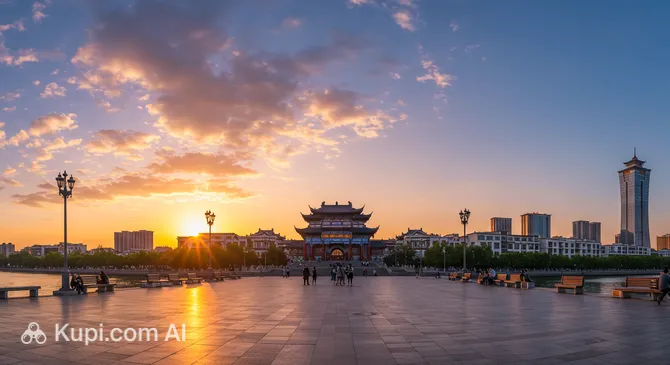
Yanjiang is a dynamically developing district in the heart of China's Sichuan Province and part of the Ziyang prefecture-level city. Located in the picturesque Sichuan Basin, the city serves as a vital transport and cultural hub connecting the region's largest metropolises—Chengdu and Chongqing. The atmosphere here is steeped in traditional Sichuanese hospitality and the leisurely pace of life along the banks of the mighty Tuojiang River.
Yanjiang's geographical position defines its status as the "eastern gateway" to Chengdu. With a population of over 2.5 million, the city blends the features of a modern industrial center with the ancient traditions of Sichuan. Its mild subtropical climate and abundant greenery make strolls along the city's embankments pleasant throughout the year.
Yanjiang. Illustration.
Source: Kupi.com AI
Tourists are drawn here by the unique opportunity to experience authentic China without the overwhelming crowds. Yanjiang is famous for its parks, its proximity to the renowned Anyue Buddhist caves, and its magnificent local cuisine. The region's rich heritage is evident in the architecture of its old quarters and the preservation of local crafts, making the city a must-visit for those seeking a deep dive into the culture of Southwest China.
Weather Overview
The climate in Yanjiang is typical of the Sichuan Basin: it is characterized by high humidity and a mild change of seasons. Summers here are hot and muggy, with average temperatures in August around 28.5°C, though it feels significantly higher due to the humidity. Winters are short and quite mild, although the sky is often overcast or foggy. In January, the average temperature stays around 7.8°C, and frost is extremely rare.
Precipitation is unevenly distributed throughout the year, peaking in the summer months. July is the wettest month, accounting for a significant portion of the annual rainfall. Expect humid summers with frequent thunderstorms and dry, foggy winters. Detailed weather in Yanjiang will help you more accurately choose your wardrobe before your trip.
The best time to visit the city is spring (March-May) and autumn (September-November). During these periods, the most comfortable temperatures for walking in the parks and along the Tuojiang River are established, and the likelihood of prolonged rain is significantly lower than in the height of summer.
Average monthly temperature
Average monthly precipitation
Interesting Facts
Transport Hub: Yanjiang occupies a strategic position on the route of China's first high-speed railway between Chengdu and Chongqing.
River Traditions: For centuries, the city's life has been inextricably linked to the Tuojiang River, which was the region's main trade route before the advent of railways.
Citrus Land: The city's surroundings are famous for their lemon plantations; the Ziyang area is considered one of the largest lemon producers in China.
Ancient Roots: Archaeological research in this zone confirms the existence of settlements dating back thousands of years, making this area one of the oldest inhabited places in Sichuan.
How to Get There
Yanjiang boasts excellent transport accessibility thanks to its location between the two largest metropolises of Southwest China. Most travelers arrive here via the international airports of neighboring cities before transferring to high-speed trains. To plan your trip, it is useful to check routes to Yanjiang to choose the most comfortable option.
The main aviation hub for the region is Chengdu Tianfu International Airport (TFU), which is located in close proximity to Ziyang. This is a modern airport with a vast number of domestic and international flights. From here, you can reach the center of Yanjiang by high-speed train or taxi in approximately 30-40 minutes.
Railway travel is the most convenient way to get around. Ziyang Railway Station handles high-speed trains running between Chengdu and Chongqing. The journey from Chengdu takes only about 25-30 minutes, making Yanjiang easily accessible even for day trips. The stations are equipped with modern navigation, and tickets can be easily booked online or purchased at ticket offices.
One of the main highlights of Yanjiang is its natural and spiritual heritage. While the district is actively being developed with modern buildings, its surroundings hide true treasures. First and foremost, the scenic views of the Tuojiang River, the city's lifeblood, are worth noting. The riverside walking areas are a favorite spot for both locals and visitors wishing to enjoy the tranquility of the water and the evening lights of the bridges.
For those interested in culture and religion, a visit to Banruo Temple and other local Buddhist shrines is a must. The region also serves as an excellent base for a trip to the famous Anyue Rock Carvings located nearby. These ancient rock-cut reliefs are striking in their detail and artistic value, serving as a significant monument of Buddhist art in China.
In the heart of the city lies the Ziyang Museum, where you can explore archaeological finds detailing the lives of people in this part of Sichuan over millennia. The exhibits include ancient ceramics, bronze items, and artifacts discovered during the construction of modern infrastructure. It is an ideal place for those wanting to understand the historical context of Yanjiang's development.
Local Cuisine
The cuisine of Yanjiang is a classic embodiment of Sichuan culinary traditions, known for their bold use of chili peppers and Sichuan peppercorns, which cause a pleasant numbing sensation. The main dish worth trying is the famous Sichuan Hot Pot (Huo Guo). Local establishments offer a rich selection of ingredients: from fresh meat and vegetables to unique local delicacies, all cooked right at your table in a fragrant and spicy broth.
The region is also famous for its noodle-based snacks and dishes made from river fish caught in the Tuojiang. Be sure to try Mapo Tofu and garlic-flavored fish—these dishes are prepared here with a special local flair. Don't forget to sample the local citrus fruits, especially the lemons grown in the area, which are often used to make refreshing drinks and desserts.
The food culture in Yanjiang is very approachable: the best culinary discoveries often await you in small street stalls and at night markets, where food is prepared right in front of you. Locals value fresh products and a balance of flavors. Various types of green tea are traditionally served as a drink, helping to manage the spiciness of the dishes and aiding digestion.
Travel Tips
Preparing for your trip to Yanjiang will help make your journey as comfortable and rewarding as possible. Here are some practical tips from experienced travelers:
Clothing and Essentials: Sichuan has high humidity, so bring light, breathable clothing for summer and warm layers for the damp winter. Be sure to bring an umbrella or a raincoat—rain is frequent here.
Transport: Install the Didi app for ride-hailing and Baidu Maps or Amap for navigation, as Western services may not function correctly.
Finances: China is a cashless country. Link your card to Alipay or WeChat Pay in advance. Cash (Yuan) should only be kept as a backup for small stalls.
Health: Drink only bottled water. If you are not used to spicy food, always specify when ordering at a restaurant: "bu la" (not spicy).
Communication: English is not widely spoken. Download an offline translator and keep a hotel card with the address in Chinese characters.
Local Etiquette: Greet people with a slight nod. In Sichuan, politeness and a relaxed pace are valued; don't be surprised if you are invited for tea—it's a sign of goodwill.
What to Avoid: Do not engage in political discussions and try not to photograph people without their explicit consent, especially in temples.
Additional Tip: Try to time your visit with one of the local festivals to see street performances and try seasonal treats.
Yanjiang will reveal the real, non-touristy China to you if you are open to new experiences and local traditions. Enjoy your trip!
Entertainment & Nightlife
Entertainment in Yanjiang largely reflects the traditional Sichuanese lifestyle, where relaxation and socialization play a key role. In the evening, the Tuojiang River embankment becomes the epicenter of life, with numerous cafes and teahouses opening their doors. Here, you can see locals playing mahjong, practicing tai chi, or simply enjoying the cool air by the water. For fans of shopping and modern entertainment, there are shopping centers, particularly around the central squares, which often host light shows and local festivals.
The city's nightlife is quieter compared to neighboring Chengdu, but it possesses its own unique charm. The Jiangcheng area features bars and restaurants that stay open late, offering local snacks accompanied by modern music. For tourists, it is a safe and friendly place to feel the true rhythm of provincial China. The most convenient way to get around in the evening is by taxi, which can be easily hailed via popular apps.
During the day, it's worth visiting city theaters or cultural centers, which occasionally host Sichuan Opera performances featuring the famous art of face-changing. This vibrant and dynamic show is an excellent addition to any cultural program. The city's parks also offer many activities, from boating to participating in mass square dancing, allowing you to feel like part of the local community.
Parks & Museums
The main place for walks in Yanjiang is Mandarin Duck Lake Park. This is a picturesque space with ponds, shaded alleys, and traditional pavilions. The park is ideal for morning exercises or a quiet evening rest. Here you can see locals practicing water calligraphy on the pavement or flying kites, which creates a unique atmosphere of comfort.
Another natural area worthy of attention is Mt. Jinshan Forest Park. It offers more active recreation with hiking trails through dense greenery. The hilltops offer panoramic views of the Tuojiang River bends and the modern development of Yanjiang, allowing you to appreciate the scale of the city surrounded by nature.
The cultural program should be complemented by a visit to the Ziyang Museum. Its exhibits are dedicated not only to the history of the Yanjiang district but also to the paleontological finds of the region (including the remains of "Ziyang Man"), as well as the development of local agriculture and crafts. This place helps to gain a deeper understanding of how ancient civilizations transformed into a modern industrial center.
Getting Around
The public transport system in Yanjiang is focused on the convenience of locals and visitors, providing reliable connections between residential quarters, shopping areas, and the embankment. The core consists of bus routes that cover the entire district and link the center with the outskirts. Buses run regularly, and the fare is extremely low, making them the most budget-friendly way to get around.
Mobile payment systems or cash (it is better to have small bills or coins) are most often used to pay for bus fares. Information boards at stops are usually in Chinese, so tourists are recommended to use navigation apps on their smartphones to plan routes. There is currently no metro in Yanjiang, but the high density of the bus network compensates for this inconvenience.
An alternative to public transport is taxis and ride-hailing services (such as Didi). This is a fast and comfortable way to get anywhere in the city, especially in the evening. Electric scooters and bicycles are also popular and can be found everywhere on the streets. A bike ride along the Tuojiang River is not just a mode of transport, but also a great opportunity to see the city from a different perspective.
Accommodation
A wide range of accommodation options is available for tourists in Yanjiang, from modern business hotels to cozy guesthouses. Most hotels are concentrated in the central part of the district, near the embankment and administrative centers. This is the most convenient area to stay, as it provides easy access to major transport hubs and restaurants.
If you prefer international standards, the city features well-known Chinese and international mid-range hotel brands offering comfortable rooms with breakfast and Wi-Fi. For those looking to save, there are numerous local hotels that provide basic comfort at very reasonable rates. During peak seasons, such as Chinese New Year or the "Golden Week" in October, it is recommended to book accommodation in advance.
Special attention should be paid to hotels with views of the Tuojiang River—panoramic views of the water and city lights will add romance to your trip. The price range in Yanjiang is significantly lower than in neighboring Chengdu, making it an excellent choice for those seeking quality accommodation at an affordable price. Most bookings are made through major international or specialized Chinese services.
Nearby Cities
Yanjiang serves as a magnificent starting point for exploring the central part of Sichuan Province, offering travelers quick access to the region's cultural and natural treasures. Thanks to the developed railway network, many interesting cities are just an hour's ride away.
First and foremost, you should visit the metropolis of Chengdu, the provincial capital. This is the city of pandas, ancient temples, and endless teahouses. Also of interest is the city of Neijiang, known for its sugar-making traditions and picturesque parks. For those who want to see the authentic lifestyle of small settlements, places like Baiheqiao or Daying are ideal.
Exploring the surroundings of Yanjiang will allow you to see the diversity of Sichuan landscapes—from endless fields to misty river valleys. Each of these directions will provide new impressions of China's deep interior.
Shopping & Souvenirs
Shopping in Yanjiang offers a pleasant mix of modern shopping malls and traditional markets. The main shopping areas are concentrated around South Road and Xinhua Avenue. Here you will find large complexes such as Tianrun Plaza, which features both popular Chinese clothing and electronics brands and international labels. These are convenient places for shopping in comfort, complete with relaxation areas and food courts.
If you are looking for something unique, head to the local markets and specialized shops. Yanjiang and the surrounding Ziyang area are known for their agricultural products. Excellent souvenirs include lemon-based products: dried fruits, teas, and sweets. The region is also famous for Sichuan silk and folk crafts, which can be found in small shops in the old part of the city.
Shops typically operate from 10:00 to 21:00 or 22:00, seven days a week. Payment in most places is made via mobile apps (Alipay, WeChat Pay), but large shopping centers also accept bank cards. In markets, cash may still be useful, and a little bit of bargaining can help you purchase souvenirs at a better price.