Support

Dazu

About

Dazu is an amazing city located in the picturesque Chongqing province in the southwest of the country. Geographically, it stretches among green hills and fertile plains, which gives it a special atmosphere of comfort and tranquility. For those who want to see authentic China, this place will be a real discovery, far from the hustle and bustle of typical tourist metropolises.

With a population of about one million people, the city harmoniously combines the rhythm of modern life and the spirit of antiquity. Administratively, it is part of the Chongqing municipality and is known as one of the region's most important cultural centers. Despite industrial development, it has preserved its original character and traditional way of life, attracting travelers.

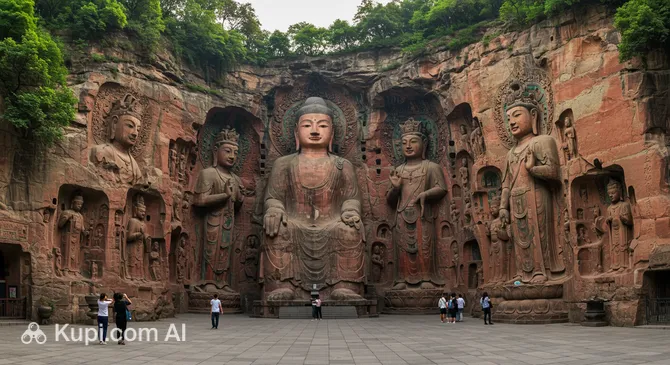
Dazu. Illustration.
Source: Kupi.com AI

Ancient trade routes once passed through these lands, connecting major cultural centers. The rich history of Dazu is woven from legends, the aromas of street food, and the echoes of Buddhist prayers. Walking through the streets, you can immerse yourself in the atmosphere carefully preserved by the locals and feel like a true explorer.

The main attraction that brings guests from all over the world here is the famous Dazu Rock Carvings. This unique monument of art, along with the opportunity to touch ancient traditions, makes the trip unforgettable. If you are looking for a place where you can relax your soul and see the grand heritage of the past, Dazu is definitely worth including in your itinerary.

Weather Overview

The climate in Dazu is mild and highly humid, which is typical for the entire Chongqing region. Winters here pass without severe frosts and with minimal precipitation. In the coldest month, January, the average temperature is about 8.0°C, and the thermometer rarely drops below 5.0°C. This is a fairly comfortable time for sightseeing without the crowds of tourists, as the number of rainy days in winter is minimal.

With the arrival of spring, the city blooms, and the temperature rises steadily, reaching an average of 22.3°C in May; however, the warmth brings rain — the number of rainy days increases to 18 per month. Summer in Dazu is hot: in August, the average temperature stays around 29.4°C, and daytime highs often exceed 33°C. Expect a hot summer with periodic rain and cool, relatively dry winters.

Autumn brings long-awaited freshness, especially in October, when the heat subsides to a comfortable 18.1°C. To ensure your trip goes as smoothly as possible, we recommend checking the weather in Dazu in advance of your trip and bringing an umbrella or raincoat if you plan to visit during the warmer months.

Average monthly temperature

Average monthly precipitation

Interesting Facts

In addition to its grand attractions, Dazu holds many fascinating secrets and details that often escape the average tourist's eye. This city is a real treasure trove of stories frozen in stone and living in local traditions.

  • Stone Encyclopedia of the Three Teachings. The Dazu Rock Carvings are unique in that they harmoniously combine symbols of three philosophical and religious movements at once: Buddhism, Taoism, and Confucianism. More than 50,000 statues create a unified stone epic that was crafted over centuries, beginning in the 7th century.

  • The Vision of Monk Zhao Zhifeng. The famous complex on Baodingshan Mountain was created under the guidance of one man — the monk Zhao Zhifeng. He dedicated his entire life to this project, and the sanctuary's location in a natural circle-shaped depression symbolizes the endless cycle of existence and the search for harmony with nature.

  • Everyday Life in Stone. Unlike many other religious monuments, here you can see not only deities and mythical creatures but also detailed scenes from the everyday life of ancient Chinese people. The masters captured the life of ordinary people with amazing accuracy, making the sculptures feel alive and relatable even centuries later.

  • Living Tradition of Craftsmanship. The art of stone carving in Dazu is not a thing of the past. Locals carefully pass on the secrets of this craft from generation to generation, preserving the ancient stone-processing techniques used by their ancestors to create the great monuments.

How to Get There

When planning a trip to the famous rock carvings, it is important to think through your route in advance. Since Dazu is located near major metropolises, getting here is easy. You can find out more about how to get to Dazu on a separate page, and below we will look at the main transport hubs through which it is most convenient to reach this region.

The city of Dazu itself does not have its own airport, so most tourists arrive via the airports of nearby major cities. The most convenient and popular option is Chongqing Jiangbei International Airport (CKG) in Chongqing. It is located about 87 km from Dazu. This is a major transport hub with a huge passenger flow, receiving flights from all over the world. The journey from the airport to the city by taxi or bus will take approximately 2 hours and 30 minutes.

An alternative option could be Chengdu Tianfu (TFU), located in the city of Chengdu. This is a modern and very large airport, but it is further away — about 158 km from Dazu. The car trip from here will take about 4 hours and 20 minutes. This option is convenient if you plan to combine a visit to Dazu with a trip to Sichuan Province.

For clarity, here is a summary of the main airports located in relative proximity:

AirportPassenger trafficDistance
Chongqing Jiangbei International Airport44.7 mln87 km
Nanchong Airport981 361143 km
Chengdu Tianfu54.9 mln159 km
Chongqing Xiannyushan Airport54 427185 km
Zunyi (Maotai)1.6 mln193 km

The railway is another excellent way to reach the region, given China's developed high-speed train network. Among the nearest major hubs is Chongqing West Railway Station, located in Chongqing, about 66 km from Dazu. This is one of the region's most important stations with a very high passenger flow. The journey from the station to Dazu by car will take about 2 hours.

It is also worth mentioning Shapingba Railway Station, which is also in Chongqing, about 63 km from your travel destination. This is a convenient transfer point from where you can reach Dazu by taxi or bus in about 1 hour and 55 minutes.

Below is a table with information about the nearest railway stations:

StationPassenger trafficDistance
Shapingba Railway Station6 mln63 km
Chongqing West Railway Station42 mln66 km
Neijiang North Railway Station2.2 mln73 km
Chongqingbei Railway Station35 mln76 km
Wanzhou North Railway Station5.5 mln292 km

Main Attractions

The main magnet for travelers in this region is undoubtedly the world-famous cultural heritage — the rock carvings. However, Dazu can offer not only ancient shrines but also picturesque natural spots for a peaceful getaway. Below are the key places that you should definitely include in your visit program.

Baodingshan Rock Carvings is perhaps the most impressive part of the complex, located about 15 kilometers from the city center. This large-scale ensemble was created under the guidance of the monk Zhao Zhifeng and is a grand horseshoe of stone dotted with thousands of statues. The jewel of the collection is the statue of the Thousand-Hand Guanyin, covered in gold leaf. Tourists are struck here not only by the skill of the ancient sculptors but also by the narrative of the compositions: here you can see scenes of Buddhist hell and heaven, as well as touching sketches of everyday life.

If you appreciate sophistication and detail, head to the Beishan Rock Carvings. They are located just 2 kilometers from the city and are historically older than the Baodingshan complex. The statues here are distinguished by incredible grace and elegance, for which they are often called the "Gallery of Oriental Beauty." In contrast to the monumentality of Baodingshan, Beishan offers a more intimate atmosphere where you can endlessly examine the delicate facial features and folds of the robes of the stone statues.

For those who want to take a break from history and enjoy nature, Longshui Lake is an excellent choice. It is a picturesque body of water located at the foot of the mountains, where you can rent a boat and take a relaxing trip on the water. The lake is surrounded by dense vegetation, and there are thermal springs on its shores, making it an ideal place to recharge after long excursions through the stone caves.

Local Cuisine

Dazu cuisine is a vivid reflection of the gastronomic traditions of the Chongqing region, where food is considered a true cult. People here love rich flavors, an abundance of spices, and the freshest products. For travelers, this is an opportunity not just to satisfy hunger, but to embark on an exciting culinary adventure full of the aromas of chili pepper and spices.

The city's signature dish is rightfully considered the famous "Dazu Noodles". This dish features a special texture: the noodles are thin and elastic, and they are served in a thick, rich broth with signature seasonings. Another important element of the local menu is river delicacies. Thanks to the proximity to water bodies, restaurants always feature dishes made from fresh fish, which is cooked with plenty of vegetables and local sauces.

For lovers of spicy sensations and long dinners, it's a must to try "huoguo". This is the local version of "hotpot," popular throughout the region. The dining process here turns into a ritual: guests choose the ingredients themselves and boil them in a simmering fragrant broth set in the center of the table. To balance the fiery spiciness of the dishes, locals often order herbal teas, sweet and sour fruit drinks, or light local beer, which perfectly refreshes the taste buds.

The street food culture in Dazu is incredibly strong. At lively markets and shopping streets, you can grab a snack literally on the go. Be sure to try the street skewers known as "chao chang" and hot, crispy flatbreads filled with herbs, baked right in front of you. If you are lucky enough to catch one of the regular food festivals, you can not only taste the best treats but also attend master classes on their preparation. And as a delicious souvenir from local farmers' markets, tourists often take home homemade sauces, spicy herbs, and seasonal fruits.

Travel Tips

A trip to Dazu is an immersion into deep history and unique culture, but even the most exciting adventure requires proper preparation. To ensure your trip to the famous rock carvings is easy, comfortable, and worry-free, we've gathered a list of the most important practical recommendations for you.

  1. Clothing and Equipment. The climate in the region is humid, so in summer prefer light, breathable fabrics, and in winter be sure to bring a warm jacket and thermal underwear, as it can be cool indoors. Since visiting the Baodingshan and Beishan complexes involves long walks up stairs and hills, comfortable shoes are your top priority. For visiting temples, choose modest clothing that covers shoulders and knees.

  2. Transport. There is no metro in the city itself, so it is most convenient to get around by taxi or bus. To call a car, we recommend installing the DiDi app (the Chinese equivalent of Uber) in advance and linking a card to it, or asking hotel staff to write the destination name in Chinese characters for the taxi driver. Renting a car without a Chinese driver's license is impossible.

  3. Finances. The official currency is the yuan. Unlike many countries, China has almost entirely switched to digital payments. International Visa and Mastercard cards are rarely accepted, mostly in major hotels. We strongly recommend setting up Alipay or WeChat Pay for tourists before your trip — this will save you from many problems. Also, keep a small supply of cash for small shops.

  4. Health and Safety. Dazu is a safe city for tourists. Pharmacies can be identified by a green cross sign, but pharmacists rarely speak English, so have photos of the necessary medicines or an online translator ready. You must not drink tap water — buy bottled water. In the summer, be sure to use insect repellent and sunscreen.

  5. Communication. English is not widely spoken here; even at tourist ticket offices, communication can be difficult. Your smartphone will be your main assistant: download an offline translator (such as Baidu Translate) and maps. Remember that common Western messengers and social networks are blocked, so take care of roaming or purchasing a special tourist SIM card (eSIM) in advance.

  6. Local Etiquette. Greetings are usually limited to a nod or a slight bow. In restaurants, it is common to order several dishes "for the table" to share. Tipping is not expected in China and may be met with confusion; the best way to show gratitude is a polite "Xie-xie" (Thank you).

  7. What to Avoid. It is strictly forbidden to touch the rock carvings and statues. Oils and moisture from fingers destroy the ancient pigment and stone. Also, avoid photographing people praying or the interiors of active temples without permission — this is considered a sign of disrespect.

  8. Planning Tip. The Baodingshan mountain complex is very popular, and large groups of tourists gather there by lunchtime. Arrive at opening time (around 8:30–9:00 AM) to enjoy the mystical atmosphere in silence and take great photos without crowds in the background.

We hope these tips help you feel confident and allow you to focus on the main thing — contemplating the great cultural heritage of Dazu. Be open to new experiences, and this city will surely reciprocate!

Entertainment & Nightlife

Nightlife in Dazu is noticeably different from the bustling metropolises like Beijing or Shanghai. Here you won't find huge rave clubs thumping until dawn; however, the city has its own unique evening charm. After sunset, Dazu plunges into an atmosphere of relaxation, neon lights, and street food aromas. The main center of attraction in the evening is not dance floors, but lively streets where locals gather to socialize, eat delicious food, and relax after a workday.

The heart of evening entertainment is the night markets. This is the true quintessence of local culture. A democratic atmosphere reigns here: there is no strict dress code, and it’s noisy and fun all around. Tourists can try the famous Chongqing skewers, fried fish, and spicy snacks accompanied by local beer. The streets adjacent to the shopping centers in the central part of the district turn into a gastronomic paradise where life buzzes late into the night. This is the best place to feel the real rhythm of the city.

If you are looking for more classic entertainment, check out the numerous KTV (karaoke clubs). In China, this is the most popular form of leisure: groups of friends rent private rooms with good sound, order drinks and fruit platters, and sing songs until morning. There are also cozy bars in the city, often with live acoustic music, where you can sit quietly with a cocktail. The crowd here is friendly, and prices for drinks and entry are significantly lower than in the center of Chongqing.

In terms of safety, Dazu is a very quiet place. You can safely walk along the well-lit central streets even late in the evening. For getting around at night, it is best to use official taxis or ride-hailing apps — it's fast, safe, and inexpensive. Most establishments close around 2:00 AM, though some street cafes may stay open until the last customer.

Speaking of entertainment, we must also mention daytime leisure, which harmoniously complements the evening program. During the day, it's worth visiting the Dazu Rock Carvings Museum, where you can dive deeper into the historical context of the region's main attractions, or take a walk through the picturesque city parks where locals practice Tai Chi. Fans of performing arts might be interested in the local theater, where performances related to traditional Chinese culture are periodically held.

Parks & Museums

Dazu is not only a famous treasure trove of stone architecture but also a city where nature harmoniously complements the historical heritage. In addition to the world-famous sculptures, travelers will find picturesque green areas for peaceful relaxation and modern museum spaces that help to understand the cultural context of the ancient masters more deeply.

Among the natural attractions, Beishan Park deserves special attention. This is not just the area around the ancient carvings, but a complete landscape zone located on a hill. Climbing stone steps through a thick forest, tourists can enjoy fresh air and panoramic views of the city. The park features an ancient pagoda that adds charm to the landscape. This is an ideal place for those who want to combine light trekking with nature contemplation.

For lovers of waterscapes, Longshui Lake is a real find. This vast body of water, surrounded by mountains, is often called "Chongqing's West Lake." Here you can rent a boat and sail between small islands while watching birds. The park area around the lake is equipped with walking paths and picnic spots. This is a great location to take a break from the excursion program and enjoy the silence away from the city bustle.

The region's main cultural and educational center is the Dazu Rock Carvings Museum. Located at the foot of Baodingshan Mountain, this large-scale modern complex serves as the key to understanding the entire historical heritage of the area. Its halls feature not only copies of statues and archaeological finds but also multimedia exhibitions telling the story of the development of Buddhism, Taoism, and Confucianism in this region. Visiting the museum before exploring the caves themselves will help you better understand the narratives of the stone carvings.

Insider tip: if you have time, head to the vicinity of Baodingshan at sunset. By this time, tourist groups have already left, and the park areas take on a special mystical atmosphere. The silence, broken only by the sounds of nature, and the soft evening light allow you to see the ancient sites from a completely different perspective, creating a sense of total solitude with history.

Getting Around

The public transport system in Dazu is much simpler than in the huge neighboring metropolis of Chongqing. Since it is a district center, there is no subway system here, and the main load of passenger transport falls on an extensive network of bus routes and taxi services. The city is quite compact, making travel around it fast and straightforward even for first-time visitors.

Buses are the most affordable and popular way to get around. The fleet is modern, and most interiors are air-conditioned, which is a lifesaver in hot, humid weather. For tourists, special tourist routes are most relevant, connecting the city center, the bus station, and the "Dazu South" high-speed railway station with the main attractions — the Baodingshan and Beishan rock carvings. Note that stop announcements are often duplicated in English, but the scrolling display may only be in Chinese characters.

Payment for bus fare in Dazu, as in the whole region, is highly digitalized. The most convenient way is to use a QR code in the Alipay or WeChat apps (via the "Transport" or "Ride Code" mini-programs). If you don't have Chinese apps set up, you can pay in cash by dropping money into a special box next to the driver. Important to remember: the driver does not give change, so prepare small bills or coins in advance (usually, the fare costs about 2 yuan, though it may be higher on long tourist routes).

Taxis serve as a great alternative to buses and are relatively inexpensive here. Official cars have a characteristic color scheme (usually yellow or green) and are equipped with meters. Taking a taxi is the easiest way to get from the railway station to your hotel, as the station is quite far from the center. We strongly recommend using the DiDi app (the Chinese equivalent of Uber), which is built into Alipay or available as a standalone app in English. This will save you from language barrier problems since the destination point is selected on a map.

For short trips around the city center, bike-sharing services are perfect. On the sidewalks, you will see many blue (HelloBike) or yellow (Meituan) bicycles. To use them, you need to scan the QR code through the corresponding app. This is a cheap and pleasant way to see residential neighborhoods or get to the nearest restaurant, though keep in mind that the terrain in Dazu is hilly in places.

Transport in the city starts early, around 6:00–6:30 AM, but finishes running quite early compared to major metropolises. Most city bus routes stop running between 7:00 PM and 9:00 PM. Taxis and online ride-hailing services work 24/7, but fares may be slightly higher at night. When planning a trip to the Baodingshan caves, try to leave in the morning so as not to depend on the schedule of the last return buses.

Accommodation

The choice of accommodation in Dazu is diverse enough to satisfy the needs of both budget backpackers and comfort seekers. Since the city is a popular tourist destination thanks to its cultural heritage, a developed hotel infrastructure has formed here. Travelers can choose between inexpensive youth hostels, classic mid-range business hotels, and resort complexes with elements of traditional Chinese architecture.

When choosing a place to stay, it is worth focusing on two main areas. The central part of the city (Longgang District) is the most practical option. Staying here, you will be in the thick of things: numerous restaurants, night markets, and supermarkets will be nearby. This is a strategically convenient point for those who plan to move around by public transport, as it's easy to reach bus stations from here. In the evening, you can walk along the lively streets and feel the rhythm of local life.

The second popular location is the vicinity of Baodingshan Mountain. This area is suitable for those seeking privacy and a relaxed atmosphere. Hotels here often position themselves as resorts, offering more spacious rooms and green territories. The main advantage of staying in this zone is the walking distance to the main rock carvings. You can head out to see the sights early in the morning, ahead of the main groups of tourists arriving from the center or from Chongqing.

An important booking tip: if you are traveling during peak season (for example, during the "Golden Week" in October or Chinese New Year), you should look for accommodation several weeks in advance, as the best options are quickly taken. For foreign tourists, it is critical to check in advance whether the chosen hotel has a license to accommodate foreigners (in China, not all hotels have the right to host guests without a Chinese ID card). This information is usually indicated on booking pages or can be clarified through support services.

The price range in Dazu will pleasantly surprise you with its affordability compared to major metropolises. Budget accommodation will cost very little, mid-level options offer excellent value for money, and staying in luxury hotels or resort areas will cost more but still remain accessible. It is most convenient to book rooms through large international or Chinese online platforms, which guarantees reliability and price transparency.

Nearby Cities

For those who want to explore the surrounding area, Dazu serves as an excellent starting point for day trips to several interesting nearby places:

The absolute leader for a short trip is Chongqing, located just 75 kilometers away. It is a huge metropolis known as the "City of Mountains," which amazes with its futuristic landscape, multi-level roads, and magnificent night views. People come here to try authentic spicy hotpot, walk through the ancient Ciqikou quarter, and see the famous Hongya Cave, which resembles scenes from an anime.

Lovers of culture and art should visit Neijiang, located about an hour's drive away. This city is often called the "Sweet City" due to its historically developed sugar production. In addition, Neijiang is known as the birthplace of Zhang Daqian, one of the most celebrated Chinese artists of the 20th century; here you can visit a memorial garden and museum dedicated to his work.

Another interesting destination is Luzhou, located at the confluence of the Yangtze and Tuo Rivers. The city is famous for its ancient winemaking traditions: it is home to China's oldest continuously operating fermentation pits for baijiu production, which are listed as national heritage. This place attracts those interested in the history of Chinese crafts and picturesque river landscapes.

CityPopulationDistance
Longchang16 24050 km
Dadukou1 214 12168 km
Neijiang3 702 84771 km
Hejiang633 21074 km
Chongqing12 135 00075 km

These nearby destinations provide insight into the diverse culture and landscapes of the region, complementing the experience of visiting the ancient Dazu carvings.

Shopping & Souvenirs

Shopping in Dazu is an opportunity to touch the everyday life of a Chinese province and purchase unique locally produced goods. Unlike metropolises with their endless rows of luxury boutiques, trade here is more practical and authentic. Travelers come here not for global brands, but for high-quality handicrafts, local delicacies, and the atmosphere of traditional bazaars, which has been preserved here better than in the country's large commercial centers.

The heart of the city's commercial life is its central part, especially the area around Longgang Square. The main shopping streets here are a lively labyrinth where modern storefronts stand next to small family-run shops. Walking through the pedestrian zones in the center, you will find many clothing, shoe, and accessory stores. This is the best place for a leisurely promenade where you can combine shopping with tasting street snacks.

For those who prefer comfortable shopping in air-conditioned premises, several large department stores and shopping centers operate in Dazu. One of the most popular places among locals is the New Century Department Store complex. It features departments for cosmetics, electronics, mass-market clothing brands, and a large supermarket on the ground floor. This is a one-stop shop where you can buy everything you need, from a suitcase to fresh fruit.

The city's markets provide a special flavor. If you want to see the real China, head to the local food and clothing bazaars. In the morning, life is buzzing here: farmers sell seasonal vegetables, Sichuan peppers, and homemade pickles. In the evening, market squares transform into areas for entertainment and selling small items. Bargaining is expected here, but it should be done with a smile and respect for the seller.

The region's main souvenir brand is the famous "Dazu Hardware". The city is historically famous for its blacksmiths and metal craftsmen. The most popular gifts that tourists take from here are high-quality kitchen knives, scissors, and manicure sets produced locally. Metal from Dazu is valued throughout the country for its strength and durability. Additionally, in souvenir shops near the attractions, you can buy miniature copies of Guanyin statues and albums with reproductions of rock carvings, made with great precision.

Shops in Dazu usually open around 9:30–10:00 AM and work until 9:30–10:00 PM. Small private shops may close later, especially during the summer season. As for payment, as elsewhere in the region, the digital era reigns. Cash is accepted, but change is not always available. The most reliable way to pay is to use the Alipay or WeChat Pay apps, to which you can link a foreign card. International plastic cards (Visa/Mastercard) are practically not accepted in regular shops in Dazu.

The Tax Free system (tax refund) is generally not common in Dazu. VAT refund processing is available mainly in large international shopping centers in central Chongqing or at the airport. Therefore, when making purchases in local shops and markets, expect that the price is final, except for the discounts you manage to negotiate.
Reached the end of the page?

That means the route is fully explored