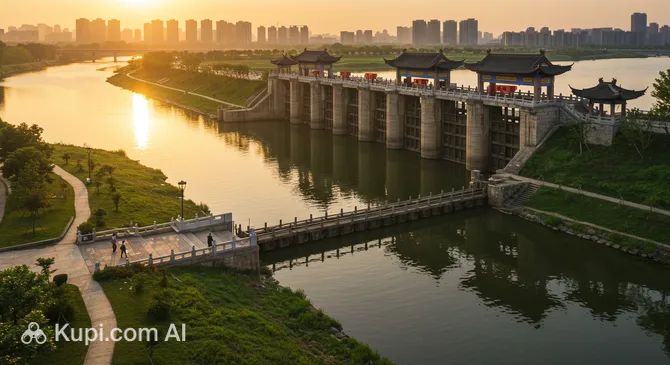
Located in the heart of eastern China, the town of Shuyanzha (the administrative center of Shuyang County) is a harmonious blend of booming urbanism and the deep agricultural traditions of Jiangsu Province. With a population of approximately 1.77 million people, this vibrant hub plays a key role in the economy of the Huaihai region while remaining a place with a distinctive character and a welcoming atmosphere.
Shuyangzha. Illustration.
Source: Kupi.com AI
Geographically, the town is spread across fertile plains, which historically predetermined its status as a major agricultural center. The climate here is temperate monsoon, providing a distinct change of seasons that adds a special charm to the local landscapes. Shuyanzha's rich historical heritage is closely linked to the development of river shipping and trade, which has left its mark on the city's architectural appearance and culture.
One of Shuyanzha's main features is its unofficial status as the "flower capital" of the region — the outskirts of the town are famous for their endless nurseries and gardens. Tourists are attracted by the opportunity to see traditional China off the beaten path, enjoy the tranquility of park areas, and get acquainted with the authentic lifestyle of Jiangsu Province. A visit here is an invitation to discover the sincerity and dynamism of a modern Chinese county.
Weather Overview
The climate in Shuyanzha is characterized as humid subtropical with a strong monsoon influence. This means travelers can expect hot, humid summers and cool, relatively dry winters. The hottest month is usually July, with an average temperature of about 27.8°C, while the coldest is January, when the thermometer drops to 1.8°C. It is worth studying the detailed city climate before your trip to choose the right wardrobe.
Precipitation is unevenly distributed: most of it falls in the summer months, especially in July (averaging 306.8 mm), which is associated with the rainy season. Spring and autumn are the most comfortable periods to visit Shuyanzha, when the weather is mild and pleasant, ideal for strolling through the famous local gardens. Frosts do occur in winter, but heavy snowfall is rare, allowing for comfortable exploration of the city year-round.
Average monthly temperature
Average monthly precipitation
Interesting Facts
Flower Capital: Shuyanzha and its surrounding Shuyang County are considered China's largest base for growing flowers and ornamental trees, with over 3,000 hectares of nurseries.
Demographic Giant: Despite its status as a county center, Shuyanzha's population (about 1.77 million) exceeds that of many European capitals.
Huaihai Hub: The town occupies a strategic position in the Huaihai economic region, serving as an important link between the north and south of eastern China.
Bonsai Traditions: Local masters are famous for their art of creating miniature trees, which are exported from Shuyanzha all over the world.
How to Get There
Shuyanzha is conveniently located within the transport network of Jiangsu Province, making it accessible for travelers exploring eastern China. The town does not have its own airport; however, excellent connections with major transport hubs allow for easy access from anywhere in the country or from abroad.
For those who prefer air travel, the nearest major hub is Xuzhou Guanyin International Airport, located approximately 1.5–2 hours away. Tourists also frequently use the airports in Nanjing or Lianyungang, from which Shuyanzha can be reached by comfortable intercity buses or high-speed trains. A well-developed network of expressways ensures quick connections with neighboring prefectures.
Rail transport is the most practical way to visit the city. Regular trains pass through the local station, connecting Shuyanzha with key cities in the region. Modern stations provide a high level of comfort, and a train journey allows you to enjoy views of the picturesque agricultural lands of Jiangsu Province. More detailed information about routes can be found in the how to get there section.
Station
Passenger traffic
Distance
Huai'an East Railway Station
3
69 km
Lianyungang railway station
6
72 km
Linyi Railway Station
3
114 km
Xuzhou railway station
9
142 km
Yancheng Railway Station
3
155 km
Main Attractions
While Shuyanzha rarely makes it into standard tourist guidebooks, the town and its surroundings hide many interesting spots for the thoughtful traveler. The primary pride of the region is its flower gardens and nurseries, which turn the surrounding fields into a living sea of color in the spring. A walk among endless rows of bonsai, azaleas, and peonies allows you not only to take impressive photos but also to witness the craftsmanship of local gardeners, whose secrets have been passed down through generations.
In the town center, it is worth paying attention to the modern public parks, which become the epicenter of life as evening falls. Here, you can see traditional square dancing, people practicing calligraphy on the pavement, or simply enjoy a quiet stroll along the canals. These places allow you to feel the true rhythm of life in provincial China, which differs greatly from the bustle of megacities like Shanghai.
For those interested in history, a visit to local temple complexes and memorial zones dedicated to the region's prominent figures is a must. Despite modern development, Shuyanzha has preserved corners where the architecture and atmosphere recall the county's centuries-old past, offering tourists quietude and space for reflection amidst the bustle of a modern town.
Local Cuisine
The gastronomic identity of Shuyanzha is inextricably linked to the traditions of Huaiyang cuisine — one of the four great culinary schools of China. The main emphasis here is on the freshness of ingredients and the mastery of knife skills, and the taste of the dishes is characterized by lightness and mildness. Be sure to try the freshwater fish and shrimp caught in local lakes and canals, which are often prepared with delicate sauces based on rice wine.
Among the region's signature dishes are "Lion's Head" (large meat meatballs stewed with vegetables) and the famous Yangzhou fried rice, whose influence is felt throughout Jiangsu Province. Duck soups and various types of dumplings are also popular in local restaurants. Street food enthusiasts should head to the evening markets to find aromatic "shaokao" skewers and the freshest steamed "baozi" buns.
The dining culture in the town includes both formal dinners in large restaurants with lazy Susans and cozy meals in small family-run eateries. For drinks, locals prefer high-quality green tea grown in the province, while for special occasions, they choose local brands of rice liquor or beer. Shuyanzha's food scene is honest and delicious, reflecting the richness of the Jiangsu land.
Travel Tips
Visiting Shuyanzha is a wonderful opportunity to see the real, non-touristy China, and a few practical tips will help make your trip as comfortable as possible.
Prepare payment methods: In Shuyanzha, as in all of China, cash and Visa/Mastercard are rarely accepted. Be sure to install and set up Alipay or WeChat Pay, linking your card to them — this is the primary way to pay for everything from taxis to street food.
Take care of connectivity: Buy a local SIM card immediately upon arrival in China or set up an eSIM. To access familiar services (email, social media), you will need a reliable VPN service.
Use a translator: English is not widely spoken in Shuyanzha. Download an offline translator with a photo translation feature — this will significantly simplify reading menus and communicating with locals.
Dress for the season: Summers in Jiangsu are hot and humid, so bring light clothing made of natural fabrics. Winters can be quite chilly, and central heating is not available everywhere, so layering will be your savior.
In-city transport: To call a taxi, use the Didi app (it is built into Alipay and has an English interface). This will save you from having to explain the address to the driver using gestures.
Local etiquette: Chinese people are very friendly toward foreigners. A polite "Nihao" (hello) and "Xiexie" (thank you) are always appreciated. Try to avoid loud conversations in public places and always ask for permission before taking photos of people.
What to avoid: Do not engage in discussions on political topics and do not drink tap water — use only bottled water, which is sold at every turn.
Health: There are many pharmacies in the city, but medication names will be in Chinese. Bring a basic first-aid kit with the medicines you are used to.
Following these simple rules will allow you to focus on the beauty of the region and enjoy immersing yourself in the unique culture of Jiangsu Province!
Entertainment & Nightlife
The entertainment scene in Shuyanzha is centered around traditional forms of leisure and modern shopping districts. In the evening, the epicenter of activity shifts to night markets and pedestrian streets, where neon signs sit alongside street food stalls. This is the perfect time to dive into the city's lively atmosphere, try local delicacies, and observe the daily life of the residents. In the central areas, you can find karaoke bars (KTV), which are the most popular format for nightlife in China.
For those who prefer a quieter evening, numerous tea houses and modern coffee shops are open, where you can spend time chatting in a cozy setting. Daytime entertainment includes visiting cinemas in large shopping malls and walking in amusement parks geared toward family vacations. Despite the lack of loud international clubs, the atmosphere in Shuyanzha in the evening remains safe and conducive to long walks.
An important part of the city's cultural life is the spontaneous performances in parks, where you can see elements of Chinese opera or folk dances. To get around the city at night, it is best to use official taxis or ride-hailing apps, which operate 24/7 and are relatively inexpensive. Safety in the city is at a high level, allowing tourists to comfortably explore the central streets even late at night.
Parks & Museums
The park culture of Shuyanzha is a reflection of its status as a "garden city." One of the main places for locals and tourists to relax is the extensive landscape parks, where the art of bonsai is elevated to a cult status. Here, you can see rare species of ornamental plants and masterfully designed garden compositions, which are especially beautiful during the spring blossom period. These green zones serve not only as places for walking but also as true living open-air museums.
For those who want to understand the history of the region more deeply, there are local history museums and exhibition halls. They feature displays telling the story of agricultural development, traditional crafts, and famous natives of the county. Shuyanzha's museums often emphasize the connection between people and the land, showcasing unique artifacts found during excavations in the Huai River valley.
Of particular interest are small contemporary art galleries and cultural centers where works by local calligraphers and artists are exhibited. Visiting such places allows you to feel the creative energy of modern China. Even simple walks along the embankments of local canals can replace a museum visit — the architectural forms and monuments here often carry deep symbolism and tell stories of the city's glorious past.
Getting Around
The public transport system in Shuyanzha is organized efficiently and clearly, allowing tourists to easily move between main districts. The core of urban transport consists of bus routes covering both the center and the outskirts of the town. Buses run regularly, they are equipped with air conditioning, and route information is often duplicated on digital displays, making navigation easier.
For fare payment, it is most convenient to use mobile apps (Alipay/WeChat) or a local transport card that can be topped up. Cash is accepted but requires the exact amount as no change is given. The cost of a city bus ride is minimal, making this the most budget-friendly way to get around Shuyanzha.
A popular alternative to public transport is taxis and ride-hailing services (such as Didi). Taxis are easy to recognize by their distinct colors and they operate by the meter. The city also has a well-developed bike-sharing system — thanks to the flat terrain, cycling is a very pleasant and eco-friendly way to explore local parks and embankments. Bikes can be rented through the same mobile apps used for making purchases.
Accommodation
The hotel infrastructure in Shuyanzha is primarily oriented toward business travelers and domestic tourists, which guarantees a wide range of accommodation options at affordable prices. Modern mid-range and high-end hotels are located in the central part of the town, offering a full range of services, including Chinese and Western restaurants, fitness centers, and conference rooms.
For those seeking more budget-friendly options, the city offers many economy-class chain hotels and guesthouses. It is recommended to choose accommodation in the area of central squares or near major shopping complexes to have easy access to transport hubs and main leisure spots. Booking should be done in advance, especially during national holidays and major agricultural exhibitions, when the demand for housing rises sharply.
The price range in Shuyanzha will pleasantly surprise budget travelers: for a moderate fee, you can get a level of service comparable to that of large megacities. When booking through international platforms or popular Chinese services (such as Trip.com), pay attention to whether the hotel has a license to accept foreign citizens, although this is usually not an issue in most modern hotels in the city.
Nearby Cities
Shuyanzha serves as an excellent starting point for exploring eastern China, offering travelers convenient access to the historical and cultural centers of Jiangsu Province. The town's location in the heart of a developed region allows for planning rich day trips, discovering the diversity of Chinese landscapes and architecture.
Just a few dozen kilometers away is the city of Suqian, known as the birthplace of famous Chinese liquor and the picturesque Loma Lake. It is also worth visiting Huai'an — a city with a rich history and magnificent canals, considered one of the cradles of the Huaiyang culinary tradition. For those seeking tranquility, a trip to Siyang is ideal, where you can enjoy river views and get acquainted with the local way of life.
Exploring the surroundings of Shuyanzha provides an opportunity to see how closely modern progress and ancient customs are intertwined in this region. A well-developed network of bus and rail connections makes such trips easy and comfortable, allowing you to get the most out of Jiangsu Province in a short amount of time.
Shopping & Souvenirs
Shopping in Shuyanzha offers a curious mix of modern retail formats and colorful local markets. The city's main shopping streets are concentrated in the central district, where large department stores and shopping malls offer a wide range of clothing, electronics, and home goods from well-known Chinese and international brands. These are excellent places to get acquainted with the high-quality products of China's domestic market.
However, for real treasures, you should head to the specialized flower markets and craft fairs. Given the region's specialization, you can buy unique seeds, garden tools, or elegant ceramics and bamboo products here. Typical souvenirs from Shuyanzha include local tea varieties and folk crafts reflecting the rural traditions of Jiangsu Province.
The city's food markets are a paradise for foodies, where you can find fresh regional delicacies and spices. Most shops are open from morning until late evening, seven days a week. WeChat Pay and Alipay are accepted everywhere as payment methods and have practically replaced cash, although you can also pay with cards in large retail outlets. Don't forget that polite bargaining is appropriate and even welcomed in the markets.