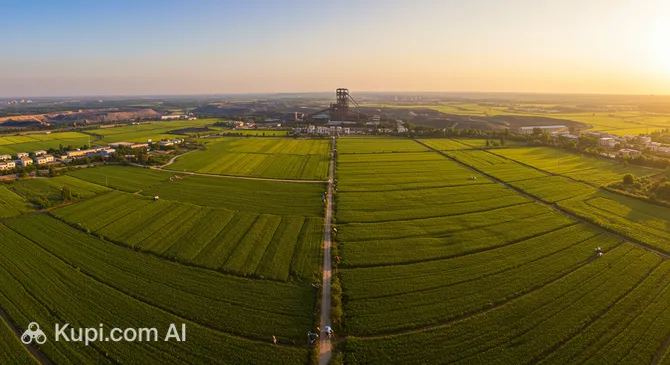
Located in the heart of Jiangsu Province, Pizhou is a harmonious blend of modern China's dynamic development and the serene charm of provincial life. This city, through which the legendary Grand Canal carries its waters, welcomes travelers with a hospitable atmosphere and a rich agricultural heritage. With a population of approximately 1.46 million, it serves as a significant regional center in eastern China.
Pizhou. Illustration.
Source: Kupi.com AI
Pizhou's geographical position at the intersection of vital transport routes has historically defined its role in trade and cultural exchange. If you decide to delve into the rich history of Pizhou, you will discover that these lands have witnessed many pivotal events that shaped the modern region. The city is famous for its endless ginkgo orchards and vast garlic plantations, which transform the surrounding landscapes into picturesque canvases, especially beautiful during the golden autumn.
Today, Pizhou attracts those seeking an authentic Chinese experience away from overcrowded megacities. Here, you can leisurely stroll along the canals, explore local architecture, and enjoy the freshness of green spaces. It is the perfect place for those who want to see the "real" China, where traditions are closely interwoven with daily life, and every street corner might hide a cozy square or a traditional teahouse.
Weather Overview
Pizhou is located in a temperate continental climate zone typical of eastern China, ensuring four distinct seasons. Summers here are usually hot and humid, with peak temperatures in July and August, when the thermometer often rises above +31°C. Winters, by contrast, are cool and quite dry; in January, the average temperature is around +1.6°C, and night frosts are a common occurrence.
Special attention should be paid to the rainy season, which falls during the summer months. July is the wettest month of the year, with precipitation reaching an impressive 333 mm due to monsoon influence. If you are planning a trip to see the golden ginkgo forests, the best time is October and November. During this period, the weather in Pizhou becomes dry and comfortable, with pleasant daytime temperatures around +15...+20°C.
Spring arrives quickly in the city: as early as March and April, the air warms up to a pleasant +15...+22°C, and nature begins to awaken. This is a wonderful time for walks in the parks and along the Grand Canal. It is recommended to bring clothing that can be easily layered, as spring and autumn evenings can be quite brisk compared to the sunny daytime.
Average monthly temperature
Average monthly precipitation
Interesting Facts
World Garlic Capital: Pizhou is one of the world's largest centers for the production and export of white garlic, prized for its pungent flavor and high quality.
Living Gold: The city is home to a vast number of ginkgo trees, including specimens that are centuries old, making the region an important center for the preservation of this unique species.
Grand Canal Hub: The city historically developed as an important station on the Grand Canal, the world's longest man-made waterway and a UNESCO World Heritage site.
Railway Artery: Pizhou is located on the famous Longhai Railway, which connects China's east coast with Central Asia, highlighting its logistical significance.
How to Get There
A trip to Pizhou is an opportunity to see eastern China with its advanced transport network. While the city itself does not have its own airport for long-haul flights, it is conveniently connected to the region's major aviation hubs. The primary way to get here is by rail or intercity buses from neighboring metropolises. Detailed information on routes and logistics can be found by exploring the section on how to get to Pizhou.
The nearest major airport serving the area is Xuzhou Guanyin International Airport (XUZ). It receives flights from many cities in China and some international destinations. From the airport, Pizhou can be reached by taxi or regular bus, with the journey taking about an hour. Travelers also frequently use the airports in Nanjing or Shanghai, subsequently transferring to high-speed trains, which significantly saves travel time.
Railway communication is the most popular and efficient way to travel. Pizhou Railway Station serves trains running along major arteries connecting the east and west of the country. Thanks to modern technology, getting here from Xuzhou or other cities in the province is fast and comfortable. The station is conveniently located, allowing for an easy transfer to local transport or a taxi immediately upon arrival.
Station
Passenger traffic
Distance
Xuzhou railway station
9
75 km
Linyi Railway Station
3
83 km
Lianyungang railway station
6
110 km
Huai'an East Railway Station
3
138 km
Jining Railway Station
3
175 km
Main Attractions
Although Pizhou is not always on standard tourist itineraries, this city is capable of surprising its guests with unique locations. The main artery and pride of the region is the Grand Canal of China—a magnificent engineering feat of antiquity that remains a living monument to history. A walk along its banks allows you to feel the scale of human labor and see how the waterway continues to serve the city's modern needs.
Natural beauty holds a special place in the hearts of travelers visiting Pizhou, specifically the famous ginkgo forests. This tree is considered a living fossil, and some of the world's oldest and most extensive groves are located right here. During the autumn period, when the leaves turn a brilliant gold, the city transforms into a fairytale space, attracting photographers and nature lovers from all over the country. This is the perfect time to appreciate the "gold of China" in all its glory.
For those interested in culture and spiritual heritage, Pizhou offers local temples and pagodas that maintain an atmosphere of tranquility. The architectural details of these structures reflect the traditional style of Jiangsu Province, with its graceful lines and attention to detail. Although the city is actively modernizing, such places allow you to touch the centuries-old traditions of the region and enjoy the silence away from the urban bustle.
Local Cuisine
The culinary traditions of Pizhou are closely linked to the rich Huaiyang cuisine, one of the four great culinary schools of China. Local dishes are characterized by refinement, moderate use of spices, and an emphasis on preserving the natural flavor of the ingredients. As the city is located in an agricultural region, the freshest vegetables are always on the table, and proximity to canals and rivers ensures an abundance of freshwater fish and shrimp dishes.
One of the specialties you must try are dishes using local garlic, which is added here in various forms—from pickled to fried. Various types of braised meat are also popular, especially pork prepared in a sweetish sauce. In street markets, you can find fragrant steamed baozi buns and freshly made noodles, which in Jiangsu Province have their own unique taste and texture.
As for drinks, Pizhou offers a wide selection of famous Chinese teas, including green varieties from neighboring areas. In local restaurants, meals are often accompanied by warm rice wine or light beer. The city's gastronomic scene is best revealed at evening open-air food courts, where you can see the cooking process with your own eyes and enjoy the atmosphere of a true Chinese feast.
Travel Tips
Preparing for your trip to Pizhou will help you feel confident and enjoy every moment of your journey in this hospitable land.
Clothing and Essentials: Choose your wardrobe according to the season: light, breathable clothing and an umbrella are useful in summer, while warm jackets are needed in winter, as it can be cool and damp in Jiangsu. Be sure to bring comfortable shoes for walks along the Grand Canal.
Transport: Install the Didi app for ride-hailing and Baidu Maps for navigation. City buses are a great way to save money, but always carry small coins or 1-yuan bills with you.
Finance: In China, almost everywhere is paid via Alipay or WeChat Pay. Link your card in advance, but keep a small reserve of cash yuan for emergencies. Tipping in restaurants is not customary.
Health and Safety: Pizhou is a safe city, but always carry a hotel business card with the address in Chinese. Pharmacies are common, but it's better to bring specific medications with you.
Communication: English is not widely spoken here. Download an offline translator and learn basic phrases: "Nihao" (hello) and "Xiexie" (thank you)—this always wins over the locals.
Local Etiquette: Chinese people value politeness and restraint. A light bow or a nod of the head is sufficient when meeting. Avoid loud conversations in public places.
What to Avoid: Do not engage in political discussions and try not to photograph military or government facilities without permission to avoid misunderstandings.
Connectivity: Buy a local SIM card at the airport or a major telecommunications office. Remember that a VPN may be required to access familiar social networks.
May your introduction to Pizhou be filled only with pleasant discoveries and the warmth of encounters with the amazing culture of eastern China!
Entertainment & Nightlife
Entertainment in Pizhou is primarily relaxed and family-oriented, reflecting the leisurely pace of life in provincial China. The city's evening life centers around the central squares and canal embankments, where locals gather for traditional dancing and strolls. This is an excellent time to see the city in the soft light of lanterns and feel its true social energy.
For those who prefer more modern forms of recreation, karaoke bars (KTV) are open in the central districts and are an integral part of Chinese leisure culture. Here, you can spend an evening with friends in a private room, enjoying music and drinks. The city's night markets are another place where life teems after sunset; here, you can not only try street food but also purchase souvenirs and local goods in a very lively atmosphere.
Daytime entertainment includes visiting modern cinemas in shopping centers and city parks equipped with relaxation and sports zones. Pizhou is a safe city for night walks, and major establishments usually stay open until late evening. For comfortable travel at night, it is best to use official taxis, which can be easily hailed through popular mobile apps.
Parks & Museums
Pizhou's green zones are a true escape from the urban rhythm. One of the most notable places is Pizhou City Park, where locals enjoy spending time practicing Tai Chi or simply strolling along well-kept alleys. Parks in this region are often designed following traditional Chinese landscape principles, combining water, stones, and elegant pavilions to create an atmosphere of harmony and peace.
For those wanting to dive deeper into local culture, the Pizhou Museum is worth a visit. It houses exhibits detailing the region's history from the Neolithic era to the present day. Special attention is given to Dawenkou culture finds and artifacts related to the development of agriculture and the Grand Canal. Visiting the museum is a great way to understand how a small settlement evolved into a modern agro-industrial center.
Also, one cannot overlook the specialized exhibition zones dedicated to ginkgo culture. These open-air park-museums not only showcase the variety of species of this ancient tree but also tell of its role in Chinese medicine and art. A walk through such places will be especially interesting for botany enthusiasts and anyone who appreciates the aesthetics of nature masterfully integrated into the urban environment.
Getting Around
The public transport system in Pizhou is oriented toward the needs of local residents and ensures convenient movement to all key points in the city. The fleet is primarily composed of buses, with a route network covering both central districts and suburban areas. Buses run regularly, and fares are extremely low, making them the most budget-friendly way to get around. Payment is usually made in cash (you need small bills) or via mobile apps.
Taxis in Pizhou are an affordable and comfortable way to reach your destination, especially if traveling with luggage. Cars can be hailed directly on the street or called via the Didi app, which has an English interface and allows for international card linking. This significantly simplifies communication with the driver, as the destination is entered in the app beforehand.
An alternative to traditional transport is bike-sharing services, which are very popular in Chinese cities. You can find many bright bicycles on the streets of Pizhou that are easy to rent using a smartphone. This is a great option for short trips in good weather, allowing you to better see urban details and enjoy views along the canals. Bus fare validation occurs upon entry, and transport operating hours are usually limited to 9:00 PM – 10:00 PM.
Accommodation
The choice of accommodation in Pizhou is mainly represented by mid-range and business-oriented hotels that offer excellent service at reasonable prices. In the city center, you can find modern hotels belonging to large Chinese chains, where guests are guaranteed comfortable rooms, breakfast, and internet access. This is the most preferable option for foreign tourists, as the staff here are more likely to have experience communicating with international guests.
For those looking for more budget-friendly options, numerous guesthouses and small local hotels are available. These allow you to save on your budget, though it is worth noting that English proficiency in such places may be minimal. It is most convenient to choose accommodation near the central square or the railway station, ensuring easy access to transport hubs and the city's main shopping streets.
If your trip coincides with the ginkgo blooming season (usually November), it is recommended to book your room in advance, as many domestic tourists visit the city during this period. Primary booking methods include international aggregators, but using Chinese apps may provide access to a wider list of local offers. Overall, price ranges in Pizhou remain very democratic compared to coastal megacities.
Nearby Cities
Pizhou serves as an excellent starting point for exploring eastern China, as several historically significant and developed cities are located around it. Convenient transport links allow for planning exciting day trips to see the diversity of Jiangsu and Shandong provinces.
Just a few dozen kilometers away is Xuzhou—a major historical center known for its Han Dynasty museums and terracotta army. This destination is ideal for history and archaeology enthusiasts. Also worth noting is the city of Suqian, famous for its picturesque parks and status as the birthplace of the ancient hero Xiang Yu. For a more tranquil getaway, Zaozhuang is a great choice, where you can visit restored ancient water towns.
Traveling around Pizhou's surroundings will allow you to gain a deeper understanding of the region's culture and see how different cities preserve their unique identities. Regardless of your chosen direction, such trips will enrich your travel experience and provide many vivid impressions of the Chinese province.
Shopping & Souvenirs
Shopping in Pizhou offers tourists an interesting mix of modern shopping malls and colorful local markets. Main shopping activities are concentrated in the central part of the city, where clothing, electronics, and cosmetics stores are located on busy streets. Here, you can find both well-known Chinese brands and everyday goods at very affordable prices.
If you are looking for something unique, be sure to check out the local food markets. Pizhou is famous for its high-quality garlic and ginkgo products (such as leaf tea or nuts), which make excellent and healthy gifts. The region is also known for traditional crafts—you can find elegant bamboo products and textiles that reflect the aesthetics of Jiangsu Province.
The city's modern shopping complexes offer a standard set of entertainment, from shopping to food courts and gaming zones. Stores typically operate from 9:00 AM to 9:00 PM, and markets open early in the morning. Large shopping centers accept bank cards, but for purchases at markets and in small shops, it is highly recommended to have Alipay or WeChat Pay apps installed, as cashless payments via QR codes are the dominant payment method in China.