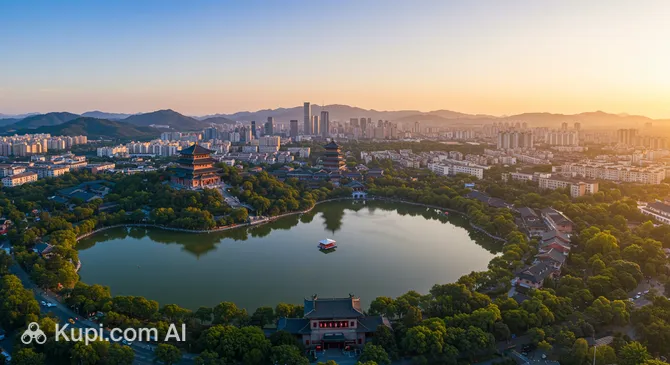
Huainan is a dynamic industrial and administrative center located in the heart of Anhui Province in China. The city lies to the south of the Huai River, which is reflected in its name: "Huai" is the name of the river, and "nan" means "south." This is a place where modern urbanization meets deep regional traditions, creating an atmosphere of authentic, non-touristy China.
Geographically, Huainan is situated on a plain surrounded by picturesque hills, the most famous of which are the Bagong Mountains. According to statistical data, the population of the prefecture-level city is over 2.3 million people. While the city is not a typical tourist "magnet," this is precisely what makes it attractive to those who want to see the steady pace of life in eastern China, free from crowds of foreign travelers.
Huainan. Illustration.
Source: Kupi.com AI
The city's rich historical heritage is closely linked to ancient Chinese medicine and trade. Here, you can learn about local legends and visit herbal medicine markets that highlight the region's special role in the country's culture. Among the natural beauties, Lake Baota and the green zones at the foot of the hills stand out, offering excellent opportunities for outdoor walks.
A visit to Huainan is a chance to look deep into the provincial life of the Celestial Empire, appreciate the hospitality of the locals, and enjoy the tranquility of a region that lives at its own harmonious pace.
Weather Overview
The climate in Huainan is classified as a humid subtropical monsoon climate, which implies a clear change of seasons. Summer here is usually hot and quite humid: average temperatures in July and August reach 28-29°C, and daytime highs often exceed 32°C. The peak of precipitation falls during the summer months, especially in July—expect frequent but warm rains.
Winters in the city are cool and relatively dry. In January, the average temperature is about 3°C, while light frosts down to -1°C are possible at night. Snow falls rarely, but due to high humidity and winds, the cold can feel more piercing. It is best to check detailed information about the weather in Huainan directly before your trip, as the influence of monsoons can bring sudden changes.
The most favorable times for a visit are spring (April–May) and autumn (September–October). During these periods, the air temperature is comfortable (around 17–24°C), the number of rainy days is small, and nature delights the eye with bright colors. This is the ideal time for walking in parks and visiting local attractions without the exhausting heat or winter dampness.
Average monthly temperature
Average monthly precipitation
Interesting Facts
Connection to a Legendary Physician: Locals believe that the history of Huainan is closely linked to Hua Tuo, one of the most famous healers of ancient China, whose image is often found in cultural descriptions of the city.
Geographical Name: The city's name 淮南 (Huainan) literally translates as "south of the Huai River," which accurately defines its position relative to this vital water artery of the country.
Center for Herbal Medicine: Large herbal medicine markets still operate in the city and its surroundings, maintaining the region's status as an important hub in the trade of traditional medicine remedies.
Diverse Landscape: Unlike many strictly flat industrial centers, Huainan boasts a picturesque relief thanks to its proximity to the Bagong Mountains.
Scale of the Agglomeration: Administratively, Huainan is not just a compact city but an extensive prefecture-level city, uniting several districts and counties, each with its own character.
How to Get There
The transport accessibility of Huainan is due to its favorable location in Anhui Province. The city serves as an important hub connecting regional centers, and the ways to get to Huainan are quite diverse, although most routes involve a transfer in larger cities. The main flow of travelers arrives here through the provincial capital, Hefei, using the developed railway network or intercity bus services.
The nearest major aviation hub is Hefei Xinqiao International Airport. Most tourists fly there and then continue their journey on high-speed trains, which cover the distance to Huainan in less than an hour. Direct buses from the airport are also a convenient and budget-friendly option for those who prefer ground transport.
Railway communication is the most popular way to travel in this region. The city has stations that receive trains from various parts of the country, including Shanghai and Beijing. Modern high-speed trains make the trip fast and comfortable, allowing for easy travel planning even for a single day.
Intra-provincial bus travel is also in demand: Huainan's bus stations provide regular connections to neighboring counties and cities. When planning a trip, it is worth considering that the load on transport increases sharply during holidays, so it is better to purchase train tickets in advance via official apps or ticket offices.
Main Attractions
Although Huainan is not among the country's major tourist centers, it offers travelers several unique locations that allow them to feel the spirit of the Anhui region. One of the most famous natural attractions is Mount Bagong (Bagunshan). This hilly area on the outskirts of the city attracts hikers and lovers of picturesque views—it is the perfect place to take a break from the city noise and capture beautiful photos against a backdrop of traditional Chinese landscapes.
Water resources play an important role in the very heart of the city and its surroundings. Lake Baota is a popular spot among locals, featuring cozy embankments for evening strolls. Tourists often note that this is where the city's everyday atmosphere is best felt: families walking by the water, and elderly people practicing gymnastics or calligraphy on the pavement tiles.
For those interested in culture and history, local sites dedicated to traditional Chinese medicine will be of interest. Huainan takes pride in its connections with ancient healers, and visiting local herbal medicine markets or small memorial zones is a great way to broaden one's horizons. Instead of seeking out "big-name" monuments, visitors here should focus on exploring the urban environment: spacious squares, parks, and shopping districts that reveal the real life of a modern regional center.
Local Cuisine
The culinary traditions of Huainan are a vibrant continuation of the famous Anhui cuisine (Hui cuisine), known for its emphasis on natural products and the mastery of braising. You won't find the extreme spiciness characteristic of southern regions here; the local food is rather hearty, aromatic, and healthy. One of the main features of the city's gastronomy is the use of river fish, fresh vegetables, and mushrooms, which abound in the surrounding hills and rivers.
You should definitely try dishes that include tofu. It is believed that many recipes for preparing soy curd originated in this region. Soups and hot snacks with the addition of medicinal herbs also deserve attention—a tribute to the city's medical history. In street markets, you can find delicious handmade dumplings and various types of noodles prepared right in front of you.
As for drinks, in Huainan, as in all of Anhui Province, there is a cult of tea. Local varieties are distinguished by a fresh taste and delicate aroma. Soy drinks and berry decoctions are also popular. It is best to dine in busy family restaurants or food courts in shopping centers, where you can always find freshly prepared dishes at affordable prices. Keep in mind that menus are often presented only in Chinese, so using a translator on your smartphone will be very helpful.
Travel Tips
To ensure your introduction to Huainan is as comfortable as possible and brings only positive emotions, we have prepared several practical recommendations for planning your trip.
Clothing and Gear: Choose your wardrobe according to the season. In summer, the region is humid and hot, so light, breathable fabrics and sun protection are necessary. In winter, it can be quite damp and cool, so a windproof jacket will come in handy. Comfortable shoes are a must for walking through parks and hills.
Transport: The most convenient way to move around is by taxi or ride-hailing apps. If you decide to use buses, have a city map on your smartphone. High-speed trains are best for travel between cities.
Finances: The main currency is the Yuan. In China, mobile payments (Alipay, WeChat) are used everywhere, so it is advisable to set them up in advance. International cards are not accepted everywhere, so always have a small supply of cash with you. Tipping in local establishments is not expected.
Health and Safety: The city is generally safe, but you should keep an eye on air quality on hot days. Pharmacies are common, but medication names will be in Chinese. We recommend drinking only bottled water.
Communication: English is not widely spoken in Huainan. Install an offline translator and save the hotel and station addresses in Chinese characters. For communication, it is better to buy a local SIM card at an official operator's office.
Local Etiquette: Be polite and patient. Loud behavior in public places is discouraged. It is customary to remove your shoes when entering private homes.
Things to Avoid: Do not engage in discussions on political topics and try not to photograph military or government facilities. Use caution when crossing roads—traffic can be very heavy.
Additional Tip: Try visiting the local herbal markets—even if you don't plan on buying anything, it's a unique visual and cultural experience characteristic of this specific city.
Huainan is a city that reveals itself gradually, and these tips will help you feel more confident and enjoy every minute of your journey.
Entertainment & Nightlife
Entertainment in Huainan is primarily geared toward the needs of local residents, allowing tourists to fully immerse themselves in authentic urban culture. Evening life here begins with walks through the central squares and embankments where citizens gather to socialize. The main leisure centers are large shopping and entertainment complexes that combine cinemas, modern cafes, and gaming zones.
For fans of nightlife, the city offers the classic Chinese format—numerous KTV (karaoke clubs), which are extremely popular here. Cozy bar streets and tea houses can also be found in the central districts, where the atmosphere is conducive to long conversations. Although there aren't many large-scale international clubs here, local establishments delight with a friendly welcome and quite affordable prices.
During the day, it is worth paying attention to the city parks and recreation areas. Spontaneous performances by amateur theaters or traditional dance classes often take place here. Huainan is a city of everyday recreation, where the best way to have fun is to join the locals in their usual relaxation rituals, whether it's tasting street food or visiting an evening market.
Parks & Museums
The city parks of Huainan are true oases of tranquility amidst the industrial landscape. One of the most significant places is the park area near Lake Baota. This is a vast space with well-maintained paths, bridges, and gazebos in a traditional style. It is a pleasant place to spend time watching city life or simply enjoying the cool by the water. No less popular are walks at the foot of the Bagong Hills, where the natural landscape is perfect for long hiking routes.
The city's museum life focuses on preserving regional history. The Huainan Municipal Museum offers visitors a chance to see archaeological finds and exhibits telling the story of the region's development from antiquity to the present day. Special attention is paid to the history of resource extraction and local crafts, allowing for a deeper understanding of the city's economic significance for the country.
For those interested in science and culture, small galleries and themed exhibitions dedicated to traditional medicine may be of interest. While Huainan does not possess world-class museums, its cultural institutions are charming in their sincerity and detailed coverage of local traditions, making their visit an informative addition to any tourist program.
Getting Around
The public transport system in Huainan is represented by an extensive network of city buses covering all major districts, from the old center to new industrial zones. Buses are the most budget-friendly way to get around, but for tourists, navigation can be complicated by the lack of English route descriptions. Therefore, it is recommended to download maps with GPS support and online translators in advance.
The most convenient and popular alternative for guests of the city is taxis and ride-hailing services via mobile apps (such as Didi). Trips around the city are relatively inexpensive, and the ability to specify the destination in the app removes the language barrier. Taxis are easily found at special stands near railway stations, shopping centers, and in busy neighborhoods.
For short trips, many residents use electric scooters and bicycles. While city bike-sharing systems are not as developed here as in megacities, renting a bike is quite feasible in some areas. Walking is also comfortable within the central squares and park zones, but it's worth noting that distances between key sites in Huainan can be significant.
Accommodation
The hotel infrastructure in Huainan is primarily geared toward business travelers and domestic tourists, ensuring a wide choice of mid-range hotels and quality apartments. There are virtually no luxury international resorts, but there are many reliable chain hotels offering comfortable rooms at very attractive prices.
The central districts of the city are considered the most convenient areas for accommodation. Staying here gives you quick access to shopping centers, main restaurants, and public transport stops. Hotels located near major transport interchanges and railway stations are also popular, which is especially convenient for those using Huainan as a base for trips around the province.
When booking accommodation, it is recommended to prefer properties oriented toward receiving foreign guests, as there is a higher probability of finding English-speaking staff. During peak seasons, such as the Chinese New Year or "Golden Week" in October, demand for housing increases sharply, so booking should be taken care of several weeks before the trip.
Nearby Cities
Huainan serves as an excellent starting point for exploring the central part of Anhui Province, offering travelers convenient access to neighboring cultural and administrative centers. Thanks to the developed transport network, many interesting cities are only a one-to-two-hour drive away, making them ideal destinations for day trips.
First on the list of must-visit places is Hefei, the provincial capital. It is a modern metropolis with magnificent parks, world-class museums, and a vibrant nightlife. It is also worth paying attention to the city of Bengbu, located very close by, which is known for its historical monuments and picturesque river views. For a more peaceful holiday, Lu'an is suitable, where you can enjoy the natural beauty and silence of provincial China.
Traveling to neighboring cities allows for a better understanding of the region's versatility. Whether it's a trip to the large city of Hefei for shopping or to small counties for unique souvenirs, each such excursion will enrich your understanding of life in the heart of the Middle Kingdom.
Shopping & Souvenirs
Shopping in Huainan is predominantly practical and reflects the needs of a modern, developing city. Major shopping activities are concentrated in large malls and central pedestrian streets. Here you can find both famous Chinese brands of clothing and electronics, as well as everyday goods. The absence of huge crowds of tourists makes the shopping process more relaxed and comfortable.
To find authentic items, you should head to the local markets. Huainan is famous for its goods related to traditional medicine: here you can purchase high-quality herbal blends, roots, and other natural remedies. Famous Anhui tea also makes an excellent souvenir, and it is best bought in specialized shops where they will offer you a tasting before you buy.
Shops usually operate from morning until late evening (often until 9:00 PM or 10:00 PM) seven days a week. Payment is most often made through popular mobile apps such as Alipay or WeChat Pay, but cash is also accepted in large shopping centers. If you are looking for something special, check out the small souvenir sections in museums or evening markets, where handicrafts from the Anhui region are often found.