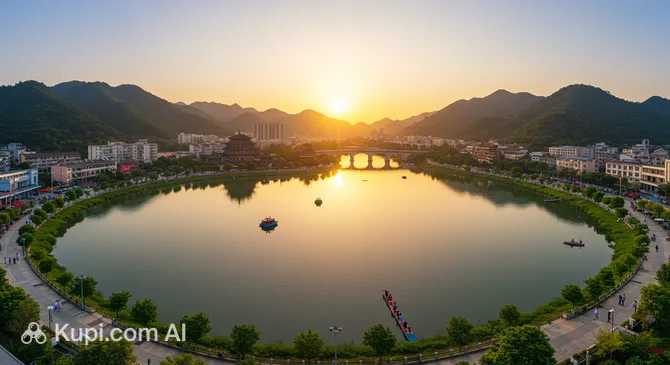
Ma'anshan is a fascinating city in Anhui Province, situated on the picturesque banks of the great Yangtze River. Known as the industrial "heart" of China, it harmoniously combines the power of modern metallurgy with the delicate charm of ancient poetic traditions. This is a place where the energy of an industrial hub meets the serenity of natural landscapes, creating a unique atmosphere for travelers.
Maanshan. Illustration.
Source: Kupi.com AI
The city was officially founded in 1956 based on its rich iron ore deposits, yet its lands hold a much deeper and rich history. Ma'anshan's geographical location makes it an important transport hub for the region, and its population of over 2.2 million fills its streets with life. Despite its status as an industrial giant, the city is immersed in the greenery of parks and surrounded by mountains that have inspired masters of the written word for centuries.
Ma'anshan is rightfully called the "Poetic City": it was here that the great Tang Dynasty poet Li Bai spent his final years. Tourists are drawn not only to cultural monuments but also to natural treasures such as Caishiji Cliff and the Putang bamboo groves. We invite you to discover this multifaceted region, where everyone will find something for themselves: from industrial aesthetics to contemplative relaxation in the heart of nature.
Weather Overview
Ma'anshan is located in a subtropical climate zone, characterized by a clear change of seasons. Summer here is hot and humid, with temperatures often rising to +32...+35°C, due to the proximity of the Yangtze River. Winters, by contrast, are quite mild and cool: the average temperature in January hovers around +4°C, and snow falls very rarely.
The most favorable time to visit the city is considered to be autumn, especially October and November. During this period, the weather is clear and moderately warm, ideal for walking through nature parks and participating in festivals. Spring is also beautiful during the blooming period, although rain may become more frequent in April and May. You can find out more about the current weather in the city to better plan your wardrobe.
The number of sunny days per year reaches 200, making Ma'anshan attractive to tourists in almost any season. It should be noted that peak precipitation occurs in June and July—the "plum rain" period, when air humidity reaches its maximum values. During this time, it is recommended to always have an umbrella or raincoat with you.
Average monthly temperature
Average monthly precipitation
Interesting Facts
The city's name, which translates as "Horse Saddle Mountain," is linked to a legend about the death of the famous general Xiang Yu's horse in 202 BC.
Ma'anshan officially holds the status of "Poetic City," as its landscapes have inspired prominent writers for many centuries.
According to folk legend, the great poet Li Bai died here while trying to catch the reflection of the moon in the waters of the Yangtze near Caishiji Cliff.
The modern history of the city began only in the mid-20th century, when one of the country's largest iron ore plants was launched, transforming a small settlement into an industrial hub.
In autumn, a real "crab cult" takes over Ma'anshan: locals consider crabs from Dantu County the best in the province and hold entire gastronomic festivals in their honor.
How to Get There
Ma'anshan enjoys excellent transport accessibility thanks to its location in a developed eastern region and its proximity to major metropolises. Most tourists arrive by land or via the Yangtze River, which has served as the city's main transport artery for centuries. To plan your trip, you can study detailed information on how to get to the city by various means of transport.
Although Ma'anshan itself does not have its own international airport, the nearest air hub is the major airport in Nanjing, located just 48 kilometers away. The journey from the terminal to the city center by high-speed train or comfortable bus takes 30 to 60 minutes, making a flight via Nanjing the most convenient way for international guests to reach the city.
Railway connection is the pride of the region. High-speed train routes from Shanghai and Hefei pass through Ma'anshan Station. Travel time from Shanghai is about 2–3 hours, while Hefei is just an hour away. The railway station is conveniently connected to city districts by a network of public transport and taxis.
For those seeking romance or traveling as part of a cruise, river transport is available. Ma'anshan Port welcomes vessels cruising the Yangtze, allowing visitors to arrive from other provinces while enjoying views of the great Chinese river.
Main Attractions
One of the city's most recognizable and revered attractions is the scenic Caishiji Cliff. This spot is famous for its breathtaking views of the Yangtze River, dense pine forests, and bamboo thickets. Walking along the cliff trails allows you to fully experience the majesty of Chinese nature, while a cable car offers a bird's-eye panorama of the surrounding area.
The cultural symbol of Ma'anshan is the majestic Taibai Pavilion, built in a traditional style with characteristic curved roofs. It is dedicated to the legendary poet Li Bai, whose life and work are inextricably linked with these places. Inside the tower, you can explore exhibits detailing the legacy of the great master and enjoy the atmosphere of classical Chinese art.
For those seeking spiritual solitude, the Guangji Temple is a must-visit. This Buddhist complex is one of the oldest in the region, with its history dating back to the Han Dynasty. The ancient architecture and peaceful setting of the monastery allow guests to immerse themselves in an atmosphere of meditation and learn more about Eastern religious traditions.
Fans of active recreation and natural beauty should head to the Putang Scenic Area. This location is often called the "Bamboo Sea" due to its endless green groves. Here you can find ancient trees, clear springs, and traditional pavilions with bells and drums. Putang is ideal for long walks, family picnics, and capturing striking photos against a backdrop of untouched nature.
Local Cuisine
Ma'anshan's culinary scene is inextricably linked to the bounty of the Yangtze River. The main highlights of local cuisine are fresh seafood and river fish. A special place is reserved for crabs from Dantu County, which are immensely popular during the autumn. They are usually prepared as simply as possible—steamed or grilled—to emphasize their natural flavor, and served with a ginger sauce.
Another unique feature of local cuisine is marinated Huangchi. These are traditional vegetables prepared according to a special recipe with spices. Huangchi is served as an appetizer for main rice or noodle dishes, adding a unique regional flair to the meal. Generally, the city's cuisine leans toward Anhui traditions: braised dishes, rich sauces, and a combination of sweet and savory flavors are favored here.
The best place to try local delicacies is in the small restaurants along the Yangtze embankment, where the catch of the day is served. It is customary to accompany dinner with local green tea, famous for its delicate aroma, or traditional rice wine. The food culture here is calm and leisurely: locals value quality products and the opportunity to spend time at the table with friends while enjoying the river views.
Travel Tips
Preparing for a trip to Ma'anshan will help make your vacation as comfortable and fulfilling as possible. Here are some practical tips that every traveler will find useful:
Best Season to Visit: The best time to travel is autumn (September–November). During this time, the weather is pleasant, the famous poetry festival takes place, and crab season begins.
Clothing: Bring comfortable shoes for long walks in the mountains and parks. In summer, repellents and light clothing made of natural fabrics will be useful due to the high humidity near the Yangtze River.
Finances: Mobile payments (Alipay, WeChat Pay) are used everywhere in China. We recommend setting them up in advance by linking an international card, as cash and regular cards are not accepted everywhere.
Connectivity: To use the internet and maps, it is better to buy a local SIM card at Nanjing airport or at communication offices in the city center. Don't forget to install a VPN service in advance.
Transport: The most convenient way to reach the city is by high-speed train from Nanjing or Shanghai. Within the city, use taxis via official apps.
Etiquette: When visiting Guangji Temple, maintain silence and choose modest clothing. Respect local traditions related to the veneration of the poet Li Bai.
Language: English is not widely spoken. Download an offline translator and carry a card with your hotel's name in Chinese.
Gastronomy: Be sure to try the crabs in Dantu County, but do so in established venues with good reviews.
Ma'anshan is a city that reveals its best side to those who take their time. Enjoy its poetic atmosphere and hospitality!
Entertainment & Nightlife
Entertainment in Ma'anshan is closely intertwined with its cultural heritage. The main event of the year is the China Poetry Festival, held every autumn. During this time, the city is transformed: large-scale poetry readings, art exhibitions, and theatrical performances dedicated to classical literature take place. It is the best time to feel the creative spirit of the city and meet the local intelligentsia.
For those who prefer active outdoor recreation, boat trips on the Yangtze River are a popular pastime. This allows you to see the city from a unique perspective and enjoy the river breeze. In the evening, locals and tourists often gather in the Dantu District, where cozy outdoor barbecues are arranged. The star delicacy of these gatherings is the famous local crab, which comes into season during the autumn months.
As for nightlife in the traditional clubbing sense, Ma'anshan is more of a quiet and contemplative city. It is difficult to find noisy discos that stay open until morning; however, the central districts of Huashan and Yushan offer many cozy cafes and restaurants by the water. In these establishments, you can spend an evening in a relaxed setting, tasting local tea or wine and admiring the city lights reflecting in the smooth surface of the Yangtze.
Parks & Museums
The central Ma'anshan Park is a unique place where the city's industrial history meets a recreational zone. It features an interesting open-air exhibition dedicated to the mining industry and the history of the region's development. Walking along shaded alleys, you can learn how iron ore was mined while simultaneously enjoying the tranquility of the green spaces.
For connoisseurs of natural landscapes, the Putang Scenic Area will be a true discovery. This massive natural park is famous for its "Bamboo Sea." Thousands of bamboo stalks create a unique sound in the wind, and winding paths lead to hidden springs and ancient gazebos. It is the perfect place for those seeking inspiration and wanting to take beautiful shots in the heart of wild nature.
The area around Caishiji Cliff holds special cultural significance for the city. It is not just a park but an entire open-air memorial complex. Here you can find cultural centers and exhibition halls dedicated to the poet Li Bai. Visitors can follow in the footsteps of the great master, see the places where he created his works, and visit the Taibai Pavilion, which is a masterpiece of classical architecture in its own right.
Getting Around
The public transport system in Ma'anshan is well-organized and allows tourists to easily reach all key sites. The foundation of the city network consists of buses, which connect the central districts of Huashan and Yushan with remote attractions such as Caishiji Cliff and suburban parks. Bus routes cover almost the entire city, and the fare remains very affordable.
For quick trips over short distances or to the Yangtze embankment, tourists often use taxis. Official taxi services and ride-sharing apps operate in the city, which is particularly convenient for foreigners as it allows you to set your destination in the navigator in advance. This is a comfortable way to get to the port or the station with luggage.
For those who prefer an active way of getting around, bicycle rentals are well-developed in park areas and along the embankments. Ma'anshan is a city with many green zones, and a bike ride through Putang or along the river is an excellent choice. Railway transport remains the main means of connection with other provinces: modern high-speed trains arrive at the central station, which is integrated into the city's overall transport system.
Accommodation
For guests of Ma'anshan, the most convenient areas to stay are the central districts of Huashan and Yushan. This is where most of the tourism infrastructure is concentrated, from modern business hotels to cozy mid-range guesthouses. Staying in the center provides quick access to shopping streets, restaurants, and the city's main transport hubs.
Nature lovers and those seeking peace should consider accommodation options near Caishiji Cliff. Ecotourism is actively developing in this area, offering small guesthouses with views of the Yangtze River and the mountains. It is an excellent choice for those who want to wake up to birdsong and start their day with walks through bamboo groves.
The overall price range in Ma'anshan is quite affordable compared to neighboring metropolises. You can find everything from budget hostels to luxury 4 and 5-star hotels with swimming pools and panoramic restaurants. Traveler's Tip: if your trip coincides with the annual poetry festival in autumn, book your accommodation in advance, as the city hosts many delegations and tourists during this period.
Nearby Cities
Ma'anshan is an ideal starting point for traveling through eastern China, as it is surrounded by cities with a wealth of history and culture. From here, it is easy to take short trips to see both modern metropolises and ancient architectural monuments.
Just a half-hour drive away is the city of Wuhu, known for its theme parks and scenic river views. If you are interested in imperial grandeur, Nanjing, the ancient capital of several dynasties, is only 50 kilometers away. There you can visit the famous Sun Yat-sen Mausoleum and walk along the ancient city walls. Also worth noting is Chuzhou with its magnificent natural parks.
Additionally, it is worth checking out Gulou or the small town of Qiaoyang to feel the rhythm of provincial Chinese life. The proximity of these places allows you to pack your travel itinerary to the fullest while returning to cozy Ma'anshan by evening.
Shopping & Souvenirs
Shopping in Ma'anshan is primarily a hunt for unique souvenirs that reflect the city's "poetic" status. The main purchases here are traditionally elegant editions of books with classical Chinese poetry and calligraphy. The region is also famous for folk crafts, particularly fine carvings and items made from local bamboo, which make excellent mementos of your trip.
To buy delicacies, head to local food markets or specialized shops in Dantu County. There you can purchase the famous Huangchi marinated vegetables in gift packaging and local green tea. During crab season, shops offer special kits for transporting this delicacy so you can bring a piece of Ma'anshan's flavor home with you.
Modern shopping is concentrated in the Huashan and Yushan districts, where large shopping centers are located. They feature both international brands and high-quality Chinese-made goods. Shops typically operate from 10:00 to 21:00 or 22:00, and payment in most places is accepted via popular mobile apps (WeChat Pay, Alipay), although bank cards work in larger malls.