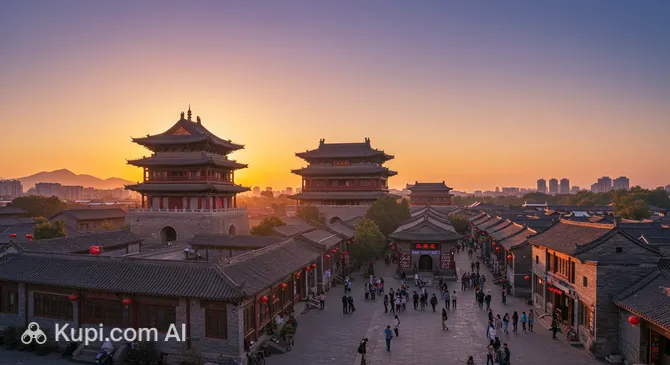
Gulou is not just an administrative district, but the true heart of historical Nanjing, one of the most significant cities in China. The district's name translates as "Drum Tower," a nod to the majestic Ming dynasty structure that remains its primary symbol today. Gulou is steeped in the atmosphere of imperial grandeur and a republican past, serving as a place where the modern rhythm of a metropolis meets thousands of years of history.
Gulou. Illustration.
Source: Kupi.com AI
Located in the central part of Nanjing on the eastern bank of the Yangtze River, Gulou covers a territory with diverse terrain, from picturesque plains to hilly areas. With a population of over 2.6 million, this district is the most important political, educational, and cultural center of Jiangsu Province. The history of this place is inextricably linked to the periods when Nanjing served as the capital of the Six Dynasties and later the Republic of China, which turned the district into an open-air architectural museum.
For travelers, Gulou is attractive for its unique attractions: from the ancient Ming Dynasty city wall to elegant Art Deco and Neoclassical buildings constructed in the early 20th century. Here you can stroll through quiet historical alleys or enjoy views from one of the highest points in the city. Gulou invites everyone who wants to touch the living heritage of the Celestial Empire and see China in all its diversity.
Weather Overview
The climate in the Gulou district is characterized by a clear change of seasons, which is typical for the Yangtze River basin. The weather in the city is often humid. Summers here are hot and rainy: in July and August, the average temperature stays around 29°C, and daytime highs often exceed 32°C. This period also sees the most rainfall, which is worth considering when planning long walks.
Winter in Gulou is cool and relatively dry. In January, the average temperature is about 5°C, but at night it can drop to zero. Spring and autumn are considered the most comfortable times of the year to visit: in April and October, the thermometer is usually at pleasant marks from 17°C to 22°C, and nature delights with bright colors.
Expect a warm, humid summer with occasional downpours and cool, bracing winters. For those planning to visit historical parks and open-air temples, May or September are the best choices, when climatic conditions are most favorable for walking tours.
Average monthly temperature
Average monthly precipitation
Interesting Facts
Gulou and the surrounding city of Nanjing are full of amazing stories and records that highlight their uniqueness on the world map.
The Drum Tower (Gulou) was built in 1382 and for centuries served as the "voice" of the city, announcing the beginning and end of the day with the beats of huge drums.
The Nanjing City Wall, fragments of which adorn the district, is recognized as one of the longest and best-preserved fortress walls in the world.
In the mid-19th century, the famous Treaty of Nanjing was signed here, which became a turning point in China's foreign policy and opened the country to international trade.
The Gulou district witnessed the golden age of the Six Dynasties, when the city, then known as Jiankang, was among the largest and most developed metropolises in the world.
The famous Yangtze River Bridge, opened in 1968, was an outstanding engineering achievement of its time and an important symbol of the region's industrial progress.
How to Get There
Gulou, being the central district of Nanjing, has excellent transport accessibility. The main gates for travelers are large international airports and modern railway stations connecting the city with all key regions of the country and the world. Getting to the historical center is easy thanks to the developed infrastructure.
For those who prefer air travel, the main hub is Nanjing Lukou International Airport (NKG). It is located approximately 35-40 kilometers from the city center. From the airport to the Gulou district, you can quickly get there by comfortable metro (line S1 with a transfer to line 1) or use the services of official taxis and shuttle buses that run regularly.
Railway communication is one of the most convenient ways to travel around China. Nanjing Railway Station is located in close proximity to the northern border of the Gulou district, making it an ideal point of arrival. High-speed trains from Beijing and Shanghai, as well as regional trains, arrive here. From the station, you can reach any point in the district by metro in just a few minutes.
The main historical treasure of the district is rightfully considered the Drum Tower (Gulou). Built in 1382 during the Ming Dynasty, it once served to announce the time to the townspeople and was a symbol of the city's capital status. Today, this majestic building is surrounded by a cozy park where you can relax from the city bustle while admiring the craftsmanship of ancient architects.
No less impressive is the Confucius Temple (Fuzimiao). This large-scale temple complex, originally founded back in the 3rd century, has been a center of education and culture for centuries. Walking through the adjacent blocks, tourists can immerse themselves in the atmosphere of old China, try traditional snacks, and see how classical architecture exists alongside bustling trade.
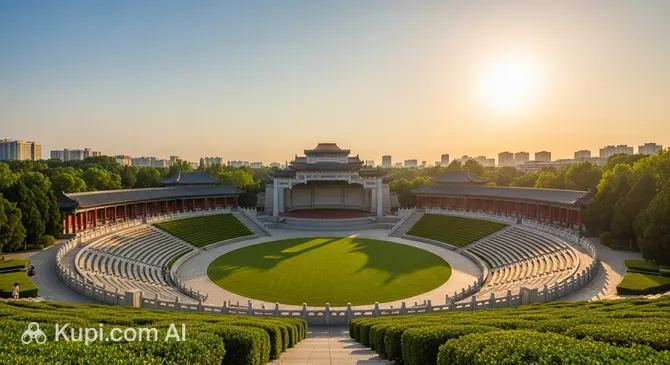
Sun Yat-sen Mausoleum Music Stage. Illustration.
Source: Kupi.com AI
Traveler photos:
The Music Stage of the Sun Yat-sen Mausoleum also deserves attention. This unique open-air structure is harmoniously integrated into the natural landscape and is known for its stunning acoustics. Built during the Republican period, the stage combines elements of Western design with traditional Chinese motifs, making it a popular spot for cultural events and peaceful walks surrounded by greenery.
For those interested in the art of fortification, the Nanjing City Wall is a must-see. The section of the wall passing through Gulou allows you to appreciate the power of 14th-century fortifications. A walk along the ridge of this massive stone structure offers breathtaking panoramas of modern skyscrapers and the mirror-like surface of Xuanwu Lake.
Local Cuisine
A gastronomic journey through Gulou is an introduction to the exquisite Huaiyang cuisine, which is famous for its attention to detail and delicate taste. Be sure to try the famous Nanjing salted duck—a dish with a centuries-old history that is considered the city's calling card. The meat of this duck is particularly tender with a subtle aroma of herbs and spices.
The food culture in the district is closely related to street food. In the vicinity of historical monuments, you can find many stalls offering "soup dumplings" (xiaolongbao) and famous Nanjing snacks made from bean curd products. As for drinks, locals prefer high-quality green tea, as well as traditional rice wine, which perfectly complements local delicacies.
For a more substantial lunch, it's worth visiting the restaurants in the Confucius Temple area, which serve dishes prepared according to ancient recipes. The Gulou gastro scene combines both upscale establishments with views of the city and modest family eateries that are always crowded. An interesting place for a walk and a light snack between excursions can be the area near such an object as the Music Stage of the Sun Yat-sen Mausoleum.
Travel Tips
Planning a trip to Gulou will be much easier if you consider a few practical nuances shared by experienced travelers.
Clothing and belongings: Summers in the region are hot and humid, while winters can be quite cool. Bring light clothing made from natural fabrics for the warm season and a windbreaker for autumn. Comfortable shoes are your top priority, as you will be walking a lot.
Transport: The metro is the ideal choice. Download a Nanjing metro map to your phone. For taxis, it's better to use the Didi app (it has an English version).
Finances: Contactless payments via WeChat Pay and Alipay dominate in China. Set them up in advance by linking an international card. Cash is accepted, but finding change can be difficult. There is no tipping culture in restaurants.
Health and safety: The Gulou district is very safe for walking even late at night. Pharmacies are common, but medicine names may only be in Chinese, so it's better to have a basic first-aid kit with you.
Communication: The main language is Mandarin (Putonghua). English is common in hotels and among young people, but it's better to have an offline translator. Learn simple phrases: "Nihao" (hello) and "Xiexie" (thank you).
Local etiquette: When entering temples, try to be quiet. Politeness and restraint in communicating with locals are always welcome.
What to avoid: Do not engage in political discussions and try not to take photos of people without their explicit consent, especially in religious sites.
Extra tip: Visit Gulou early in the morning. At this time, you can see locals practicing Tai Chi by the Drum Tower, which creates a unique atmosphere.
By following these simple tips, you can fully focus on the beauty of Gulou and get the most out of your trip.
Entertainment & Nightlife
Nightlife in the Gulou district and the adjacent center of Nanjing is characterized by a special elegance and cultural flair. One of the most popular destinations for evening walks is the Qinhuai River waterfront. With the onset of darkness, thousands of lights are lit here, and traditional boats gliding along the water create an atmosphere of ancient China. Many cozy bars and restaurants are located along the banks, where you can spend the evening enjoying views of the illuminated temples and pagodas.
Fans of a more modern entertainment format should head to the areas where trendy cafes and bars with live music are concentrated. Both local youth and foreign guests gather here. Most establishments are open until late at night, and the dress code is usually casual, unless it is an exclusive club in a major hotel. For safe travel at night, it is best to use official taxi services or popular mobile ride-hailing apps.
Daytime entertainment in Gulou is closely linked to art and nature. Exhibitions and theatrical productions reflecting the rich history of the region are often held in the district. One interesting place to visit is the Music Stage of the Sun Yat-sen Mausoleum, where during daylight hours you can enjoy the silence and architectural elegance of this iconic site.
Parks & Museums
Gulou District and its surroundings are a true paradise for history buffs. One of the most significant sites is the Presidential Palace, which today houses the Museum of Modern Chinese History. Here you can trace the country's path from the late imperial era to the proclamation of the republic, strolling through the magnificent halls and traditional gardens of the former residence of rulers.
The natural gem of the region is considered to be Purple Mountain (Zijinshan). This is a huge forest park, on the territory of which the most important monuments are concentrated: from an observatory to imperial mausoleums. The mountain is especially beautiful in autumn, when the foliage turns crimson. In the same area is the Music Stage of the Sun Yat-sen Mausoleum, which represents a harmonious combination of architecture and landscape design.
Another important site is the Taiping Heavenly Kingdom History Museum, located in the historical manor of Zhan Yuan Garden. The museum's exhibition is dedicated to one of the largest popular uprisings in Chinese history. Visiting such places provides a deep understanding of the complex and multifaceted fate of Nanjing and its role in shaping the modern image of the country.
Getting Around
The transport system of Nanjing and the Gulou district is rightfully considered one of the most efficient in the region. The basis of public transport is the metro, whose lines pierce the district in all directions. The metro is the fastest and most reliable way to get to any attraction. Stations are equipped with clear navigation in English, and trains run with minimal intervals from early morning until late evening.
Surface transport is represented by an extensive network of buses. This is a great option for those who want to see the city from the window. Payment for travel in the metro and buses is possible both in cash (via machines) and using transport cards or mobile payment systems. Fares are very affordable, making public transport accessible to any budget.
As an alternative, many tourists choose taxis or popular ride-hailing services via apps (e.g., Didi). Gulou also has a well-developed bike-sharing system, which is very convenient for moving between closely located historical sites. However, in the very heart of the district, among narrow alleys and ancient walls, it is best to move on foot so as not to miss a single detail of the unique architecture.
Accommodation
In the Gulou district, tourists will find a wide range of accommodation options—from luxurious five-star hotels located in modern skyscrapers to cozy boutique hotels in buildings from the Republican era. Thanks to the district's central status, most hotels offer excellent views of city landmarks or Xuanwu Lake, while providing easy access to transport hubs.
For those who appreciate history, it is worth looking into accommodation in neighborhoods with preserved early 20th-century architecture. Here you can find hotels whose interiors recreate the atmosphere of old Nanjing. Budget travelers can find modern hostels and apartments, often located in lively areas near universities, where there are many inexpensive cafes and shops.
When planning a trip to Gulou, it is recommended to book accommodation in advance, especially during Chinese public holidays, the cherry blossom season, or the autumn maple festival. Primary booking methods include international online platforms and local services, and prices vary depending on proximity to major historical sites, such as the Music Stage of the Sun Yat-sen Mausoleum or the Drum Tower.
Nearby Cities
Gulou and Nanjing serve as an ideal starting point for exploring the rich heritage of Jiangsu Province and neighboring regions. Thanks to the network of high-speed trains, many interesting cities are just an hour's ride away, making it easy to plan fulfilling day trips.
Nearby is modern Nanjing, of which Gulou is a part, offering even more museums and parks. It is also worth paying attention to the city of Chuzhou, known for its picturesque mountains and historical pavilions, and Ma'anshan, where you can enjoy views of the Yangtze and visit places associated with ancient poetry. For those seeking tranquility, Jurong, famous for its shrines and tea plantations, is a great fit.
Exploring the surroundings will allow you to see different facets of China—from industrial giants to quiet provincial towns that have remained faithful to tradition. Each of these destinations is easily accessible and will provide a wealth of new impressions off the main tourist track.
Shopping & Souvenirs
Shopping in Gulou offers an exciting combination of modern shopping centers and colorful markets. The district is famous for its silk products and traditional calligraphy. The main shopping opportunities are concentrated in the central part of the city, where modern glass windows sit alongside shops selling antiques and folk crafts.
For authentic souvenirs, it is best to head to the vicinity of the Confucius Temple. Here you can purchase the famous Nanjing "yunjin" brocade, handmade fans, and exquisite jewelry. In the Gulou district itself, there are also many bookstores and shops at universities where you can find unique publications and souvenirs with an academic flair.
The district's large shopping centers offer global brand products and are usually open from 10:00 to 22:00. Most stores accept international cards, but for visiting small markets and souvenir shops, it is recommended to have cash or set up Alipay or WeChat Pay apps. The Tax Free system is available in several large department stores, making shopping even more pleasant for foreign tourists.