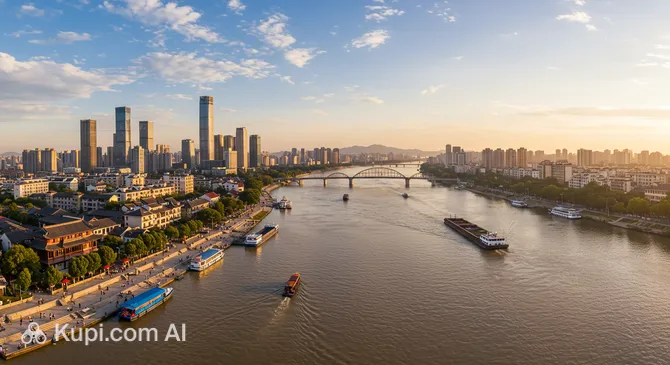
Located in the heart of East China, Danyang is a dynamic industrial hub where the pulse of a modern economy blends harmoniously with the natural charm of the Yangtze River Delta. Situated in Jiangsu Province, the city is a vital link in the region's transport system, attracting travelers with its business activity and strategic location between the country's largest metropolises.
With a population of approximately 980,000 people, Danyang demonstrates impressive development rates. It is a quintessential example of a modern Chinese city where high-tech manufacturing exists alongside a traditional way of life. If you are interested in the history of the region's development, you will notice how quickly the city transformed from an agrarian land into a significant industrial node while maintaining access to the picturesque landscapes of the river valley.
Danyang. Illustration.
Source: Kupi.com AI
One of Danyang's main features is its proximity to unique engineering feats and natural riches. Here, you can see endless rice fields and a network of canals that have fed this region for centuries. Visiting this city is an excellent opportunity to see the "real," working China, hidden from the eyes of mass tourists, and to feel the energy of one of the fastest-growing regions in the world.
We invite you to discover Danyang—a city that serves as an ideal starting point for exploring Jiangsu Province and offers a unique perspective on the industrial grandeur of the modern East.
Weather Overview
Danyang features a humid subtropical climate typical of the Yangtze River Delta. The weather here is characterized by four distinct seasons, each giving the city its own charm. Spring and autumn are considered the most favorable periods for visiting, when temperatures are moderate and nature is painted in vibrant colors.
Summers in the city are usually hot and humid, with daytime temperatures often exceeding +30°C. June and July are the rainiest months due to the monsoon season. Winter in Danyang is cool and damp, although severe frosts are rare; average January temperatures hover around +4°C... +8°C. Precipitation is distributed throughout the year, but the peak occurs during the summer period.
When planning your trip, be sure to study the detailed city climate to choose the right wardrobe. Expect warm summers with occasional downpours and cool, sometimes windy winters. Regardless of the season, having an umbrella or a light raincoat in your bag will not go amiss.
Average monthly temperature
Average monthly precipitation
Interesting Facts
The Longest Bridge in the World: The city's territory is crossed by the famous Danyang–Kunshan Grand Bridge, which spans an incredible 164.8 kilometers.
Railway Record: Thanks to the Beijing–Shanghai high-speed railway, travelers can get from Danyang to Shanghai in just a couple of hours, a journey that previously took twice as long.
Scale of Construction: Approximately 450,000 tons of steel were used in the construction of the Danyang–Kunshan Bridge, and 10,000 workers were involved in its building simultaneously.
Rice Granary: The city's surroundings still maintain their status as an important agricultural region, where traditional rice cultivation in the Yangtze Delta creates a unique rural landscape.
How to Get There
Danyang boasts excellent transport accessibility, being a major hub on one of the country's most significant transport arteries. The primary way to get to the city is via the Beijing–Shanghai high-speed railway. Trains on this route run regularly, allowing travelers to cover vast distances in just a few hours.
For those planning to arrive in the region by plane, it is most convenient to use Shanghai's major international airports. After landing, you can easily transfer to a high-speed train or bus, and the journey to Danyang will take between one and two hours depending on the chosen transport. The city is also connected to neighboring provinces by a developed network of modern highways.
Danyang Railway Station serves both high-speed trains and regular passenger services. This makes the city a convenient point for traveling throughout Jiangsu Province. Trips to major centers like Nanjing or Suzhou take very little time, which is very convenient for tourists.
The main and most massive attraction of the region is rightfully considered the Danyang–Kunshan Grand Bridge. This incredible feat of engineering is officially recognized as the longest bridge in the world. Stretching over 164 kilometers, it is part of the high-speed railway line. Tourists interested in modern architecture and technology can appreciate the scale of this colossus from many vantage points around the city.
The natural beauty of the Yangtze River Delta forms the foundation of the tourist appeal of Danyang's surroundings. The landscape here is crisscrossed by numerous water canals and adorned with mirror-like lakes. Picturesque rice fields, which change color according to the season, create a perfect backdrop for photography and leisurely walks, allowing for a break from the industrial rhythm of the city center.
Danyang itself also serves as a convenient base for visiting the historical and cultural treasures of neighboring cities. Thanks to the developed transport network, it is easy to reach the ancient pagodas and gardens that Jiangsu Province is famous for, making the city an important stop on the itinerary of any explorer of Eastern China.
Local Cuisine
Danyang's culinary scene is a true reflection of the heritage of Jiangsu Province and the rich resources of the Yangtze Delta. Unlike the fiery spicy dishes of the country's central regions, the local cuisine is characterized by mild flavors and an emphasis on preserving the natural aroma of fresh ingredients. Traditionally, river fish and seafood are the stars of the table here.
Be sure to try dishes made from freshly caught carp, which is prepared in many ways here—from braising in soy sauce to steaming with ginger. Thick noodle soups and various dishes made from rice grown in the surrounding fields are equally popular. Vegetables in Danyang's restaurants are always fresh, often supplied directly from the region's farms.
The food culture in the city is diverse: you will find small family-run eateries with home-cooked meals as well as elegant restaurants for formal dinners. Tea culture holds a special place in the life of the townspeople. In local tea houses, you can not only sample the best varieties of Chinese tea but also soak up the atmosphere of tranquility and traditional hospitality that persists in Danyang despite its industrial character.
Travel Tips
To ensure your introduction to Danyang is as comfortable as possible and leaves only pleasant impressions, we have prepared some useful recommendations for you.
Seasonality and Clothing: The best times to visit are spring (March–May) and autumn (September–November). Summers here can be very hot and humid, so be sure to bring light clothing made from natural fabrics and comfortable shoes for long walks.
City Transport: Install the Didi app for calling taxis—it is reliable and convenient. For trips to neighboring cities, book high-speed train tickets in advance through official services.
Finances and Payments: Cashless payments via AliPay and WeChat Pay dominate in China. It is recommended to link an international card to one of these apps beforehand. Cash should only be kept as a backup option.
Language Barrier: English is not widely spoken in Danyang. Be sure to download an offline translator and save your hotel address in Chinese (characters).
Connectivity: Buy a local SIM card at the Shanghai airport or at official operator offices in the city. Remember that a VPN may be required to access familiar Western services.
Local Etiquette: Be polite and patient. Speaking loudly in public places is discouraged, and it is customary to remove your shoes when entering private homes.
Health: Drink only bottled water and use sunscreen, especially during summer visits.
What to Avoid: Do not engage in discussions on political topics and try not to photograph military or government facilities without explicit permission.
Danyang is a welcoming city that will reward the curious traveler with unique photos and sincere smiles from the local residents. We wish you a great journey!
Entertainment & Nightlife
As a major industrial center, Danyang offers guests a classic range of entertainment typical of modern Chinese cities. Most evening activity is concentrated in the central districts and near major shopping complexes. Here, you can find modern cinemas, bowling centers, and, of course, numerous karaoke bars (KTV), which are an integral part of the local leisure culture.
For those who prefer a quieter evening, the city offers walks along the illuminated canal embankments or dinner at one of the many restaurants where life buzzes until late at night. The nightlife here is less boisterous than in neighboring Shanghai, creating a more authentic and cozy atmosphere for interacting with locals.
During the day, outdoor enthusiasts can go on excursions to the natural areas of the Yangtze Delta or take a short high-speed train ride to neighboring cultural capitals such as Nanjing or Suzhou. This allows you to combine a business trip or a quiet stay in Danyang with a rich cultural program and visits to the region's famous landmarks.
Parks & Museums
Although Danyang is primarily known as an industrial center, its natural surroundings offer travelers unique opportunities for outdoor recreation. The city is located in the picturesque Yangtze River Delta, where the landscape is shaped by endless rice fields, winding canals, and quiet lakes. These are ideal spots for those who want to see the traditional rural landscape of China and enjoy peace away from the city highways.
For culture lovers, we recommend visiting local historical halls and exhibition centers that tell the story of the development of industry and crafts in the region. To get the most up-to-date information on current exhibitions and city parks, it is worth checking Danyang's tourist information centers, as the city is constantly updating its public spaces.
If you are looking for world-famous museums and classic imperial gardens, you can easily reach the neighboring cultural capitals of Suzhou and Nanjing. A short train ride will allow you to complement your visit to Danyang with a tour of UNESCO World Heritage masterpieces, making your trip through Jiangsu Province truly fulfilling.
Getting Around
The transport system in Danyang is designed for maximum convenience of movement both within the city and beyond. The main pride of the region is the high-speed railway, which connects the city with Beijing, Shanghai, and other key centers of the country. This is not just transport, but a vital artery that allows for comfortable travel over vast distances.
Intra-city transit is provided by an extensive network of bus routes. This is the most economical way to get around, covering all major residential and industrial areas. For tourists, buses are convenient because they allow access to the railway station and central shopping zones. Fares are usually paid in cash upon boarding or via mobile apps.
For quick trips around the city, taxis and popular ride-hailing services like Didi are ideal. This eliminates the need to figure out public transport routes and ensures comfort at any time of day. Additionally, as in many other Chinese cities, bicycles are popular in Danyang, making cycling a great way to explore the city and its surroundings at a relaxed pace.
Accommodation
Given Danyang's status as a significant industrial and transport hub, the city offers a wide choice of accommodation options for every taste and budget. The most popular places to look for housing are the areas adjacent to the railway station, as well as the central part of the city. Here, you will find both modern hotels from well-known chains and comfortable apartments for business travelers.
For those looking to save money, Danyang has many budget hotels and guesthouses. It is worth noting that accommodation prices here are significantly lower than in neighboring metropolises like Shanghai, while the level of service in medium and large hotels remains at a decent level. This makes the city an excellent option for those who want to explore Jiangsu Province while having an affordable "base."
We recommend booking accommodation in advance, especially if your trip coincides with Chinese national holidays or major industrial exhibitions in the region. During these times, the demand for quality rooms increases significantly. Most hotels support booking through international and local online services, simplifying trip planning.
Nearby Cities
Thanks to its location on the high-speed rail line, Danyang serves as an excellent starting point for exploring the rich cultural heritage of neighboring cities in Jiangsu Province. In just a short time, you can find yourself in places considered the gems of Eastern China.
One of the most recommended destinations is Yangzhou, famous for its picturesque lakes and ancient architecture. It is also worth visiting Zhenjiang, located just 26 kilometers away, and Changzhou, where modern theme parks sit alongside historical temples. If you have a full free day, a high-speed train will whisk you away to majestic Nanjing or futuristic Shanghai.
The developed railway infrastructure makes such trips as comfortable and fast as possible. We highly recommend setting aside time to explore the surrounding areas to fully appreciate the diversity and beauty of this region.
Shopping & Souvenirs
Shopping in Danyang offers tourists a classic experience of a modern Chinese city. While you won't find a huge number of global brand boutiques like in Shanghai, the city will delight you with an abundance of high-quality locally produced goods. Main commercial activity is concentrated in the central blocks, where department stores and modern shopping malls offering electronics, clothing, and household goods are located.
For those looking for authentic experiences, it is worth heading to the local markets. Here, you can not only observe the daily life of the locals but also purchase fresh produce, local spices, and folk crafts. Markets in Danyang are an excellent place to buy souvenirs that will remind you of the local color of Jiangsu Province.
Shops usually operate from morning until late evening (often until 21:00 or 22:00), and payments are most often made through popular mobile applications (AliPay, WeChat Pay). Nevertheless, major retail outlets also accept bank cards. If you crave a larger-scale shopping experience, the high-speed railway allows you to quickly reach the shopping districts of Suzhou or Shanghai.