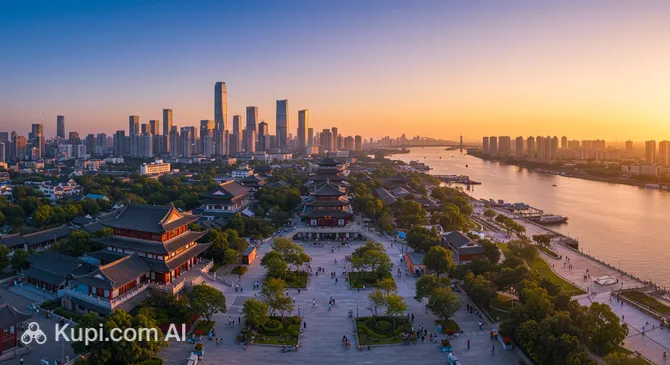
Nantong is widely recognized as a pioneer in Chinese modernization, a legacy that is beautifully preserved in its abundant green spaces and impressive array of museums. Known historically as the "City of Museums," it offers visitors a sophisticated blend of natural beauty and intellectual heritage, largely shaped by the vision of the late 19th-century industrialist Zhang Jian. Whether you are strolling through classical gardens or exploring unique cultural exhibitions, the city provides a peaceful yet enriching escape.
Wushan National Forest Park is the ecological crown jewel of the city, encompassing five separate mountains, including the famous Wolf Mountain. This expansive natural area is perfect for hiking enthusiasts and nature lovers, offering lush dense forests and botanically diverse trails. It is particularly interesting for tourists because it combines scenic hiking with spiritual exploration; the park is dotted with ancient shrines and offers sweeping views of the Yangtze River, allowing visitors to appreciate the city's strategic geography.
For a more traditional experience, Shuihui Garden in Rugao is a masterpiece of classical landscape design. Dating back to the Ming Dynasty, this "Water Garden" is celebrated for its intricate layout where water features and architecture blend seamlessly. It was once a gathering place for scholars and poets, and today, visitors can admire its preserved pavilions, rockeries, and ancient trees. It serves as a perfect example of the intimate and poetic style of Jiangnan gardening, distinct from the grander imperial gardens in the north.
Binjiang Park offers a contrasting modern experience, stretching along the banks of the Yangtze River. This open green space is a favorite among locals for kite flying and evening walks. For tourists, it provides an unparalleled vantage point to watch the massive cargo ships navigating one of the world's busiest waterways. The park captures the essence of Nantong as a port city, blending the tranquility of a riverside promenade with the dynamic energy of river commerce.
The city's cultural landscape is anchored by the Nantong Museum, which holds the distinction of being the first public museum founded by a Chinese national. Unlike typical indoor museums, this is a garden-style complex that integrates exhibition halls with outdoor pavilions and ancient trees. It focuses on both natural history and historical art, making it a fascinating stop for those interested in the origins of China's modern museum system and regional history.
Reflecting the city's unique folk traditions, the Nantong Kite Museum is a delightful venue dedicated to the art of the "Banyao" or whistling kite. The museum displays a colorful array of kites from different eras and regions, but the highlight is the local variety equipped with whistles that sing in the wind. It is an engaging place to learn about the aerodynamics and craftsmanship behind this intangible cultural heritage.
Another specialized institution is the China Abacus and Mental Arithmetic Museum. As the world's largest museum of its kind, it houses thousands of abacuses made from materials ranging from gold and jade to wood and porcelain. It offers an intriguing look into the history of calculation and commerce in China, showcasing the ingenuity of ancient tools before the digital age.
In terms of historical architecture, the Guangjiao Temple on Wolf Mountain stands out. With a history spanning over a millennium, it houses the tomb of the Tang Dynasty poet Luo Binwang. The temple's architecture is a stunning example of Buddhist design adapted to a mountain setting, and it remains an active place of worship, offering a glimpse into the spiritual life of the region.
For a truly authentic experience, seek out the Nantong Blue Calico Art Museum. Tucked away from the main tourist trails, this spot is dedicated to the traditional indigo dyeing technique. Visitors can often see artisans at work and even try their hand at printing patterns, offering a tactile connection to the city's textile roots that you won't find in larger, more commercialized venues.