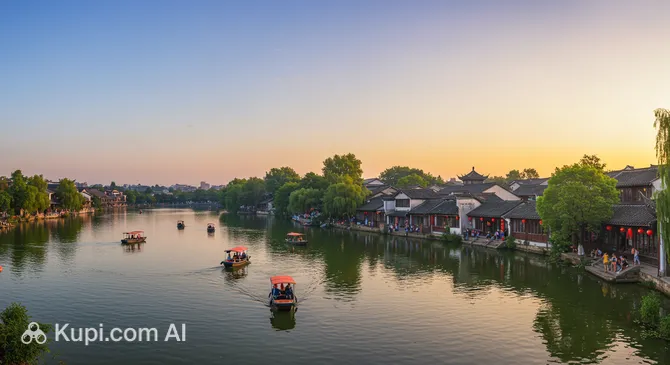
Changshu is a hidden gem in Jiangsu Province, located in the heart of the picturesque Jiangnan region. This city in China harmoniously combines the charm of ancient traditions with the dynamism of a modern industrial center. Known as the "City of Clothing," it attracts travelers with its elegant gardens, quiet canals, and welcoming atmosphere, where every corner breathes tranquility and peace.
Geographically, the city is nestled between the Yangtze River and the mountains, which largely determined its mild climate and wealth of natural resources. With a population of about 1.677 million people, Changshu remains quite spacious and green, offering tourists a break from the hustle and bustle of megacities. Here, you can wander for hours through winding streets, admiring how fields of mulberry trees give way to modern shopping districts.
Changshu. Illustration.
Source: Kupi.com AI
Special attention should be paid to the city's unique cultural heritage. Changshu is famous for its "Jade Mountain" Yushan and the mystical Shanghu Lake, which have inspired poets and artists for centuries. We invite you to embark on a journey to this amazing land to see the "sea of metasequoias" with your own eyes and feel the true magic of the East.
Weather Overview
Changshu welcomes guests with the mild and humid subtropical climate typical of the Jiangnan region. Each season here has its own charm: spring delights with delicate blossoms, while autumn brings piercingly clear air and bright colors of foliage. You can find out more about weather conditions for specific dates in the weather in Changshu section.
Summer in the city is quite hot and rainy: in July and August, the thermometer often rises to +32...+35°C, and air humidity increases significantly. Winter, on the other hand, is cool and relatively dry. In January, the average temperature is about +5°C, but due to the high humidity, the cold can feel sharper. Expect warm summers with periodic downpours and invigorating, clear winters that are ideal for contemplative walks through the parks.
Average monthly temperature
Average monthly precipitation
Interesting Facts
Changshu is a city with an amazing fate and many hidden secrets. Here are a few facts that will help you look at it in a new way:
Textile Capital: Changshu is unofficially called the "City of Clothing." A huge number of shopping centers and factories are concentrated here, making it one of the largest hubs for the production and sale of textiles in China.
Winter "Red Sea": More than 300 acres of metasequoias grow at Shanghu Lake. In winter, their needles take on a bright red hue, creating the illusion of a flaming forest right in the middle of the water.
Tree of Wisdom: A ginkgo tree that is centuries old grows in one of the city's gardens. It is considered a living witness to the change of dynasties and is revered by locals as sacred.
Silk Road of Jiangnan: Historically, the city was a key center for the silk trade. To this day, you can see vast plantations of mulberry trees in the surrounding area, whose leaves serve as food for silkworms.
Spiritual Mountain: Yushan Mountain is considered a place where "qi energy" is concentrated. According to legends, a walk along its slopes can restore a person's inner balance and clarity of thought.
How to Get There
Changshu boasts excellent transport accessibility, being an important hub in the developed network of Jiangsu Province. The city is integrated into the modern infrastructure of high-speed highways and railways, making travel here from major megacities fast and comfortable. You can find out how best to plan your route on the how to get to Changshu page.
Although the city itself does not have its own airport, travelers usually use the air hubs of neighboring cities. The most convenient option is Shanghai's international airports (PVG or SHA) or Wuxi airport (WUX). From these hubs, you can reach the center of Changshu by taxi or by booking a transfer through the popular Didi app, which takes about 1.5–2 hours.
Rail travel is the most popular way to arrive. The modern Changshu station receives high-speed trains from Shanghai, Nanjing, and Suzhou. Travel time from Shanghai is often less than an hour, allowing the city to be considered even as a weekend getaway destination. From the station, main attractions are easily reached by regular buses or city taxis.
One of the city's main architectural landmarks is rightfully considered the Square Pagoda. This majestic structure, surrounded by a classic garden, is a magnificent example of traditional architecture. Tucked away nearby are historical relics such as the Song Dynasty well and an ancient ginkgo tree, which turns everything into a golden fairy tale in autumn.
For those seeking connection with nature, Yushan Mountain (or Jade Mountain) is a must-visit. The climb to its peak will reward you with breathtaking panoramic views of the surrounding fields and silk villages. It is believed that the spiritual energy of heaven and earth is concentrated here, making the walk not only a physical but also a contemplative experience.
No less impressive is Shanghu Lake, which turns into a real natural phenomenon in winter. About 300 acres of coastal metasequoias turn a rich red color, creating an ethereal landscape. Tourists can rent a bamboo raft and take a water trip, watching graceful white herons soaring above the mirrored surface.
If you want to feel the rhythm of local life, stop by the lively Nanmen Market. This place is famous not only for its fresh produce but also for its legendary Dongheng wooden bridge. The market is the perfect place to see the daily life of townspeople and taste famous local delicacies in the most authentic setting.
Local Cuisine
Changshu's culinary traditions are closely linked to the culture of the Jiangnan region, where the emphasis is on freshness of ingredients and a subtle combination of flavors. The city's main gastronomic symbol is its signature roast chicken, for which locals and tourists line up at the Nanmen Market. The secret of its taste lies in a special marinade and a crispy crust, the recipe for which is passed down from generation to generation.
Be sure to try dishes made from fresh lake dwellers, especially koi carp and various shellfish cooked with seasonal herbs. Fans of unusual desserts will appreciate sweets with added silkworm pupae or light rice cakes. The cuisine here is light, fragrant, and visually flawless, which is characteristic of the haute cuisine school of Jiangsu Province.
The food culture in Changshu is diverse: from bustling street stalls at evening markets to elegant restaurants in shopping centers. Tea culture holds a special place in the lives of the townspeople. We recommend visiting one of the tea houses in the gardens near the ancient ginkgo, where the best varieties of local green tea are served accompanied by traditional snacks and the contemplation of calm ponds.
Travel Tips
Preparing for a trip to Changshu will be much easier if you follow our practical recommendations, compiled for the most comfortable stay.
Clothing and Seasonality: Plan your visit for autumn to see the red forest of Shanghu. Bring comfortable walking shoes for the mountains and a light jacket, as it can be cool by the water in the evening.
Getting Around Town: Install the Didi app (the Chinese equivalent of Uber)—it's the easiest way to call a taxi with a fixed price and the ability to pin your destination on the map.
Finances and Payment: Cash is becoming a thing of the past. Be sure to set up Alipay or WeChat Pay by linking your international card. ATMs are available in major shopping centers but do not work with all types of cards.
Health and Pharmacies: Pharmacies are easy to find by the green cross. We advise having a basic set of medications and insurance with you. It's best to drink only bottled water.
Communication and Internet: Buy a local SIM card at the airport or at communication stores. You may need a VPN to access your usual services. Free Wi-Fi is available in most hotels and cafes.
Local Etiquette: Chinese people value politeness. Greet people with a slight nod. Tipping is not customary in restaurants—it may even embarrass the staff.
What to Avoid: Don't try to visit popular markets and Yushan Mountain on weekends or Chinese holidays if you want to avoid huge crowds. Avoid discussing sensitive political topics.
Special Tip: Be sure to book a bamboo raft trip on Shanghu Lake in advance, especially if your visit falls during peak tourist season.
By following these simple tips, you can fully focus on the beauty of Changshu and get only the most positive emotions from your trip!
Entertainment & Nightlife
Entertainment in Changshu is predominantly contemplative and active, focusing on the region's natural riches. During the day, the epicenter of outdoor activities is Shanghu Lake, where tourists are offered unforgettable bamboo raft drifting. A trip on the water surrounded by red metasequoias while watching rare birds is the perfect way to disconnect from everyday worries.
Hiking enthusiasts will find their calling on the slopes of Yushan Mountain. Numerous trails lead through shady groves to observation decks and secluded pavilions. In the evening, life moves toward the city markets, such as Nanmen. Here, you can not only buy souvenirs but also enjoy gastronomic adventures, tasting street food in the company of locals.
For more relaxed leisure, the city offers visits to exquisite tea houses located in historical gardens. Spending an hour or two with a cup of aromatic drink near the ancient ginkgo tree, watching koi carp in the pond, is a special kind of meditation. Although Changshu lacks world-class noisy nightclubs, cozy bars in the center and walks along illuminated embankments create a unique evening atmosphere.
Parks & Museums
Changshu's natural parks are true oases of tranquility. The jewel of the city is the Shanghu Lake Landscape Park. This place strikes the imagination with its water labyrinths and dense metasequoia forests. The park is ideal for photo shoots, leisurely boat trips, and watching the numerous flocks of herons that have chosen this place as their home.
Yushan Mountain Park offers a completely different experience. This is a huge green area with a network of walking trails leading to ancient pagodas and pavilions. Here, nature is closely intertwined with history: along the way, you will encounter ancient monuments and memorials dedicated to outstanding figures of the past. The park is considered a place of power where you can feel the special spiritual energy of the region.
For those interested in culture, it is worth visiting the small but very cozy gardens near the ancient ginkgo and the Song Dynasty well. These locations combine elements of an open-air museum and a botanical garden. Here you can see rare species of hydrangeas and learn more about the history of the textile industry and silk-making, which have been the basis of Changshu's prosperity for centuries.
Getting Around
Changshu's transport system is thought out to the smallest detail, allowing tourists to easily move between main attractions. The basis of city transport is buses. The route network covers all important points: from the railway station to the foot of Yushan Mountain and the shores of Shanghu Lake. Bus trips are inexpensive, and services run quite frequently, making them a convenient choice for the budget traveler.
For faster and more comfortable trips, we recommend using a taxi or the popular ride-hailing service Didi. This is especially relevant if you plan to visit remote corners of the city or reach your hotel with luggage. Taxi prices in Changshu remain quite affordable. In addition, city authorities are actively developing eco-friendly modes of transport, so electric scooters or bicycles can often be rented.
Bus fares are most often paid in cash or via QR codes from mobile apps. If you plan to move around a lot, it is convenient to use universal transport cards. Don't forget that during peak hours, congestion can occur on main roads, so allow extra time for trips to the train station or for important excursions. Overall, logistics in Changshu are intuitively clear even for those who are in China for the first time.
Accommodation
Accommodation in Changshu offers an excellent price-to-quality ratio, with options for every taste and budget. For tourists focused on cultural programs and shopping, staying in the city center is the ideal choice. Both modern chain hotels and cozy guesthouses are concentrated here, located within walking distance of the main shopping streets and the Square Pagoda.
If you are looking for peace and privacy, consider hotels in the Shanghu Lake area or at the foot of Yushan Mountain. Here you can find high-class eco-resorts and hotels with panoramic views of the gardens and mountains. Waking up to birdsong and a view of the misty lake will create an unforgettable atmosphere for your holiday.
It is recommended to book accommodation in advance, especially during national holidays and during the "red season" at Shanghu Lake (winter). Most hotels accept bookings through international systems, but it is worth having a confirmation in Chinese to facilitate communication at the reception. Prices range from budget-friendly $20–30 per night in a hostel to $100–150 in five-star complexes.
Nearby Cities
Changshu is not only a self-sufficient tourist center but also a magnificent starting point for exploring the rich Jiangnan region. Thanks to the compact location of cities, you can easily plan day trips to see even more of the beauty of eastern China.
Just 43 kilometers away is the famous Suzhou—the "Venice of the East," famous for its classic gardens and ancient canals. This is a must-visit for those who appreciate the aesthetics of old China. No less interesting is Wuxi (45 km), where you can enjoy views of Lake Taihu and visit the giant Buddha statue at Lingshan.
Also worth noting is Nantong, located just 39 kilometers away. This is a modern port city with a rich history of textile production and cozy embankments. For those ready to drive a bit further, opportunities open up to visit bustling Shanghai or historical Nanjing.
Using the developed network of high-speed trains turns any of these destinations into an easy and pleasant trip. Exploring the surroundings of Changshu, you can get a complete picture of the diversity of Chinese culture and nature.
Shopping & Souvenirs
Shopping in Changshu is a unique kind of adventure. The city rightfully holds the status of the "textile heart" of the region, so the first thing you should do is head to the huge clothing shopping centers. Here you can find high-quality items made from natural fabrics, including silk and cotton, at prices significantly lower than in major megacities. It's a real paradise for those who want to update their wardrobe without breaking the budget.
If you're looking for something more authentic, head to Nanmen Market. In addition to fresh farm products, you can find unique gastronomic souvenirs here. But the main treasure of local markets is silk products: from elegant scarves to embroidered robes. Also, look out for souvenirs made from chrysanthemum stone—a unique mineral with a natural pattern resembling flowers.
Most retail outlets are open from morning until late evening (usually until 21:00 or 22:00). Major malls accept international bank cards, but in markets and small shops, it is preferable to use payment systems like Alipay or WeChat Pay. Don't hesitate to bargain politely at the markets—in Changshu, it's part of the local culture of communication.