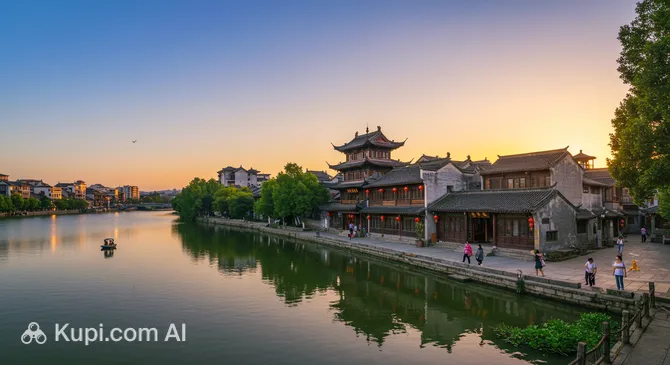
Pinghu is a charming corner of Zhejiang Province that harmoniously combines the dynamics of an industrial center with the tranquility of a traditional Chinese county. Located in the northeastern part of China, right on the coast of the East China Sea, the city has long been famous as the "land of fish and rice" and the "hometown of silk." About 672,000 people live here, and the very atmosphere of the city is imbued with a spirit of creation and a measured provincial life.
The city's geographical position makes it an important hub in the Yangtze River Delta. Pinghu is in close proximity to megacities like Shanghai and Hangzhou, which has left its mark on its development. Despite its status as an industrial and agricultural center, the city maintains cozy natural areas that become a true discovery for those seeking authentic China without the excessive tourist hustle and bustle.
Pinghu. Illustration.
Source: Kupi.com AI
The rich chronicle of these places deserves special attention—you can learn more about the stages of the region's formation on the page dedicated to the history of Pinghu. The main points of attraction here are the picturesque East Lake and ancient temple complexes that reflect the cultural heritage of the province. Visiting this city is an excellent opportunity to see the "real" China, where traditions are closely interwoven with modern production.
Weather Overview
The climate in Pinghu is typical for the subtropical monsoon zone of Zhejiang Province. This means that summers are long, hot, and humid—in July and August, the average temperature stays around +30°C, and high humidity can create a "sauna effect." Winter arrives late and is quite mild: in January, the thermometer rarely drops below +3°C, with average daytime values around +9°C.
Precipitation is distributed unevenly. The peak of the rainy season is in June and July when monsoon downpours hit the region, and typhoons are possible in late summer. Autumn (October and November) is considered the most comfortable time to visit: during this period, the weather is clear, moderately warm, and has minimal rainfall. Spring is also pleasant for walking, though the weather can be changeable.
When planning your trip, consider not only the temperature but also the air quality, which can vary depending on the wind direction from industrial zones. You can find more detailed information on seasonal changes and current conditions in the section describing the weather in Pinghu. Generally, the proximity to the sea and the abundance of lakes soften the city's microclimate, making its parks a great place to relax at any time of year.
Average monthly temperature
Average monthly precipitation
Interesting Facts
The Pinghu county has a centuries-old history: it was officially established in 1430 during the reign of the legendary Ming Dynasty.
The city deservedly bears the title of "hometown of silk"—local production of this precious material was famous throughout the region for centuries.
The city's geography is unique as it is located at the confluence of two major rivers, which historically determined its success as a trade and agricultural hub.
Pinghu received the status of a county-level city relatively recently, in 1991, which gave a powerful boost to its modern industrial transformation.
Thanks to fertile lands and an abundance of water bodies, the city is called the "land of fish and rice", highlighting its gastronomic and natural wealth.
How to Get There
The transport accessibility of Pinghu is one of its main advantages. The city is strategically located, making it easy to reach from the country's largest transport hubs. High-speed rail is the primary way for tourists to travel. Trains from Shanghai deliver passengers to the local station in just 30–40 minutes, turning the trip into a comfortable and quick excursion.
For those arriving from afar, the nearest international air hub is Shanghai Pudong International Airport (PVG). It is located approximately 80 kilometers from the city. You can get there by transfer or taxi, which takes about 1.5–2 hours depending on traffic. You can also use the bus service from neighboring Jiaxing, from where the journey along the G15 expressway takes no more than 50 minutes.
The Pinghu railway station serves trains running along the Shanghai-Hangzhou line, ensuring stable connections with key cities in the region. Travelers should keep in mind that traffic congestion can occur at the city entrance during peak hours, so for more accurate trip planning, it is recommended to study the details on how to get to Pinghu using various modes of transport.
Although Pinghu is primarily known as an industrial hub, it boasts several truly inspiring locations. The city's main gem is East Lake (Donghu). It is often called a miniature version of the famous West Lake in Hangzhou. This is an ideal space for leisurely strolls: well-maintained paths, elegant bridges, and shady alleys allow you to completely disconnect from city noise in just an hour's walk around the entire perimeter.
The Baoben Temple, founded in 1563 during the Ming Dynasty, holds particular cultural value. It is a modest yet very atmospheric place of pilgrimage. On Yinu Island, which is part of the temple complex, stands a majestic pagoda that serves as a recognizable symbol of the city. A visit to the temple offers a chance to touch the region's ancient spiritual traditions and enjoy the silence surrounded by old architecture.
For those interested in culture and art, the Li Shutong Memorial Hall is a must-see. It is dedicated to the life and work of the outstanding master of music, painting, and theater who made a huge contribution to the development of Chinese art. It is also worth stopping by the historical district near the lake, where traditional shops have been preserved, such as the famous Maogou Noodle Shop, offering guests a taste of history in every bowl.
Local Cuisine
The gastronomic face of Pinghu is defined by classic Zhejiang cuisine, which is famous for its freshness and light, slightly sweet taste. The status of "land of fish and rice" is directly reflected in the menus of local establishments: you must try the steamed river fish and various dishes made from fresh rice. A special place in the hearts of gourmets is held by silk tofu, which has an incredibly delicate texture.
To experience authentic flavors, head to the East Lake area. A local gastronomic symbol is the Maogou noodle shop, where they prepare traditional noodles with rich broths and local toppings. Street food is also widely represented near the Baoben Temple, where you can snack on freshly baked treats and seasonal vegetable stews at very affordable prices (usually 10–30 yuan per serving).
As for drinks, Pinghu honors the traditions of the region. High-quality green tea and the famous rice wine, often served warm, are offered everywhere. Most restaurants cater to locals, which guarantees authenticity of taste and the absence of "tourist markups." The food culture here is simple and clear: fresh ingredients, traditional recipes, and the cozy atmosphere of everyday China.
Travel Tips
Visiting Pinghu will be a pleasant and easy adventure if you use our practical recommendations. This quiet city warmly welcomes guests, offering an authentic experience of life in a Chinese province.
Clothing and Seasonality: In summer, the region is very humid and hot, so bring light clothing made from natural fabrics and definitely carry an umbrella or raincoat. In winter, the weather is mild, but the humidity can make it feel chilly—a mid-season jacket will come in handy.
In-city Transport: The best way to get around is by taxi or bus. Walking is convenient only in the park area by the lake; for other movements, it's better to use taxis, which are inexpensive here.
Finances and Payment: Be sure to set up WeChat Pay or Alipay, as terminals for foreign cards are rare. Cash is only useful as a backup in small shops; ATMs are available in the center.
Safety: Pinghu is a safe city. However, avoid walking in remote industrial zones at night due to poor lighting and road conditions.
Language Barrier: English is practically not spoken here. Download an offline translator in advance and save the names of your hotel and attractions in Chinese (in characters).
Etiquette: Chinese people value politeness. Greet locals with a slight nod, and give or receive money or business cards with both hands—it's a sign of respect.
What to Avoid: Do not photograph military objects or people in uniform without permission. Also, refrain from discussing political topics in public places.
Connectivity: For stable internet, it's best to purchase a local SIM card at the airport or communication stores, as public Wi-Fi often requires registration with a Chinese number.
Be open to new experiences, try the local food, and don't hesitate to communicate with residents through a translator—this will make your trip to Pinghu truly memorable!
Entertainment & Nightlife
Nightlife in Pinghu is significantly different from the boisterous parties of megacities and has a more quiet, family-oriented character. Most activity after sunset is concentrated around East Lake, where the lights turn on and locals head out for evening walks. Here you can find cozy teahouses where it’s pleasant to spend time in conversation, watching the reflection of the lights in the water. Most establishments close around 10:00 PM, so it's best to plan evening leisure in advance.
Fans of a more modern entertainment format should look to the shopping centers in the city center. They house cinemas and the karaoke clubs (KTV) that are so popular in China and serve as the main meeting spots for young people. However, for full-scale clubs, major concerts, or bars with craft cocktails, residents usually head to neighboring Jiaxing or Shanghai, as transport links make such trips quick and comfortable.
During the day, entertainment options include walks in the parks and visiting occasional festivals at the Baoben Temple. For active travelers, modern sports grounds and fitness centers are available in the newer residential quarters. Overall, the city's atmosphere lends itself to contemplative relaxation and immersion in the daily life of Zhejiang residents, which is a unique experience for any traveler in itself.
Parks & Museums
The main attraction for nature lovers in Pinghu is East Lake. It is not just a body of water, but a complete cultural and park landscape with elegant bridges, national-style gazebos, and manicured gardens. The area surrounding the lake is perfect for meditative walks, and the panorama overlooking the ancient Baoben Pagoda creates that peaceful mood many seek in China.
The city's museum component is represented by small but very significant sites for the region. The Li Shutong Memorial Hall introduces visitors to the legacy of a legendary figure whose contribution to Chinese culture is hard to overstate. The exhibits located within the Baoben Temple itself complete the picture, telling the history of Buddhism and the architectural features of the ancient county. These places are free from tourist crowds, allowing for a quiet study of the artifacts.
In addition to large sites, Pinghu has many small squares and green spaces that serve as centers of social life. In the evening, they fill with people practicing Tai Chi or dancing, which is a living museum of Chinese everyday life in itself. While the city doesn't have massive forest parks, the greenery in the center is quite sufficient for a comfortable outdoor break.
Getting Around
The public transport system in Pinghu is simple and efficient, perfectly suited for the needs of a compact city. Buses form the backbone of internal transportation. Routes cover all key points: from the railway station to the central districts and East Lake. Service intervals are about 10–20 minutes, making the wait non-burdensome. Fares are minimal, and payment is most often made via QR codes in mobile apps.
For fast and comfortable trips around the city, tourists often choose taxis. This is an inexpensive mode of transport: a ride across the center usually costs between 5 and 15 yuan. You can catch a car on the street or call one through the popular Didi app. Electric scooters and bicycles are also popular in central areas, allowing you to easily maneuver between main attractions and enjoy lake views without being tied to a bus schedule.
There is no metro in the city; however, the railway station serves as the main transport hub, connecting Pinghu with the country's high-speed lines. Walking is a great option for exploring the central part of the city, which features a high density of interesting sites. Travelers should remember that traffic can be difficult on main roads during morning and evening rush hours, so it's better to allow some extra time for trips to the station.
Accommodation
The hotel infrastructure in Pinghu is primarily geared toward business travelers and those making a brief stopover between major megacities. Accommodation options range from modern business hotels to cozy local guesthouses. Prices in the city are quite affordable: a decent room in a mid-range hotel or apartment will cost significantly less than in neighboring Shanghai.
The most convenient area for tourists to stay is the central part of the city near East Lake. This is where the main walking zones and dining spots are concentrated, allowing you to enjoy evening views without a long commute back to the hotel. Accommodations near the railway station are also popular, which is ideal for those planning early departures to other cities in the region.
When planning your trip, keep in mind that international hotel chains have a limited presence in the city, so you will most likely encounter high-quality Chinese brands. It is recommended to book accommodation in advance through popular services, especially during national holidays. For longer stays, you might consider renting an apartment in new residential complexes, which offer a modern level of comfort and security.
Nearby Cities
Pinghu serves as an excellent starting point for exploring the sight-rich Yangtze River Delta region. Thanks to a developed network of expressways and railways, you can easily take interesting day trips to neighboring cities, each with its own unique character.
Just 26 kilometers away is Jiaxing—a major historical center with the picturesque South Lake and ancient canals. If you want to trade provincial calm for the rhythm of a global megacity, a high-speed train will whisk you to the skyscrapers and shopping streets of Shanghai in less than an hour. Also in close proximity is Jinshan, known for its coastal areas and the opportunity to see seaside landscapes.
Don't miss the chance to explore the surroundings: small settlements like Shenjiabang or Wangjiazhai allow you to see the traditional way of rural life in China. The region around the city offers amazing diversity—from futuristic views to quiet old streets on the water.
Shopping & Souvenirs
Shopping in Pinghu is primarily an opportunity to purchase locally produced goods at very favorable prices. Historically known as the hometown of silk, the city still offers an excellent selection of silk fabrics and products. It is best to look for them in specialized stores in the city center or at local markets, where you can find both traditional clothing and modern accessories made from this noble material.
The main shopping areas are concentrated around the central squares and the railway station. Here you will find modern shopping centers with supermarkets and stores of popular brands. For a more colorful experience, visit the seafood markets and local food stalls near the lake. These are great places to buy the famous local noodles, elite teas, or the rice products that the region is so proud of.
Shops in the city usually operate from 9:00 AM to 9:00 PM or 10:00 PM. Most retail outlets accept payment via WeChat Pay and Alipay mobile apps, which are standard in modern China. There are no world-class mega-malls here, but for everyday purchases and finding authentic souvenirs, the opportunities in Pinghu are quite sufficient. Prices here remain at a provincial level, making shopping a pleasant bonus to your trip.